Home » 2021 (Page 11)

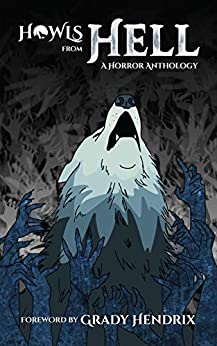
Book Review: Howls from Hell: A Horror Anthology edited by HOWL Society, with a foreword by Grady Hendrix

cover art for Howls from Hell: A Horror Anthology

Howls from Hell: A Horror Anthology edited by HOWL Society, with a foreword by Grady Hendrix

HOWL (Horror-Obsessed Writing and Literature) Society

ISBN-13: 9781736780008

Available: Paperback, Kindle edition, Audible Bookshop.org |  Amazon.com )


Howls From Hell presents sixteen emerging horror writers from one of the largest horror communities in the world, the HOWL Society. I love reading horror anthologies and this volume holds a place in my personal library now. Each tale offers something different. Some stories that stood out follow in this review.


“Red Punch Buggy” by B.O.B. Jenkin involves a car accident leading to a new way of thinking for a young office worker when the accident victim finds his own mind has been…released. “She’s Taken Away” by Shane Hawk is told in a transcription, between a doctor and his patient, Annie Ellis, held in evidence by the Wichita Police Department. Annie has a twin sister who was institutionalized for violent and disturbing behavior, but Annie holds a secret to the case. In “Gooseberry Bramble” by Solomon Forse, the narrator relates a childhood memory in front of a court when he ignored a warning given by his grandmother about not journeying out of the area. As with most children in these stories, he discovers the disturbing truth when he decides to wander to the forbidden territory.


“Clement & Sons” by Joe Radkins is a great haunted house story. Lydia Carrigan purchases a “fixer upper” house, hoping to restore it to its former glory. She discovers an old grandfather clock that holds a strange power. In “Duplicitous Wings” by Amanda Nevada DeMel, Lisa craves revenge for familial betrayal committed by her brother. In her drunken fury, she summons a winged woman named Anza to take out Lisa’s ire on her brother and his family. Unfortunately for Lisa, Anza has her own plans.


“Possess and Serve” by Christopher O’Halloran comes closer to the length of a novella, and is a solid read. In this story, the police can possess and gain control over the body of an attacker to resolve a crime or problem before it gets out of hand. When Sarah discovers that one of their own could be using the service for nefarious reasons, she suspects she knows who the rogue cop is, and sets out to prove it.


Other authors in the anthology are J. W. Donley, P. L. McMillan, Joseph Andre Thomas, Alex Wolfgang, Lindsey Ragsdale, Justin Faull, M. David Clarkson, S. E. Denton, Quinn Fern, and Thea Maeve. Grady Hendrix provides an excellent foreword for this volume.


Howls from Hell is one of the best anthologies I have picked up recently. I like discovering what new writers have to offer. If you are looking for a new favorite author, consider picking this up. I look forward to seeing more of these authors’ work in the future.


Reviewed by Lizzy Walker


Highly recommended
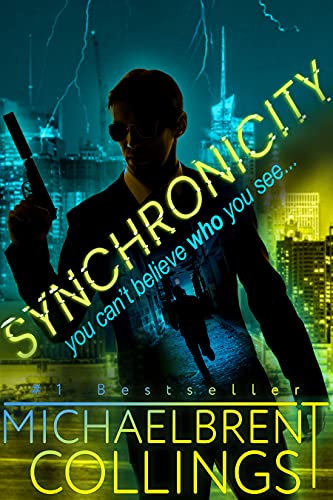
 

Book Review: Synchronicity by Michaelbrent Collings

cover art for Synchronicity by Michaelbrent Collings

Synchronicity by Michaelbrent Collings

Written Insomnia Press, 2021

ISBN: 38744369R00197

Availability: paperback, Kindle edition Amazon.com )


Synchronicity, the newest thriller from Michaelbrent Collings, succeeds in most areas, while missing in a few.  His trademark skill of writing action sequences and maintaining a fast pace is on full display, but the story does skimp a little on fleshing out the plot for the reader.  It’s a decent read, just not quite to the level of excellence of his most recent novels.


“Book” Malcolm is a small-time pickpocket and thief who drifts through life, taking what he can.  One day, unknown people try to kill him on a subway platform.  With their light-speed method of fighting, abnormal healing powers, and the ability to shift consciousness from one body to another, they resemble the characters in The Matrix.  Then, Book is on the run, pursued by some and aided by others, as he struggles to answer the question: “why me?”  Later, Book becomes aware of his own powers, and tries to stop the villains from using the consciousness-shifting device to achieve world domination.


Collings has always been good at making a story move quickly and providing plenty of action along the way, and Synchronicity continues the trend.  As always, it starts off fast; the destruction on the subway platform happens in the first few pages, and the pace never lets up until the end of the story.  The numerous action sequences (and there are a LOT) are well detailed and thought out, and show the author’s usual flair for bone-crushing intensity, as well as violent gunfights.  In terms of a straight thrill ride of a story, Synchronicity hits the target dead-on.


However, it takes more than just breakneck speed to engross some readers start to finish, and that’s where Synchronicity falls a bit short.  It’s almost too fast, and doesn’t allow the plot enough time to breathe, in terms of explanation.  It’s written so the reader never knows more than Book himself throughout the story, and that’s good for character development, but frustrating for the reader.  There is little backstory or dialogue between other characters to give readers some explanation prior to the big reveal at the end.  This makes it harder to get interested in the characters, since you don’t know much about why they are acting like they are.  It’s a shame, because the reason behind the consciousness-jumping technology is quite clever, but it doesn’t get much page time.  More breaks from the hyper-speed of the narrative to detail the plot would have gone a long way.  It’s a good action book, just a little more one-dimensional than Collings’s usual writing.


Synchronicity will probably keep his legions of fans entertained, but first-timers might want to start with Scavenger Hunt or the Stranger series instead, to get a better perspective on his writing.


Reviewed by Murray Samuelson

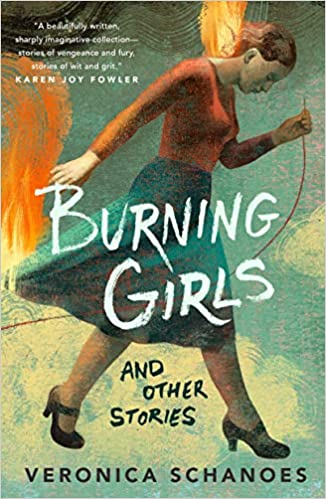
Book Review: Burning Girls and Other Stories by Veronica Schanoes with a foreword by Jane Yolen

cover art for Burning Girls and Other Stories by Veronica Schanoes

Burning Girls and Other Stories by Veronica Schanoes with a foreword by Jane Yolen

Tor.com, 2021

ISBN-13 ‏ : ‎ 978-1250781505

Available: Hardcover, paperback, Kindle edition, audiobook Bookshop.org  |  Amazon.com )


In Burning Girls and Other Stories, Veronica Schanoes brings the present day into a literary and folkloric past that brings fairytales, history, and Jewish tradition together to form something new and unique.  I don’t think I have ever  encountered new tales that blend Jewish tradition, history and religion in a way that feels familiar to me as a Jew, and the stories in the book that use this technique are, I think, the strongest ones in the book.


I had read the titular novella, Burning Girls, when it was originally published, and was wowed by it at the time (I was not the only one, it was nominated for a Nebula and World Fantasy Award and won the Shirley Jackson Award for best novella). In this story, a young woman who has been trained by her grandmother in herb lore, Jewish women’s rituals, and witchcraft, immigrates to the United States. Her sister has signed a contract with a lilit, a demon that steals children, and must discover the lilit’s name to break the contract. In addition to the religious lore, Schanoes interweaves the sewing factories’ unsafe conditions in the early 20th century, the growth of socialism, and the Triangle Shirtwaist Factory Fire. The transformation of a Grimm’s fairytale into a story of Russian Jews’ immigration to and intergration in America created a stunning, tragic, and relevant story.


In Among the Thorns, Schanoes responds to an antisemitic story that appears in Grimm’s Fairy Tales, “The Jew Among Thorns”, in which a youth is rewarded by a dwarf with a fiddle that enchants anyone who hears it into dancing, a fowling piece that never misses, and the ability to have any request granted. He meets a Jew in the road and forces him to dance in nearby thornbushes and hand over his money. When the Jew lodges a complaint in the nearest village, and the youth is sentenced to hang, he plays the fiddle again, enchanting the town into dancing and using his power to have the Jew hanged instead.  Schanoes’ story is told from the point of view of the daughter of the victim, who agrees to a bargain with the Matronit, or Shekina, the goddess of Israel who appears in the Jewish Kabbalah, so she can take revenge on the fiddler and the town. What’s most chilling in this story is the context in which it’s set. While much of the story may seem just a tale, the first page mentions names and dates: the actual incidents may be fictional, but the antisemitism and antisemitic violence were not.


Emma Goldman Takes Tea with Baba Yaga is a wonderful metanarrative in which Schanoes plays with the conventions of fairytales and narrative nonfiction. Emma Goldman was a Jewish immigrant from Russia in the early 20th century who was a notorious anti-capitalist anarchist and was deported back to Russia after many years of activism in the United States, only to become disillusioned with the Russian Revolution. Schanoes begins by attempting to write Emma’s story in a fairytale format, but Goldman is a real and vivid figure in American history, and the details of her life are too important for that. Schanoes imagines Goldman, tired and disillusioned, meeting another controversial and legendary figure, Baba Yaga, and what that meeting would be like.  As a fan of both, I really enjoyed this.  Schanoes also takes this opportunity to speak directly to her readers about the impact of Marxism and revolution on the present day and her own beliefs, an interesting choice.


Phosphorous does not touch on Jewish religion or tradition, but is also a strong story. It describes the events and environment of  the London matchgirl strike of 1888, both from a third-person narrator’s point of view and from the point of view of Lucy, one of the striking workers who is fatally ill, deteriorating quickly due to her close contact with the white phosphorous the matches are made with. Her grandmother comes up with a terrible plan to keep Lucy alive long enough for her to see the end of the strike. Schanoes grounds this story in historical fact by including real people such as Annie Besant as characters, and suggesting that physical artifacts exist as evidence of the story.


Schanoes’ ability to seamlessly draw real events and people together with folklore and fairytale, even while breaking the fourth wall,  is impressive.  Other stories I haven’t described in detail seem hallucinatory, playing with language and imagery while also using literary or folkloric elements, such as Alice: A Fantasia and Serpents. Jane Yolen’s praise in the introduction that these stories have a “lyric beauty” that “bleeds onto the pages” is well-deserved.


Highly recommended.


Reviewed by Kirsten Kowalewski