Home » 2021 (Page 12)

Graphic Novel Review: American Cult: A Graphic History of Religious Cults in America from the Colonial Era to Today edited by Robyn Chapman

American Cult edited by Robyn Chapman

Silver Sprocket, 2021

ISBN-13: 978-194550963

Available: Paperback Bookshop.org | Amazon.com )


American Cult is a graphic history of American religious cults dating from colonial America to the present. According to editor Robyn Chapman, the eighteen pieces in American Cult turn a critical eye to the cults and their behavior, but recognize the very human faces that entered into these dangerous groups.


The book opens with “The Monk in the Cave” by Steve Teare, relating the history of mystic Johannes Kelpius, also called the “Wissahickon Wizard”, who led the Society of the Woman in the Wilderness in Philadelphia in the 1690s. “Inside Oneida” by Emi Gennis addresses the eugenics experiment that the founder, John Humphreys Noyes, demanded of his followers and the incestuous relationship Gennis carried on with his niece, Tirzah, and how it affected her in her own life. In “Fruitlands: The Little Cult that Couldn’t”, Ellen Lindner relates the Alcott family experience and a failed experiment had a profound effect on Louisa May Alcott’s adult life. “Children of God!” by Rosa Colón Guerra presents the case of sexual abuse ran rampant in this cult at the behest of the leader, David Berg; Ricky “Davidito” Rodriguez, a child of the cult leader and also a victim of abuse, later as an adult found one of his abusers as an adult, killed her, and then killed himself. The cult still exists as a Christian church.


“Death Valley ’69” by Janet Harvey and Jim Rugg discuss the Manson Family. There wasn’t anything really new came out of this, but what volume wouldn’t be complete without mentioning one of the most famous American cults? In “Source Family Values”, Andrew Greenston discusses the Source Restaurant and how easy it was for them to garner followers. “Mindbending: A Story about the Process Church of the Final Judgment” by Lara Antal shows further subtle ways a cult can lure in someone. “Cults Reoriented” by Josh Kramer and Mike Dawson discuss Sufism Reoriented (SR), a cult comprised of white, wealthy Baby Boomers located in Walnut Creek, CA, and its connection with The Cheesecake Factory. In “Walk a Mile in My Shoes: A Jonestown History” by Ryan Carey and Mike Freiheit outlines Jones’ time leading up to the establishment of Jonestown, subsequent travel to Guyana, the physical and psychological torture he put followers through, and the mass suicide or murder that ultimately resulted; the narrative is told through a faceless member of Jones’ congregation, and the last two pages make some profound statements. “Playing the Game” by Lisa Rosalie Eisenberg discusses Synanon, tracing the history through Synanon III, or the Church of Synanon, all the way to the cult’s demise. The author ties the “troubled teen bootcamps” to Synanon.


“MOVE” by Ben Passmore presents the rise and fall of MOVE founder John Africa. The police aren’t shown in a good light here, either, considering after the death of a police officer they arrested nine members of the group after a standoff and the courts convicted them, even though no evidence supported the decision. Police also used C-4 to burn a building MOVE members were hiding in, and killed all but two.


“That’s Not What We’re Called” by Jesse Lambert focuses on Sullivanians and modern day effect on offspring of the adults involved in the sex cult. “The Last Days of Mount Carmel” by Vreni Stollberger, told in second-person, regards the Branch Davidians and the ATF/FBI raid that ended in tragedy. “Making Sense of Heaven’s Gate” by Robyn Chapman includes something particularly touching in the 2-page visual obituary of the victims of the mass suicide. Instead of just leaving them as the faceless covered bodies wearing jumpsuits and sneakers, we see the smiling faces of those who died believing they were being taken to the heavens.


“God Hates Me: A True Tale of the Westboro Baptist Church” by J.T. Yost, is told by the child of a parent who was converted by the WBC, and is particularly difficult to read. “Keep Sweet: On Warren Jeff and His Mormon Fundamentalist Splinter Group” by Robert Sergel presents the disturbing history of the FLDS. “Orthodox Judaism is a Cult” by Lonnie Mann provides a firsthand account of growing up as an Orthodox Jew in New York. He discusses his falling out with his religious parents, and how his life changed for the better after accepting himself. “Call Me Vanguard” by Brian “Box” Brown presents disturbing practices and initiation of NXIVM members.


Chapman outlines very well-defined criteria used to determine if a group is a cult. Regarding the content, Chapman states, “When it comes to creating this sort of nonfiction, I feel you should approach these stories with 50% empathy and 50% justice”. She and the other contributors to American Cult create this balance well. There is a particularly eye-opening sentiment that brainwashing doesn’t just effect the gullible. The chapter on Westboro Baptist Church by J.T. Yost illustrates this frighteningly well. I would recommend this for readers who want a deeper look into these cults. Recommended.


Reviewed by Lizzy Walker
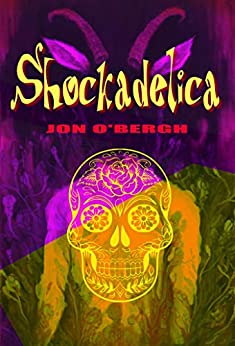


Book Review: Shockadelica by Jon O’ Bergh

cover art for Shockadelica by Jon O'Bergh

Shockadelica by Jon O’Bergh

Bookbaby, 2021

ISBN: 9781098372415

Available: Paperback, Kindle edition Bookshop.orgAmazon.com )


Shockadelica is a suspense/horror ghost story that uses the tried and true tools of an old apartment building with mysterious noises in the night.  The premise has worked for many authors over the years, but Shockadelica never quite gets the story off the ground floor.  It’s an extremely dialogue-heavy story, and it’s difficult to keep the reader’s interest through the entire 252 pages.


Drag queen Kendall and his buddy Jenna start hearing unexplainable noises in their apartment building, and they soon learn that their neighbors do as well.  Feeling that an actual haunting would be great material for their “all things horror” weekly podcast, Kendall and Jenna investigate, and learn that the building has a sinister history.  The rest is a mystery as they try to find the source of the noises in the building, and whether it is a true haunt, or human nature with an evil purpose.


It’s a decent premise, just very slow moving.  The first 130 pages consist almost entirely of Kendall and Jenna interviewing the building’s other inhabitants to learn what they may have seen or heard.  The dialogue is  straightforward, without much injection of the characters’ personalities.  Hearing about the “hauntings” secondhand through dialogue with the other residents hurts the story’s excitement level. Describing the incidents as they actually happen from a narrative point of view would have helped; the few times the hauntings are narrated by the author are pretty good, and doing it more would have helped a great deal.   The story doesn’t start building real interest until around page 186.  The payoff at the end of the book is decent and there is a nice touch of Irish folk legend involved, it’s just questionable if readers will make it that far.


As for the characters, the secondary ones help the story more than the primary ones.  Kendall and Jenna are uninspiring characters; outside of talking about dresses, they don’t do much and generate minimal interest or sympathy.  Fleshing them out more would have helped.  The secondary characters are eclectic and have a little more life.  Vince, the goth/metal musician, is fun, and Rooney is probably the best.  She makes her living doing bogus written and video reviews for products she’s never used, and her adventures between the building walls trying to scare her annoying neighbor add some much-needed flair.  It’s too bad the main characters weren’t as entertaining.


Shockadelica may appeal to some readers who like stories with a lot of exposition, but most readers will probably want to skip this one.


Reviewed by Murray Samuelson

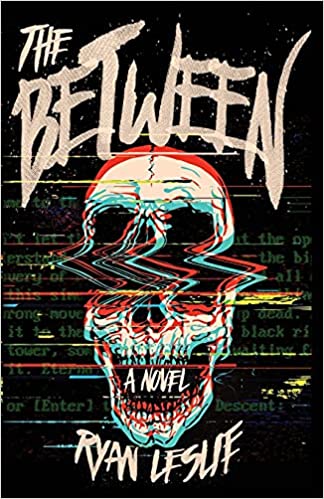
Book Review: The Between by Ryan Leslie

cover art for The Between by Ryan Leslie

The Between by Ryan Leslie

Parliament House, 2021

ISBN: 9798741008720

Availability: Paperback, Kindle edition, audiobook Bookshop.org |  Amazon.com )


>telnetsimulato.interla.hu:4444

name or [ENTER] to play

>read review of the between

I don’t recognize the verb ‘read’

>examine review

WELCOME TO THE REVIEW OF THE BETWEEN


…and what you’ll find in this book is a wildly original story that’s also a homage to the 80’s computer games, when text-based ASCII games like ZORK were all the rage.  Combining adventure, horror, mystery, and a touch of nerdiness, The Between is one of the year’s best so far.


Mild-mannered health care executive Paul Prentice discovers a large iron door set in the ground while digging in his Texas backyard.  He and his carefree, wisecrack-a-minute buddy Jay wrestle open the door and descend the ladder underneath.  They find themselves in a maze of identical rooms, which eventually leads to other worlds of existence containing things like hellhounds of ash, killer robots made of scrap metal, and a vengeful god, Kosmaro, who imprisons souls.  Jay and Paul later learn that the world they entered is based on The Between, an old text-based computer game.  They try to escape, but eventually have to decide…do they want to escape?


The Between is a fast paced read, with a high level of depth and creativity.  With multiple different world levels and all of them having different entrances and exits, there’s no shortage of adventure for Jay and Paul.  The book does a good job tying back into the whole “computer game” theme; if you used to play those games, you may see where some of the inspiration for the worlds and characters in the book came from.   What made text-based games fun was that they allowed you to become another individual entirely, and The Between does a good job inserting that theme into the writing.  Many who enter The Between take on actual roles that exist in the computer game, and they keep the role until they escape, or are killed.  This allows for intriguing personality shifts within the characters, such as the “failure in life,” Jay, transforming into a murderous assassin, the stelisto.  The story occasionally flips back to Texas, providing a nice contrast to the insanity of The Between.  It’s a multi-layered story, and a true original.


A good setting is nothing without good characters, and in addition to Paul and Jay, the other players in The Between do a good job driving the story and keeping it focused.  The two female leads, star athlete Supriya, and the cold-hearted former ballet queen Corienne, provide good counterparts for Paul and Jay, and there’s enough backstory to fill out the characters and allow the reader to feel a connection to them.  Jay is particularly memorable; his “no worries” attitude helps give the story a dash of humor at times that helps lighten the mood.  It’s a wild ride from beginning to end, and one that readers won’t want to miss.  Highly recommended.


END REVIEW

Command?

<read the between book immediately

<[esc]

CLOSE PROGRAM


Reviewed by Murray Samuelson