Home » Page 6

Book Review: Estate Sale by Mia Dalia

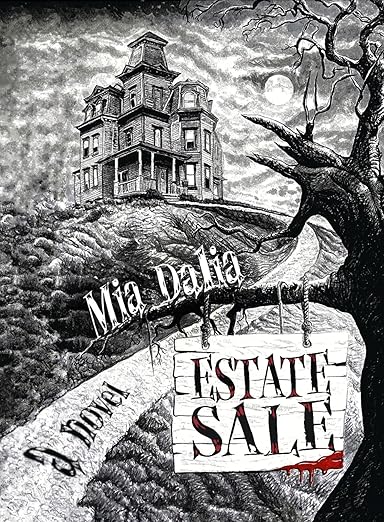
Estate Sale by Mia Dalia cover art

Estate Sale by Mia Dalia

Lethe Press, 2025

ISBN-13: 9781590215579

Available: Paperback, Kindle ebook


After the passing of Lady Koshmaroff, an estate sale draws the attention of the community, who knew very little about her and her late husband. Once the locals start buying the everyday objects from the house, strange things start happening to the new owners of these possessions. A writer buys a rocking chair and, after a long stint of writer’s block, he begins to write…and write…and write. A teenager, aspiring to be a comic artist, finds the quill her grandfather bought at an estate sale before he died holds an amazing secret that frees her from the confines of an uncaring mother and a stepfather whose recent medical condition she feels guilty about… maybe. A man returns to his hometown after an adventurous life, and caters the wedding of the man who was his first kiss, leading to rekindled, conflicting feelings, that end with a dark secret revealed and a mysterious engraved cup. A wife purchases a magnifying glass for her discredited investigator husband in the hopes it will give him some confidence, which leads to obsession over his most recent case. These are only a fraction of the objects purchased from the estate.


Between tales of the objects and their buyers is the strange history of Russian couple Ana and Pavel Koshmaroff, who managed to escape numerous atrocities in Europe in the early 20th century, finally settling in the United States. Throughout their story, Pavel introduces Ana to friends made across the world, including the infamous Aleister Crowley and other practitioners of magick. He also collects a seemingly eclectic assortment of objects, which she inherits at Pavel’s death.


Dalia expertly weaves the couple’s travels through history with the stories of the buyers of objects from the estate sale. Her ability to turn what seems like an everyday object into something sinister, or a strange comfort, added to the suspense and mystery of the Koshmaroff line. Although there is a large cast of characters, Dalia provides each of them a distinct voice and personality, and sometimes they cross paths with each other. This effect makes the setting feel small, despite the fact that some characters have moved out the of community, only to be pulled back for various reasons, to come across the estate sale at the center of the book.


Estate Sale would be a great recommendation for readers who like historical horror, gothic horror, short story collections, and intricate yet simple world building. Highly recommended.


Reviewed by Lizzy Walker
Book Review: The Verdant Cage by Jess Lourey

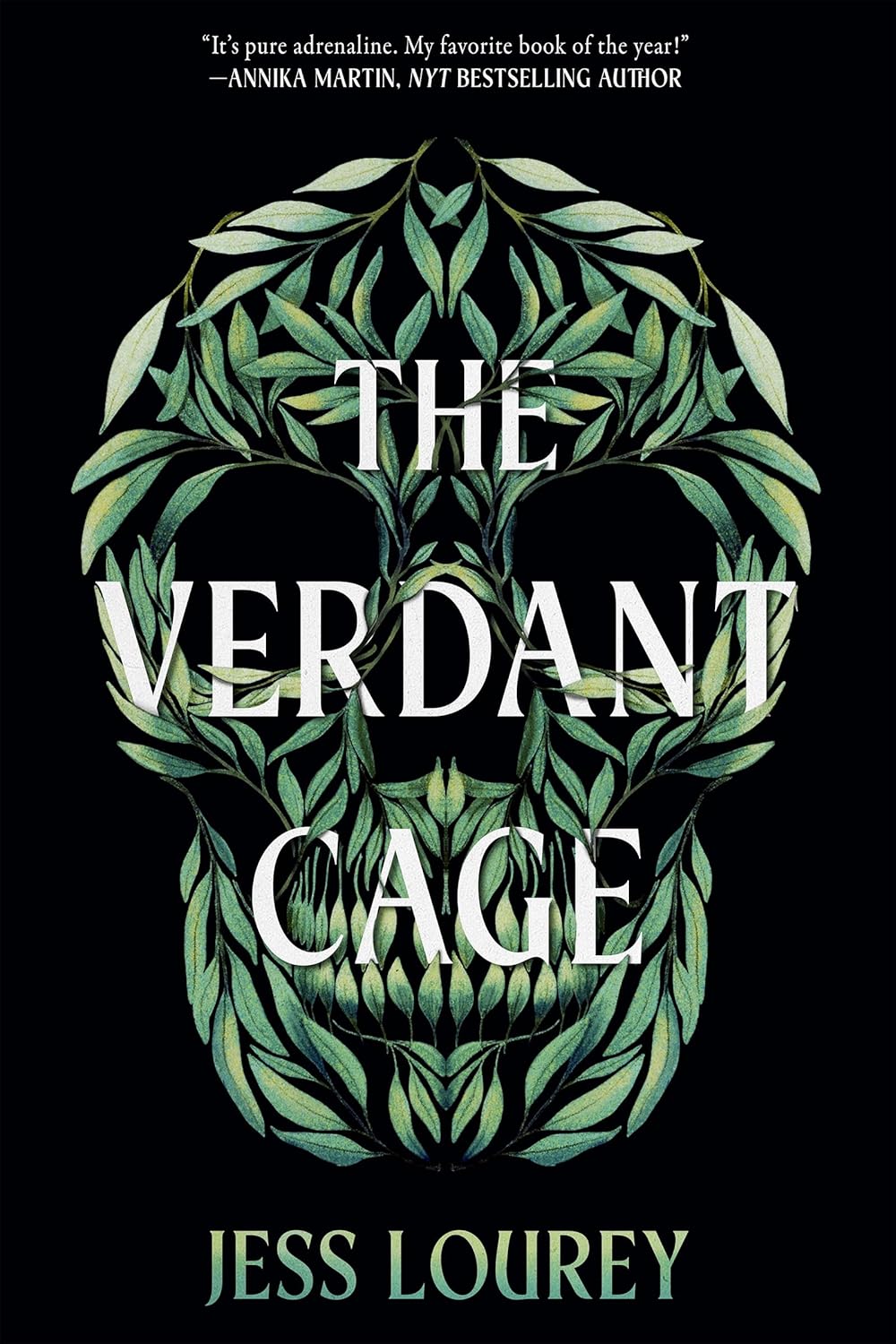
Cover art for The Verdant Cage by Jess Lourey

The Verdant Cage, by Jess Lourey
Mayhem Books, April 2026
ISBN: 9781682816455
Available: Hardcover, ebook edition
Buy:  Bookshop.org 


The Verdant Cage is a decent YA dystopian novel that in terms of basic setup, strongly resembles the old M. Night Shyamalan movie The Village: small utopian, self-sustaining community cut off from the rest of the world behind a wall in an idyllic village, no electricity,  they all live in peace and harmony.  It’s a good read, although a bit slow and predictable through the first two-thirds. However, the payoff and increased pace in the last third of the book are worth the wait.  As far as where it falls in quality in the YA dystopian genre, it is certainly a good deal better than the Divergent series, if not quite at the level of The Hunger Games.


The first third of the story is basically stage-setting, getting the characters and location characteristics into place, and there’s a fair amount to cover.  It’s a reasonably large cast of characters, each of them working in different Houses, where they apply their trades, such as Apothecary, Cobbler, Insect Farmer… there are at least 15 houses.  Thankfully, the author had the foresight to include an appendix at the end, a very helpful idea that more authors today should consider.  While the setup is well done  and detailed (cricket flour was a nice touch, in terms of creativity for a  modern self-sustaining community) the plot here is guessable.  Teenage protagonist Rose Allgood is stuck with a pre-arranged marriage to someone she doesn’t like, but used to; murder happens in a community that has never seen such a thing; no one knows how or why they wound up in Noah’s Valley…predictable, but still interesting. The setting and character interactions are intriguing enough to keep the reader engaged at that point.  The author did enough research to make the community feel believable, in terms of how trades such as a medic would function in pre-modern times. It’s a good job of world building, very in-depth, and it feels realistic.


Rose’s brother is the person labeled responsible for the murder of her mother, at which point he is sent up and over the Wall, to his likely death.  Naturally, Rose isn’t buying it, and about half the book is her trying to find out who is responsible, which of course slowly leads to her uncovering certain hidden truths about Noah’s Valley.  Once she puts all the pieces together in the last part of the book, the story takes off and improves dramatically.  Faster pacing, and the shifting loyalties and double-crossing by many characters make the plot much more engaging, and less predictable.  The big reveal in terms of the Valley and the history of its inhabitants is outstanding: very high marks for creativity to the author!  It adds an unexpected change to the plot, and a much wider lens for the story.  The book continues in high gear right up to the end, with an open-ended finale.  I expect a lot of readers might wind up screaming for a sequel due to the ending, as there is potentially a LOT of story to tell, and the ending’s nature makes it a perfect fit.  However, I would actually vote against another one.  I liked the ambiguous ending and feel it should be left where it is. Let the reader imagine what happens next.


For readers that can exercise a bit of patience to wait for the story to get rolling, this one is worth the time invested.  The big payoff certainly is enough to justify reading this.


Reviewed by Murray Samuelson

Graphic Novel Review: Woodstake: Three Days of Peace, Music, and Blood Volume 1, by Darin S. Cape, art by Felipe Kroll, lettering by Stephen Kok


Woodstake bookcover

Woodstake: Three Days of Peace, Music and Blood by Darin S. Cape, art by Felipe Kroll; lettering by Stephen Kok
SHP Comics, 2025
ISBN-13: 979-8992749915
Available: paperback
Buy: Bookshop.org


Woodstake begins in March 1927, in upstate New York, in a lone cabin where Dracula awakens, feeding on the wildlife in the forest to regain his strength. Nearby, Jack Heyward and Lucy Westin are in love, but the latter is hunted and turned by Dracula.


Sheriff Obadiah Wood is investigating a strange murder, and Marius Van Helsing believes he has killed the creature that used to be Lucy. As time passes, Van Helsing’s son Alexandru takes on the mantle of the family legacy of hunting vampires, and Obadiah’s son Jim becomes the acting sheriff of Sullivan County.


The setting then changes to San Francsico in July 1969. Jonathan distributes his free music publication to interested readers, struggling to keep it going while his father gives him an ultimatum. Jon needs to turn a profit so he can make a living, or be cut off financially and return home to work for Boeing, something he is vehemently against, as he is opposed to the Vietnam War. He reaches out to his friend Artie, and they, along with Artie’s friend Nina, head to Woodstock with the hopes of getting a front-page interview with Jimi Hendrix. They receive a rude welcome at the diner from a couple of locals, one of whom has returned from Vietnam and the other who can’t wait to go fight. The situation escalates into a confrontation in the woods, where the sheriff does something that goes against his regular duties. When the trio get to the music festival, nobody expects that a vampire horde is about to descend on the crowd of festival-goers.


The publisher’s summary includes that this is a “darkly funny, genre-bending thrill ride.” Unfortunately, the humor doesn’t land for me, and for anyone who is a fan of 1960s and 1970s vampire horror flicks, this story is not genre-bending, as there are several films that combine hippies and vampires. Perhaps with the addition of music history, sure, but not when it comes to the merging of horror and counterculture movements. However, although there is so much going on in Woodstake that it is hard to track some of the plot, it is still a good read. The subplot of anti-war protests and two very different groups clashing reflects the period well. For music fans, look for musical references included in various scenes. Maybe dig those albums out, or access them via streaming, and give them a listen while reading. It does add atmosphere, so kudos to Cape for including them in the book.


While Kroll’s art style is unique and vivid for the most part, there are some shadows that do not seem to play well on the page, and sometimes expressions do not match the emotion in some panels. However, when he uses vibrant colors, his artwork really comes alive, where his shadow work is excellent. His chapter break pieces are phenomenal.


Another aspect of comics and graphic novels I have been tracking lately is lettering. Stephen Kok’s lettering in this book is clear, and it is obvious who is communicating, and how.


This book is recommended for those who like horror and music history, as well as for readers who are looking for a good vampire story. Libraries looking to grow their comics and graphic novels offerings should consider this for their collection. Recommended.


Reviewed by Lizzy Walker