Home » Page 4

Book Review: Withered by A.G.A. Wilmot

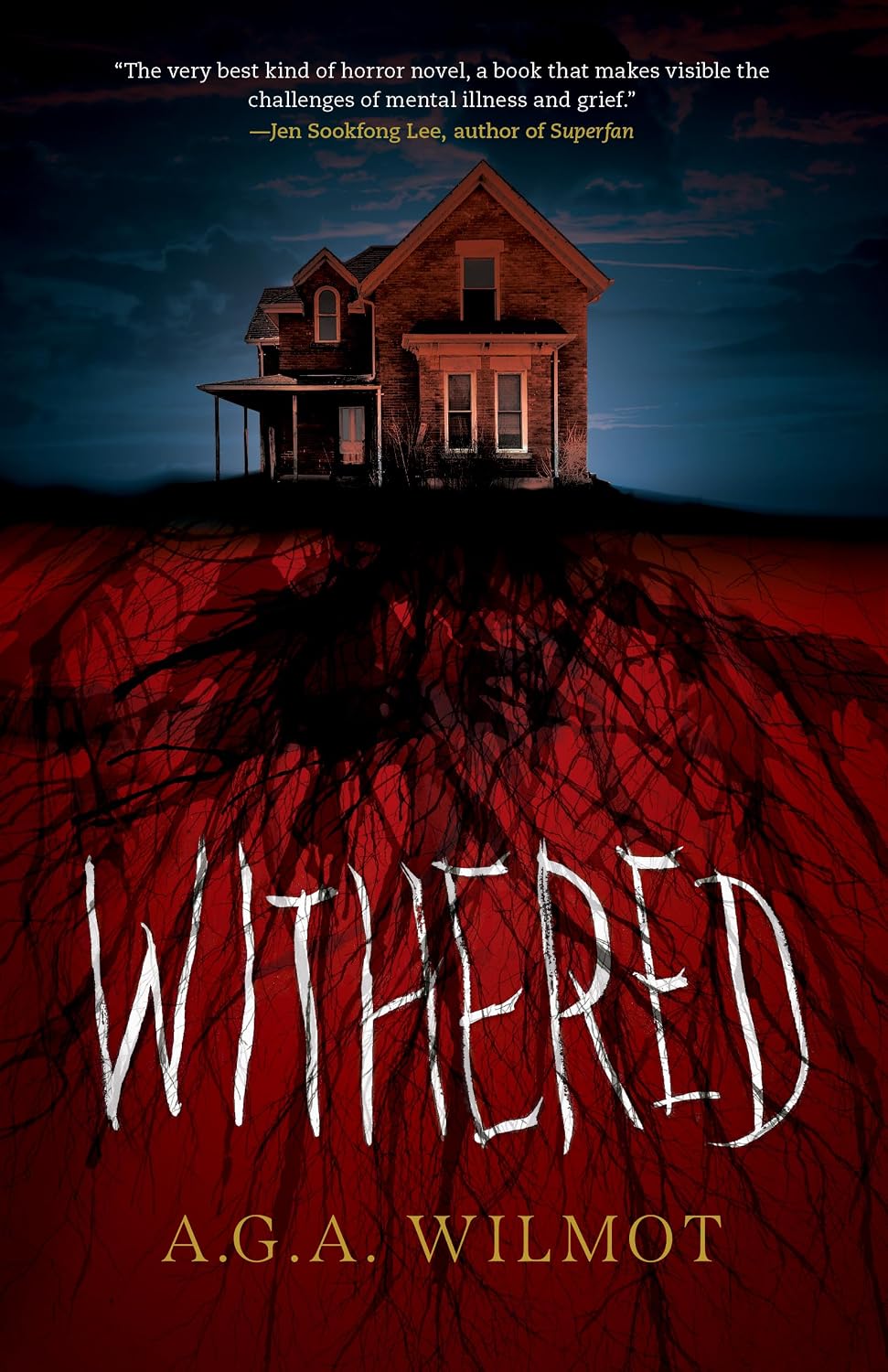
cover art for Withered by A.G.A Wilmot

Withered by A.G.A. Wilmot

ECW Press, 2024

ISBN-13 ‏ : ‎ 978-1770417038

Available: Paperback, ebook edition, audibook

Buy:  Bookshop.org  | Amazon.com


Although I live in the Midwest now, my parents still reside in the Southern California city where I spent most of my childhood. They’ve since moved to a more affluent neighborhood in the same city, but whenever we visit, I always drive my kids past the houses where I grew up. I love showing them where I used to play dodgeball or mix “potions'” out of backyard flowers. A wave of excitement always stirs in me when I see those old spots even if my kids don’t quite share the sentiment. A.G.A. Wilmot understands the deep, undeniable connection between our homes, our history, and who we are now. They write in Withered, “Over years, as a mattress takes on weight from dead skin and oils, so does a house grow dense with memories of all who’ve dwelled within.” (Intermission One).


Withered is a queer psychological horror novel centered on a haunted house and the generations of inhabitants who have lived and died within its walls. Although the story is told through the eyes of the protagonist, Ellis Lang, who recently moved into the home with their mother, the house itself functions as the true main character. The narrative structure mirrors this haunting presence, alternating between chapters focused on Ellis’s current experiences and intermissions that offer flashbacks to past residents whose lives and deaths shaped the house into what it is today.


What makes Withered so compelling is that it completely rejects a simple “good vs. evil” binary. Those who wish to destroy the house and those who fight to preserve it are both driven by their own deeply held convictions of what is right. Even the manifestation of Death avoids the traditional, menacing Grim Reaper trope, appearing instead as an impartial force of nature simply trying to maintain a necessary balance.


This rejection of strict binaries perfectly reflects the core theme of the novel: liminality. Derived from the Latin word limen, meaning “threshold,” a liminal space or state represents an in-between holding area. It’s a point of transition between two conditions. Ellis embodies this threshold state in nearly every aspect of their identity and circumstances. Firstly, as a non-binary individual, Ellis exists gracefully between traditional gender binaries. Secondly, in terms of grief, Ellis is suspended in deep mourning about their father’s death, a psychological limbo where one is surrounded by loss yet forced to keep living, Ellis’s eating disorder acts as a biological threshold, hovering between life-giving sustenance and the physical deprivation of life. Finally, moving from the bustling city to the isolated countryside triggers a profound “relocation depression.” Ellis is caught in the painful gap where the old home is gone, but the new house does not yet feel like home.


This thematic liminality even bleeds into the broader narrative. The central romance features two teenagers navigating between childhood and adulthood, and the book itself sits right on the publishing threshold blurring the line between Young Adult and Adult fiction. The supernatural maternal presence in the house describes itself, “She was no afterlife– of this she held no illusion. What she’s become, she realized, was a haven. A limbo.” (Intermission Six)


While the pacing is initially slow, due to a web of mysteries that aren’t resolved until the second half, the book eventually takes off. The author masterfully gathers all the narrative threads to show you the big picture before slowly untangling them. You have to commit to the slow burn, but the resolution is well worth the wait.


Reviewed by Lucy Nguyen
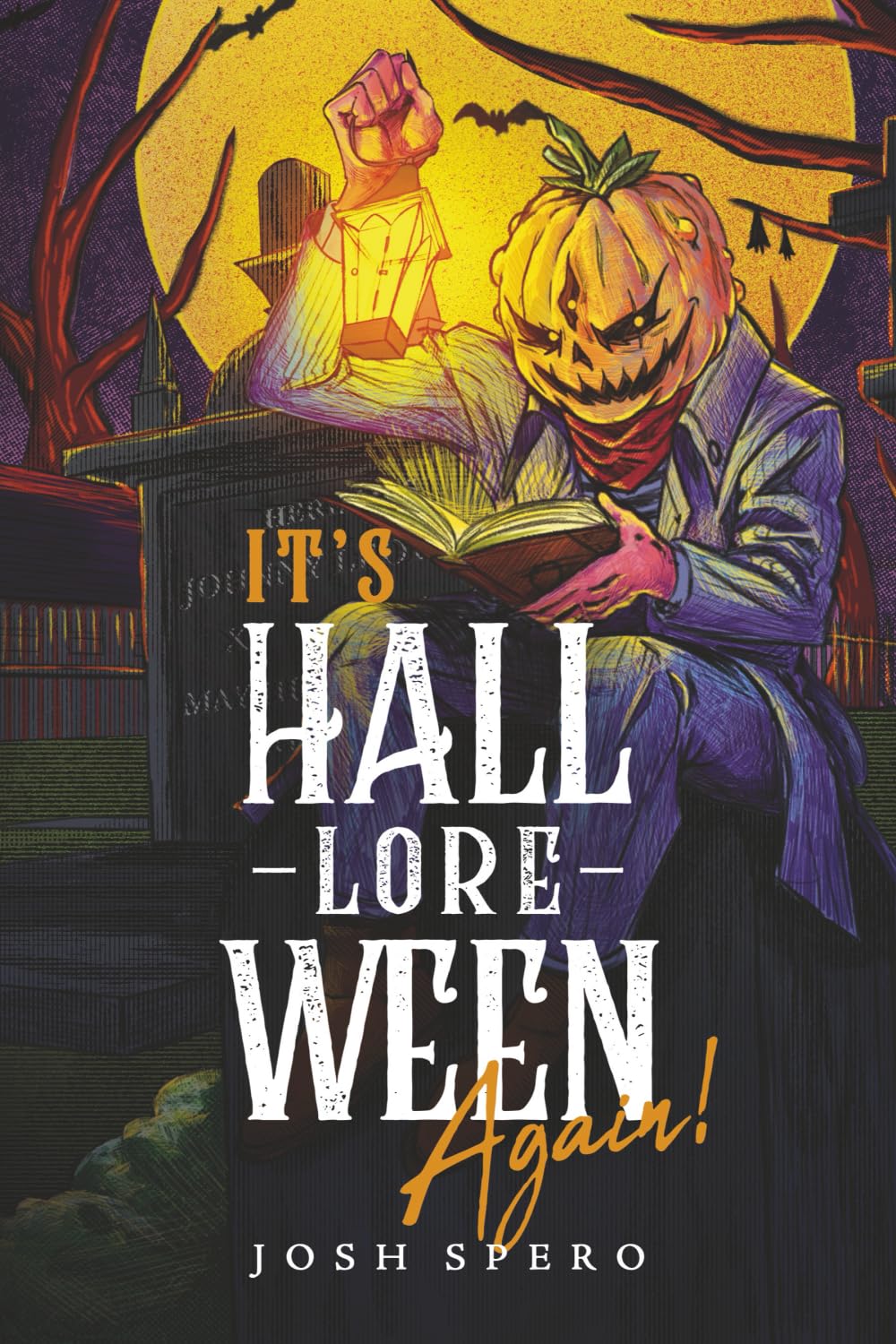
Book Review: It’s Hall-Lore-Ween Again! by Josh Spero, illustrated by TT Hernandez and Aldo Avilar

It’s Hall-Lore-Ween Again! by Josh Spero, illustrated by TT Hernandez and Aldo Avilar

Castle Bridge Media, 2025

ISBN: 9798991785570

Available: Paperback, Kindle edition

Buy: Bookshop.orgAmazon.com


Josh Spero has taken the winning formula from Hall-Lore-Ween, his first collection of spooky stories for kids, and improved it for the sequel.  Like the first, this one features short tales, poems, and illustrations.  This time there are fewer tales, they are longer, and they are oriented towards a slightly older audience.  The first one worked well for roughly grades 1-3, but this one feels like it would be a better fit for grades 3-6.  Most important, it has all the charm and whimsy of the first one.


The book consists of three tales and six poems, slotted into 171 pages.  The story length is significantly increased this time, which allows for greater character development.  Similar to the first book, the stories are spook stories for a young audience, and they again rely on universal themes, such as love, loyalty, righting a wrong, and so on, to provide tales with a bit of creep, usually with an uplifting ending.  Let’s take a look at what’s under the hood.


“The Kings of Halloween”:  The story establishes the tone right away. This is more for the pre-teen set, as part of the tale revolves around the classic nerdy misfits getting bullied at school by the “cool” kids.  As for revenge, the downtrodden will get it– but in a fun, monster-filled fashion, with no real harm done to anyone in the end, except for maybe a few shattered egos.  This one illustrates the style of the stories well: all the elements of Halloween are present, but in a fun, non-threatening fashion.


“The Jamboree”:  A ghostly romance of sorts between the living and the dead, it’s a charming, romantic, and melancholy tale all rolled into one, with a hint of tragedy tossed in for good measure.  It’s an extremely engrossing story that covers all the bases, and should be a guaranteed hit with pre-teen girls.  It’s the longest, and probably the best yarn in the book.


“In the Dead of Night”: This one is just fun, loose silliness with zombies, and an ironic explanation for the undead. It’s guaranteed to make the reader chuckle at the end, and it ends the book on a happy, uplifting note.


My only complaint with this book is the same as the last one: more illustrations please!  There is still only one illustration per story, I would really like to see two or three.  It’s a book for younger readers (and overgrown kids like me), and a few more illustrations would really appeal to the likely reader base.  There are some good sketches in between each story showing Jacko, who is kind of the book mascot/narrator. but more of them based around the story should be included.


My bottom line: I liked this even more than the first one, which I was quite fond of.  Even if readers don’t find it to be better than the first, there is no way they will find it to be a downgrade from the prior book.  Definitely recommended for good, safe, family-friendly Halloween fun.  If Disney had decided to do Halloween films back in their heyday, this is probably the style they would have gone with.


Reviewed by Murray Samuelson

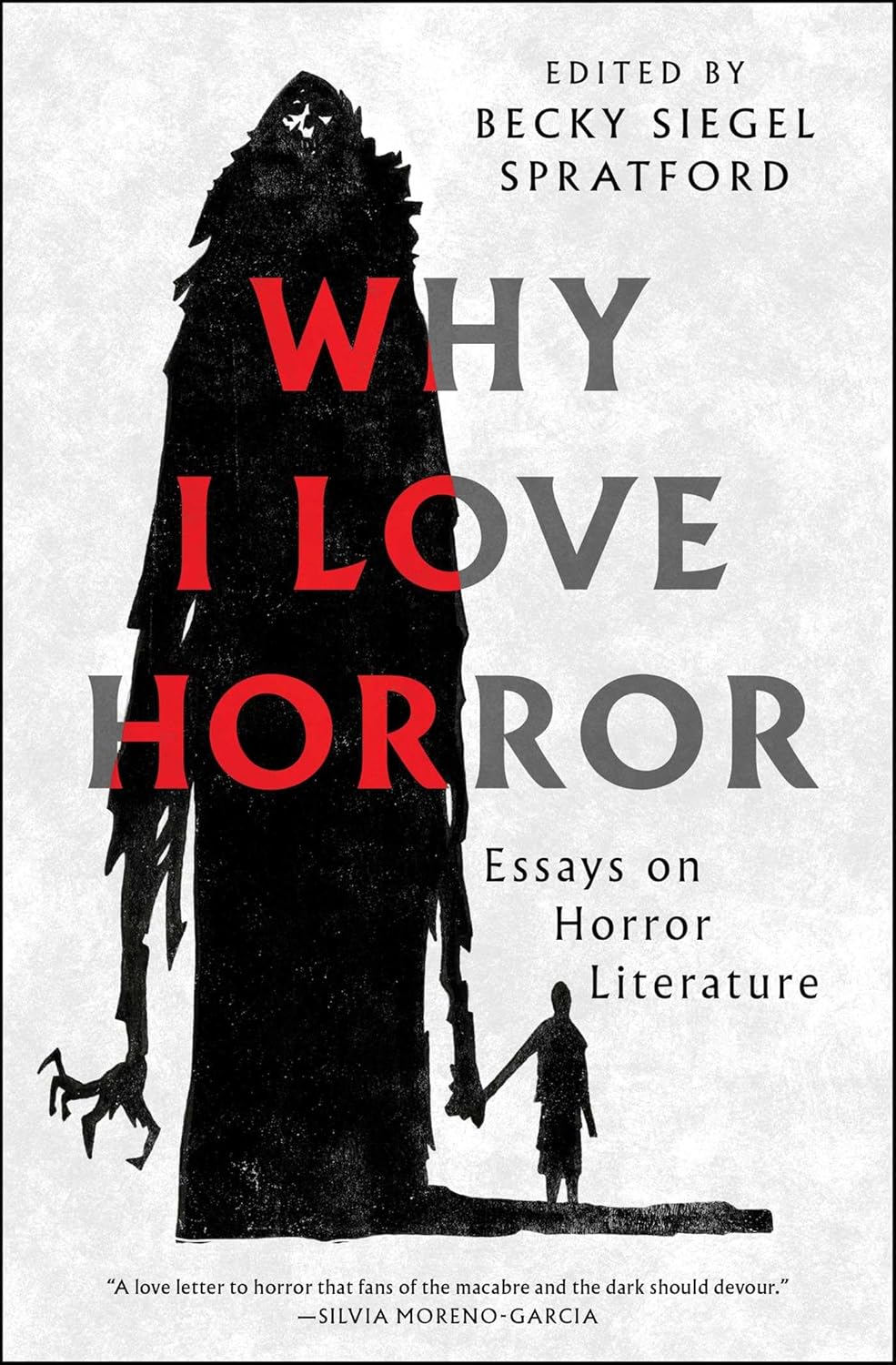
Book Review: Why I Love Horror: Essays on Horror Literature edited by Becky Siegel Spratford

Cover art for Why I Love Horror edited by Becky Siegel Spratford

Why I Love Horror: Essays on Horror Literature

Saga Press, 2025

ISBN-13: 9781668205099

Available: Paperback, Kindle edition, audiobook, audio CD

Buy: Bookshop.org |  Amazon.com


Librarian Becky Siegel Spratford presents eighteen essays by current horror authors on why they love horror. The collection begins with a welcome to the reader by Sadie Hartman, followed by Spratford’s own essay, “Why Ask Why,” where she tells her story about how she found herself working with horror and curating this book full of talented horror writers. Before each essay, Spratford includes an introduction to the authors, a book recommendation to start with from their works, and a recommendation of an author in a similar vein.


My experience reading this was like opening a door to different times in my life where horror made significant appearances, despite having never really left me. Childhood memories and horror are foundational for some in this community. In “Brian Keene’s Giant-Size Man-Thing,” the author discusses his introduction to horror through comics and how horror helped him cope with dread and fear. John Langan writes of his childhood fascination with cryptids in “In the Bermuda Triangle with Sasquatch, Flesh Smoldering.” Jennifer McMahon’s “Monster Girl: How Horror Gave Me a Place to Belong” hit particularly close to home in terms of feeling out of place, being the weird girl who liked horror, and experiencing struggles at home. “My Mother Was Margaret White” by Cynthia Pelayo discusses abuse she experienced at home and at school, never feeling safe anywhere. Horror saved us both. “Permission to Scream” by Rachel Harrison and and “Tales From My Crypt” by Mary SanGiovanni specifically focus on girlhood and horror, both also speaking to similar experiences for me.


Horror providing comfort or a safe space is another thread that ties these essays together. Hailey Piper describes, in “The Giant Footprint of Horror”, how Godzilla introduced her to horror, and that there is joy in this dreadful genre. “My Long Road to Horror”, by Tananarive Due, describes horror as feeling. She writes a short but powerful history of her family and their personal horrors of racism and struggle.


Authors remind the reader that horror is more than a genre, it is an entire community. Alma Katsu’s “What You Can Learn from Horror: Don’t Run from Darkness; It’s Trying to Teach You a Lesson”, presents an essay questioning why people shy away from horror. A true crime writer I had a conversation with during my undergrad found it fascinating that there is a line in the sand between what his audience will and will not read: that line is fictional horror. Katsu states “I’m here to argue against running away from darkness,” (52) and provides personal information regarding past employment with government agencies as an intelligence analyst. Gabino Iglesias, in “Horror is Life: A Blood-soaked Love Letter,” discusses his life in Puerto Rico and discovering horror, which turns into a moving statement on how horror changed his life. In “A Day in My Psychedelic World,” Nuzo Onoh, dubbed the Queen of African Horror, reminds us there is horror for everybody.


There are so many great essays in this book. Other authors who contribute are Josh Malerman, Paul Tremblay, whose piece is accompanied by his daughter Emma, Grady Hendrix, Clay McLeod Chapman, Victor LaValle, David Demchuk, and Stephen Graham Jones. This would make a great addition to a general library collection, as well as essential reading for a course on horror. Highly recommended.


Reviewed by Lizzy Walker