Home » Page 5

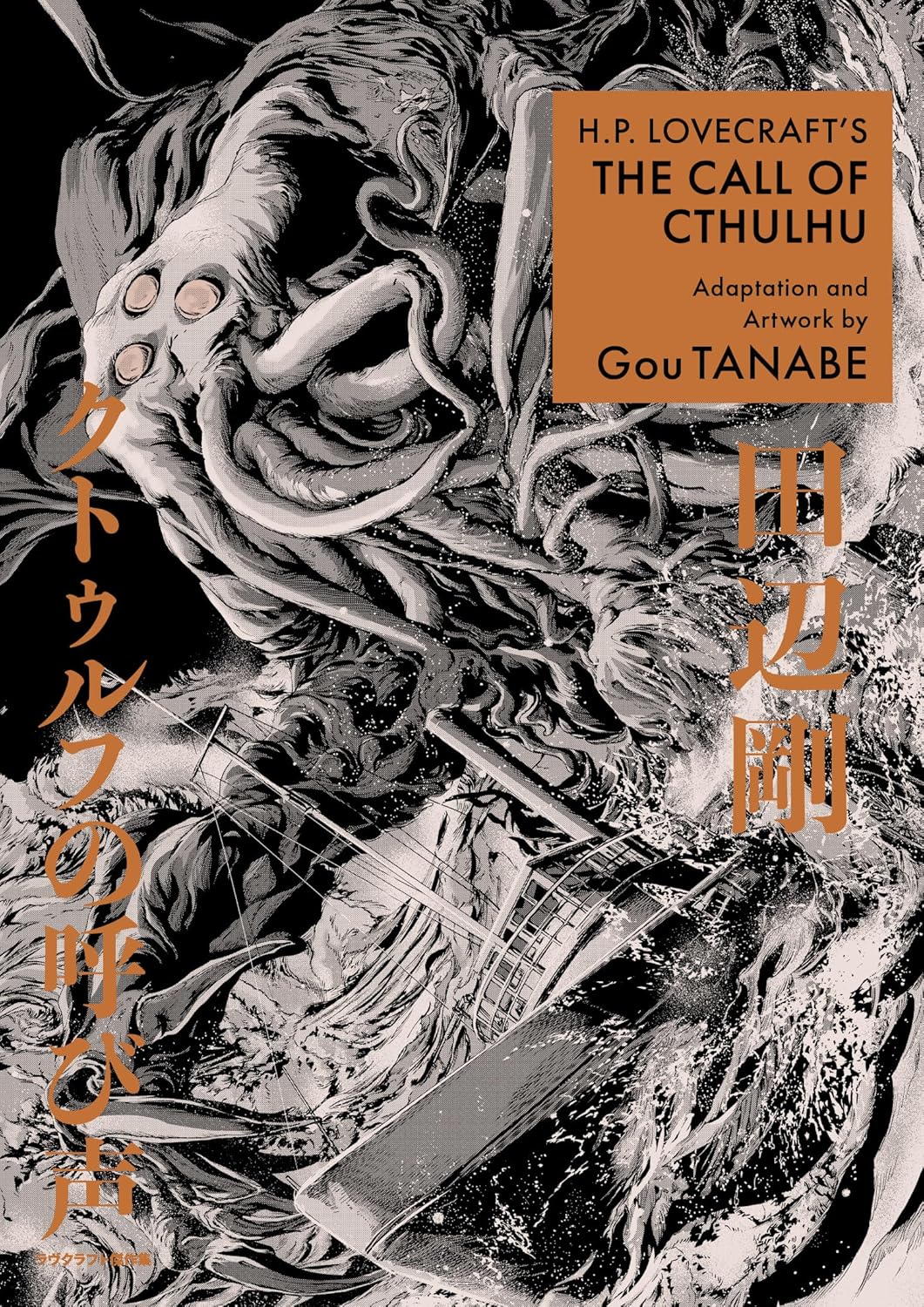
Graphic Novel Review: H.P. Lovecraft’s The Call of Cthulhu (H.P. Lovecraft Manga), adaptation and art by Gou Tanabe

H. P. Lovecraft’s The Call of Cthulhu (H.P. Lovecraft Manga) adaptation and artwork by Gou Tanabe, translated by Zack Davisson

Dark Horse Comics, 2024

ISBN-13: 9781506741406

Available: Paperback, Kindle edition

Buy:   Bookshop.org | Amazon.com


Eisner-nominated mangaka Gou Tanabe adapts H. P. Lovecraft’s The Call of Cthulhu, first published in 1928. Francis Thurston, the executor of the estate of the late Professer Angell, discovers that the academic was investigating a strange cult that worships an entity known as Cthulhu. Thurston, curious about the papers, journal entries, and strange clay idols, launches his own investigation that unearths something bigger than he could ever dream of—the city of R’lyeh.


The story is told in a series of journal entries and flashbacks to events in the aforementioned entries to construct the mysteries of the cult, mythos, and what happened to anyone who comes across even the mere mention of the Great Old Ones.


Tanabe’s artwork includes such intricate detail. The eye is forced to observe. He renders Lovecraft’s cosmic horror as visceral, beautiful, and maddening at the same time. There are panels where black text is outlined in white, and is overlaid on the artwork, which forces the reader to slow down, take in the words on the page, and then move to the surrounding artwork. Particularly visceral and intricate scenes include cultist activities and the discovery of and journey through R’lyeh. Tanabe’s large scenes, such as an overhead view of a seafaring vessel fighting to avoid being pulled into a whirlpool near R’lyeh, are impressive. Put these on a shelf next to such horror mangaka as Junji Ito and Q Hayashida. Highly recommended


Reviewed by Lizzy Walker

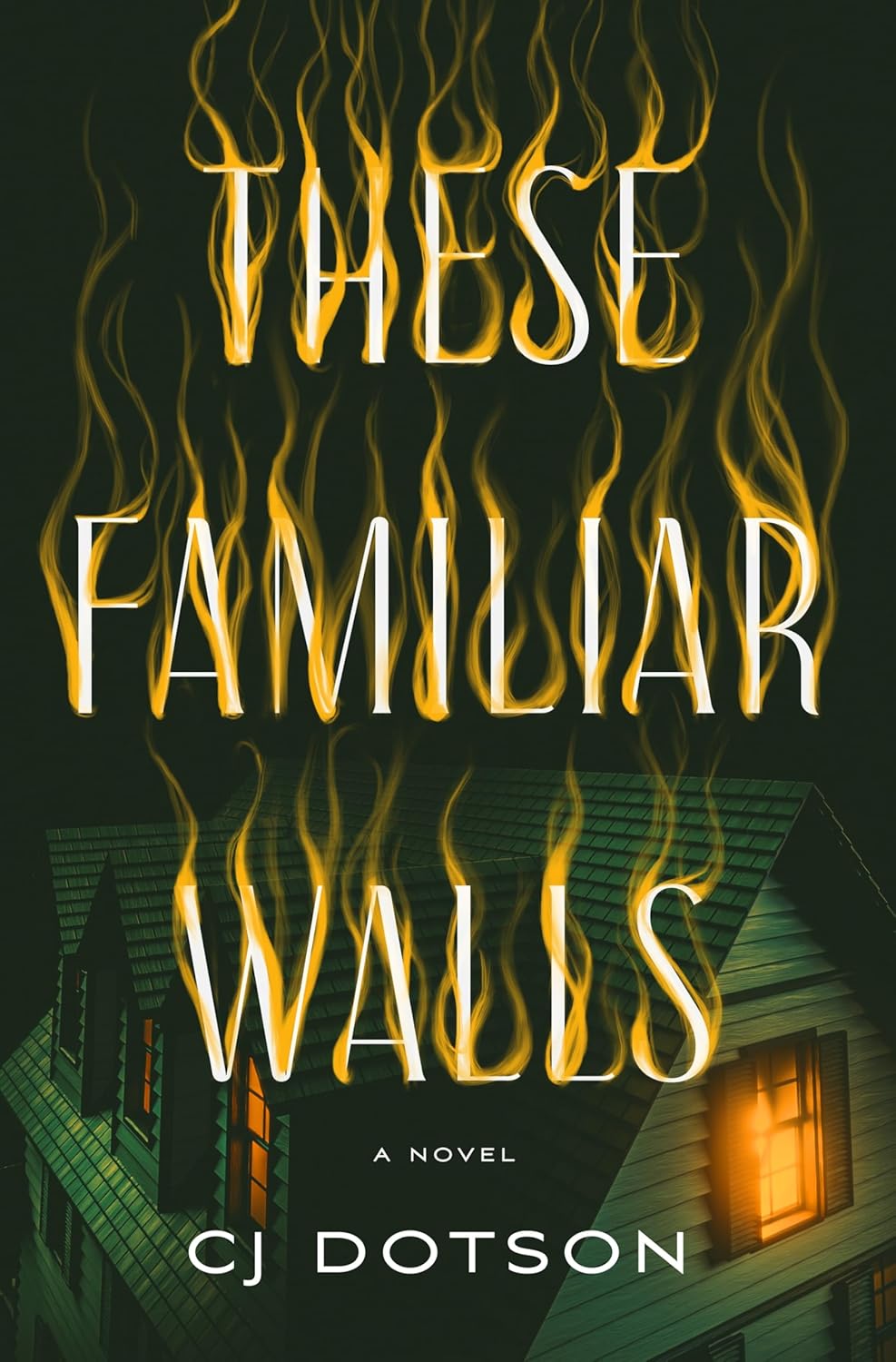
Book Review: These Familiar Walls by CJ Dotson


These Familiar Walls by CJ Dotson

St. Martin’s Press, 2026

ISBN: 9781250336583

Available: Hardcover, Kindle edition

Buy: Bookshop.org |  Amazon.com


These Familiar Walls is a taut thriller, a major improvement over CJ Dotson’s debut novel, The Cut : it avoids all the problems that plagued that novel. It is a tightly written story that sticks to its premise, and does an outstanding job of throwing the reader off-base in terms of guessing the ending.  No sophomore jinx with this book: it’s certainly worth the read.


The book starts with a prologue, where thirty-something protagonist Amber Hughes’s parents are brutally murdered in a home invasion, and one of the killers(killed in the attack) turns out to have been Amber’s disturbed childhood friend, Nathan.  Amber inherits the house, and she and her husband Ben, and their two kids move in. Strange things start happening, and the author does a good job slowly building up the level of tension over the course of the book.  Dotson uses fairly basic items like sounds and images, but does it well, especially when using mirrors.  With a number of the incidents, it’s almost more psychological, as it seems like some of the characters go into a sort of fugue state, as they find themselves doing things, and being there, but not mentally in the moment.  It adds a nice touch, and will make the reader wonder: is the house really haunted, or are the characters mentally unstable, and dealing with the results?  The scene with the multiple candles, and the barbeque scene are good examples: they keep the story riveting while providing for some uncertainty for the reader.


The narrative is a split narrative, with parts taking place in the present, and sections in the past that document Amber’s time growing up as a teen with Nathan, who is every concerned parent’s worst nightmare.  Worth noting: there is a bit of animal cruelty associated with Nathan, and some people might want to skip those two sections.  It makes sense in terms of the plot, but can still be difficult to deal with.  The timelines tie together in the end, as the mystery of the house, as well as the mystery of the killer who escaped the night Amber’s parents were slain, are all resolved.


As good as the book is, it’s the last third of the book that’s a real gut punch, as all the answers are truly stunning and will completely throw the reader off.  As much as this is a thriller about a haunted house, it’s also a prime example of how the worst things in the world aren’t always supernatural: they can be contained within ourselves.


In closing, These Familiar Walls is a vast improvement over Dotson’s debut novel: let’s hope the author can keep it going in the future. Recommended.


Reviewed by Murray Samuelson
Book Review: The Rack II: More Stories Inspired by Vintage Horror Paperbacks, edited by Tom Deady

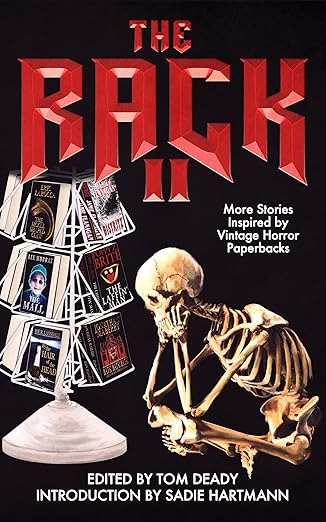
The Rack II: More Stories Inspired by Vintage Horror Paperbacks

The Rack II: More Stories Inspired by Vintage Horror Paperbacks, edited by Tom Deady, introduction by Sadie Hartmann

Greymore Publishing, 2025

ISBN: 9788998958915

Available: Paperback, Kindle edition

Buy: Amazon.comBookshop.org


With 23 stories packed into 450 pages, The Rack II certainly delivers enough quantity for the dollar. But what about quality, you say? This installment in the series is actually better than the last one. As with the previous volume, the stories are of mixed quality,  The difference is, the good stories are better than last time, and there are more of them, while before, most were just ok. This time, the majority are good, so it’s easier to justify the purchase.


First off, note that the book says “stories INSPIRED by vintage horror paperbacks,” not “stories written in the style of vintage horror paperbacks.” These stories bear very little resemblance to any of the “thrash-n-trash” style pulp thrillers that ruled the 1980’s. That certainly doesn’t make the stories bad, but don’t buy this and expect reruns of Guy N. Smith or Graham Masterton. The authors of the short stories in this volume may have been inspired by that time period, but they certainly don’t write in that style. That’s perfectly fine, but readers should know what they are getting with a purchase of the book.


As for the stories…again, the overall quality level is better this time, with most of the stories grading in at about a solid B, and a lot of stylistic variety. A number of the middle-of-the-road stories are ones you could even go back and read again. We’ll look at the real bangers.


“Beepbeepbeep”: a tale of virtual pets, with a path into reality. This story makes good use of kids’ obsession with electronics, and does a great job of twisting it into real-world consequences with human life. Great fun!


“We Have (Never) Been Here Before”: even if this wasn’t entertaining as hell, it would get mentioned for the excellent writing. It’s just someone watching a horror film and calling out the standard tropes, but eventually it crosses over, and you don’t know what is film and what is real in the story. I felt this must have been a difficult one to write, but Jonathan Lees does an outstanding job on this one.


“Midnight Rider”: no, this isn’t about the Allman Brothers Band, but it sure has some of the melancholy they built into the lyrics of that song. It involves a Ferris Wheel and a grieving husband whose wife passed away too soon, and his attempts to see her again. It’s actually a pretty sad and dramatic story. I would not call it a horror story at all, but it is a damn good story. It was enough to (almost) give me a case of the sniffles. If author Mike Deady chose to write a drama novel, I would definitely read it.


“The Comeback Kid”: this is as close to a vintage 1980’s blast as you will get in the book, and it’s a disgusting mess of fun. It takes the idea of excellence in gymnastics at any cost to a whole new level, with plenty of body parts involved. Gross, and impossible not to enjoy.


“The Cartographer”: a thrilling tale of revenge, with four kids managing to track down a serial killer, and deciding to take justice into their own hands. The problem is, how to do it when you are kids, and don’t have access to guns? Credit to the kids for their solution: it’s a clever one. The story does take a bend into the realm of the otherworldly at one point, which adds a new dimension to the story. It might be the longest story in the book, but it sure holds its own against the quicker thrillers.


Bottom line is:  this is better than the original, and you can’t say that about sequels very often. Recommended.


Reviewed by Murray Samuelson