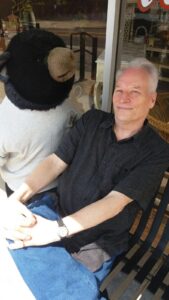
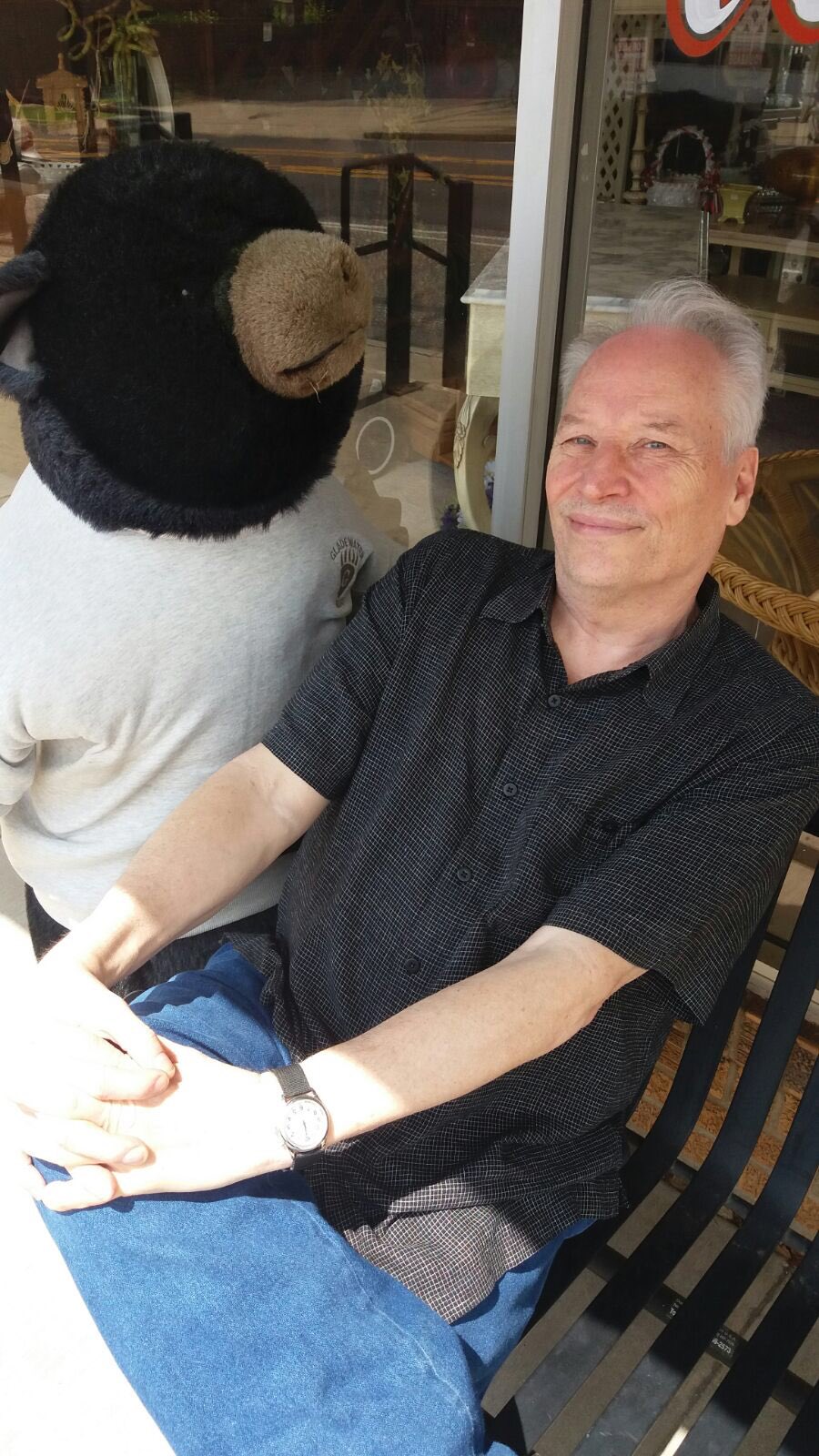
Joe R. Lansdale
Joe R. Lansdale is an award-winning writer in multiple genres, including Western, horror, crime, suspense, mystery, science fiction, and comics. In addition to novellas, chapbooks, comic books, and short stories, he has written over 45 novels. Several of his books have been adapted to film. He is also the subject of Hansi Oppenheimer’s documentary All Hail the Popcorn King. Reviewer Lizzy Walker was lucky enough to have the opportunity to interview him for Monster Librarian.
LW: In the All Hail the Popcorn King documentary, you mentioned that your interest in reading started with discovering comic books. What titles did you start reading? What is/was your favourite book or series?
JL: For me, it’s not that simple. When I was a child it was John Carter of Mars by Edgar Rice Burroughs, and that, as well as Tarzan and other books by him, were among my favorites, and he is still my sentimental favorite writer. I like a lot of series, but most of my favorite novels beyond Burroughs were Kipling’s The Jungle Book, as well as his short stories, which I adore, specifically, “The Man Who Would be King”, anything by Jack London, Twain, and there were quite a few others. As I got older, I grew into liking Twain even better, started reading Richard Matheson, Charles Beaumont, Ray Bradbury, and just about any science fiction writer out there. I was especially fond of Philip Jose Farmer, but I read them all and liked them to varying degrees. Henry Kuttner, Cyril Cornbluth, and so on. Early teens it was To Kill a Mockingbird by Harper Lee, which still resonates with me and is probably my favorite novel. Late teens it was F. Scott Fitzgerald, John Steinbeck, William Faulkner, lots of books on anthropology, sociology, psychology, and an insane amount of history. In my early twenties I discovered Raymond Chandler, Dashiell Hammett, James Cain, Ernest Hemingway, Flanner O’Conner, my favorite short story writer, though her novel Wise Blood is a favorite. Carson McCullers, Larry McMurtry, and so many more. I guess if I have to pick a series, however, I’ll go for Raymond Chandler and his Philp Marlowe novels. Later, James Lee Burke’s series books, Robert B. Parker, Ralph Dennis, and well, this list is far from complete and could get very long.
Sorry. Got carried away. Favorite novel. To Kill a Mockingbird, Harper Lee.
LW: You also talk about the library. How did libraries shape your future in writing?
JL: Bookmobiles were my first library. I would check out books during the summer, which is the only time I think it ran. There was another kid that had a card, but he didn’t like to read, so he would let me have his three books, and I would read them. I also read any book I could find. I was reading a lot of adult books before I was a teenager. We were poor and couldn’t afford much in the way of books, but my mother was always getting hold of used or discarded books, so I read those. She also managed me a library card in Gladewater, Texas, and later an actual library became my home. I went through the children’s stacks quickly, and the librarian was good about letting me read above my age level. I read books on birds, animals, travel, adventure, and certainly lots of novels. I read short stories, but my true love for them developed over time, and I have the library to thank for that. Later, the Tyler Junior College library became important to me, and finally the Nacogdoches, Texas library. I actually can afford to buy books these days, so though I donate to the library, I rarely use it anymore. My personal library is monstrous. I read three or four books a week, but I’ll never get through all of the books I own, and keep adding to.
LW: What are essential, comics or otherwise, you feel every reader should pick up?
JL: As a kid, I read all kinds of comics. I think it has to be what appeals to you. For modern readers I’d recommend WATCHMEN and THE DARK KNIGHT RETURNS, but I love all the old archive DC comics. I read Marvel, but have always had a soft spot for DC comic characters. Comics are struggling these days. I also recommend a number of comics like Capote in Kansas, which is about the writing of IN COLD BLOOD, and there are a number of good biography comics, and even a great graphic novel of TO KILL A MOCKINGBIRD.
LW: What influences your writing?
JL: Everything. I mentioned a lot of the books that influenced me. But newspaper articles, current events, watching people, remembering stories my folks used to tell about the Great Depression, and stories they told that their parents told them about growing up in the eighteen hundreds. My father was born in nineteen-o-nine, my mother in nineteen fourteen, so they were on the cusp of the nineteenth century and the twentieth century in that things didn’t change automatically when the twentieth century rolled in. I was born in the middle of the twentieth century, during the Cold War, the sixties upheaval, the Vietnam War, Elvis and the Beatles, and all of that has gone into stories.
LW: Do you have a favourite genre or audience to write for?
JL: No. Whatever interests me at the time. Maybe I lean a bit toward novels that are historical to some degree.
LW: Can you talk about how East Texas influences or enhances your writing?
JL: It’s where I grew up. It’s what I know. My character was built by growing up running the creeks, rivers and woods. The land, the climate, the people, the experiences of growing up in a racist society, rebelling against it, and the Vietnam War, and so on. It’s all interwoven.
LW: How would you categorize you work?
JL: The Lansdale Genre.
LW: Your discussion about how your mother and you would sit on the roof and watch the drive-in flicks was great. What is your fondest memory of this time with your mother? Favourite film?
JL: We actually sat at a window in a house with a row of tall windows and watched the drive-in. We couldn’t hear the sound. From then, I remember cartoons, and my mother made up stories to go with them. Warner Brothers cartoons are what I best remember. My favorite pure drive-in movie, meaning a movie that was pretty much designed for Drive-ins, was either Night of the Living Dead or Texas Chainsaw Massacre. I had other favorites that showed there, but they were often films that were actually designed for theaters. That was during my teen years.
LW: What was your introduction to horror?
JL: Film, and a collection of Edgar Allen Poe Stories my mother gave me. I was young for them, but my mother thought I was mature enough for them, so that was the intro.
LW: What advice do you have for new writers?
JL: Read, read, read. Write, write, write. It’s best to write a little a day so as not to dread it. Mileage may vary on that method. But I like it. I generally only work about three hours a day.
LW: Can you talk about any upcoming projects?
JL: My son has adapted my story the Projectionist into a screenplay, and I hope to direct it. We’ll see. I’m working on a new novel, but I don’t talk much about works in progress. I have a number of things coming out later this year. MORE BETTER DEALS from LITTLE BROWN/MULHOLLAND being the most prominent. It’s a crime novel. I think of it as Cain’s DOUBLE INDEMNITY meets Fitzgerald’s THE GREAT GATSBY.
LW: I know this is described in the documentary, but I have to ask. What is the best way to eat popcorn?
JL: With your hands.
LW: I recently finished the Bubba Ho-Tep and the Cosmic Bloodsuckers. How much creative influence did you have on the series?
JL: The writer who adapted it kept me in the loop, but the artist did his own thing. I usually got to make suggestions there as well, but was less involved with that.
LW: Do you have anything else you want to tell Monster Librarian readers about yourself or your work?
JL: Only this. Keep reading.




Follow Us!