Home » 2020 (Page 21)

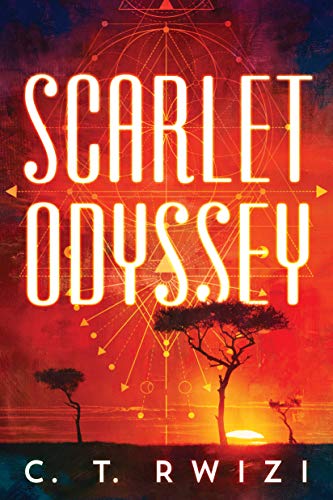
Book Review: Scarlet Odyssey (Scarlet Odyssey #1) by C.T. Rwizi

cover for Scarlet Odyssey by C.T. Rwizi

Scarlet Odyssey by C.T. Rwizi (  Amazon.com  )

47North, 2020

ISBN-13: 978-1542023825

Available: Hardcover, paperback, Kindle edition, audiobook


C.T. Rwizi is a South African author who has drawn from African mythology and landscapes as well as more common fantasy and science fiction tropes to create  a unique but recognizable epic fantasy that goes to some very dark places.

In the Red Wilds, among the people of the Yerezi Plains, gender roles are very rigid: men become warriors and hunters, and women become scholars and mystics. Salo is the exception. Before she died, his mother, a mystic, left him the tools to become a powerful mystic himself, but he has kept his talent hidden. Then his clan is attacked by a dark witch, the Maidservant, and her soldiers, killing many of his clan.

The Maidservant is compelled by a curse to serve Dark Sun, a warlord with ambitions to conquer all of the Redlands, but she has plans of her own. The Maidservant’s magic is fed by agony, blood, and  hatred stemming from a similar attack on her own village in nearby Umadiland many years ago. Now she is forced to repeat the actions which drove her to revenge.

After the attack, in an effort to save  what remains of his clan, Salo asks to be recognized as his clan’s mystic. When he claims his mystic power, the men of his clan feel betrayed. The queen of the Yerezi Plains decides it is too difficult for Salo to remain and sends him on a diplomatic mission to the faraway city of Yonte Saire (I received an ARC of this book and it did not have a map, which seems like a major omission for a story so geographically oriented, so I hope one was included in the final version).

The strict gender roles are also the reason Ilapra left the Yerezi Plains for nearby Umadiland. Her ability and desire to be a fighter was dismissed because she is a woman. As a paid guard and soldier, she has found herself on ethically shaky ground. Salo, traveling alone, hires her to be his guardian. The two join forces with Tuk, an atmech, part machine and part human, created in the more technologically advanced Empire of Light by a necromancer. Appearing and acting just as human as Salo and Ilapra,  but with advanced abilities in language and weaponry, Tuk tells them he is traveling to discover the Redlands, which are mostly unknown in the Empire of Light.

Isa is the last member of the ruling family of the Kingdom of Yontai, the Saires, who were murdered in a bloody massacre by possessed soldiers. She has sought sanctuary in the temple while she solidifies her position and decides what her options are, as the head of the Crocodile clan has himself named prince regent. She does not know Salo is coming or that he is unaware that the political situation he’s walking into has changed.

The Enchantress is a mystic who has some kind of plan to destabilize the Kingdom of Yontai both economically and politically. It’s not totally clear what her agenda is, but she is ruthless.

The book’s storytelling alternates between these five point of view characters. A big chunk of the front end of the story involves Salo’s character development and world-building before he sets off on his journey to Yonte Saire, and the backstory of the Maidservant.  It is mostly long and slow, partly because Salo, Tuk, and Ilapra are on a long, slow journey. However, Salo is being tracked by the followers of Dark Sun, including the Maidservant, who recognize that he has a unique talent and must be eliminated for Dark Sun to continue his conquest, so the story is broken up with solid action sequences involving impressive magic and considerable bloodshed. The limited technology means communication over long distances is difficult and uncommon, so the Yerezi queen, the Maidservant, and Salo and his friends don’t know what’s really going on in Yonte Saire.

Probably the most successful thing Rwizi accomplished character-wise was to give dimension to the Maidservant. It would be easy to make her a one-dimensional, evil character, but instead she is an example of what trauma can do, passed on to traumatize and victimize others who are in the same situation she was in. There is graphic violence and gore in the book- Rwizi’s black witches really are stained black.

The world building is impressive, and it’s interesting to see how the characters’ worlds widen as they travel. I think we will see this story spreading out onto a larger canvas regarding magic, technology, what constitutes civilization and power, and (possibly) climate change. I also suspect there will be a return to the Yerezi Plains as Rwizi left a number of loose ends.

Because this is a first book and the world building doesn’t have European fantasy tropes to fall back on, Scarlet Odyssey is long, but it isn’t entirely satisfying, because despite its length it ends just as the characters all finally began to come together. It feels like the story is finally picking up the pace and getting going… and then it’s done.  Still, it’s a fine beginning to what looks to be an ambitious piece of African speculative fiction. Rwizi is a strong writer who does a good job establishing setting, developing characters, and creating some truly disturbing action scenes. I look forward to his next, hopefully faster-moving, volume in this series.  Recommended for adult readers and older teens with strong stomachs.

Contains: large-scale murder, violence, gore, slavery.
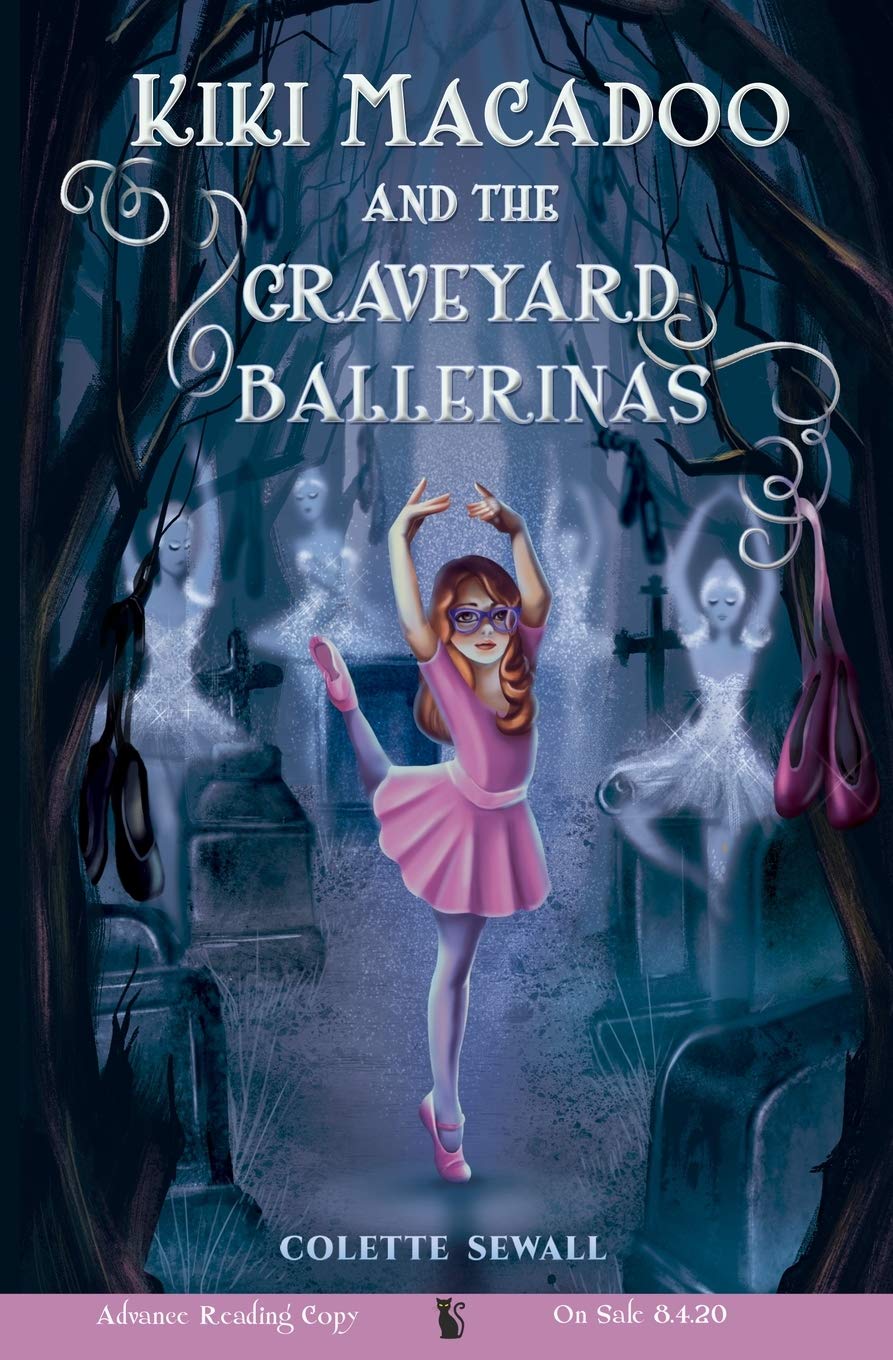
Book Review: Kiki Macadoo and the Graveyard Ballerinas by Colette Sewall

cover for Kiki Macadoo and the Graveyard Ballerinas

Kiki Macadoo and the Graveyard Ballerinas by Colette Sewall ( Amazon.com )

Owl Hollow Press, 2020

ISBN-13: 978-1945654558

Available: Paperback, Kindle edition


Kiki Macadoo, age eleven, and her teenage sister Alison, are going to a special ballet summer camp housed in a Gothic castle in a remote area surrounded by dense forest. Kiki loves ballet but is terrible at it, while Alison is very talented. While both of them are excited about camp, Kiki is nervous, and Alison is bummed because she’ll be spending the summer away from her boyfriend, Dylan.

Despite the camp’s setting, the kids seem pretty normal– they’re there because they want to excel in dance. Sewall writes naturally about ballet and dance, without making the terminology intimidating. Kiki is placed in the lowest dance class, with 8 year olds, but she’s lucky in that she has a pretty good relationship with Alison, her roommate is kind and friendly even though she’s a much better dancer, and the dance teacher is understanding and helpful. The camp director, Madame Dupree, is elderly, forgetful, and a bit eccentric (there’s a subplot where her son’s fiance attempts to have her committed so he can sell the property to developers, but it doesn’t really go anywhere), but she’s also thoughtful and generous. When she learns that Alison will have her sixteenth birthday at camp, she enlists Kiki in helping plan a surprise party for Alison. It’s  refreshing to see a school story, especially one involving teenagers and middle-schoolers, where the main character isn’t bullied because of physical flaws or struggles with learning.  It’s also nice to see the conflicting feelings Kiki has about dance and about her sister– she may struggle but she perserveres.

While the campers have been forbidden from going into the forest, it doesn’t stop Kiki. Her lessons end earlier than Alison’s or her roommate’s, leaving Kiki plenty of time to explore. One of the boys at the school, Oliver, lives on the grounds and tells her she needs to be careful because fairies and spirits live in the woods (Oliver isn’t mocked for dancing; we have come a long way since Oliver Button Is a Sissy). At first she doesn’t believe him, but it turns out that Kiki is one of a rare few who can see them, because she has “ghost eyes”, two different-colored eyes. Kiki and Oliver become friends and explore the forest together (it is almost a character in its own right), and between Oliver’s stories and hints dropped by Madame Dupree, Kiki learns that in addition to harmless spirits, there are some dangerous ones as well. The wilis, water sylphs who died of broken hearts while at ballet camp, draw in any young woman with a broken heart and force her to dance to her death, at which time she becomes one of them. There is a graveyard filled with the bodies of girls who died dancing and became wilis.

The surprise party for Alison does not end well. Alison’s boyfriend shows up with bad grace and she discovers he’s seeing another girl; broken-hearted, she runs into the forest where she is drawn in to the wilis’ dance. As terrifying as they are, it is up to Kiki to break her sister away from the wilis’ spell.

I really liked the author’s choice to make the wilis her dangerous spirits. They are part of Slavic folklore and are not commonly known, but they do appear in the ballet Giselle, which is tragic and terrifying. Giselle is maybe not as well known to the average kid as The Nutcracker or Swan Lake, but that makes the story extra cool in integrating the ballet theme into the story.

As it is a middle grade book, things end well, but the path to getting there has its frightening moments, and definitely magical ones. The door is left open to a sequel, and I’ll be interested to see if one happens and, if it does, where it takes Kiki, Alison, and Oliver next. Recommended for ages 8-13.

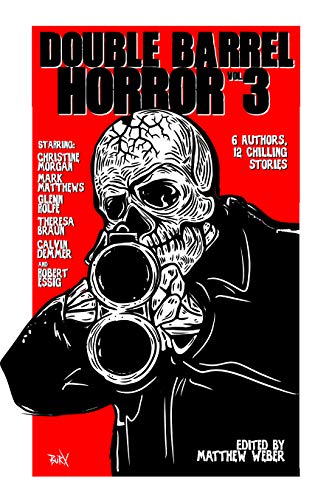
Book Review: Double Barrel Horror, Volume 3 edited by Matthew Weber

cover image for Double Barrel Horror Volume 3

Double Barrel Horror, Volume 3 edited by Matthew Weber (  Amazon.com  )

Pint Bottle Press, 2020

ISBN: 978-1-945005-01-5

Availability: Paperback, Kindle edition


Double Barrel Horror, Volume 3 is a 182 page collection of horror shorts by six different authors, two stories by each one.  Most of the stories clock in at around the 10-15 page mark, and the quality is all over the map.  There are some good ones, but some clunkers as well.   Or, in keeping with the “shotgun” theme of the book title, there are some good rounds of double-aught buck in here, but there is also a fair amount of birdshot and blanks mixed in.


Calvin Demmer is the most consistent author out of the six; his “Highway Hell” and “Motel Madness” are entertaining romps, concerning how roadkill is really removed from the highways, and what happens to a bad, but not truly evil, person when they are tossed into purgatory.  Robert Essig’s “From Unclean Spells” is a decent story of necromancy gone wrong.   If nothing else, the belch-and-barf-fest (literally) in the story is quite amusing.  Essig comes up big with “Fuel for the King of Death”, which scores high both in terms of originality and excitement.  How does a freaky little Museum of Death keep getting new video footage for the museum?  Read on and find out.  Mark Matthews adds “Goodwin”, which is an entertaining take on the joys of necrophilia, from a corpse’s point of view.  The most chilling story in the book certainly comes Glenn Rolfe.  His “The House on Mayflower Street” is a terrifying look at what happens when nosy neighborhood brats start investigating the classic “abandoned house” in a suburban neighborhood.  As the kids find out, curiosity is not only painful, it’s a lot worse than death.  This one would make a good movie; it alone is almost worth the price of admission.


As for the rest of the stories…meh.  They aren’t necessarily bad, but they aren’t that interesting either.  The writing quality for all of them is fine, there just really isn’t anything in the stories to capture and hold the reader.  They are okay for a quick moment, but there is nothing that will make the stories truly memorable for the reader.  If you have the money to spare, you may want to consider picking this up for the good stories it does contain.  Anyone on a limited budget, though, would be better off investing in The Third Corona Book of Horror Stories or Lost Highways: Dark Fiction From the Road.


Contains: violence, profanity, gore


Reviewed by Murray Samuelson