Home » Posts tagged "thriller fiction"

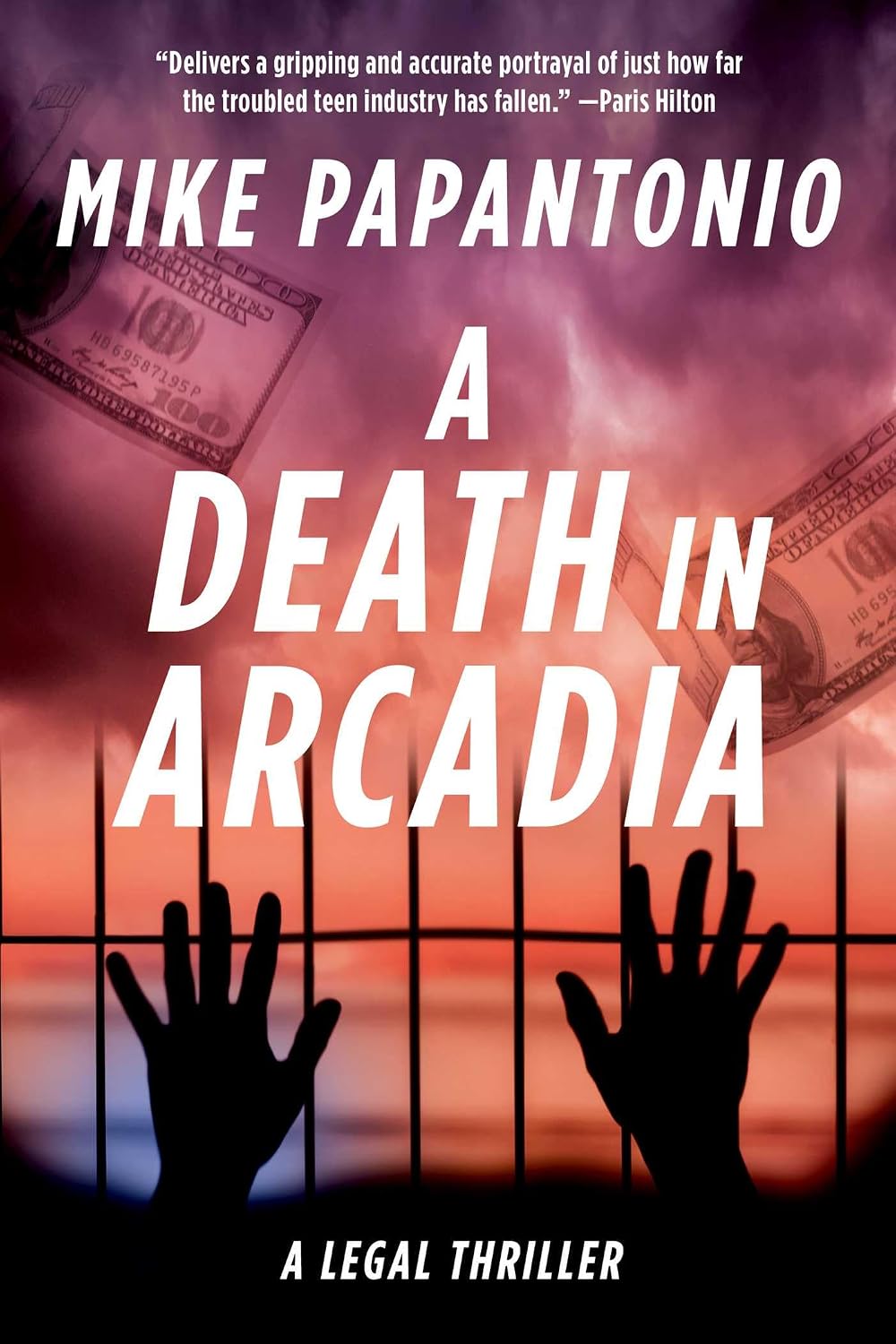
Book Review: A Death in Arcadia by Michael Papantonio

A Death in Arcadia by Michael Papantonio

Arcade Publishing, August 2026

ISBN: 9781648211706

Available: Hardcover, ebook edition

Buy: Bookshop.org | Amazon.com


Although Monster Librarian is primarily for horror books, we like to stretch ourselves on occasion. A Death In Arcadia is billed as a “legal thriller.”  As everyone knows, in this genre, there is John Grisham, and there is everyone else. How does this one stack up? In this case, for readers that like legal thrillers, this one will provide a reasonable stopgap of material to enjoy between waiting for Grisham releases.


The plot focuses on the abuse and murder of a fifteen year old boy by a guard at a troubled teen facility. Taking the case is the law firm of Nicholas “Deke” Deketonis. The book focuses on the crusading mass tort lawyers vs. Phoenix, the for-profit corporation that runs the detention centers.


Overall, it’s an enjoyable book, although it could have used a bit less legal, and a bit more thriller. The author has a nice touch for plot pacing: he keeps it moving the whole time, and it doesn’t really ever bog down. It is a bit heavy on the legalese, but the author keeps it understandable for those of us who don’t know much about the law. Papantonio has a knack for writing good dialogue, which makes up the majority of the book. One of the best characters, showing the author’s dialogue skill, was the on-the-take politician Bob Minds. I really enjoyed how the character didn’t try to mince words, and spent his time berating and trash-talking the very people signing his paychecks. It was nice to see a character not trying to whitewash what they were doing illegally; he just came out and said it.


As enjoyable as the book was, the characters were very black and white, either completely slimy or completely valorous. Some shades of gray would have made the characters more intriguing. It was also predictable. The bad guys always screwed up, and the good guys never made any mistakes. The lack of push-pull dynamic was a problem: you knew the good guys would always come out on top of whatever situation they were in.


It also felt unrealistic that almost no mention was ever made of the large fees that the lawyers stood to make through winning.  Readers are supposed to believe that trial lawyers are crusaders for good in an unfair world, working for free?  That’s one thing Grisham understands very well and makes clear in his novels. Some mention of money would have made the protagonists seem a lot more realistic: in this they came off as King Deke and the Lawyers of the Round Table. Yes, this is fiction, but that part was a bit much to swallow.


Bottom line? Readers of legal thrillers will probably enjoy this and learn a few things, while waiting for the next Grisham.


Reviewed by Murray Samuelson

Book Review: Beth is Dead by Katie Bernet

Cover art for Beth is Deat by Katie Bernet


Beth is Dead by Katie Bernet

Sarah Barley Books/Simon & Schuster Books for Young Readers

ISBN-13 ‏ : ‎ 978-1665988698

Available: Hardcover, Ebook edition, audio CD

Buy: Bookshop.org


Beth is Dead is a modern, original take on Louisa May Alcott’s classic children’s novel, Little Women.


I will start by saying that I have read Little Women many times, and most teens today are probably coming at Beth is Dead fresh, which will make a dfference in how it hits. The original novel takes place around the time of the Civil War and is about four sisters, Meg, Jo, Beth, and Amy March, as they grow up, while their father is with the Union Army. Beth is a fragile “angel of the house” character who dies tragically from illness near the end.


Beth is Dead not only brings the story to the present day, but remixes it. This time, the story starts with the discovery of Beth March’s body by sisters Jo and Amy, in a nearby park on New Year’s Day. Bernet name-checks a lot of minor characters from the original book– Amy and Beth had gone to Sallie Gardiner’s yearly party, and had a fight, after which Amy left. There are plenty of secrets about what happened that night.


But the story really starts much earlier, when the March sisters’ father published a bestselling novel detailing their private lives, Little Women, that became controversial because protesters objected to a man exploiting women’s lives for money. Threats caused him to leave home, and he hasn’t returned. In the fictionalized book, Beth dies at the end in a tragic car crash, and since the book is loosely based on their lives, most people think she is dead until she does an interview with Teen Vogue: now everyone is waiting to see what she does next. Beth’s boyfriend, Henry Hummell, is supportive and caring and doesn’t care about the book, and she is a gifted pianist. Life is looking up for her. After the interview, their Aunt March offers to pay for Beth to attend Plumfield, an arts boarding school: she just has to decide if that’s what she wants. I liked Beth a lot in this book– she grows past the “angel of the house” stereotype into someone more complex and independent. able to speak up for herself.


The story is told in alternating first person points of view by Beth (in the past), and Jo, Meg, and Amy (with different chapters set in the past and present). First person gives the reader a much different and more immediate view of the remaining three girls than a third person perspective. I really disliked Jo, who comes across as attention-seeking, selfish, naive, and only interested in picking up social media followers. I was less impatient with Amy, a wannabe artist, because it quickly became obvious where her story was going. Meg didn’t really have a compelling storyline, although it was nice to see that she had big dreams and was going after them while she worked out her feelings about John Brooke, which doesn’t happen in the original. Race plays a more obvious role: Jo’s friend Laurie goes from having olive skin and “Italian features” in the original book to Black in this one, and John Brooke is also Black: this affects their encounters with law enforcement, as both are suspects at some point. The least compelling element of the book to me was the Jo-Laurie-Amy storyline. Bernet didn’t have the opportunity to develop the relationship between Laurie and Amy convincingly, or resolve the hurt feelings between Jo and Laurie. Unfortunately, most conflicts in the book felt forced, and many secondary characters were flat, as there simply wasn’t space for character development.


Bernet does an effective job of depicting anger and grief, and the way sisters can be there for each other even at their worst. But the mystery didn’t feel very original, although there were a few surprising moments. The book moves along at a fairly fast clip, with plenty of accusations, missteps, and betrayals, so teens who like a mystery that moves along, with a dash of romance and family drama, whether they’ve read the original or not, may enjoy this book.


Reviewed by Kirsten Kowalewski


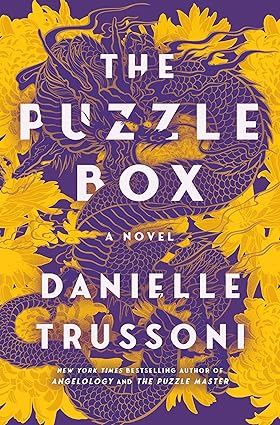
Book Review: The Puzzle Box by Danielle Trussoni

Cover art for The Puzzle Box by Danielle Trussoni

The Puzzle Box by Danielle Trussoni

Random House, 2024

ISBN: 9780593595321

Available: Hardcover, Kindle edition

Buy: Bookshop.org  |  Amazon.com


Part mystery, part puzzle, and all thrills, The Puzzle Box is a knockout.  For all those that loved The Da Vinci Code, this one’s for you.  With maddening puzzles, a genius as the protagonist, and a wild pursuit around the country of Japan, it’s just as good, and in some ways, better.


The lead, Mike Brink, is a mathematical genius with an eidetic memory, who gained his ability after a brain injury.  It’s called “acquired savant syndrome”, and it’s a real thing.  Mike is contacted by the Emperor of Japan for help in solving a sacred puzzle box that has bedeviled the imperial family for centuries.  Inside may be a secret important to the future of Japan as a nation.  The problem is that the puzzle box is not only difficult, it’s lethal.  If Mike makes a mistake opening it, he can’t try again: he won’t be around for another attempt.


What makes this a great story?  The pace is frenetic: it never slows a whit, right up to the end.  The author does an outstanding job of incorporating the history of  Japanese emperors, shoguns and samurai into the story.  The book’s setting, with ancient shrines, forgotten buildings, and snow-covered bamboo forests, is the perfect backdrop for a treasure hunt, much better than just using a series of cities, as in The Da Vinci Code.


The pursuit angle adds urgency to the pacing, as the Emperor isn’t the only one interested in the puzzle box contents.  Artificial intelligence is a big part of the chase, and the story credibly shows how AI can easily be more dangerous than any mortal element in our technology-enslaved world.  A cautionary tale, perhaps?  As for the puzzles… it’s more than the puzzle box itself:  that’s just the start of the clues that lead Brink and his cohorts across Japan, racing to beat the clock.  There is a window of time that the puzzle can be solved in, which helps drive the book’s pacing even faster.  The puzzle box itself doesn’t do anything magic, but it’s just as dangerous as the Lemarchand Configuration from the Hellraiser series.  Mistakes opening the box (and some of the other puzzles) can lead to amputated digits, poisoning, and more.  The puzzles are the perfect backbone to build one hell of a thrill ride on, and The Puzzle Box is all of that, and more.


What more do you really need to know?  The chances of readers not liking this book are approximately zero. It should take the country by storm the way The Da Vinci Code did…and that’s the BOTTOM LINE!  Highly recommended.


Reviewed by Murray Samuelson