Home » Posts tagged "short story collection"

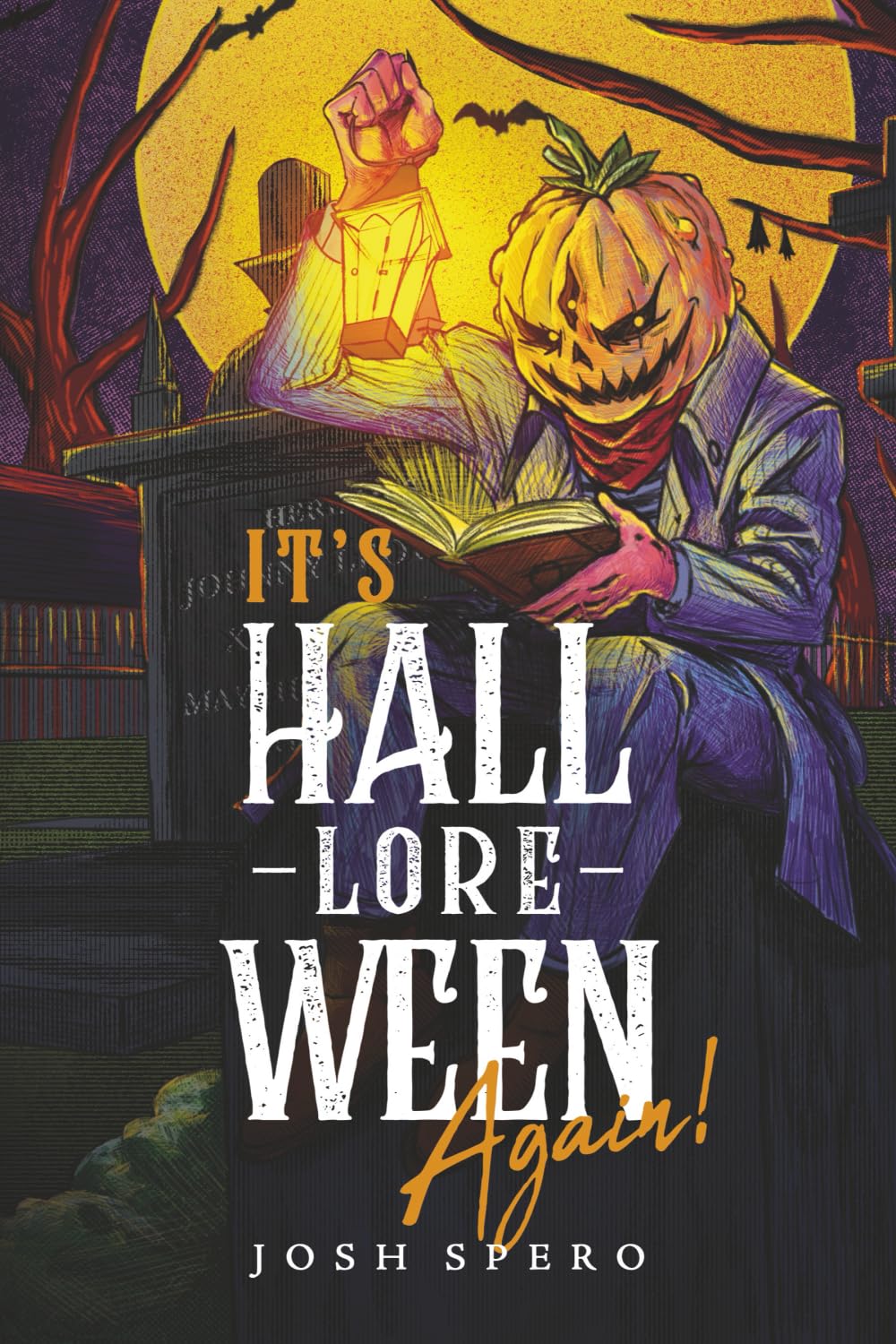
Book Review: It’s Hall-Lore-Ween Again! by Josh Spero, illustrated by TT Hernandez and Aldo Avilar

It’s Hall-Lore-Ween Again! by Josh Spero, illustrated by TT Hernandez and Aldo Avilar

Castle Bridge Media, 2025

ISBN: 9798991785570

Available: Paperback, Kindle edition

Buy: Bookshop.orgAmazon.com


Josh Spero has taken the winning formula from Hall-Lore-Ween, his first collection of spooky stories for kids, and improved it for the sequel.  Like the first, this one features short tales, poems, and illustrations.  This time there are fewer tales, they are longer, and they are oriented towards a slightly older audience.  The first one worked well for roughly grades 1-3, but this one feels like it would be a better fit for grades 3-6.  Most important, it has all the charm and whimsy of the first one.


The book consists of three tales and six poems, slotted into 171 pages.  The story length is significantly increased this time, which allows for greater character development.  Similar to the first book, the stories are spook stories for a young audience, and they again rely on universal themes, such as love, loyalty, righting a wrong, and so on, to provide tales with a bit of creep, usually with an uplifting ending.  Let’s take a look at what’s under the hood.


“The Kings of Halloween”:  The story establishes the tone right away. This is more for the pre-teen set, as part of the tale revolves around the classic nerdy misfits getting bullied at school by the “cool” kids.  As for revenge, the downtrodden will get it– but in a fun, monster-filled fashion, with no real harm done to anyone in the end, except for maybe a few shattered egos.  This one illustrates the style of the stories well: all the elements of Halloween are present, but in a fun, non-threatening fashion.


“The Jamboree”:  A ghostly romance of sorts between the living and the dead, it’s a charming, romantic, and melancholy tale all rolled into one, with a hint of tragedy tossed in for good measure.  It’s an extremely engrossing story that covers all the bases, and should be a guaranteed hit with pre-teen girls.  It’s the longest, and probably the best yarn in the book.


“In the Dead of Night”: This one is just fun, loose silliness with zombies, and an ironic explanation for the undead. It’s guaranteed to make the reader chuckle at the end, and it ends the book on a happy, uplifting note.


My only complaint with this book is the same as the last one: more illustrations please!  There is still only one illustration per story, I would really like to see two or three.  It’s a book for younger readers (and overgrown kids like me), and a few more illustrations would really appeal to the likely reader base.  There are some good sketches in between each story showing Jacko, who is kind of the book mascot/narrator. but more of them based around the story should be included.


My bottom line: I liked this even more than the first one, which I was quite fond of.  Even if readers don’t find it to be better than the first, there is no way they will find it to be a downgrade from the prior book.  Definitely recommended for good, safe, family-friendly Halloween fun.  If Disney had decided to do Halloween films back in their heyday, this is probably the style they would have gone with.


Reviewed by Murray Samuelson
Graphic Novel Review: Lovesickness: Junji Ito Story Collection by Junji Ito

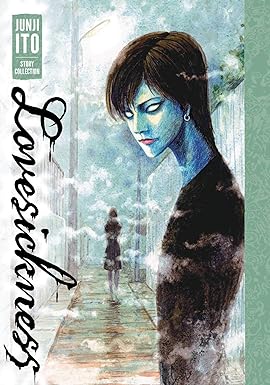
Cover art for Lovesickness: Junji Ito Story Collection by Junji Ito


Lovesickness: Junji Ito Story Collection by Junji Ito

Viz Media, 2021

ISBN: 9781974719846

Available:  Hardcover, Kindle edition

Buy: Bookshop.orgAmazon.com


In Lovesickness, originally published in 1996 and told in 5 parts, Ryusuke Fukuda and his parents move back to the town of Nazumi after his father accepts a job there. The story opens with a teenage girl approaching the crossroads of an empty street where a man is emerging from the fog. She quickly places her notebook over her face and asks for a fortune. The older man responds and they part ways. When the man meets his family at the Nazumi train station, it is revealed that he is Ryusuke’s father. He relates the story to his wife and son, the latter shaken by the chance meeting.


When he starts at school the next day, he is greeted by an old friend, Midori. Eventually the topic of rumors comes up regarding teenage girls committing suicide after encountering a mysterious handsome young man. Ryusuke, in an attempt to calm his own guilty conscience when he reveals a terrible fortune he gave to a woman in distress, which led to a grisly suicide, hunts for the shadowy figure delivering his own tragic fortunes to innocent strangers at the crossroads.


The artwork in Lovesickness is probably some of my favorite in Ito’s work. The effect of the fog and shadows is excellent, and the body horror is fantastic. The handsome stranger is eerily beautiful. The character design reminds me of Fukusuke from the visual kei band Metronome.


Four other stories are included in this volume. “The Strange Hikizuri Siblings,” told in two parts, are a strange family, often at odds with each other while still trying to support each other the best they know how… to a degree. The first story, “Narumi’s Boyfriend”, shows the cruelty of the siblings and how they all take part in driving Kotani, the titular boyfriend, albeit in a forced relationship, to madness. In “The Séance”, we see family power dynamics play out in the worst possible way, with the two eldest brothers being just awful people.


The next story in the collection, “The Mansion of Phantom Pain”, relates the story of Kozeki, a young man employed to be a live-in caretaker for Yusuke, the son of a wealthy family. Yusuke’s condition is a strange phantom pain that extends beyond his normal body. A team of caretakers who can never leave the bricked up mansion manage the boy’s pain, day and night. When they start to experience their own maladies, and the death of Yusuke’s father, his mother still refuses to let them leave. Some of the caretakers slowly succumb to infections and hallucinations, but those remaining can’t leave, with the promise of the family’s wealth at stake, no matter how much Kozeki pleads for doctors.


Following that is “The Rib Woman”,  a cautionary tale of rib removal surgery and  obsession with the perfect figure. Yuki laments the lack of an hourglass figure like her friend Ruriko’s, and decides surgery is the best option. Throughout the story, Ruriko is tormented by strange and discordant music. One evening Yuki and her brother, who is also dating Ruriko, find the latter in agony on the sidewalk as she is trying to find the source of the song. They offer to help, and when they do find the source, they see a mysterious woman in the park playing a small instrument. She flees and leaves behind her instrument, which looks to be a large rib. After Yuki’s surgery, she too can hear the music. She also finds the woman and discovers there is more to the story than she believed. There is some deliciously good body horror in this one.


The final story in the collection is the inexplicable “Memories of Real Poop.” It’s the shortest chapter in this collection, at only four pages, but it’s memorable. I’ll just leave it at that. Highly recommended.


Reviewed by Lizzy Walker

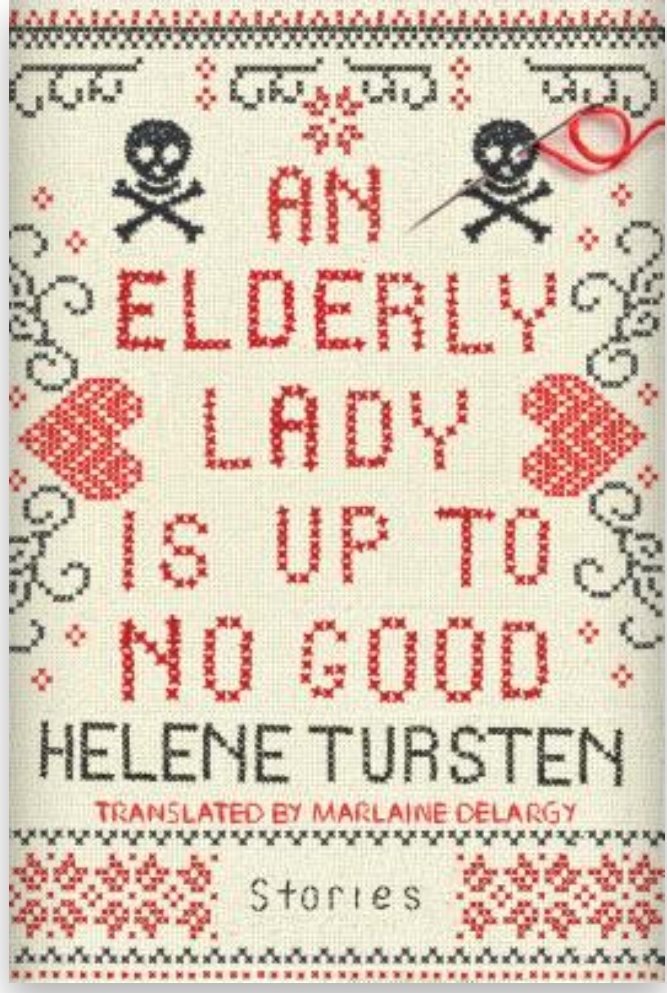
Book Review: An Elderly Lady is Up to No Good: Stories by Helene Tursten, translated from Swedish by Marlaine Delargy

An Elderly Lady is Up to No Good: Stories by Helene Tursten, translated from Swedish by Marlaine Delargy.

Soho Crime, 2018 (1st edition)

ISBN-13 ‎978-1641290111

Available: Hardcover, Kindle edition, audiobook, audio CD.

Buy:  Bookshop.org | Amazon.com


Maud is an eighty-eight year old woman with a contract that allows her to live rent-free in her apartment as long as she is alive. She lives alone, likes to travel, and likes a peaceful, orderly life… and she knows how to get away with murder.


Three of the five stories are previously published. In “An Elderly Lady Has Accomodation Problems”, Maud discovers her friendly new neighbor is scheming to get her large apartment by trying to convince her that her smaller ground floor apartment is a better choice for an elderly lady, with fatal results. In “An Elderly Lady on Her Travels” Maud sees a notice that her ex-fiance is marrying one of her former students, a porn actress half his age, and decides to vacation at the same spa, with unfortunate consequences for the future bride. In “An Elderly Lady at Christmastime” Maud decides to take care of the loud arguments upstairs that are disrupting her peace by setting up an accident for the abusive husband. The last two stories are different perspectives on the same events, from a building resident and a police detective. Maud calls the police after discovering the dead body of a silver thief.


Maud is a sharp and canny elderly woman unafraid to use people’s perceptions of older women to influence the way they think of her: better for people to think she is dotty and deaf than a murderer. But she has no problem eliminating obstacles with premeditation and/or extreme violence. These aren’t murder mysteries, they are simply enjoyable stories where you can’t help being on the criminal’s side.


Reviewed by Kirsten Kowalewski