 After deciding against being a ballerina, an ichthyologist, and a famous singer, Wednesday Lee Friday decided to become a novelist just before starting kindergarten. Her books include A Stabbing for Sadie (Crossroad Press 2014), The Cat’s Apprentice (StoneGarden.net Publishing 2008), Kiss Me Like You Love Me (Crossroad Press 2013), and The Finster Effect (Crossroad Press 2012). Her short fiction has been published in a variety of magazines and anthologies. She currently lives in Ann Arbor, Michigan with some carnivorous plants, a few cats, and her husband. She is a very busy woman of horror!
1.) Can you give our readers a brief introduction?
Hi readers! I am Wednesday Lee Friday, author of A Stabbing for Sadie, Kiss Me Like You Love Me, and The Finster Effect in addition to a bunch of wild short stories. I’m also a TV and movie reviewer, a sex writer, and the managing editor of Under the Bed Magazine, a horror fiction monthly. I’ve studied theatre and broadcasting and have worked as everything from a reptile wrangler to a phonesex operator to a manager at a now defunct video store chain (almost rhymes with Lackluster). Mostly though, I love horror.
2. Why do you write horror? What draws you to the genre?
The horror genre is about exploring our limitations as humans and discovering what, if anything, could drive us to do things well outside out established morality. Some people insist that there must be a supernatural element in horror, but I couldn’t disagree more. Horror is in the everyday things that haunt us with their impending possibility. Horror is what turns us against our fellow humans out of fear and desperation. Horror is in every act of violence, every lie, every glare from a stranger, every wish that some annoying fuckwit would get hit by a truck just so we don’t have to deal with them anymore. Horror is all around us. Horror writers just want to make sure you notice.
3. Can you describe your writing style or the tone you prefer to set for your stories?
I’m a firm believer in first-person narration. To my mind, it’s the best route for intimacy, immediacy, and understanding. I write horror with the desire to help people get their heads around the unfathomable. Kiss Me Like You Love Me follows a very damaged man as he commits deplorable acts of violence on truly innocent people. Readers have reported being extremely uncomfortable by experiencing the killer’s point-of view—that it makes them feel complicit in his deeds. This perspective also makes the reader watch helplessly as the killer repeats his pattern over and over.
4. Who are some of your influences? Are there any women authors who have particularly inspired you to write?
I confess, a lot of my favorite horror writers are fellas. Stephen King, Jack Ketchum, Christopher Moore are my big three. But I’ve been influenced by plenty of ladies: most notably Shirley Jackson, Mary Shelley, and the great Margaret Atwood. I know Atwood isn’t typically called a horror writer, but her books scare the hell out of me. The Handmaid’s Tale gave me nightmares for years afterward. I’m still depressed over the end of Maddaddam. I’m continually amazed at how Atwood uses such lyrical, beautiful prose even as she’s describing terrible people and horrific brutality.
5. What authors do you like to read? Any Recommendations?
I read a good one by Kate Jonez recently: Candy House. Amy Grech also has a splendid collection called Blanket of White. I enjoyed a collection recently by Antoinette Bergin called Bedtime Stories for Children You Hate. I read those Hunger Games books recently. Those should probably be called horror books, especially given the ending. Yeesh!
6. Where can readers find your work?
My website is a great place to catch up with all my insidious deeds. In addition to Amazon and Smashwords, my books are also available from Macabre Ink Digital and Crossroads Press.
Thanks so much for letting me be a part of Women in Horror month.
Interested in learning more? Visit Wednesday Lee Friday’s Amazon author page, her Smashwords page, or the website for Under The Bed, the online horror fiction magazine she edits. And check out this incredibly awesome nonfiction piece on point of view and how it can make or break a story– something she mentioned briefly above.
 Author Sumiko Saulson has compiled a great resource,
 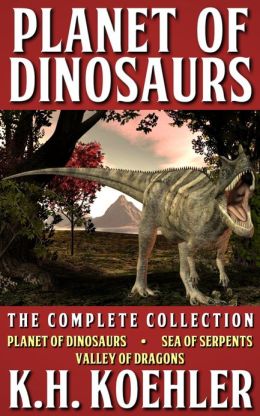 Karen H. Koehler is a versatile writer who has written everything from kaiju novels to paranormal-tinged steampunk and noir. She is the author of the stand alone novels Scarabus (KHP 2002), Raiju: The Kaiju Hunter (K.H. Koehler Books 2010), Black Jack Derringer: The Complete Collection (K.H. Koehler Books 2011), and Tales for 3 o”Clock in the Morning (K.H. Koehler Books 2012). She has also written several series, including The Blackburn and Scarletti Mysteries and the Slayer trilogy (both from KHP) , the Sasha Strange Chronicles, the Horrorotica Collection, the Nick Englebrecht books, and the Mrs. McGillicuddy Mysteries (all from K.H. Koehler Books), and the Anti-Heroes serial, written with Louise Bohmer (Anti-Heroes Press, 2013) She is the owner of K.H. Koehler Books. Her short work has appeared in the Bram-Stoker winning anthology Demons, edited by John Skipp, among other places.



Follow Us!