Home » Posts tagged "interview" (Page 7)

Women in Horror Month: David Simms Interviews Lauren Oliver


And now, for Women in Horror Month,  reviewer David Simms interviews Lauren Oliver.       Lauren  is the author of many YA novels, including the Delirium trilogy, Before I Fall,  and Panic (soon to be a movie). She has also written for adults (Rooms) and children( The Spindlers and Liesl & Po). Her newest book, the YA thriller Vanishing Girls, will be released in March of 2015.
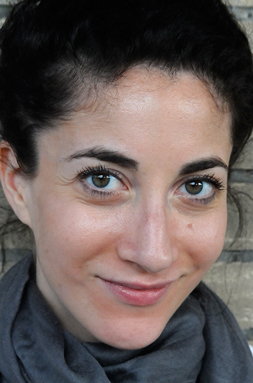
Lauren enjoys reading, cooking, traveling, dancing, running, and making up weird songs. She divides her time between Brooklyn, upstate New York, and various hotel rooms.


Dave: In Vanishing Girls,  mental health is a major issue.  Thank you for delving into this. As a special education teacher/therapist for teens, I don’t see enough writers tackling it. Do you think it’s something teens (both sexes) need to be aware of?

Lauren: Well, yes, sure–I think everyone of almost every age should be educated about various kinds of mental illnesses and, more generally speaking, about the diversity of human experience. It’s funny, I never set out to write about mental health issues or about “difficult” topics; I simply write what I know. And I know people with mental health issues, and addiction disorders, etc. It’s part of the human condition.


Dave: Following this, most writers I’ve met, from the biggest in the world down to the scribblers and wishers, have demons they have battled. You really hit on some tough points for teens. Do you feel that embracing your past helps you as a writer and subsequently helps your readers?

Lauren: Yes, absolutely–writers are always on some level writing about their own experiences, things they’ve known, perceived, thought about, dreamed of. The same is true of me. I don’t consciously choose to broach difficult topics or to show teens struggling with difficult scenarios; that’s a reflection of my memories and also my understanding of the emotional content of adolescence, how tough and alienating it can be.


Dave: At a major conference recently, I listened to a panel of “adult” writers who are jumping into the YA fray. They were saying that they can knock out a YA novel in full within 6 weeks.  As a published YA author myself, I was frustrated to see YA treated dismissively. Your take?

Lauren: Well, I mean, I don’t know the context of that comment; YA books can be shorter than adult books, which obviously influences how long they take to write. But I would venture to wonder whether the books that authors brag about spending less time and attention on become successful efforts, whether they attract critical praise or the devotion and care of readers? I mean, anyone can write a kind of so-so book, for any audience, in any amount of time. Good books require attention and editing and long term care, for the most part. Then again, some writers are simply fast.


Dave: The sisters in Vanishing Girls display the fragility of sibling relationships and rivalry as well as family dynamics. Do you receive a lot of communication from readers who are seeking guidance?
Lauren: I’ve always received a lot of messages from people who empathize with my books and their main characters, yes. Some of them are seeking guidance and direction but most of them just want to reach out–they find the guidance, I think, in the books themselves.


Dave: The amusement park setting of Vanishing Girls is just great. Is this something straight out of your past?

Lauren: Ha, no. I wish! I was a lifeguard in high school. But I like amusement parks as much as the next girl.


Dave: What are your plans for your next book? Any issues you’d love to tackle or think need to be that haven’t been brought to the spotlight? Is there anything off limits to you?

Lauren: I don’t approach books by identifying issues I want to tackle, although all of my books do end up tackling some heavy issues because that has been my experience of the world and one of the purposes, I think, of writing books in the first place. My next standalone YA, Broken Things, will therefore deal with guilt and criminalization and also with the unhealthy dynamics that can sometimes develop between female friends–but the idea came to me not through its themes but because I became inspired by a real-life criminal case.


Dave:  In terms of research, planning, etc., what’s your favorite part of the writing process before sitting down to immerse yourself? What helps you write?
Lauren: Oh, the writing always comes first, the planning and research later, even though I know that sounds weird. I always “write my way in,” meaning that I just sit down for 15-20K words and feel my way through the language into the characters and the world. Then I sit down and think critically about an outline, about the central conflicts and antagonists, etc.


Dave: As a psychologist and therapist/teacher, I often ask other professionals how their childhood impacted career choices and how they go about helping the next generation. Teens today face many new issues and new slants on the ones we grappled with. What role do you believe teachers/guidance counselors have today?
Lauren: That’s a tremendously difficult question for me to answer. I can’t imagine the kind of pressures kids are facing today, but I can venture to guess that they would need the influence of guidance, care, and attention now more than ever, and in particular that they would find great value in face-to-face communication and conversation.


Dave:  Do you meet your readers mostly via social media, school/library/bookstore visits, or at conventions?

Lauren: All of the above!


Dave: What’s the best piece of writing advice you’ve ever received and who gave it?

Lauren: My dad–he taught me to write every day.


Dave: What/who are your influences, past and present? When did you know you had to write for a living?

Lauren: I’ve always known I had to write, but I never at any point thought it had to be “for a living” (either then or now!). At a certain point I started writing novels, and at a certain point after that I decided to try and get them published, and at a certain point after that they did get published. But the publishing is only incidentally related to my great love of writing, in a way, which is an intrinsic part of who I am. As for influences, there are simply too many to list.


Dave: Monster Librarian is spotlighting women authors next month (and should EVERY month). I see more females reading in my schools than males, yet while when I was growing up, the trend appeared to be reversed. Why do you think this might be happening?

Lauren: That’s very surprising, actually–when I was a kid, I felt the girls read more than the boys, but then again, that is likely because my sample was quite skewed. In any case, I’m thrilled to hear that girls as well as boys are reading and hope that the continued efflorescence of fabulous literature for teens and children will just encourage more and more kids to read.


Thank you, Lauren, for answering our questions!


A Look Back: The Monster Librarian Interview With Guy N. Smith

I didn’t know this, but I learned over at the Facebook page for Too Much Horror Fiction that November 21 was Guy N. Smith’s birthday when Will Errickson posted some photos of the covers of Smith’s Crabs books. These quality killer animal books were particular favorites of Dylan’s, although he was a fan of pretty much everything Smith had ever written, and a few of them number among his earliest reviews, in the days before people thought we were cool enough to request us to review their work, and he was going through his own collection (if you’d like to read them, here are links to his reviews of Crabs’ Moon, The Origin of the Crabs, and Crabs: The Human Sacrifice. I even apparently mentioned the Crabs books earlier this year when I wrote about clearing out our bookshelves, and him insisting we hang on to everything Guy N Smith. Seeing the covers Will posted made me smile in a way that killer crabs never have before.

Dylan, as the Monster Librarian, actually interviewed Guy N. Smith several years ago, in July of 2009, when Smith’s novel Maneater was coming out.  It was really exciting for Dylan, as it can be when you are a real fan of an author. The interview is posted here, in the depths of the main site.  We have actually interviewed some pretty interesting people along the way!  I am reposting the entire thing below, too, to make it more accessible to you.

And a happy belated birthday to you, Mr. Smith.

Interview with Guy N. Smith

with the Monster Librarian


Guy N. Smith is an icon of horror fiction. He has been writing horror fiction for over 30 years, producing a wide range of monsters to haunt his readers.  His latest take of terror is Maneater.


ML: Could you tell us a little about yourself?

GNS: I was born in the small village of Hopwas, Staffordshire, where I lived until 1977.  My mother was historical author E.M. Weale and she encouraged me to write from an early age.  I was first published at the age of 12 in a local newspaper and this led to 56 short stories (1952-57) some of which were novellas and were serialised.


In 1972 I married Jean and we had 4 children.  1977 saw us move to Black Hill, a remote area on the Shropshire/Welsh border which is still our home.


I have written around 116 books since 1974, mostly horror but also mysteries, childrens books,  westerns and non-fiction.  Primarily though, I have always been a journalist and have published around 3,000 articles on shooting, deer stalking , big-game hunting etc.  For the last 10 years I have been Gun Editor of “The Countryman’s Weekly” with a deadline of 5 features per week, mostly technical on guns, ammunition etc.  I also have to review and test rifles, shotguns etc.


ML: Did you initially want to write horror?  How did you get started writing?

GNS: My early short stories featured some horror, SF, pirates, westerns detective etc.  I began writing for the sporting press in 1960 which was to be the mainstay of my output.  However, in 1972 I submitted a story to the “London Mystery Magazine” and this led to a further 17 being published in this quarterly anthology up until its demise in 1982.  So, in between my regular journalism, I wrote short fiction.


ML: Did you read horror yourself?  Do you read it now?  What would you say has influenced your writing?

GNS: I have read much of the classic horror, Lovecraft, Stoker etc,  and I have my own collection of ‘Weird Tales.’  If I read any horror now it is usually pre-1960.  Some contemporary horror writers have accused me of emulating them but this is certainly not the case as I have never read their work.  In any case I was published prior to their books.


As already stated, my mother influenced my writing and my family have always encouraged me.


ML: You have been writing for 30 years.  How have writing and publishing changed in that time?  Do you think the changes have been good or bad for writers?

GNS: Writing and publishing have certainly changed since I started.  In the ‘good old days’ I wrote 40,000 word books and my publishers were encouraging me to turn out as many as possible.  The most I ever wrote in one year was 10.


Then things changed.  Basically, the market was saturated with numerous category publishers trying to ‘leap on the bandwagon.’  Everybody’s sales plummeted, publishers began to drop their horror lists and eventually the category market as a whole suffered.


Before the horror market collapsed my publishers at the time (Hamlyn Paperbacks) wanted bigger and more ‘complicate’ novels.  Instead of producing fast-paced fun horror I found myself having to write depressing psychological horror.  I was not happy with it but I continued until the horror genre virtually petered out.


I then diversified into children’s books, a tome of a western for Pinnacle, USA and various non-fiction.  We tried publishing for a year or two under our Black Hill Books ‘Bulldog’ and ‘Muffin’ imprints.  It was fairly successful but this was not the way I wanted to go.  So I abandoned fiction for 10 years and concentrated on my journalism and my second-hand mystery and westerns postal book business.  This is now very successful and expanding all the time.


ML: When you are writing, what is your process for putting together a story?  What type of environment do you like to write in?  Do you need quiet, or play music, for example.

GNS: For every book I have a detailed synopsis broken up into chapters.  So, when I come to write it all the research is done, it is paced, and all I have to do is to sit down and write.  In the old days I could write a book comfortably in 4 weeks.  Nowadays my routine is different; the daytime hours are taken up with journalism, interspersed with my hobbies, and I write novels in the comfort of my armchair in the evenings, usually knocking out around 3,000 words at a session.  I do not need peace and quiet.  Often the television is on.  I can also write on trains or in the car when Jean is driving.  The environment is of no consequence to my work.


ML: You have written a number of series over the years – the Crabs series, the Sabat series, the Werewolf series.  Do you start off the series knowing where you story arc is going, or do you develop each book on its own, as a stand alone title?

GNS: Sabat was commissioned as a series by New English Library.  During the 1970’s series were selling well but by 1982 when my Sabats 1-4 were published they were going out of fashion.  Had they been published a few years earlier then we should probably have reached anything from nos 30-40.


The Werewolf trilogy was certainly not intended as such.  I was simply delighted to have the first one, also my first book, commissioned.  The same applies to the Crabs.  I never thought ‘Night of the Crabs’ would be anything other than a one-off.  In the event it spawned five sequels, many short stories and a graphic novel.


ML: You have written about killer bats, crabs and other creatures over the years.  What inspired these “nature run amok” stories?”

GNS:  “Nature–run–amok” stories come naturally to me.  I have lived in the countryside all my life and understand wildlife.  My latest novel “Maneater” (Severn House) is about a wounded leopard terrorising the area around my home.  It cannot hunt its natural prey so it turns to the easy option – humans.  It could just become a chilling reality.


In ‘Maneater’ the hero is Gordon Hall who featured in all three of my early werewolf novels.  I have brought him back to the scene of his former adventures, now a man in his late sixties who has spent the intervening years as a professional hunter in Africa.  This is specially for my original fans.


ML: The Crabs series has developed a following over the years.  Were you surprised by the success of the series?

GNS: Yes, I was surprised by the success of the Crabs series.  It was also filmed in the 1980’s as ‘Island Claws.’  Best sellers are rare, you can never forecast how a book will be received.  This one came at the right time, that record hot summer of 1976 when ‘beach reads’ were in demand.


ML: You have written about werewolves, vampires, the occult, and nature run amok.  Of all the monsters and demonic forces you have written about, which do you find to be the scariest?  What kinds of stories are the most fun for you to write?

GNS: ‘Maneater’ is the book I find the scariest because I feel that one day it will happen.  I have often been accused of prophetic writing.  In 1980 I wrote ‘Caracal’ (a lynx-type creature).  A month after it was published a Big Cat was sighted in Wales, one of the first of a multitude of such feline sightings.  My novel was mentioned in the local press and our local bookshop sold 100 copies as a result!


Pulp fiction is the most fun to write.  I often think that I was born too late and maybe I could have had a field day in the many pulps of the thirties.


ML: Your book ‘Writing Horror Fiction’ was published in 1996.  Some time has passed since then.  What additional counsel would you give to those horror authors just starting out?

GNS: Many aspiring writers seek my advice.  Much of what I wrote in ‘Writing Horror Fiction’ is still applicable except that the market has changed.  The only advice I can give is to keep on writing, don’t give up.  I forecast that the horror genre will be BIG again one day, and maybe sooner that you think.


Whilst I am always willing to advise budding authors, I simply do not have time to read their manuscripts.


ML: What stories are you working on now?  What new releases can we expect from Guy N. Smith?

GNS: I have ideas on file but today publishers are ruled by accountants.  If your last book does not sell as hoped then they will be reluctant to publish your next.  This also applies to authors such as myself who have a track record that cannot be disputed.  It is what you are achieving now, that counts.  ‘Maneater’ has had some excellent reviews so I am hopeful that sales figures will be on target for another book.


ML: Is there anything in particular you would like librarians and readers to know about you?

GNS: Fans are very important to me.  When possible I like to meet them personally.  For many years now I have held my Fan Club Convention at my home in Shropshire.  This gives fans an opportunity to meet me in my own surroundings and see where all the books have originated.  All except the first six were written here.


This year the Convention will be held on Sunday, September 6th.  We start at 1pm and the event usually continues through to the evening.  There will be an on-going buffet and drinks.  Fans will have the opportunity to discuss my books with me or talk about their won writing.  There will be the usual auction, a few GNS rarities, going under the hammer.  Then there is the GNS bookstore to browse, maybe finding that elusive title for which you have been searching for years – and probably much cheaper than one found on e-bay!


For further information visit:  www.guynsmith.com

Maurice Sendak on Childhood and the Power of Story

This is a wonderful short video interview of Maurice Sendak on childhood and children’s stories. While he wasn’t specifically addressing the value of scary stories for children, he says, and I think this is very true,

I think there’s something barbaric in children and it’s missing in lots of books for them because we don’t like to think of it. We want them to be happy.

My parents were immigrants, and they didn’t know they should clean the stories up for us. We heard horrible horrible stories and we absolutely loved them.

We don’t like to think it, or remember it ourselves, but childhood can be a frightening time. And stories help us all, including children, through frightening times. Take five minutes out of your day to listen to what Mr. Sendak has to say. It will be worth your while.