Home » Posts tagged "horror fiction" (Page 54)

Book Review: Broken Lands by Jonathan Maberry

Broken Lands by Jonathan Maberry

Simon and Schuster, 2018

ISBN-13: 978-1534406377

Available: Hardcover, Kindle edition, audiobook


I will be honest, I am not a fan of zombie fiction.  As a reviewer, I am putting my feelings about the genre as a whole to the side to review Broken Lands because it is on the final ballot for the 2018 Bram Stoker Award for Superior Achievement in a Young Adult Novel. I know Jonathan Maberry is a talented author whose work in both the adult and young adult categories has been judged as outstanding, not just in the community of people who write horror fiction or love zombie fiction but by other reviewers, including librarians (and librarians are not an easy audience to impress).

Broken Lands is the first book in a follow-up series to Maberry’s YA series Rot and Ruin. That series introduced backstory on how and why the apocalypse happened and introduced the teenage Benny Imura as a main character. Previous to writing the Rot and Ruin books, Maberry wrote adult zombie fiction starring a special ops soldier, Joe Ledger. I have not read either the Rot and Ruin books or the Joe Ledger books, so Broken Lands is my introduction to Benny and his friends and to Joe. Benny and Joe each have their own, narratives, which alternate with a third narrative involving Gutsy Gomez, a teenage girl who is uncovering a disturbing secret about her town and its involvement with a secret military base nearby (For purposes of representation, Gutsy is essentially uninterested in sex or romance, although she is described as bi, and she has a kiss with Alice, a lesbian).

The book starts out strong, with an abrupt hook that introduces and characterizes Gutsy and the world she’s living in with just a few words, enough to make even a reluctant reader curious enough to turn the page. Her story mainly takes place in and around New Alamo, a town of indeterminate size in New Mexico that was formerly an internment camp for undocumented immigrants. Maberry takes no time to ratchet up the suspense and action. Short sentences and plenty of white space push the reader on through not just Gutsy’s actions but her thought processes as she observes the cemetery. I wasn’t wild about Maberry’s characterization of grief as something that you work your way through and eventually come out of healed, but his portrayal of Gutsy’s grieving, and how horrific it is to have the person you are grieving come back from the dead to attack you, I thought was spot on. She’s a girl who thinks and acts and doesn’t slow down. Her friends, Alethea and Spider, are loyal and supportive, and secondary characters are developed enough for the reader to care about them, at least a little.

Then we switch to Benny and his friends, in Reclamation, California, a town of about 16,000 people that they helped to defend and rebuild. Reclamation has managed to connect with eight other towns in California and the new American government being established in Asheville, North Carolina, but Asheville has suddenly gone silent, and Joe Ledger, who was on his way from Reclamation to Asheville by helicopter, has disappeared. Benny and his friends decide to steal six “quads” (small four-wheeled vehicles), from the town, tie up the guards on watch duty, and go off to search for Ledger and then on to Asheville. Experienced, tough, and with varying levels of skill in combat, Benny and five friends take off across unknown country. Teenagers do a lot of unwise things, but this choice, for me, went beyond normal levels of maladaptive judgment. I am not a young adult, though: maybe actual teenagers would find this plausible.

My guess is that Maberry wanted us to see what the wasteland beyond California looked like and to get a preview of the zombie hordes that is stomach-dropping dreadful. There is a lot of zombie fighting, including a battle with a zombie silverback gorilla and an absolutely horrific experience in a state prison where the locked-up prisoners, all zombies, are in starvation mode. There’s also observation of their bizarre surroundings, including mutations from chemical spills, bioweapons, and radioactivity, and growing dread as they witness intelligent zombies directing endless hordes of shambling horrors. While Asheville is in the South, Benny and his friends find themselves driven further and further south, towards the Mexican border, because the radioactivity, mutations, and zombies all have to be avoided. And because there are six teenagers in various states of romantic involvement, there’s also teenage drama. It could be that the character development of the teenage characters all occured in the previous series, but aside from Benny (the point of view character) and Chong (who is holding off zombification with medication only available in Asheville) the characters sort of blended together for me.

Finally, we have a storyline where a hunter tracks down Joe Ledger, whose helicopter has crashed, and they turn out to be former comrades. They decide to go to New Alamo to hunt for a weapons cache and then head to Asheville together. I enjoyed the Joe Ledger storyline. I could tell that Maberry was comfortable writing Ledger and it was interesting to watch the relationship between Ledger and his new partner.

All three sets of characters collide as a horde of  hundreds of zombies overtake and burn down the secret military base where scientists have been running experiments on the citizens of New Alamo (because apparently it’s okay to conduct racist, fatal scientific experiments on undocumented immigrants) and head for the walls of the town. Benny and three of his friends sneak in through a tunnel infested with zombies, killing everyone in their path until they reach the interior. Gutsy and her friends and neighbors (about ten of them are named) defend the walls. Ledger wades straight into the middle of the horde and starts cutting zombies down. The hunter, who turns out to be Benny’s older half-brother Sam, uses a sniper rifle to take down zombies one at a time. This small group of people who have not coordinated in any way defeat and kill all the zombies, including any bitten or killed townspeople. Gutsy then discovers the director of the hospital and the leader of the scientists from the military base attempting to escape with the records of their experiments, and stops them. The book ends with a shocking reveal which I can’t give away, but which will definitely send readers after the next book.

My overall impression is that Maberry does a great job creating suspense and action with a very economical use of words, and uses vivid language to describe the mutating, destroyed land that the characters must cross. The grave-robbing and scientific experimentation in New Alamo contributed to a rather heavy-handed critique on immigration policy, but the introduction of Gutsy Gomez, whose experience of these was intensely personal, led it to be a very strong storyline. Here was a girl who put her grief on hold to deal with life-and-death issues and did what had to be done, even at great personal expense. Maberry certainly manages to instill a feeling of dread and horror with the zombie hordes and one-on-one battles, even those that are only implied (the final time Gutsy and her friends have to kill her already dead mother is not depicted, but it doesn’t have to be to get the emotional impact) and the human horror, of what military scientists were willing to do to innocent people, is appalling. It’s not for nothing that Maberry has a reputation as a gifted horror writer.

However, I felt that he depended far too much on his readers’ knowledge of backstory for characters from previous books. As someone who hasn’t read any of Maberry’s zombie books, I felt lost among the characters that carried over from his previous books. The transition between narratives was often clunky, with Maberry spending a long time in one narrative, then cutting out to a different one that I had lost track of, and switching time periods back and forth. I would have liked to see more of a focus on Gutsy’s story (and maybe Ledger’s). Based on the sudden ending, I assume that there is going to be a second book, and perhaps a better choice would have been to focus on Gutsy in this book and Benny in the next (Rick Riordan did this successfully in his Heroes of Olympus books, in which the first book focuses on a newly introduced character and the second switches to a character from the previous series). There is good action and suspense, some pretty raw horror and violence, and some compelling writing and description. Readers of Maberry’s previous books will probably like this one, but it’s not the one to start with, and I suspect it’s not nearly his best work.  Recommended for public libraries, high school library media centers, readers of zombie fiction, readers who enjoyed the Rot and Ruin books, and for Jonathan Maberry fans.


Editor’s note: Broken Lands is on the final ballot for the 2018 Bram Stoker Awards in the category of Superior Achievement in a Young Adult Novel.

Book Review: Inspection by Josh Malerman

Inspection by Josh Malerman

Del Rey, 2019

ISBN-13: 978-1524796990

Available: Hardcover, Kindle edition, audiobook


Hot on the heels of the biggest Netflix movie of all time, Bird Box, Josh Malerman is poised to continue his climb to stardom in this stellar new novel, a strange story that takes a left turn through the woods of Michigan instead of following a well-trodden road.

For anyone who has read him, Malerman a refreshing read because he eschews the normal, refusing  to follow formula: he entertains  readers. as well as forcing them to think. Bird Box, Malerman’s first novel, has been followed by Black Mad Wheel (music was the antagonist, allegedly), Goblin (a connected set of stories), and Unbury Carol (a western/horror/romance),

Inspection may remind some of 1984 or The Giver. The premise is that two towers exist in the forest, each just barely out of sight of the other. Within each, 26 students are raised from birth, given names of simply letters. The Alphabet Boys. The Letter Girls.  Neither is aware the other sex exists. The leaders of the experiment, D.A.D. and M.O.M., train their prodigies in several subjects, the arts, and more, honing the twelve-year-olds for mysterious lives.

The initial sections force the reader to push past the typical storytelling format, as the characters and setting require an intricate set up. Assigning each student only a letter for a name accomplishes both identity and sameness, the reason of which will reveal itself in layers. The schooling and activities impressed upon the students are mindbending and brutal: bizarre games and social events that twist in logic and morality.

J suspects something exists beyond the borders of his world when he sees a shadowy figure beyond a tree in the yard. It sends him on a journey that will alter him in ways he never thought possible, changing how he views his compartmentalized world. When a strange book lands on the students’ beds one day, one that reveals the truths about life outside of the school, the walls begin to crumble and terror of a new kind creeps into the students’ lives, one that could send them to “the corner,” a place from where no one has ever returned.

K embarks on a similar path, one that will bring her to a world she never knew existed.

Inspection will challenge readers. The result of Malerman’s story is a rewarding psychological journey that is guaranteed to garner him new readers and please his fans. His examination of the human condition, and of the “nature vs. nurture” debate, is relevant to the educational system and parenting today’s youth.

Finding a genre that fits this story will be a tough task, but one that should be determined by each reader. Inspection is destined to become one of the most talked about novels of 2019– and  it should be. Recommended.


Reviewed by Dave Simms

Musings: Introducing the Summer Scares Reading List

I am more than a little behind in getting information out to you all right now, but FINALLY I am at a place in my “gotta get it done” pile where I can share with you something I am pretty excited about. In fact, this is something I wanted to do years and years ago but could never really figure out how to execute it. Since Monster Librarian started, there have been huge changes in both the way HWA does things, how horror publishing works, and how seriously libraries take horror fiction. In 2006 (when we started reviewing) horror fiction and horror publishing was a pretty tiny community still communicating mainly through groups like Shocklines with independent presses that printed a lot of limited and collectible editions. Ebooks and self-publishing were just really getting their start and were the source of a lot of contention.

Dylan actually started  Monster Librarian during his internship for his MLS (for the uninitiated, that’s a master’s degree in library science) when he discovered that the other librarians working with him at the reference desk were familiar with Stephen King and… Stephen King, and neither knew or cared about most other contemporary horror. At the same time, I was sitting on a student choice awards nominating committee of school librarians who had neither a liking for or interest in horror or scary stories, this despite my being asked all the time “where are the scary books?” by kids. The fact that HWA now has a library committee, that major review publications now cover horror and scary stories and that there are major publishing imprints that now publish horror, that social media and sites like Book Riot exist and connect readers, writers, and publishers… this is huge. It makes Monster Librarian a very tiny fish now, but I am really proud that we have been here promoting horror for librarians and readers of horror and scary stories for all ages and have gotten to see and participate in this amazing growth and not just acceptance but celebration of the genre. I really wish Dylan was here to see this all happen.

And now, a press release on the beginnings of what I hope will be more than a one-time partnership: the Summer Scares reading program.

*************************

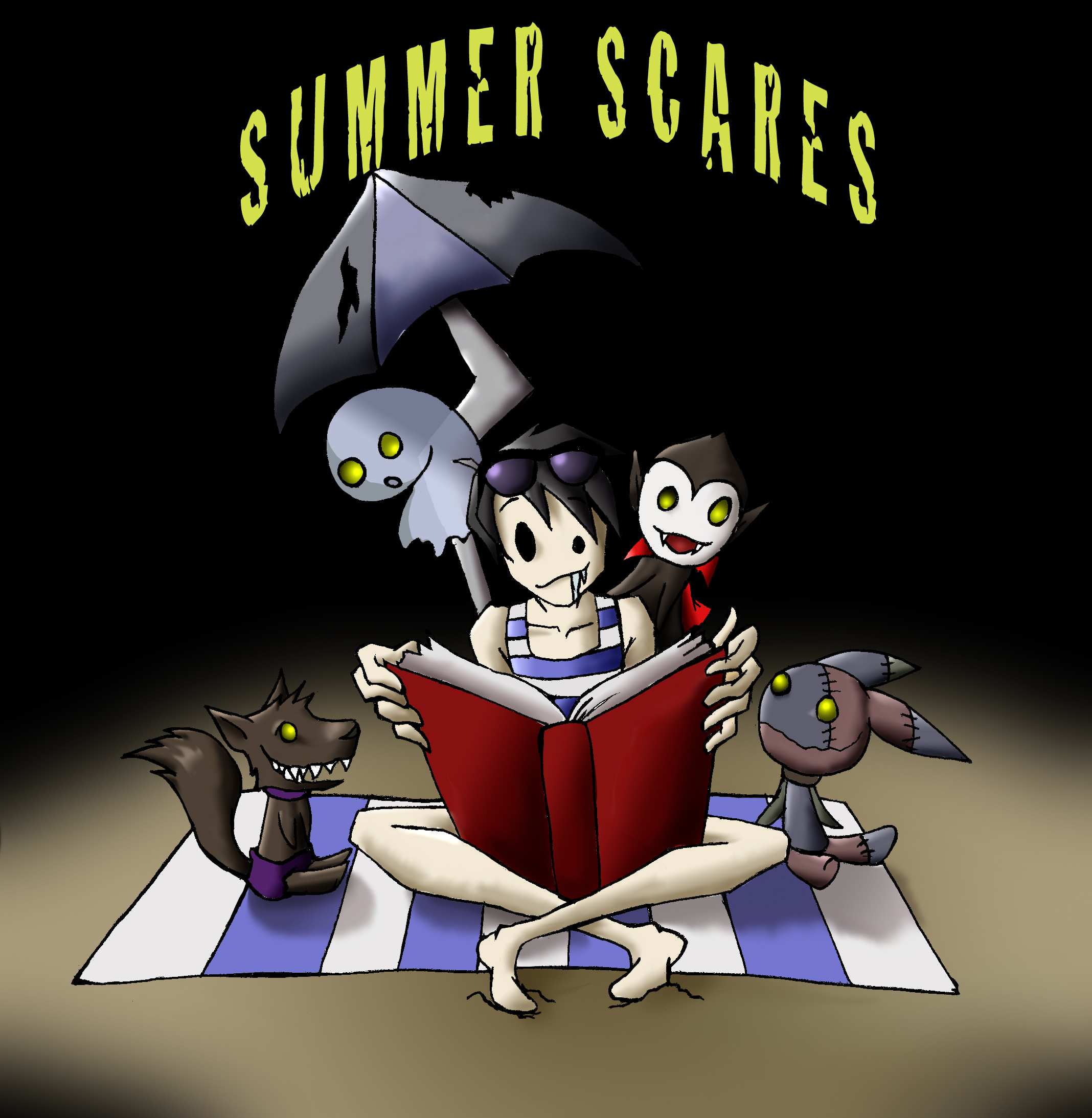
SUMMER SCARES FIRST ANNUAL READING LIST ANNOUNCED

In celebration of National Library Lover’s Day, the Horror Writers Association (HWA), in partnership with United for Libraries, Book Riot, and Library Journal/School Library Journal, is delighted to announce the first annual Summer Scares Reading List, which includes titles selected by a panel of authors and librarians and is designed to promote horror as a great reading option for all ages, during any time of the year.

Each year, three titles will be chosen in the Adult, Young Adult, and Middle Grade categories, and for 2019 they are:

ADULT

Mongrels by Stephen Graham Jones (William Morrow Paperbacks, 2017)

My Soul to Keep by Tananarive Due (Harper Voyager, 1998)

Earthworm Gods by Brian Keene (Deadite Press, 2012)

YOUNG ADULT

Rotters by Daniel Kraus (Ember, 2012)

Slasher Girls and Monster Boys, edited by April Genevieve Tucholke (Speak, 2016)

Devil and Winnie Flynn by Micol Ostow (Penguin Random House Publisher Services, 2015)

MIDDLE GRADE

Doll Bones Holly Black (Margaret K. McElderry Books, 2015)

Through the Woods by Emily Carroll (Margaret K. McElderry Books, 2014)

The Jumbies by Tracey Baptiste (Algonquin Young Readers, 2016)

The goal of the Summer Scares program is to introduce horror titles to school and public library workers in order to help them start conversations with readers that will extend beyond the books from each list and promote reading for years to come. Along with the annual list of recommended titles for readers of all ages, the Summer Scares committee will also release themed lists of even more “read-alike” titles for libraries to use when suggesting books to readers this summer and all year long. And, in order to help libraries forge stronger connections between books and readers, the Summer Scares committee will be working with both the recommended list authors and horror authors from all over the country, to provide free programming to libraries. From author visits (both in person and virtual) to book discussions to horror themed events, Summer Scares is focused on connecting horror creators with libraries and readers all year long.

The Horror Writers Association (HWA) will also be hosting special Library Day programming at its annual StokerCon event, which will be held May 9-12 in Grand Rapids, Michigan. Several of the authors from the Summer Scares reading list, as well as the committee members, will be in attendance. Authors and committee members will also be available throughout the year for on-site and/or remote appearances to libraries and schools to promote the Summer Scares program and discuss the use of horror fiction as a tool to increase readership and nurture a love of reading.

The Summer Scares program committee consists of award-winning author Grady Hendrix (We Sold Our Souls, Paperbacks from Hell), Becky Spratford (library consultant, author of The Readers Advisory Guide to Horror, 2nd Ed.), Carolyn Ciesla (library director, academic dean, book reviewer), Kiera Parrott (reviews director for Library Journal and School Library Journal), Kelly Jensen (editor, Book Riot, author of [Don’t] Call Me Crazy: 33 Voices Start the Conversation about Mental Health), and JG Faherty (HWA Library Program director, author of The Cure and Carnival of Fear).

The HWA is a non-profit organization of writers and publishing professionals, and the oldest organization dedicated to the horror/dark fiction genre. One of the HWA’s missions is to foster an appreciation of reading through extensive programming and partnerships with libraries, schools, and literacy-based organizations.

For more information about the Summer Scares reading program, including how to obtain promotional materials and schedule events with the authors/committee members, visit the HWA’s Libraries web page (www.horror.org/libraries), Becky Spratford’s Reader’s Advisory Horror Blog RA for All: Horror (http://raforallhorror.blogspot.com/), or the Book Riot, School Library Journal, Library Journal, or United for Libraries websites and social media sites.

You can also contact JG Faherty, Library Program Director (libraries@horror.org) or Becky Spratford, HWA Secretary (bspratford@hotmail.com).