Home » Posts tagged "H. P. Lovecraft" (Page 2)

Book Review: The Willows by Algernon Blackwood

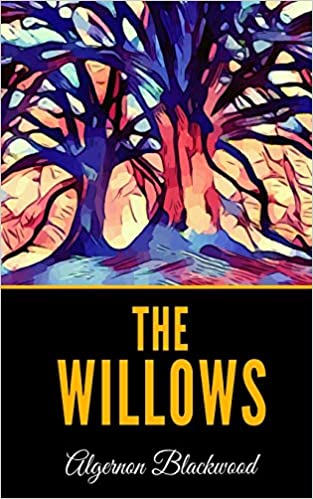
cover art for The Willows by Algernon Blackwood

Bookshop.org  |  Project GutenbergAmazon.com )

The Willows by Algernon Blackwood

ISBN-13 : 978-1081920890

Available: Hardcover, paperback, Kindle edition, audiobook, Project Gutenberg


Having just finished T. Kingfisher’s book The Hollow Places, I discovered in the afterword that she had been inspired by a novella by Algernon Blackwood titled The Willows, which was much admired by H.P. Lovecraft as an example of horror and weird fiction. The story follows the narrator and his traveling companion (referred to throughout as “the Swede”) as they journey down the Danube River, which is almost a character in the story. Having left the town of Pressburg during a rising tide, with the threat of a storm on the way, they are washed out of the main channel of the river and into a wilderness of islands, sandbanks, and swamp covered with willow bushes, a “separate little kingdom of wonder and magic… with everywhere unwritten warnings to trespassers.”

With the waters still rising and the winds blowing the two find an island large enough to camp on that they are sure they will not be washed away. The rising water, the shouting wind, the crumbling islands, and the masses of willows all together create a sense of unease and terror in the narrator, which he tries to dismiss by focusing on practical matters. He and his companion avoid speaking about their current situation, even when all they have to occupy themselves with is conversation. Alone, collecting driftwood for the fire, the narrator describes the willows as “utterly alien,” a vast army of “innumberable silver spears”. Although he suspects his companion shares his feelings of disquiet, the two men don’t speak about their unease. After their first night on the island, the narrator sees that the islands, covered in willows, have moved closer to their own, which is washing away. His companion has discovered that they cannot leave right away, though, because one of their steering paddles is missing, the second has been filed so it will break on usage, and there is now a hole in the bottom of their canoe, and believes the damage was done to make them victims of a sacrifice. The narrator, not wanting corroboration for his feelings of unease and fear, attempts to come up with logical explanations, but neither of the two can really believe them. Both men are terrified of their upcoming fate, but his companion advises him that it’s best to neither talk nor think of the willows who may be searching them out and hope that, in their insignificance, the creatures of the “beyond region” they have strayed into, will fail to find them.

A camping trip with a friend doesn’t sound like it would be ominous and terrifying, but Blackwood’s vivid descriptions of the natural world and the narrator’s disintegrating state of mind turns what seems at first like a river inlet filled with willow bushes that might be a good place to stay overnight, into an unnatural, dread-inducing enviroment. It’s creepy in the “I can’t believe these characters slept at all on the island” kind of way. You will never look at willows without seeing them as sinister again.

Blackwood’s descriptions of the willows as an “unearthly region” where the beings “have nothing to do with mankind” marks this story as an early work of weird fiction, and you can clearly see the influence on Lovecraft’s work. It’s easy to see why Blackwood is considered a master of the genre. Highly recommended.

Note: I read the Project Gutenberg edition of this novella, not the one pictured above.

Book Review: The New Annotated Lovecraft: Beyond Arkham edited with notes by Leslie S. Klinger

The New Annotated H. P. Lovecraft: Beyond Arkham edited with notes by Leslie S. Klinger

Liveright Publishing, 2019

ISBN-13: 978-1631492631

Available: Hardcover, Kindle edition


The New Annotated H. P. Lovecraft: Beyond Arkham is a handsome volume of the master’s short stories. This volume collects 25 of the prolific author’s stories, including such famous titles as “The Music of Erich Zann”, “Pickman’s Models”, “The Tomb”, and “The Horror at Red Hook”. It is a heavy book, and I would definitely recommend making sure you have a clean, clear table to read it on.

When you consider an annotated book, the most important thing is of course the annotations, or notes. These notes are printed in an appropriate and easily readable shade of red. They are clear, and they explain fully each and every detail the reader might not have been previously aware of. Leslie Klinger has clearly done extensive research, hunting all manner of information down to provide us thorough, precise explanations of all sorts of short hand descriptions of things in Lovecraft’s stories.

This is a big, beautiful book. If you are a fan of Lovecraft, or you just like short stories that discuss strange, otherwordly monsters, this is highly recommended. This is definitely for ADULT readers.


Reviewed by Ben Franz


Musings: Racism in Genre Fiction Is Everyone’s Problem

Courtney Milan

Recently, romance author Courtney Milan was censured by romance writers’ professional organization, the Romance Writers of America (RWA). Milan, who is half-Chinese, called out racist stereotypes of half-Chinese women in a romance novel by Kathryn Davis on Twitter. In return, Davis filed an ethics complaint that the criticism was unfair and caused her to lose a three-book deal. Suzan Tisdale, Davis’ employer, also filed an ethics complaint that Milan asked her how many authors of color she had published and was critical of Tisdale’s answer, and that she had called Davis a racist. Milan called Davis’ book a “racist mess,” but there’s a difference between personally attacking an author and criticizing her book (if honest reviews are important to you, I hope you can tell the difference). None of this was a violation of the RWA’s ethics code, but the board suspended her for a year and banned her from holding leadership positions. Milan has worked to increase diversity and inclusion in the romance community, which is majority white, cis, and heteronormative, and that appeared to have had a positive effect on the RWA. The lack of transparency in making this decision led to outrage from many in the romance community, and many officers, committee members, and paid members of the organization resigned. If you subscribe to any major newspaper, there has probably been a mention of this controversy in it this week (here’s the Washington Post’s take, and the New York Times).

Beyond the individual support for Milan, a larger problem has come to light, and that is institutional and systemic racism in the RWA and the romance community. Bestselling authors, such as Nora Roberts, have condemned the racism and homophobia that have come to light while all of this has been unfolding. For those people who don’t follow romance or know who Nora Roberts is, she’s close to being the romance genre’s equivalent to Stephen King.

I am writing about the out-of-control events in the romance writing community because racist, bigoted, and homophobic behavior and writing is not limited to one genre writing community. It’s everywhere. The horror genre and the people who participate in it do not get to wash our hands and say “well, what does racism there have to do with us?” Like it or not, one of the greats of the horror genre is well-known for racist, xenophobic vitriol. That is not opinion, it’s fact. Just because he wrote a century ago doesn’t mean we can’t criticize Lovecraft’s work. It’s even productive to do so. Some really great horror fiction has been published that critique his racism and xenophobia, like Victor Lavalle’s The Ballad of Black Tom, Matt Ruff’s Lovecraft Country, and Ruthanna Emrys’ Winter Tide.

Let’s not pretend, either, that those are things of the past and we’re too enlightened to have them appear in the horror community, or horror fiction, today. It doesn’t have to be related to your personal politics, any of us can trip over a stereotype or a dog whistle (I certainly can’t claim to know them all).  I’m pretty sure we’re all writers, reviewers, educators, librarians, or at least readers here, and that means we all know that words matter. It’s not a personal attack to point that out, it’s not being “too sensitive,” it’s an opportunity to do better for the horror genre and for ourselves.