Home » Posts tagged "H. P. Lovecraft"

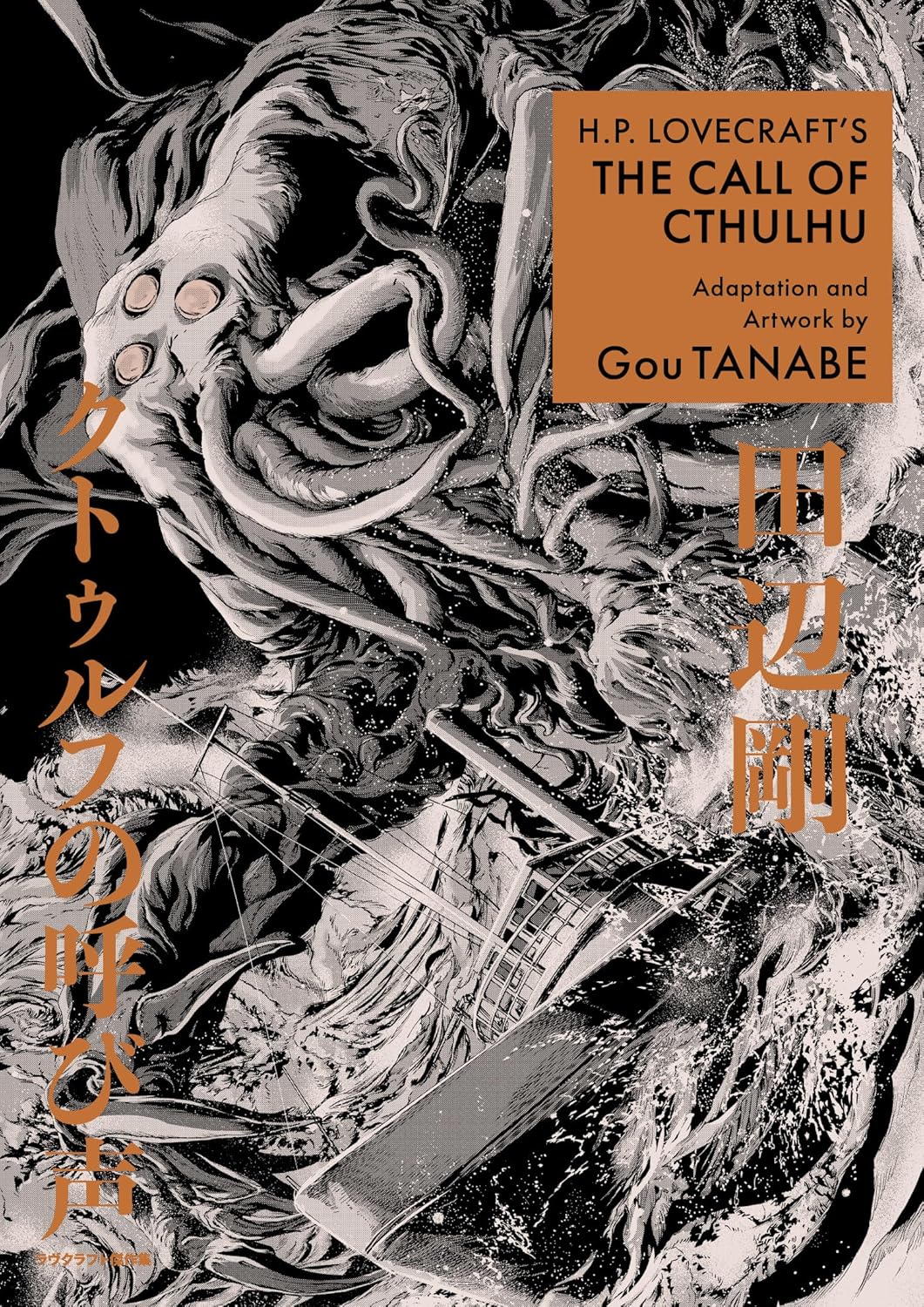
Graphic Novel Review: H.P. Lovecraft’s The Call of Cthulhu (H.P. Lovecraft Manga), adaptation and art by Gou Tanabe

H. P. Lovecraft’s The Call of Cthulhu (H.P. Lovecraft Manga) adaptation and artwork by Gou Tanabe, translated by Zack Davisson

Dark Horse Comics, 2024

ISBN-13: 9781506741406

Available: Paperback, Kindle edition

Buy:   Bookshop.org | Amazon.com


Eisner-nominated mangaka Gou Tanabe adapts H. P. Lovecraft’s The Call of Cthulhu, first published in 1928. Francis Thurston, the executor of the estate of the late Professer Angell, discovers that the academic was investigating a strange cult that worships an entity known as Cthulhu. Thurston, curious about the papers, journal entries, and strange clay idols, launches his own investigation that unearths something bigger than he could ever dream of—the city of R’lyeh.


The story is told in a series of journal entries and flashbacks to events in the aforementioned entries to construct the mysteries of the cult, mythos, and what happened to anyone who comes across even the mere mention of the Great Old Ones.


Tanabe’s artwork includes such intricate detail. The eye is forced to observe. He renders Lovecraft’s cosmic horror as visceral, beautiful, and maddening at the same time. There are panels where black text is outlined in white, and is overlaid on the artwork, which forces the reader to slow down, take in the words on the page, and then move to the surrounding artwork. Particularly visceral and intricate scenes include cultist activities and the discovery of and journey through R’lyeh. Tanabe’s large scenes, such as an overhead view of a seafaring vessel fighting to avoid being pulled into a whirlpool near R’lyeh, are impressive. Put these on a shelf next to such horror mangaka as Junji Ito and Q Hayashida. Highly recommended.


Reviewed by Lizzy Walker

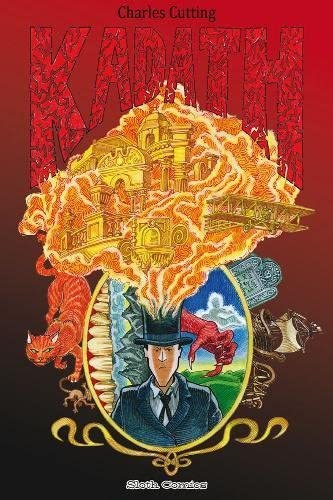
Graphic Novel Review: Kadath, or the Dream Quest of Randolph Carter by Charles Cutting

0

Kadath, or the Dream Quest of Randolph Carter by Charles Cutting

Sloth Comics, 2015

ISBN-13: 9781908830074

Available: Paperback ( Amazon.com )


Kadath, or the Dream Quest of Randolph Carter, is based on H. P. Lovecraft’s 1943 novella, The Dream Quest of Unknown Kadath. Cutting does not offer a straightforward retelling in his Kadath, but rather a more entertaining and colourful version.


Randolph Carter dreams of a mysterious sunset city on three different occasions. His obsession with this perfect city becomes dangerous as he ventures on a quest within the dream world to find the elusive place called Kadath. The further he goes, the closer he gets to a terrible secret. Carter faces Zoogs, the cats of Ulthar, and more in his journey. The main character is also, in short, a jerk and wholy unreliable as a narrator. Cutting also includes a Kadath gallery and humorous two-page comic titled “Did Lovecraft Die a Virgin?” at the end of this volume. 


The artwork in this graphic novel is notable in its detail and vibrant colours. There are times where Cutting’s artwork makes me think of Noel Fielding’s strange and psychedelic art pieces and character designs, which seems right at home in a dreamscape. This is an entertaining and well-illustrated graphic novel. I would encourage readers interested in retellings of Lovecraft to seek this out.  Highly recommended.


Reviewed by Lizzy Walker

Haunted Travels: Essex County, Massachusetts: Lovecraft Country


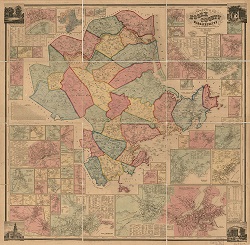
topographical map of essex county massachusetts by Henry Francis WallingIf you’re visiting Salem already, you can take your haunted travels further; it is a county seat for Essex County, Massachusetts, frequently referred to as “Lovecraft country” (not to be mistaken with the novel by Matt Ruff or the HBO show).  While not all of his tales were set here, many of horror master H.P. Lovecraft’s stories are set in the area, and while the locations and geography have been fictionalized and altered,  Marblehead, Salem, Gloucester, and Newburyport in particular have been suggested as inspirations for the towns of Kingsport, Arkham (home of Miskatonic University), Innsmouth, and Dunwich (although not necessarily in that order). In an article for The Toast, Rebecca Turkewitz writes:


Although Lovecraft’s towns and rivers have invented names and the geography is slightly altered, Lovecraft is adamant about the importance of his rural New England locations. He nestled his fictional towns, such as Arkham and Dunwich, in between real places, such as Newburyport and Plum Island. In his story “The Picture in the House,” Lovecraft describes the ghastly spell of the “ancient, lonely farmhouses of backwoods New England,” and the “elements of strength, solitude, grotesqueness and ignorance” which skulk there.


That Lovecraft mentions nonfictional places and place names in the same stories gives the reader a sense that it all could be real, and yet the fact that his imagined places are not quite analogues contributes to his creation of an uncanny atmosphere for the stories. Trying to identify exactly where they are can be difficult, as Lovecraft locatescover for The Shadow Over Innsmouth and Other Stories Arkham in different places in his stories. Luckily, there are fans of Lovecraft who have done the work of mapping out the inspirations and possible locations of his tales. Donovan Loucks of the H.P. Lovecraft Archive has researched Massachusetts sites tied into Lovecraft’s stories: while his short tour of Lovecraftian Massachusetts sites  includes Boston and Cambridge, most are in Essex County.


1920s Essex County and 2020s Essex County are very different places, as you can see in this Lovecraft lover’s 1997 journey, but bring your copy of The Shadow Over Innsmouth and imagine the geography and architecture of Essex County through a glass darkly.


Interested in Lovecraft-inspired fiction? Here’s a list of some relatively recent books that give his fiction a twist.