Home » Posts tagged "body horror" (Page 23)

Book Review: I Can Taste The Blood edited by John F.D. Taff and Anthony Rivera

I Can Taste the Blood  edited by John F.D. Taff and Anthony Rivera

ISBN-13: 978-1940658728

Grey Matter Press, 2016

Available: Paperback, Kindle edition

This anthology contains five stories, or “visions”, all written with the same title: I Can Taste the Blood. The editor gathered five authors, each presenting a unique take on the phrase, which originated from graffiti in the bathroom of a dive bar, which read “I can taste the blood.”

The first vision, by Josh Malerman, is the story of Rab, a traveler who begs for help at the home of Madmannah, Sammi, and their child, Aart. It is a windy night when the desperate traveler knocks on their door and demands shelter for a short time. At the encouragement of their visiting friends, they admit the stranger into their home. Rab then tells them the story of how he came to be in their humble abode, what is chasing him, the horrors that he faced in this person’s presence… and what he has done. Everything is not as it seems with the traveler, or with the entity pursuing him.

The second vision, by J. Daniel Stone, is one of violence, underground snuff films, and heroin. Bok can’t escape the clutches of Laurenz, an elderly German man with a taste for extreme violence who creates films to feed his urges. Bok discovers, through his lover Jared, that the old German’s films hold a transformative contagion. As a warning, this story is extremely explicit in its depiction of bloody violence, snuff film material, and sex.

Joe Schwartz presents a vision of a man who earns his keep as a hired strong-arm for someone known simply as Caretaker. The man and his partner, Joe, kidnap a young woman as she leaves her home. We get a series of short memories of crimes he has committed when he first started in the “business,” and snapshots of his personal life. As the story returns to the present, and the kidnapped woman, things don’t quite go as planned for the dastardly duo.

Erik T. Johnson’s vision tells of Canny, who is trying to cope with his strange mother and her death… I think. I read and reread this story a few times, and I’m still not sure what to make of it. It reads like a stream of consciousness piece, and Canny’s thoughts are incredibly disjointed. There are subtle, perhaps too subtle, connections between his thoughts. At times I felt like I should be getting more from this story than I was, but things just weren’t connecting for me. I will say it is very poetic, and there is a lot of rich imagery in this story. Just be prepared for an exercise in attempting to follow a lost man down the rabbit hole.

The final vision in the anthology, by John. F.D. Taff, is probably my favorite out of the anthology. Merle, a divorced father of one, lives in the small town he was raised in, where he knows everyone and everyone knows him. One evening at the local bar, his friend, Gun, points out a bandage on his arm. Merle doesn’t remember giving blood, but the alcohol he loves so much tends to make him forgetful. Things change that night, when the two men venture to the VFW for the weekly spaghetti dinner. Merle gets very sick, and experiences disturbing and hyper-realistic hallucinations. What happens to him in the following days is enough to make anyone crazy. He struggles with his illness, he sleeps for days on end, his ex-wife is a constant nag, and all he wants to do is see his daughter. Oh, and his hands are growing teeth.

I Can Taste the Blood is an incredible anthology, full of nightmare fuel. I don’t recommend it for squeamish readers, though. There are times where the material delves into uncomfortable themes, or it just gets gross. If you don’t like transgressive dark fiction, this won’t be your cup of tea. If you do, dig in. You won’t be disappointed. Recommended.

Contains: blood, gore, sexuality, torture, rape, body horror


Reviewed by Lizzy Walker


Book Review: Dreams from the Witch House: Female Voices of Lovecraftian Horror edited by Lynne Jamneck


Dreams from the Witch House: Female Voices of Lovecraftian Horror  edited by Lynne Jamneck, illustrations by Daniele Serra

Dark Regions Press, 2016

ISBN 9781626411111 (ebook)

Available: Pre-order Kindle ebook, hardcover, trade paperback

I haven’t contributed financially to many Indiegogo projects, but when I saw the announcement for Dreams from the Witch House: Female Voices of Lovecraftian Horror, I knew I couldn’t pass it up, and I’m very glad I did not.

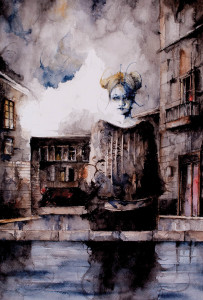
Dreams from the Witch House is a collection of twenty weird fiction stories, each one set in various times and places with characters and themes that resonate with the reader long after the tales have concluded. I had to take some time to mentally process each tale after I read them. The authors have crafted tales that really impact the reader. It’s hard to even say which one is my favourite since they each have their own distinct qualities. From the firsshadows-of-the-evening-joyce-carol-oates-1000px (1)t story by the legendary Joyce Carol Oates (what a way to start a book!) to the last, each story has so much complexity and succeed in evoking different emotions in such short page space.  I found that I have something to say about every one of these stories, but I have selected a few that really stand out.

“Shadows of the Evening” by Joyce Carol Oates is the story of Magdalena Schӧn told by her granddaughter. After being forced to leave home, Magdalena finds herself living with her wealthy great-aunt, Erica Kistenmacher to whom she is to be a companion. Finding that she has ample free time, she takes to wandering the streets of her new town. She is beckoned by a handsome voice singing a haunting song. She finds the owner of the voice, and he changes her forever.

Tamsyn Muir’s “The Woman in the Hill” is written in the form of a letter from Caroline, a woman who is afraid she is losing her mind. After her friend Elizabeth tells her of finding a door in a hill, she disappears mysteriously. Caroline discovers Elizabeth wasn’t the first to disappear, and most certainly won’t be the last.

“Pippa’s Crayons” by Christine Morgan is a story of a child whose crayons, crafted by her grandfather, display colours not of this world. Despite the short length of this story, Morgan has written an incredibly chilling story.

“Cthulhu’s Mother” by Kelda Circh injects some humour into the collection with a conversation between cultists of Cthulhu and the rather strict mother of the Sleeper of R’lyeh.

In addition the previously named authors, other women who have lent their writing skills to Dreams from the Witch House are, Collen Douglas, Cat Hellison, Caitlin R. Kiernan, Lucy Brady, Marly Youmans, Sanya Taaffe, Gemma Files, Molly Tanzer, Karen Heuler, Lois H. Gresh, Nancy Kilpatrick, E.R. Knightsbridge, Amanda Downum, Storm Constantine, R.A Kaelin, Elizabeth Bear and Sarah Monette, with full colour artwork by Daniele Serra. Introduction by editor, Lynne Jamneck.

I recommend this collection to anyone who enjoys incredible weird fiction. I was not disappointed with any of the stories. The artwork that Serra created for each story are beautifully rendered. To date, I have only had access to the ebook. The paperback version is still forthcoming.

Highly recommended

Contains: mild body horror, sexuality

Reviewed by Lizzy Walker

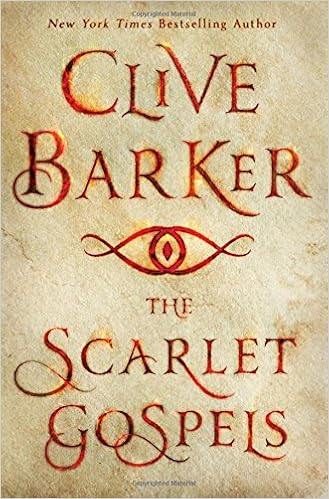
Book Review: The Scarlet Gospels by Clive Barker (audiobook)


The Scarlet Gospels by Clive Barker

St. Martin’s Press, 2015

ISBN-13: 9781250055804 (Hardback)

ISBN-13: 9781427261571 (Macmillan audiobook)

Available: Hardback, Macmillan audiobook, paperback, Kindle edition, Audible edition

The Scarlet Gospels marks Clive Barker’s long awaited return to adult horror fiction. This novel has a long history, and he’s had fans on tenterhooks since the 1990s when he first hinted at this work in progress. The story revolves around two of Barker’s iconic characters, Harry D’Amour, his tattooed implacable investigator of the supernatural, and the eloquent Cenobite Hell Priest, better known as Pinhead. Joining Harry is a group of magic users, the Harrowers, who help him along the way after Norma Paine is abducted by the Hell Priest and his misshapen minion, Felixson. Harry finds the Lament Configuration, that damned box, and is pulled into a Dante-esque mission put forth by the Hell Priest himself. At first it is unclear what the Hell Priest wants to do with D’Amour—kill him or use him. He needs a witness, an archivist, who will chronicle his usurping the throne of Hell. While there were of course several colourful characters to the story, the main action revolves around Harry and the Hell Priest. Most other relationships remain secondary.

The book was fast paced, and very cinematic at times, especially regarding gore, body horror, and the scenes in Hell. One of the best and bloodiest sections of the novel is the prologue, only matched by what he wrote in the Books of Blood series. The reader is introduced to the magicians who resurrect the magician Ragowski, one of their dwindling number that the Hell Priest tore apart. Ragowski reveals that the Hell Priest is killing all of them off after torturing information out of them as to the location of magical talismans and grimoires and collecting the world’s magic, but to what end? The violence is incredibly visceral and graphic, and the Hell Priest’s curses and speeches to the magicians are intelligently delivered. The prologue really drew me in and made me want to continue reading.

Despite Barker’s writing the Hell Priest as a departure from what we are familiar with most of the films, it was difficult not to imagine Doug Bradley’s face and voice overpowering my reading. If you are expecting the Cenobite from the films, you will be disappointed. This writing of the Hell Priest of the Order of the Gash relishes in the abuses and torments he puts his victim through, which seems like the complete opposite characterization from the distinguished, duty bound Cenobite from the first two Hellraiser movies, let alone The Hellbound Heart. The character in the films was more reserved, even reverent when visiting pain on others, as it was his duty.

I wish the novel would have been much longer, especially regarding the space devoted to D’Amour’s and the Harrowers’ journey through Hell, and the epic battle between the Hell Priest and Lucifer. My main complaint seems to be echoed by other Barker fans: while the book is good, it could have been much longer and given the reader a lot more content.

As a side note, the narrator of the Macmillan audio book version of the novel is John Lee. He pulls out some fantastic voice acting for The Scarlet Gospels.

As an avid Clive Barker fan, I recommend this book, but with reservation. Recommended for adult readers

Contains: Body horror, gore, graphic violence, rape, sex, implications of child abuse.

Reviewed by Lizzy Walker