Home » 2021 (Page 5)

Book Review: Beasts and Beauty: Dangerous Tales by Soman Chainani, illustrated by Julia Iredale

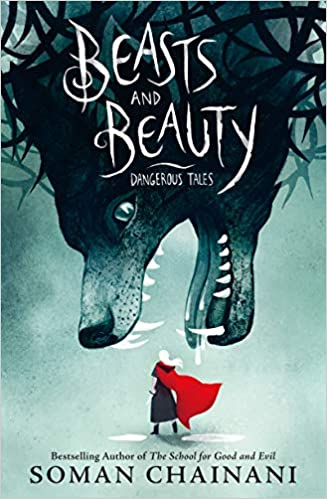
cover art for Beasts and Beauty: Dangerous Tales by Sonan Chainani

Beasts and Beauty: Dangerous Tales by Soman Chainani, illustrated by Julia Iredale

HarperCollins Children’s Books, 2021

ISBN-13 ‏ : ‎ 978-0062652638

Available: Hardcover, Kindle edition, audiobook Bookshop.org  |  Amazon.com )


In Beasts and Beauty: Dangerous Tales, Soman Chainani brings us tales so sharp they cut, with teen protagonists who seize their agency, and subversive, unexpected re-visionings of 12 familiar stories.

The standout story in this collection for me is “Bluebeard”, a lush and bleeding horror story. Chainani has altered the story so that instead of courting a wife, Bluebeard chooses boys from an orphanage as his victims. Unfortunately for him, one boy, Pietro, is wise to what’s going on.

“Bluebeard” is just one of many excellent stories. Chainani’s version of “Red Riding Hood” would do Shirley Jackson proud, with its rejection of conformity and tradition.  “Hansel and Gretel” set in India, is very different from the original tale, although you can clearly see its roots.  This was a beautifully done variation with a very satisfying ending, if you’ve ever wanted the stepmother to get her comeuppance.  “Cinderella” is an entertaining story where a girl in love with the prince, who has been hexed into a mouse, convinces Cinderella to go to the ball and take her along. The story definitely does not go where you think it will! “Snow White” takes on racism with an unusual reversal, and disrupts the structure of fairytale narrative. “Beauty and the Beast” also addresses racism and classism in its commentary on seeing past appearances, with a prickly, bookish, Chinese “Beauty”.  “Sleeping Beauty” is genderswapped, with lyrical, gorgeous writing threaded with horror. The relationships in this were particularly troubling as Chainani was not clear on the issue of consent or its lack that is central to Sleeping Beauty stories.

Chainani does a good job taking a traditional tale and giving it just a little bit of a twist, as well. Rapunzel uses her brain instead of her hair to get what she wants; Jack grows a beanstalk hoping to find his missing father at the top; the sea witch lectures the Little Mermaid on the folly of giving up a long life and self-respect for the possibility of love.  Other stories include “Rumplestiltskin” and “Peter Pan”.  Overall, it’s a great collection that pays a creative homage to traditional stories.  Art by Julia Iredale throughout, including full-page color illustrations, complements the stories perfectly as it’s integrated into the design of the book.

Teens who grew up reading Adam Gidwitz, the Sisters Grimm, or Chainani’s School for Good and Evil series, or who enjoy fairytale adaptations such as those by Anna-Marie Macklemore (Blanca & Roja)  Emily Whitten (For The Wolf) and Emma Donoghue (Kissing the Witch) should enjoy this collection. Highly recommended for ages 10+.


Book Review: The Devil and His Advocates by Erik Butler

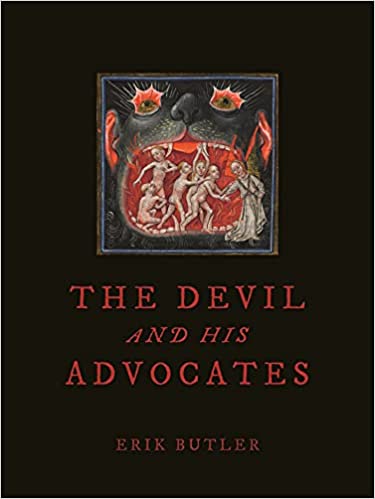
cover art for The Devil and His Advocates by Erik Butler

The Devil and His Advocates by Erik Butler

Reaktion Books, 2021

ISBN-13: 9781789143737

Available: Hardcover, Kindle edition  Bookshop.org  |  Amazon.com )


In Erik Butler’s The Devil and His Advocates, the author argues that Satan is not God’s enemy in the Bible, but that he has been misinterpreted. In fact, he has been doing God’s bidding rather than acting as his own entity all this time. Butler uses the Old and New Testament, especially the trial of Job, to analyze the figure of Satan in literature, music, theology, and visual art from antiquity to the present. Butler asserts that Satan has been tasked by God to test human beings, whose piety leaves room for doubt. Butler argues that while Satan can be manipulative, he facilitates what mortals are inclined to do anyway, and he’s right.


In addition to biblical sources, Butler uses works of literature from Dante, Chaucer, Christopher Marlowe, Robert Burton, Jules Amédée Barbey d’Audervilly, James Joyce, Isidore Ducasse, Oskar Panizza, William Butler Yeats, Fyodor Dostoyevsky, Gian Pietro Lucini, Gottfried Benn, C. S. Lewis and more to unveil the nature and depiction of Satan, or the satan (which is an eye-opening discussion itself in the first chapter) to discuss why and how Satan’s role, position, and even personality have been, essentially, misinterpreted or reinterpreted. Butler includes a chapter on music as well.


Butler includes references, an index, and illustrations in The Devil and His Advocates. While this isn’t a work of horror, The Devil and His Advocates has the potential to be a valuable research tool for anyone who wants to focus on Satan in their fiction. It could also be useful for numerous classes, such as literature, drama, religious studies, fiction writing, and more. Highly recommended.


Reviewed by Lizzy Walker

Book Review: The Last House on Needless Street by Catriona Ward

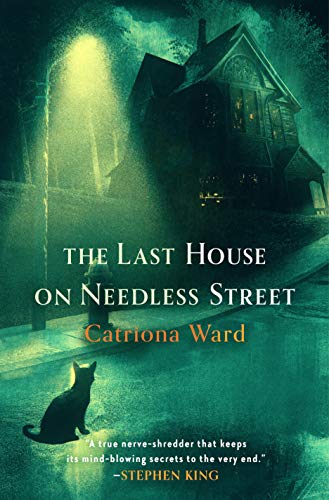
cover art for The Last House on Needless Street by Catriona Ward

The Last House on Needless Street by Catriona Ward

Tor Nightfire, 2021

ISBN-13 ‏ : ‎ 978-1250812629

Available: Hardcover, Kindle edition, audiobook Bookshop.org |  Amazon.com  )


The Last House on Needless Street takes as its starting point the abduction of a little girl, Lulu, from the beach, ten years before the events of the present. Lulu’s disappearance was a turning point in the lives of two children at the beach that day: her older sister Dee, and a young man, Ted Bannerman, who was briefly suspected of carrying Lulu off.  Since then, Dee has been obsessed with finding Lulu and the man who abducted her. A photograph from a news article about the search for Lulu sends Dee in Ted’s direction, and she moves into the house next door to observe him and look for evidence of Lulu.

The book alternates between a variety of first person narrators, and the reader will soon pick up that none of them are reliable. Tragic, violent, and terrible things happen but it’s not clear to whom or when. Characters are not who they seem to be and their actions and thoughts are often scrambled or inexplicable. Ward has constructed an intricate, layered, maze of a book with tragedy, horrific abuse, and trauma at its core.

Mental illness is often demonized in the media and especially in horror fiction and Ward avoids that, writing with compassion and respect. Her author’s note indicates that she did detailed research before writing the book. While it’s possible to read through this quickly, it deserves the time it takes for the reader to process. It will stick with you long after you are done. Highly recommended.


Contains: emotional and physical abuse, child abuse, suicide. violence.