Home » 2021 (Page 37)

Women in Horror Month: Book Review: The Lady from the Black Lagoon: Hollywood Monsters and the Lost Legacy of Milicent Patrick by Mallory O’Meara

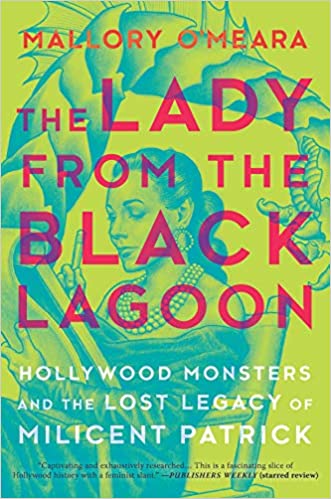
cover art for The Lady from the Black Lagoon by Mallory o"Meara

(  Bookshop.org  |  Amazon.com  )

The Lady from the Black Lagoon: Hollywood Monsters and the Lost Legacy of Milicent Patrick by Mallory O’Meara

Hanover Square Press, 2019

ISBN-13: 9781335937803

Available: Hardcover, paperback. Kindle, Audible audiobook


When Mallory O’Meara discovered that one of her favorite movies, The Creature from the Black Lagoon, featured a monster designed by a woman, Milicent Patrick, she knew she had to find out more. Sadly, there was little information available about this elusive figure. Through her research, O’Meara learned much about Patrick’s contribution to The Creature from the Black Lagoon and her eventual disappearance from film history. O’Meara, herself working in the horror movie industry, “set out to right the wrong and in the process discovered the full, fascinating story of an ambitious, artistic woman ahead of her time.”

O’Meara’s book is well-researched, using primary archival resources and interviews as a basis for her work. She describes pushback she received from different parties in her introduction. Similar to asking the question, “why is there a Women in Horror Month?”, she was asked why she was searching so much for a woman who was denied her craft for decades. O’Meara spends the bulk of the book answering this question.

The book isn’t strictly a biography of Milicent, but also of those closest to her. O’Meara includes biographical information on Milicent’s parents, William Randolph Hearst, Bud Westmore, and other people who had been influential in Patrick’s life. Interspersed in the chapters are the author’s discussion of her discoveries and “aha moments”, such as finding Hearst Castle as a clue to unveiling more of Milicent’s life, her time at Glendale Junior College, her eventual dropping out to attend Chouinard Art Institute, and Walt Disney hiring her on in the animation department of his humble studio. Milicent worked as an uncredited model, developing her own sense of style, something her father disapproved of. The author does not hide that some of Milicent’s life choices led to heartache and agony, her own as well as others. O’Meara discusses Milicent crossing paths with the infamous Bud Westmore and her time designing the Gillman, Universal’s monster in Creature from the Black Lagoon. The author also provides some great information on the history of special effects, and the ongoing gender inequality in the film industry.

A major criticism I have about the content is O’Meara’s exaggerated lack of understanding of the research process. She discusses her struggles with the process and, thankfully, credits those who helped her by providing her with clues or pointing her in the right direction. She seemed to be unaware of databases, or how to conduct oneself in an archival room. While such things are undoubtedly unknown to some people, including her own ignorance and gasping, and telling the reader she probably annoyed others in the research room of the archives, would probably be best left out. However, O’Meara’s conversational style of writing is appealing, to a point, and makes the pace of the book go quickly. Recommended.


Reviewed by Lizzy Walker
Women in Horror Month: Book Review: The Burning Girls: A Novel by C.J. Tudor

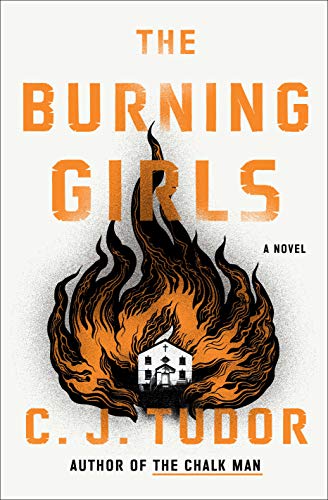
cover art for The Burning Girls by C.J. Tudor

(   Bookshop.comAmazon.com )

The Burning Girls: A Novel by C.J. Tudor

Ballantine Books, 2021

ISBN-13 : 978-1984825025

Available: Hardcover, paperback, Kindle edition, audiobook


Some of the best books straddle genres and wind up splintering the boundaries in the process. Some of the best authors writing today have nailed this, refusing to be pigeonholed.

C.J. Tudor broke through with the phenomenal novel The Chalk Man and now takes her blend of horror, mystery, and thriller, churning it into one of the first hits of the new year.

Set in modern-day England, Reverend Jack Brooks appears to be running from her past when she is reassigned to a church in Chapel Croft, a town where the previous vicar committed suicide. Jack and her daughter Flo reluctantly leave Nottingham after a case that may have involved an exorcism left a young girl dead. Immediately, Jack discovers the small town is full of mysteries, conspiracies, and hidden shadows that make her past resemble heaven.

The legend of the burning girls harkens back to the reign of the Catholic Queen Mary in the sixteenth century, whose purge of Protestants resulted in the deaths of eight victims, including two young girls, through, of course, burning. Thirty years ago, another pair of girls disappeared from the town, apparently meeting with foul play. Toss in another missing vicar, and the stage is set for a creepy tale that might bring to mind the best of Shirley Jackson if channeled through Lauren Beukes.

The legend says that whoever sees the burning girls is destined for a horrific fate. On her first morning, Jack discovers effigies on her doorstep, while Flo catches a fiery specter on film when exploring a disturbing, abandoned house with a boy whose past carries its own hefty shadows.

As Jack discovers the terrors that Chapel Croft has spent centuries burying, she struggles to find who to trust, and who might be seeking to add her to the body count the church seems to invite.

Tudor brings a strong dose of horror that evokes folktale. mythology, and evil in human form, by way of small town mentality. What sets The Burning Girls apart from other novels is the writing. Tudor’s strong voice is both alluring and conversational, deceptively simple in its complex characterization, especially of the role of a female priest in a setting stuck on living in dangerous nostalgia. Humor is utilzed as a foil to the terror Tudor wraps around the twisting plot, succeeding in keeping the reader off guard until the final note is played. Both this novel and the author’s previous offerings are highly recommended.


Reviewed by David Simms

Women in Horror Month: Book Review: Dying With Her Cheer Pants On: Stories of the Fighting Pumpkins by Seanan McGuire

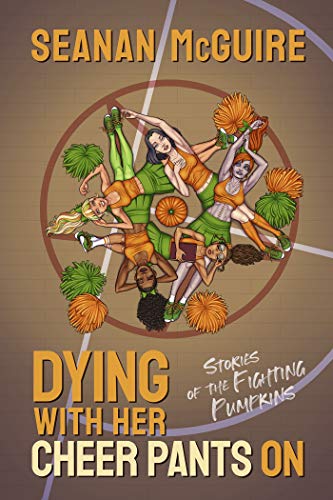
cover art for Dying With Her Cheer Pants On: Tales of the Fighting Pumpkins

( Amazon.com  |  Subterranean Press  limited edition hardcover  | Subterranean Press ebook edition )

Dying With Her Cheer Pants On: Stories of the Fighting Pumpkins by Seanan McGuire

Subterranean Press, 2020

ISBN-13 : 978-1596069978

Available: Direct from Subterranean Press (limited edition hardcover, ebook edition), and Kindle edition


Into every high school class a cheerleading squad must come to fight against the forces of darkness: aliens, mud monsters, and eldritch creatures.  Squads that don’t survive until graduation are forgotten, and a mysterious force chooses a new cheer captain to recruit a new squad. This tight-knit group of cheerleaders, who may or may not be supernatural themselves, are the Fighting Pumpkins of Johnson’s Crossing, California. These are their stories.

The stories have been published over time, in different places: I first encountered them in the story “Away Game”, a clever, if predictable, story that appears in A Secret Guide to Fighting Elder Gods, edited by Jennifer Brozek, and have been seeking out their stories since then. I’m so glad they have now been collected together. Originally a limited edition published by Subterranean Press, the collection is now available as an ebook.

Because there have been many cheerleading squads over a long period of time, the stories can be set in a variety of time periods, with different characters. While the majority of the Fighting Pumpkins stories are linked stories about the same varsity squad, with half-vampire cheer captain Jude, squad historian Colleen, Laurie, who has a command voice, supernaturally strong Marti, and undead Heather, a few take place in other time periods and with other squads, such as the titular “Dying With Her Cheer Pants On”, in which the team dies calling Bloody Mary from a mirror during an alien invasion to exterminate the aliens, and “Switchblade Smile”, which features Jude’s mother Andrea, a vampire, as a cheerleader in the 1930s.

Character development is strong, and there is a lot of humor (how can there not be with a team called the Fighting Pumpkins?). McGuire draws from a kitchen-sink universe where any creature of the imagination can be real,  and remixes tropes to create her stories, but the sisterhood of the girls on the cheer squad is what makes the stories of the Fighting Pumpkins really enjoyable. Although a story might center on a specific character, these stories aren’t about a single individual or chosen one bound to save the world on her own. The girls are a team, and they stick together even when things are scary, or dangerous, or one of them turns out to be a monster. Two related stories that involve cheerleader Heather Monroe stood out as favorites, “Gimme a Z”, in which she rises from the grave and defends her sister Pumpkins from an undead mob, and “Turn the World Around”,  an often poetic story in which she helps a girl who mysteriously shows up in a Fighting Pumpkins uniform make a life-and-death decision that will affect the entire community. “School Colors” covers a cheerleading competition between the Fighting Pumpkins and an alien cheerleading squad that could decide the fate of the planet.

The stories of the Fighting Pumpkins are a little scary, but mostly a lot of fun. Those looking for a break from heavy or intense reading will find a lot to like, as will Buffy lovers.  YA readers may enjoy this collection as well.


Contains : strong language, violence, some gore. The story “Fiber” received some criticism from First Nations people regarding McGuire’s interpretation of the wendigo.


Reviewed by Kirsten Kowalewski