Home » Posts tagged "YA horror" (Page 10)

Musings: Clown in a Cornfield by Adam Cesare


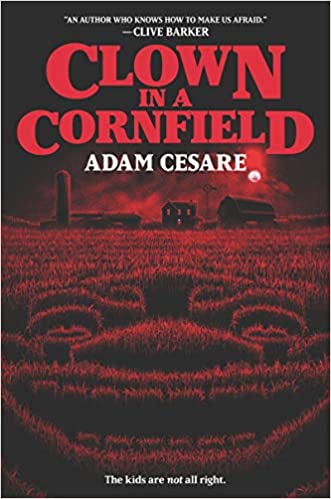
cover art for Clown in a Cornfield by Adam Cesare  (  Bookshop.org |  Amazon.com )

Clown in a Cornfield by Adam Cesare

HarperTeen, 2020

ISBN-13 : 978-0062854599

Available: Hardcover, Kindle edition, audiobook


Clown in a Cornfield has the cover art, title, and pacing I’d expect from a pulp paperback from the 1970s-1980s, but a very contemporary feel. It takes place in a small, rural town in Missouri. Quinn Maybrook has just moved from Philadelphia to Kettle Springs, where her father has taken over the town doctor’s practice to give both of them a fresh start after her mother died by drug overdose. A year prior to the events of the book, Cole Hill and his friends livestreamed a prank for their YouTube channel that led to the accidental death of Cole’s younger sister, and shortly before the story begins, Cole attempted to burn down an abandoned factory owned by his father’s company, Baypen. Baypen’s mascot is a clown, Frendo, and it might as well be Kettle Springs’ mascot, as well.

Quinn’s first day at school gets a rocky start when she is caught in the crossfire between Cole and his friends and the science teacher as he angrily ejects them from his classroom, but she soon finds herself included in the group. Quinn discovers that almost everything they do is to get an on-camera reaction. A dangerous prank at the town’s Founder’s Day parade causes a lot of anger in the community, especially from the sheriff, who holds a lot of power and is a very convincing man.

The teens have planned a party in a barn in the middle of a cornfield on the farm of a family who has left on vacation, and despite the damage, a huge crowd arrives to drink and dance. That’s when Frendo, the clown, shows up, and events quickly escalate into a large-scale, fast-paced, violent, and bloody massacre.

Small, rural towns in mid-America tend to be very conservative, very white, and attached to traditional values. They are mostly financially depressed, mainly because nearby manufacturing has failed and family farming isn’t very profitable. Gun ownership, especially for hunting, is common. And communities are usually small enough that their identities center on high school sports, including the mascots. I’ve worked in a really small, rural town, and every day when I got off the highway exit I drove past miles and miles of corn. Cesare really captures the character of these communities, and while some characters are relatively stock, such as the sheriff, others are well-fleshed out.  I especially was impressed with the portrayal of Rust,  who could easily have been a cariacature of a gun-happy redneck but instead was a nuanced, thoughtful, and resourceful character. There’s also positive representation of gay characters, and an interesting Asian “mean girl”.

My daughter didn’t feel that the motivation for the massacre was believable, but having watched the events of the past week play out, I can now fully believe that clowns could turn in a violent and deadly way on people they feel alienated from if they believe there is a threat to their way of life. Clown in a Cornfield moves along quickly and may appeal to reluctant readers. Slasher fans and teens looking for a terrifying, gory story will find it here. Highly recommended for grades 9+.

Contains: extreme violence, gore, murder, body horror


Book List: Chosen Ones: Most Unlikely To Be Chosen

We all know the “Chosen One” trope that is prevalent though all kinds of literature and media from King Arthur to Buffy the Vampire Slayer, and its mutated dystopian form that divides families and communities, as in Veronica Roth’s Divergent and Margaret Atwood’s The Handmaid’s Tale to produce its hero.

But being the “one girl to save the world” or “the Boy who Lived” isn’t always what it’s cracked up to be. Recently, I’m seeing a number of takes on Chosen Ones that are a little different.

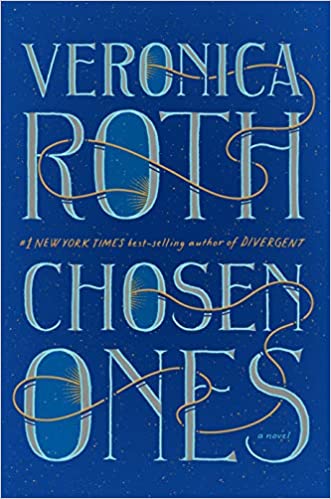
cover for Chosen Ones by Veronica Roth  Bookshop.org )

Chosen Ones is Veronica Roth’s newest book, and after her runaway success with Divergent, a series grounded in the “chosen one” trope, it’s interesting to see what she does with it.  In it, the government receives a prophecy that could describe any of a number of children. It’s not clear which one is the Chosen One in the prophecy, so all five of the children are trained together to defeat the Evil One. Roth focuses on what happens when the battle is over and the Chosen Ones grow up. Is the battle really over, though?


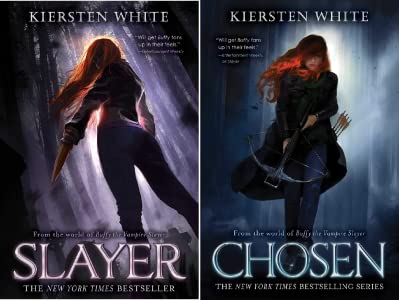
cover art for Slayer and Chosen by Kiersten White  Bookshop.org )

Slayer and Chosen are Kiersten White’s contributions to the Buffyverse. Twins Nina and Artemis live in an Irish castle with what’s left of the Council of Watchers, two months after Buffy shut down all interdimensional portals and destroyed magic, killing off many of the Watchers and potential Slayers, and disappeared. Nina has always felt inferior to Artemis, believing she is only good at being the castle medic, and pretty much everyone around her has shared that belief, but it turns out that she is much more than anyone could have expected.


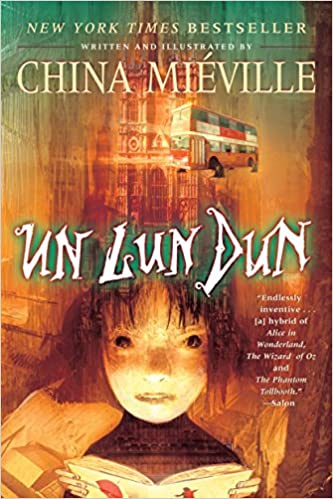
cover art for Un Lun Dun by China Mieville     Bookshop.org )

Un Lun Dun by China Mieville is an older title, but one I just encountered myself. It looks like it’s going to be a conventional “Chosen One” story, but plays with the tropes in some surprising ways. Londoners Zanna (the prophesied Chosen One) and her friend Deeba enter UnLondon, a surreal alternate London that gives a new life to the broken and out-of-date things that have been discarded or forgotten by the original Londoners. UnLondon is threatened by a fantastical, sentient version of a very real problem; Smog. Unfortunately for Zanna, the prophecies aren’t exactly right, and Mieville knocks home to the reader that you don’t have to be chosen to save the world. With living words and clothes made from the pages of books, this has a lot in common with The Phantom Tollbooth, but it has some very dark and grim moments among the playfulness, and its urban, underground alternate reality is very reminiscent of Neil Gaiman’s Neverwhere. 

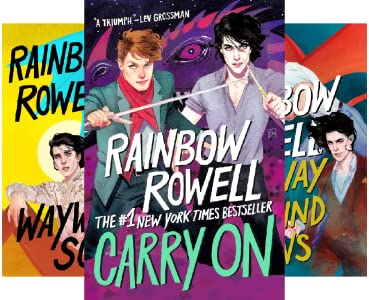
images for covers of Simon Snow series books by Rainbow Rowell ( Bookshop.org )

Carry On and Wayward Son are the first two books of a trilogy about Simon Snow (the third, As The Way The Wind Blows, comes out in 2021), the hero of a fictional series created in Rainbow Rowell’s standalone novel Fangirl, where the main character writes fanfic about the series, which itself seems to be loosely based on the Harry Potter books. In Carry On, supposedly the last book in a series of eight, we learn that Simon was told by a Dumbledore-type character that he was chosen to defeat the evil Humdrum. While Simon has his good friend Penelope watching his back, he’s basically no good at magic, his girlfriend has dumped him, he isn’t all that excited about being a Chosen One. Fangirl’s Cath mainly focused on a developing romantic relationship between Simon and his vampire nemesis/roommate Baz, and that is pretty essential to the plot. Wayward Son follows Simon after his final battle with the Humdrum, at a loss of what to do with himself or even communicate with the people who care about him. In an attempt to break him out of this state of mind, Penelope and Baz suggest a road trip across America. It’s kind of an interesting idea to explore “what happens next” in this way, but the lack of communication, especially between Simon and Baz, throughout the majority of the book, drove me bonkers. In both books, Baz is the most interesting and shows the most growth. It is interesting to see Rowell play with and critique the Chosen One tropes while shifting the focus, and the overt LGBTQ+ love story.

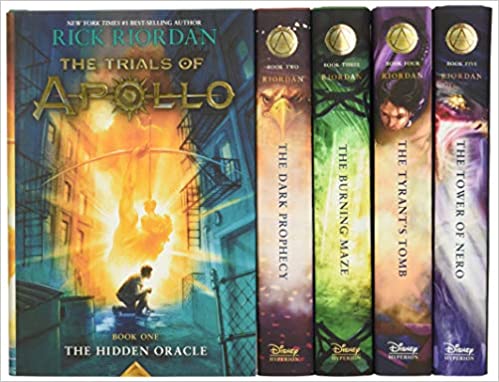
cover art for Trials of Apollo by Rick Riordan box set  Bookshop.org )

The Trials of Apollo series by Rick Riordan is the most adult of Riordan’s series in the Percy Jackson universe. Beginning with The Hidden Oracle, the fifth and last book in this series, The Tower of Nero, was just released a few months ago. In this series, the arrogant, selfish, handsome Apollo, god of music, prophecy, the sun, and archery is tossed from Olympus by an angry Zeus in the form of a powerless, pimply teenager and forced to serve a sullen tween girl while making up for the harm he has thoughtlessly caused for others, not just in the past but in the present, which turns out to include not just redeeming himself but saving the world. This series has some great LGBTQ+ representation, not just in Apollo but with other characters.


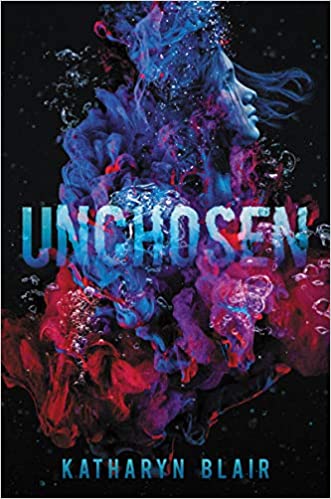
cover art for Unchosen by Katharyn Blair  ( Bookshop.org )

Unchosen by Katharyn Blair, soon to be released, takes place in an apocalyptic dystopian future, where a plague called the Crimson that is spread by eye contact is turning people into ravenous, flesh-eating, intelligent zombies. Charlotte, the narrator, is the unnoticed middle sister to Harlow, who leads a band of survivors, and Vanessa, the Chosen One. Charlotte and Vanessa share a bedroom, and as Vanessa mutters prophecies in her sleep, Charlotte writes them down. When raiders seeking the Chosen One attack their encampment, Charlotte claims to be the Chosen One in order to protect Vanessa.


   ( Bookshop.org )

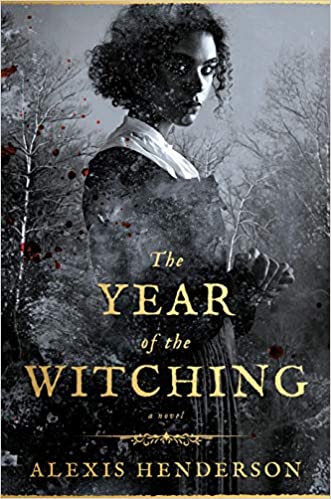
The Year of the Witching by Alexis Henderson has a completely different approach and it is the closest to straight horror on this list. This story takes place in an isolated, patriarchal, oppressive, religious community.  The protagonist, Immanuelle, doesn’t know she was chosen for anything special, and doesn’t want to be. She has not been told or even given a choice in the role she will play in the destruction of her community.


Book Review: The Grace Year by Kim Liggett


A note from the editor:

We are getting near the end of November and Monster Librarian still needs to raise the funds to pay for our hosting fees and postage in 2021. If you like what we’re doing, please take a moment to click on that red “Contribute” button in the sidebar to the right, to help us keep going!  Even five dollars will get us closer to the $45 we still need to keep going at the most basic level. We have never accepted paid advertising so you can be guaranteed that our reviews are objective. We’ve been reviewing and supporting the horror community for 15 years now, help us make it another year! Thank you! And now our review of The Grace Year by Kim Liggett.


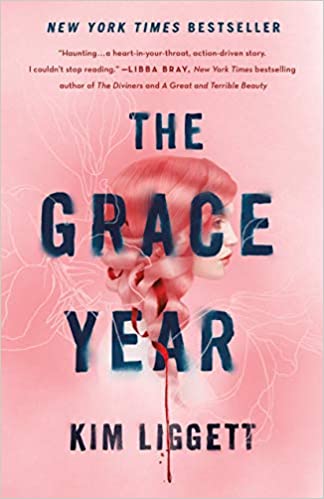
cover art for The Grace Year by Kim Liggett

The Grace Year by Kim Liggett (   Bookshop.org  | Amazon.com  )

Wednesday Books, 2019

ISBN-13 : 978-1250145444

Available: Hardcover, Kindle edition, audiobook


At first glance, The Grace Year seems like a YA take on The Handmaid’s Tale crossed with The Lord of the Flies. It takes place in an alternate society where women and girls are divided into groups by the colors of their hair ribbons: white for girls, black for wives, and red for grace year girls. Grace year girls are sent to an isolated camp as a group when they turn sixteen, after boys and men their age and older have an opportunity to choose one to marry from among them. Some girls are “veiled” and the rest know they will be assigned to manual labor tasks. The younger sisters of the girls who don’t return run the risk of being sent to the outskirts, where they will struggle to survive and are expected eventually to sexually service men no longer satisfied with their wives.

Protagonist Tierney is about to begin her grace year. She does not aspire to be veiled, but would rather labor outside when her grace year is done, as wives’ movements and speech are very restricted and she has always enjoyed spending time outdoors, learning useful skills from her father and spending her time alone and with her friend Michael, whose family is very high status. Rather than choosing Kiersten, the girl his family has picked out for him, though, Michael chooses Tierney to keep her safe, not realizing that he has actually made her a target during the grace year.

The supposed purpose of the grace year is for girls to come into their magic and work it out of themselves without risking the men, so the girls are “safe” to be around, but girls know that things too terrible to talk about must happen, because of each group of girls that leaves, fewer come back, and the ones who do are traumatized and refuse to speak about it. In addition to their isolation, the girls must stay within a fence, because they are being hunted by “poachers” who will skin them alive, dissect them, bottle the parts, and sell them back to the men in town as aphrodisiacs. There is the obligatory section of a YA speculative survival novel where a character whose job it is to exterminate a girl actually saves her and heals her and they fall in love, but it is particularly gruesome because there is no hiding the fact that he’s there to skin, dissect, and bottle her for consumption– he even has diagrams. The body horror is strong in this book, although most of the actual damage is done offscreen.

It is difficult to write about the characters and society in this book, both women and men, because from best to worst every one of them is so poisoned by patriarchy. The gaslighting of women and girls is so extensive and ingrained that it can’t really be separated out. Would Kiersten be so cruel if she hadn’t been trapped by society’s constraints since she was a child? Would so many of the girls have been so eager to believe in their magic if they hadn’t been powerless their entire lives? Even “good” men like Michael, with the best of intentions, can’t undo the damage. In 800+ pages (Amazon says there are 416, my Kindle says 815) there was not a single character in this book whose decisions could be trusted, including Tierney’s. The ending was absolutely crushing to me. I have to hope that YA readers who get all the way through to the end will develop a strong desire to examine their decisions and choices in light of the damage patriarchy does to all of them in the present, rather than waiting for the next generation. Whether they do or not, given the number of comparisons to The Hunger Games, I am sure many will find it a compelling read. Recommended.