Home » Posts tagged "YA fiction"

Book Review: The Band From Another World (Alien Survival Guide #3) by Kevin Garone

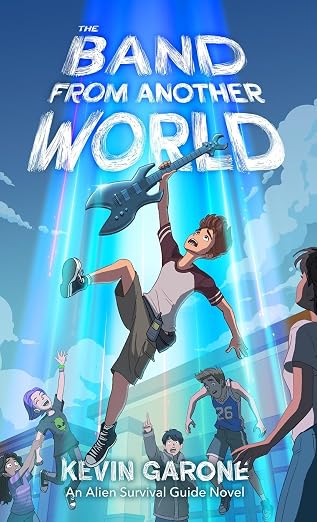
cover art for The Band from Another World by Kevin Garone

The Band From Another World (Alien Survival Guide #3), by Kevin Garone

Temor Press, 2026 (pre-order out September 8)

ISBN: 9798991328470

Available: Hardcover, paperback, ebook edition

Buy: Amazon.com | Bookshop.org


The teenaged scallywags of Kevin Garone’s Alien Survival Guide series return for their third (and unfortunately, final) adventure, and like the last two, this doesn’t disappoint. This series should not be missed by young readers (and young-at-heart adults), and it deserves recognition in its genre for how good it is.


The team of Marv, Jace, Kenji, Nora, and their new member, Liv (code name: Alien Lover) manage to get into trouble in the first few pages while investigating an abandoned cabin in the woods. There they find instruments that somehow enable them to play better than the band Dream Theatre, which leads to possession and a homing signal, which leads to a school battle of the bands… and in the end, finally resolves whether Marv’s unshaking belief in alien invaders was justified, or a delusional waste of time.


As with the previous volumes, these work so well because, as much as they are adventure stories for young readers, Garone manages to throw in some pretty heartfelt material from time to time that adult readers are sure to appreciate. The conversation between Marv and Liv later in the book is a prime example. It’s about finding your big interest when young, and how kids just want something that makes them stand out and be unique from the other kids, even if it is something silly, such as preparing for alien invasions. The conversation is a good example of using simple, straightforward writing to convey some pretty heady ideas. Young readers will relate, and it will certainly make adult readers think back. Didn’t we all have something we wanted to be our own thing, that no one else had?


Although there is some touching material, at heart this is a thrill ride of aliens vs. humans, and the author keeps the story moving at a quick pace, right up to the final page of the story, as mankind will finally be saved, or ended. It’s worth noting that the author has always shown an ability to introduce new characters as good as the originals in each book, which helps keep the story from getting predictable, and this is no exception. In the last book it was Kenji, the flame-wielding maniac; this time it’s alien-obsessed Liz, an utterly charming character. Where Marv’s take on potential aliens resembles the mentality of Independence Day or Mars Attacks, Liv is from the Close Encounters of the Third Kind school of thought, that aliens must be benevolent. Her character is an excellent contrast to Marv, and together they learn something important: you can be friends, even if some of your ideas are diametrically opposed, a lesson adults in this day would do well to remember.


Bottom line is, this series is a fantastic trilogy of YA fiction, and the final volume proves to be a fitting capstone to the series. Keep an eye out for what the author writes next, he’s very good and worth noticing. Definitely recommended!


Reviewed by Murray Samuelson


Book Review: Beth is Dead by Katie Bernet

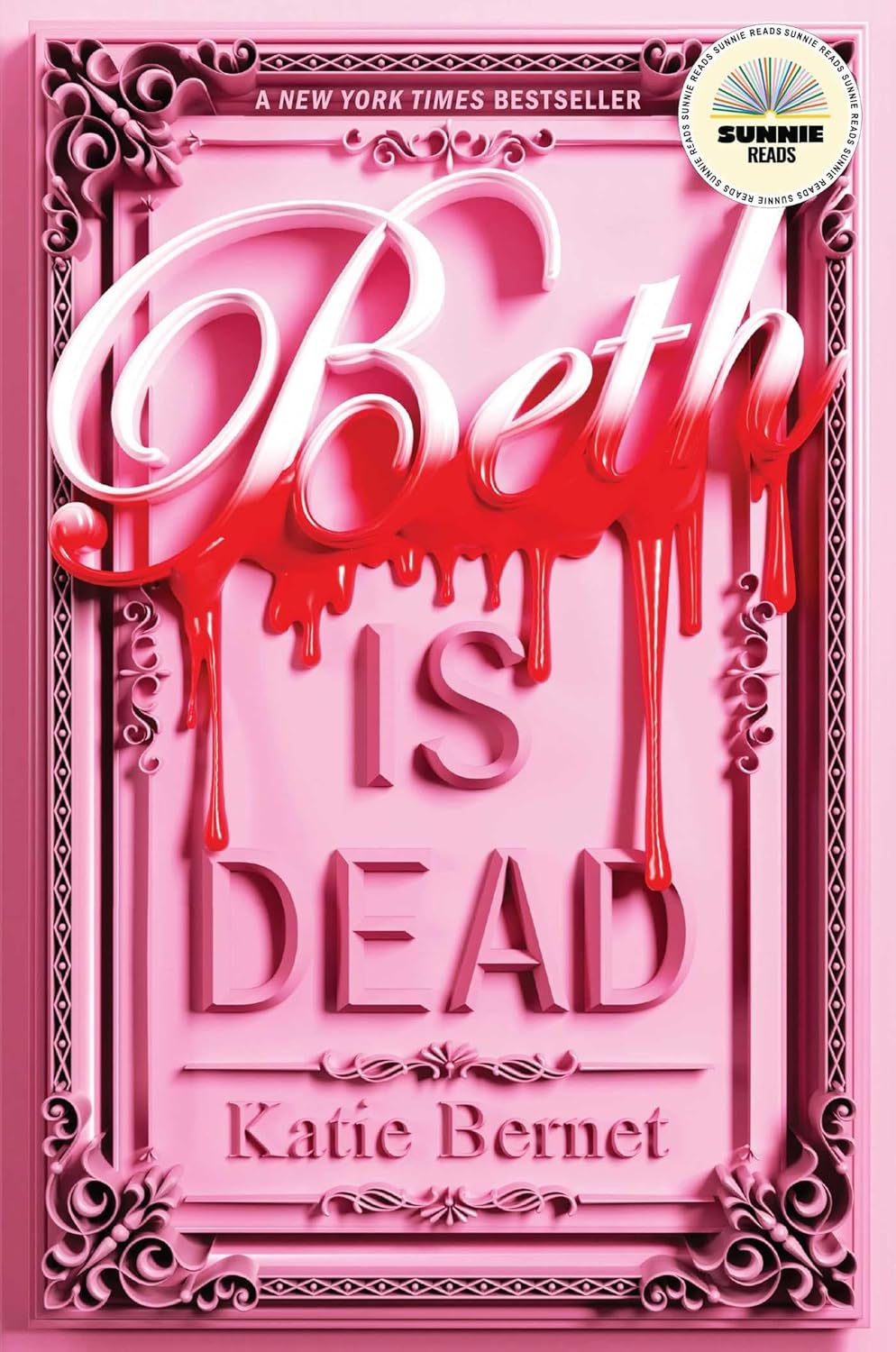
Cover art for Beth is Deat by Katie Bernet


Beth is Dead by Katie Bernet

Sarah Barley Books/Simon & Schuster Books for Young Readers

ISBN-13 ‏ : ‎ 978-1665988698

Available: Hardcover, Ebook edition, audio CD

Buy: Bookshop.org


Beth is Dead is a modern, original take on Louisa May Alcott’s classic children’s novel, Little Women.


I will start by saying that I have read Little Women many times, and most teens today are probably coming at Beth is Dead fresh, which will make a dfference in how it hits. The original novel takes place around the time of the Civil War and is about four sisters, Meg, Jo, Beth, and Amy March, as they grow up, while their father is with the Union Army. Beth is a fragile “angel of the house” character who dies tragically from illness near the end.


Beth is Dead not only brings the story to the present day, but remixes it. This time, the story starts with the discovery of Beth March’s body by sisters Jo and Amy, in a nearby park on New Year’s Day. Bernet name-checks a lot of minor characters from the original book– Amy and Beth had gone to Sallie Gardiner’s yearly party, and had a fight, after which Amy left. There are plenty of secrets about what happened that night.


But the story really starts much earlier, when the March sisters’ father published a bestselling novel detailing their private lives, Little Women, that became controversial because protesters objected to a man exploiting women’s lives for money. Threats caused him to leave home, and he hasn’t returned. In the fictionalized book, Beth dies at the end in a tragic car crash, and since the book is loosely based on their lives, most people think she is dead until she does an interview with Teen Vogue: now everyone is waiting to see what she does next. Beth’s boyfriend, Henry Hummell, is supportive and caring and doesn’t care about the book, and she is a gifted pianist. Life is looking up for her. After the interview, their Aunt March offers to pay for Beth to attend Plumfield, an arts boarding school: she just has to decide if that’s what she wants. I liked Beth a lot in this book– she grows past the “angel of the house” stereotype into someone more complex and independent. able to speak up for herself.


The story is told in alternating first person points of view by Beth (in the past), and Jo, Meg, and Amy (with different chapters set in the past and present). First person gives the reader a much different and more immediate view of the remaining three girls than a third person perspective. I really disliked Jo, who comes across as attention-seeking, selfish, naive, and only interested in picking up social media followers. I was less impatient with Amy, a wannabe artist, because it quickly became obvious where her story was going. Meg didn’t really have a compelling storyline, although it was nice to see that she had big dreams and was going after them while she worked out her feelings about John Brooke, which doesn’t happen in the original. Race plays a more obvious role: Jo’s friend Laurie goes from having olive skin and “Italian features” in the original book to Black in this one, and John Brooke is also Black: this affects their encounters with law enforcement, as both are suspects at some point. The least compelling element of the book to me was the Jo-Laurie-Amy storyline. Bernet didn’t have the opportunity to develop the relationship between Laurie and Amy convincingly, or resolve the hurt feelings between Jo and Laurie. Unfortunately, most conflicts in the book felt forced, and many secondary characters were flat, as there simply wasn’t space for character development.


Bernet does an effective job of depicting anger and grief, and the way sisters can be there for each other even at their worst. But the mystery didn’t feel very original, although there were a few surprising moments. The book moves along at a fairly fast clip, with plenty of accusations, missteps, and betrayals, so teens who like a mystery that moves along, with a dash of romance and family drama, whether they’ve read the original or not, may enjoy this book.


Reviewed by Kirsten Kowalewski


Musings: The Trouble with Young Adult Fiction

And now for something completely different.


Elisabeth Wheatley is an indie author of  fantasy romance who also makes videos, and most recently she addressed a question from the  parent of girls aged 12 and 14: why does every YA book seem like it has smut? Part of her video had to do with the way other readers piled on that person (as in, don’t be a jerk),  but her answer is interesting, and so are the comments that followed the video. And what I found interesting about the comments was that there are many people who have a different idea of what YA books are and who their target audience is than those of us who are librarians, writers, and publishers. These are people who read extensively in their genre, and I assumed we were all working off a common definition.


Granted, the boundaries are a little muddled: A Court of Thorns and Roses was originally marketed as a YA title and is often shelved with YA books, but is definitely not YA (this is likely how it frequently ends up challenged) but to me the surprising thing to me is the number of readers who think young adult books are for readers in their 20s– who would actually be described as young adults- instead of for teenagers. YA fiction has a lot more adult readers than it used to, but this is the first time I’ve actually come across a significant group of readers who believe YA is not for teenagers.

Have you come across this belief that young adult books are actually for readers who are in their 20s? I”ve been reading YA books since the 1980s and I never would have predicted there would be confusion over this. What do you think about the way books are being marketed over this “blurred line”? Do you think it matters, not just in terms of “smut” but in terms of violence?  I’d love to know.