Home » Posts tagged "YA fiction"

Book Review: Beth is Dead by Katie Bernet

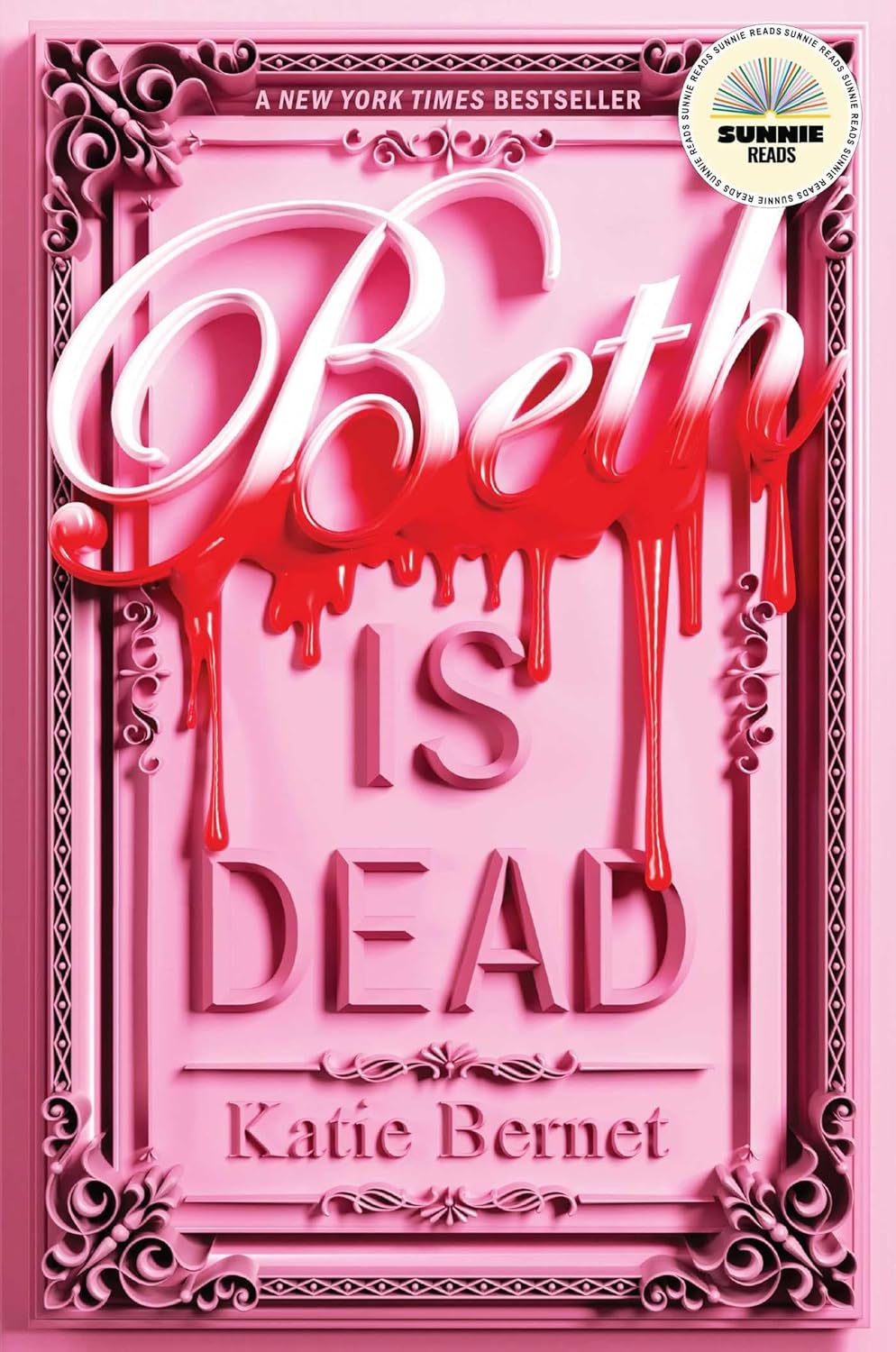
Cover art for Beth is Deat by Katie Bernet


Beth is Dead by Katie Bernet

Sarah Barley Books/Simon & Schuster Books for Young Readers

ISBN-13 ‏ : ‎ 978-1665988698

Available: Hardcover, Ebook edition, audio CD

Buy: Bookshop.org


Beth is Dead is a modern, original take on Louisa May Alcott’s classic children’s novel, Little Women.


I will start by saying that I have read Little Women many times, and most teens today are probably coming at Beth is Dead fresh, which will make a dfference in how it hits. The original novel takes place around the time of the Civil War and is about four sisters, Meg, Jo, Beth, and Amy March, as they grow up, while their father is with the Union Army. Beth is a fragile “angel of the house” character who dies tragically from illness near the end.


Beth is Dead not only brings the story to the present day, but remixes it. This time, the story starts with the discovery of Beth March’s body by sisters Jo and Amy, in a nearby park on New Year’s Day. Bernet name-checks a lot of minor characters from the original book– Amy and Beth had gone to Sallie Gardiner’s yearly party, and had a fight, after which Amy left. There are plenty of secrets about what happened that night.


But the story really starts much earlier, when the March sisters’ father published a bestselling novel detailing their private lives, Little Women, that became controversial because protesters objected to a man exploiting women’s lives for money. Threats caused him to leave home, and he hasn’t returned. In the fictionalized book, Beth dies at the end in a tragic car crash, and since the book is loosely based on their lives, most people think she is dead until she does an interview with Teen Vogue: now everyone is waiting to see what she does next. Beth’s boyfriend, Henry Hummell, is supportive and caring and doesn’t care about the book, and she is a gifted pianist. Life is looking up for her. After the interview, their Aunt March offers to pay for Beth to attend Plumfield, an arts boarding school: she just has to decide if that’s what she wants. I liked Beth a lot in this book– she grows past the “angel of the house” stereotype into someone more complex and independent. able to speak up for herself.


The story is told in alternating first person points of view by Beth (in the past), and Jo, Meg, and Amy (with different chapters set in the past and present). First person gives the reader a much different and more immediate view of the remaining three girls than a third person perspective. I really disliked Jo, who comes across as attention-seeking, selfish, naive, and only interested in picking up social media followers. I was less impatient with Amy, a wannabe artist, because it quickly became obvious where her story was going. Meg didn’t really have a compelling storyline, although it was nice to see that she had big dreams and was going after them while she worked out her feelings about John Brooke, which doesn’t happen in the original. Race plays a more obvious role: Jo’s friend Laurie goes from having olive skin and “Italian features” in the original book to Black in this one, and John Brooke is also Black: this affects their encounters with law enforcement, as both are suspects at some point. The least compelling element of the book to me was the Jo-Laurie-Amy storyline. Bernet didn’t have the opportunity to develop the relationship between Laurie and Amy convincingly, or resolve the hurt feelings between Jo and Laurie. Unfortunately, most conflicts in the book felt forced, and many secondary characters were flat, as there simply wasn’t space for character development.


Bernet does an effective job of depicting anger and grief, and the way sisters can be there for each other even at their worst. But the mystery didn’t feel very original, although there were a few surprising moments. The book moves along at a fairly fast clip, with plenty of accusations, missteps, and betrayals, so teens who like a mystery that moves along, with a dash of romance and family drama, whether they’ve read the original or not, may enjoy this book.


Reviewed by Kirsten Kowalewski
 

Musings: The Trouble with Young Adult Fiction

And now for something completely different.


Elisabeth Wheatley is an indie author of  fantasy romance who also makes videos, and most recently she addressed a question from the  parent of girls aged 12 and 14: why does every YA book seem like it has smut? Part of her video had to do with the way other readers piled on that person (as in, don’t be a jerk),  but her answer is interesting, and so are the comments that followed the video. And what I found interesting about the comments was that there are many people who have a different idea of what YA books are and who their target audience is than those of us who are librarians, writers, and publishers. These are people who read extensively in their genre, and I assumed we were all working off a common definition.


Granted, the boundaries are a little muddled: A Court of Thorns and Roses was originally marketed as a YA title and is often shelved with YA books, but is definitely not YA (this is likely how it frequently ends up challenged) but to me the surprising thing to me is the number of readers who think young adult books are for readers in their 20s– who would actually be described as young adults- instead of for teenagers. YA fiction has a lot more adult readers than it used to, but this is the first time I’ve actually come across a significant group of readers who believe YA is not for teenagers.

Have you come across this belief that young adult books are actually for readers who are in their 20s? I”ve been reading YA books since the 1980s and I never would have predicted there would be confusion over this. What do you think about the way books are being marketed over this “blurred line”? Do you think it matters, not just in terms of “smut” but in terms of violence?  I’d love to know.

Book Review: Bitter by Akwaeke Emezi

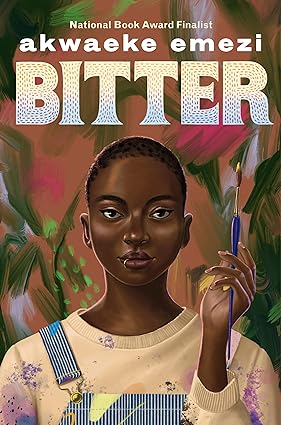
Cover art for Bitter by Akwaeke Emezi

Bitter by Akwaeke Emezi.

Knopf Books for Young Readers, 2022

ISBN-13 ‏ : ‎ 978-0593309032

Available:: Hardcover, paperback, Kindle edition, audiobook

Buy:  Bookshop.org  |  Amazon.com


Bitter is a prequel to Pet. In Pet, Jam accidentally brings a monstrous angel created by her artist mother through a gate to our world, opened by her bleeding on the image. In Bitter, we learn that it isn’t the first time Jam’s mother brought an angel through.


The city of Lucille is filled with protests turned violent. Bitter, who grew up in foster homes where she felt unsafe, has found refuge in Eucalyptus, a residential school for artistic teens run by Miss Virtue . She avoids the protests, focusing on her art, believing there’s no hope for change. She meets Aloe, a sound artist training to be a street medic to help the Assatta, grassroots revolutionaries, and he starts giving her hope. I liked the idea that everyone can contribute in their own way, even if they aren’t on the front lines.


After a particularly violent protest, Bitter, who can make her art come to life briefly with blood, creates a monstrous creature and brings it to life in hopes of ending the violence. Unfortunately, the intention he sensed in her was anger, so instead of helping her stop it, he becomes an angel of Vengeance, a hunter of monsters (in this case billionaires and politicians) who wants to kill or burn away evil. When Bitter refuses to help, he convinces members of Assata to hunt with him, but despite their anger, none of them are ready for the brutal, impersonal violence of the angel.


Bitter realizes she can force him back through the gate, but the damage is done, with both innocent and not-so-innocent people dead. Bitter and the Assatta cover up the angel involvement and are able to use the incident to gain concessions and change the system to make it more equitable, the beginnings of the mostly utopian world that exists at the beginning of Pet.


Emezi wrote Bitter during the pandemic and watched their fiction come far too close to reality. They were becoming progressively more disabled while it was written: they dictated it to a friend over Zoom.


Bitter is an angrier book than Pet, and the characters are older teens: while Pet works as a middle grade book and almost a fairytale, Bitter is definitely YA. Highly recommended.


Reviewed by Kirsten Kowalewski