Home » Posts tagged "women in horror" (Page 16)

Women in Horror Fiction: Yvonne Navarro

While we’ve moved on from February and Women in Horror Month, there is absolutely no reason to limit our celebration of women writers of horror to any particular time of year– so even though we interviewed Yvonne Navarro months ago, May is a perfect time to draw attention to an excellent writer of horror who also happens to be a woman.

Yvonne Navarro is a prolific horror author, having written such books as Afterage (2002 Overlook Connection Press), Final Impact (1997 Bantam), and Dead Times (2000 DarkTales Publications).  Her short stories have appeared in anthologies such as Deep Cuts: Mayhem, Menace, and Misery (2013 Evil Jester Press), Skull Full of Spurs (2000 Dark Highway Press), V-Wars (2013 IDW Publishing), and The Haunted Mansion Project: Year One (2012 Damnation Books).


1. Can you give our readers a brief introduction?

Hi, everyone.  I’m Yvonne Navarro, and I’ve been writing since way longer than I care to admit.  As of right now, I’ve gotten twenty-two novels published.  Seven were solo novels, and the rest were media-related.  I did seven novels in the Buffy the Vampire Slayer Universe, five of which were originals, and won the Bram Stoker Award for YA writing for one of the Buffy tie-ins.  Some other awards and such—it’s always fun to have people appreciate your work.  I’ve also written a big bunch of short stories, somewhere over 100, but I have no idea of the final count because, well, I’m always going to get around to updating that bibliography document “later.”


2. Why do you write horror?  What draws you to the genre?

The first movie I remember watching was Alfred Hitchcock’s The Birds (1963).  I guess I’ve always thought there’s nothing better than a great, pulse-pounding, scary story.  Nowadays it’s a little harder to entertain me in that area, but when I was a kid Creature Features was a staple in our house every Friday night, and I hit the matinee at the local movie house every Saturday without fail.  My mom liked scary movies, so maybe she’s where I got it from, along with the desire to draw and write.  The first adult horror book I read was Scream and Scream Again by Peter Saxon (originally titled The Disoriented Man, 1968).  I saw the edge of it on top of the fridge where my Mom had hidden it.  I was hooked.


3. Can you describe your writing style or the tone you prefer to set for your stories?

That’s a hard question because normally I don’t think I have a specific style.  I write the way I like to read—total involvement in the characters and stories, so much so that I forget I actually am reading.  When I write I don’t think about writing.  I “see” the characters in their environment and it’s like I’m just putting down what they see and do in their own element.  I always have a little romance in a story because if a character can’t care about someone else, he or she probably isn’t memorable enough for the reader to care either.


4. Who are some of your influences?  Are there any women authors who have particularly inspired you to write?

My biggest influence was without a doubt Robert R. McCammon.  It was his book, They Thirst (1981 Avon Books), that made me want to try my hand at writing to begin with.  When I wrote and asked him questions, he responded positively even though I was an absolute green-behind-the-ears person who was about as much of a non-writer as I could be.  There are lots of good women writers out there.  I “grew up” with Elizabeth Massie, in particular; we met at the first World Horror Convention I attended and have been friends ever since.


5. What authors do you like to read?  Any Recommendations?

I still adore the work of Robert R. McCammon (who recently started writing again after taking quite awhile off), and I have an entire collection of Stephen King.  Right now I seem to be on a YA fantasy craze.  I’m reading Cassandra Clare’s Mortal Instruments Series (Margaret K. McElderry Books) and Veronica Roth’s Divergent Series (Katherine Tegen Books).  I’m always looking for the next Barbara O’Neal novel, which isn’t horror but consistently has some small supernatural thing going on.  And I can’t wait for the final Laini Taylor novel in her Daughter of Smoke and Bone trilogy (Little, Brown Books for Young Readers).
6. Where can readers find your work?

Most of my solo novels are out of print but I still have copies of lots of stuff (signed, too) available off my website at http://www.yvonnenavarro.com/offerings.htm.  I’m notoriously bad about updating the blog on my main website page (just like my bibliography), but I do keep up with Facebook at http://www.facebook.com/yvonne.navarro.001.  And I’m always trying to cook up something new.  I have big plans for this July, when I’ll be a Writer In Residence for two weeks at the Golden Apple Studio in Bangor, Maine.  I plan on world-building and cooking up a brand new series while I’m there.  I also write the Double X Chromosome column for Dark Discoveries magazine (http://www.darkdiscoveries.com).


Thanks, Yvonne, for your patience, and for participating in our Women in Horror project, even though it’s already May!
 

Shelley’s Daughters: The Magazinists

One of the interesting things about the women who have historically written supernatural fiction, especially in America, is how little of their writing is available to those who want to read it. And one of the reasons so little of it is available is because most of them did not publish books. They wrote for newspapers and magazines– and, in fact, are sometimes referred to as “magazinists”. Newspapers and magazines are ephemeral in nature– here today and gone tomorrow– so a great deal of the work of women writers has simply vanished. In introducing her partial bibliography of Charlotte Perkins Gilman (unfortunately, no longer available online), who is widely known for penning the terrifying story “The Yellow Wallpaper”, Kim Wells noted that, as of 1998, just forty-three of her 186 stories had been published in book form. All of these appeared in magazines, and many of them appeared in The Forerunner, which she published herself.  According to Wells, Gilman also wrote over a thousand pieces of nonfiction on a variety of topics, which were mostly published in magazines and newspapers  (Oxford Online confirms this) and many of these have been inaccessible to researchers (although Radcliffe College reports that Harvard and Radcliffe now both have searchable collections of her papers in the process of digitization). And yet, most people know of this prolific writer and passionate social reformer primarily for one short story, “The Yellow Wallpaper” .

Even less is available on other women writers (particularly those who wrote between 1850 and 1930) whose works were published mainly in newspapers and magazines, and whose names we may not even know well enough to find. Unfortunately for most reader’s advisory librarians, even compilations in which the editor has gone to outstanding lengths to seek out works from women magazinists (and there are a limited number of these), are now out of print.


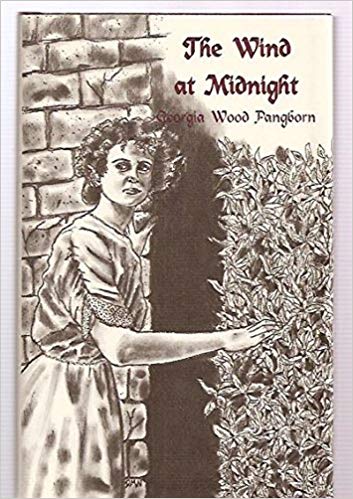
Georgia Wood Pangborn (1872-1958) is oThe Wind at Midnight by Georgia Wood Pangbornne of these women, well-known for her supernatural fiction during the time that she wrote, but now almost completely faded away. In a draft of an introduction to The Wind at Midnight, a limited edition collection of Pangborn’s short stories that was published in 1999, editor Jessica Amanda Salmonson wrote that “she was possibly the best American supernaturalist of her day. Yet she fell so far into obscurity after she withdrew from literary life in the middle of the 1920s, she has been totally unknown to modern anthologists of supernatural fiction.” Some of her works can be found online in PDF format, and a few reproductions of her books Roman Biznet and Interventions are now available through Amazon (although they are quite expensive and I don’t have any idea as to the content or quality at this time. If you would like to sample her work, one of her stories appears in What Did Miss Darrington See? An Anthology of Feminist Supernatural Fiction, edited by Jessica Amanda Salmonson, which is still in print.

Sarah Wilkinson (1779-1831), also known as Sarah Scudgell Wilkinson or Sarah Scadgell, is primarily known for her blue books, or chapbooks, and in fact, her first short works were published in a literary magazine called The Tell-Tale Magazine, which published them simultaneously as chapbooks.

In a blog entry at The Gothic Imagination, Franz Potter gives some description of what exactly a chapbook or blue book was. These were heavily illustrated 36 to 72 page booklets, much shorter than the average Gothic novel. Potter writes that while Ann Radcliffe and her imitators moderated their use of terror, chapbook authors “filled their pages with continual scenes of horror”. Click here to see PDF images of the pages from one of the blue books Wilkinson wrote, The Castle Spectre (which was based on a play by Matthew Lewis), so you can see exactly what they look like.

This is what Sarah Wilkinson was best known for. Her writing wasn’t limited to chapbooks, however: in 1806, she published a subscription novel titled The Thatched Cottage; or, Sorrows of Eugenia, which had such eminent subscribers as the Duchess of Gloucester. From 1812-1819, she worked as a teacher and wrote primarily children’s stories and books, but returned to the Gothic after poor health forced her to resign her teaching position, publishing A Bandit of Florence (1819) and Lanmere Abbey (1820). Over the next decade, as her health continued to fail and her financial situation became desperate, she continued to write short pieces for periodicals and blue books. Potter has written about her in detail here.

1875 Elliott & Fry photograph,courtesy Jennifer Carnell, Sensation Press

Charlotte Riddell (1832-1906), also known as Mrs. J.H. Riddell and F.G. Trafford, was also a well-known writer of supernatural fiction.  In an essay on her life, S.M. Ellis  called her “a born story-teller”. In addition to producing numerous novels, she wrote a tremendous number of short stories and tales for a wide variety of publications. Ellis wrote that she had written so many that  “she lost all count of her works, possessed very few copies of them herself, and often forgot where certain stories had appeared or what had happened to her rights in them.”She was born Charlotte Elizabeth Lawson Cowan. She grew up in Ireland, and many of her works are set there. Married in 1857 to Mr. Joseph Henry Riddell, she wrote primarily under the name Mrs. J.H. Riddell after that time. At her time, she was compared with Sheridan Le Fanu and her work was praised by M.R. James, a master of supernatural fiction himself. Peter Beresford Ellis quotes  the critic James L. Campbell who wrote: “Next to Le Fanu, Riddell is the best writer of supernatural tales in the Victorian era” (note: if you click on the link above, you will have to scroll way down to find the artile on Riddell, but it is there). In addition to being a writer of popular supernatural fiction, Riddell also was part owner of the literary journal St. James’ Magazine. While Riddell has occasionally had stories appear in anthologies of supernatural fiction, her work has been out of print and often difficult to find in the past. There are some recent collections of her work that have been published, however, that include some of her better-known novels, novelettes, and short stories. These include The Collected Supernatural and Weird Fiction of Mrs. J. H. Riddell: Volume 1-Including Two Novels “The Haunted River, ” and “The Haunted House at Latchford; The Collected Supernatural and Weird Fiction of Mrs. J. H. Riddell: Volume 2-Including One Novel “The Nun’s Curse, ” and Two Short Stories;  The Collected Supernatural and Weird Fiction of Mrs. J. H. Riddell: Volume 3-Including Two Novels “The Disappearance of Jeremiah Redworth, ” and “The Uninhabited House

Or, perhaps if you don’t require an expensive three volume set, you might take a look at these smaller collections that look much more like something readers in search of a good ghost story might appreciate. Click on the cover images to find out more about the below titles:

Weird Stories was first published in 1882, to great acclaim. Here’s a reasonably priced annotated version, currently in print.
 Fourteen of Mrs. Riddell’s supernatural tales.
These three women are just a few of those writing at the same time, struggling to make a living with their pens. All three of these women, writing as print culture exploded, made significant contributions to the writing of supernatural and Gothic fiction, the evolution of the ghost story, and the use of not just genteel terror, but of true creepiness and horror. Yet, while male authors of the same time are often well known, these women, as talented as they may have been, have been passed over by time. The scribbling women of the Romantic and Victorian eras, and well into the 20th century have a great deal to say, and it’s time to uncover it.


Women in Horror Fiction: H.I. Moscato (H.I.M.)

Women in Horror Month is technically over, but we still have more good stuff to share. Today, an interview with H.I. Moscato. If you didn’t know about her already, you might not have discovered her easily on your own. Enjoy!

Product DetailsH.I. Moscato is the author of a two-book vampire series, Vampire’s Song (2009 Amazon) and The Sound of Blood (Vampire’s Song) (2013 Amazon), as well as various short stories.


 

Can you give our readers a brief introduction?

My full name is Hortenzia Ilona Moscato and I publish under my initials, H.I.M., due to its length. I’m an author of a two- book vampire series and several short horror stories. I found my love of writing rather late in life when I caught up on reading all the books that my favorite author of the time had written and was having a hard time finding a replacement read that filled the same void. After a great deal of frustration in not finding what I was looking for I thought it would be fun to write something myself–  never thinking anyone would ever see it. That was all it took to fall in love with the craft. It’s now been 12 years, and my love affair with writing is still going strong.


Why do you write horror?  What draws you to the genre?

As all young children I feared the monsters under my bed and somehow early on I realized that the only way to keep them– the monsters– from eating me up was to befriend them with offerings of cookies. Now I chase their friendship on paper.


Can you describe your writing style or the tone you prefer to set for your stories?

I prefer to take a seemingly normal start to a story and then slowly twist it into something the reader never saw coming.


Who are some of your influences?  Are there any women authors who have particularly inspired you to write?

I find I’m influenced by every author I read. I can’t help but pull out everything I love, hate, got excited about, mad at or cried over out of every story. I’m not sure how you can’t be influenced one way or another– that’s, in my opinion the beauty of reading.


What authors do you like to read?  Any Recommendations?

Wow, that’s a tall order to fill. There are so many great writers. I’d have to say the best place to get a taste for an author’s work is through anthologies. I see them as sampler platters for novels.
Where can readers find your work?

I have two novels out, Vampires’ Song and its sequel The Sound of Blood both available on Amazon in hard copy and Kindle, as well as several short stories through Horrified Press and James Kirk Ward Publishing.