Home » Posts tagged "Thanksgiving"

Book Review: Tears of the Dragon (Kiranis #4) by Ronald A. Geobey


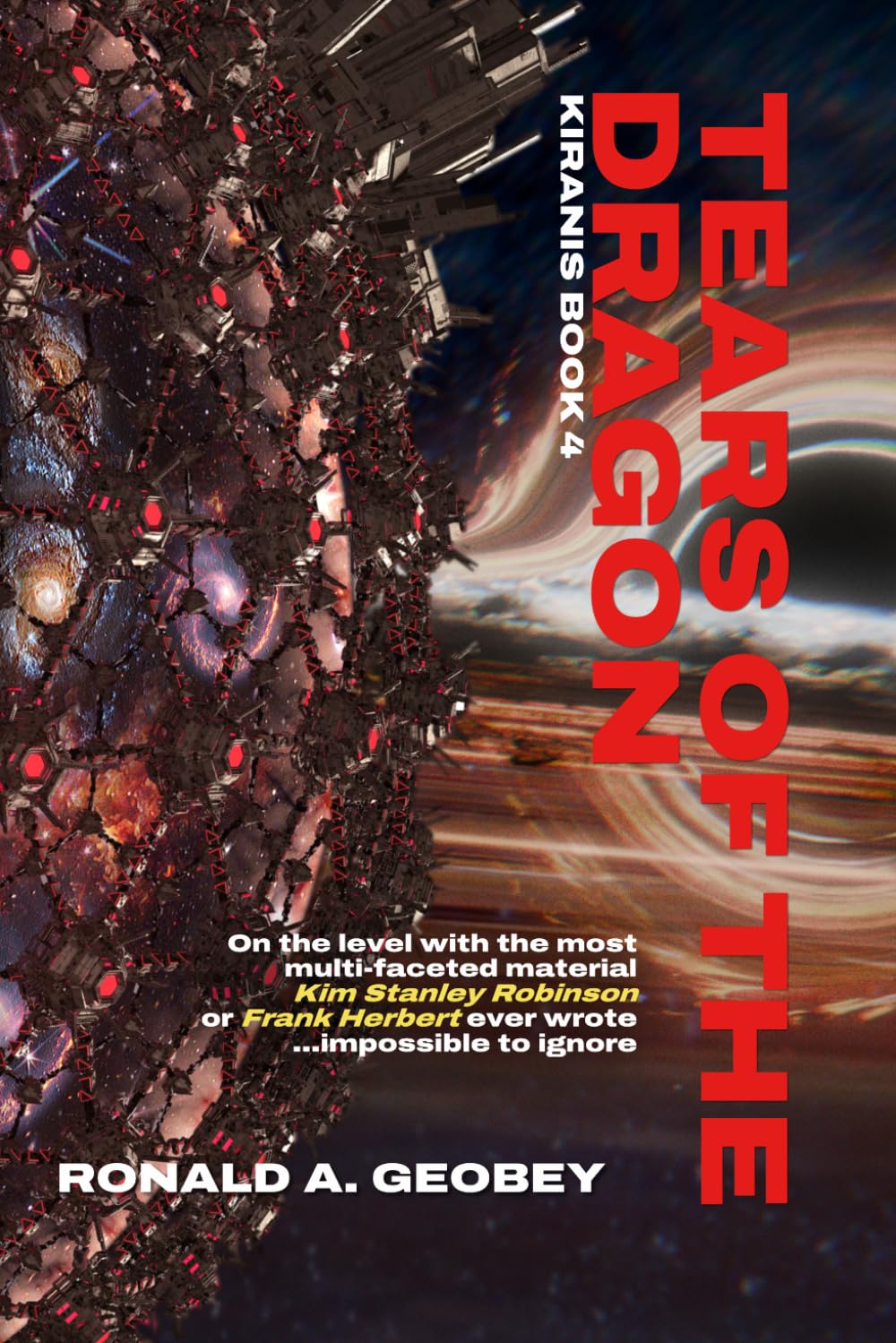
cover art for Tears of the Dragon by Ronald A. Geobey

Tears of the Dragon by Ronald A. Geobey

Temple Dark Publishing, 2026

ISBN: 9781068250743

Available: Hardcover, ebook edition

Buy: Bookshop.org | Amazon.com


The fourth volume in Ronald A. Geobey’s magnum space opus, Tears of the Dragon continues along the path established by the previous three volumes: multiple plotlines intertwined with many characters, all heading for various unknown outcomes. This is SERIOUSLY complex stuff, on the level with the most multi-faceted material Kim Stanley Robinson or Frank Herbert ever wrote. This saga is likely to have a very devoted following over time, but it’s for certain types of readers. In other words, the mass appeal may be a bit limited, but the fans of the series will love it.


I’ll admit I got somewhat left in the space-dust on where all of this is heading, and my comprehension of the plot is pretty limited. However, that did not detract from my enjoyment of the story. Here’s an analogy. I love the films The Departed and Interstellar, yet even after multiple viewings, I still can’t figure out all the plot points of either film. This series is much the same way. I can’t make head or tail of it at times, but it’s still a good read. I like seeing what the characters are doing, the action taking place, and all the twists to the plot. When this series finally reaches its conclusion, I fully expect that I may not even comprehend it, but so what? As the Grateful Dead famously said, “at least I’m enjoyin’ the ride.”


For all that, that doesn’t mean that the author has written an impenetrable story. This isn’t Finnegan’s Wake. I’ve always had trouble with stories that involve time travel and multiple dimensions, and this story has a lot of that. There’s also a lot to keep track of, and I forget things. I still enjoyed the story, though, especially the thread with Cassandra Messina as the Empress. I’m still not sure how she was cloned multiple times, with the original model appearing at the same time as a clone, years later, but again, no sense worrying about it. I found the story captivating, all the same. There was a discussion between two characters in the area of page 170 that I would like to see a bit more of in the series, almost a break to help explain part of the plot. More little sections like that would be helpful for readers like me, who struggle with hard sci-fi, and I would like to see a few more of those interspersed within each book.


Overall, this series is one that is likely to have individuals with very strong opinions about it, from both supporters and detractors. One thing is certain: the world-building and layering of plot threads is staggering. I don’t think I’ve ever seen it done on this scale before. Regardless of whether you love or hate this series, it’s a monumental achievement that is almost impossible to ignore. Recommended for fans of the series. For new readers who want to give it a shot, make sure to start with the first book: you CANNOT read this series out of order.


Reviewed by Murray Samuelson
 

Book Review: Beth is Dead by Katie Bernet

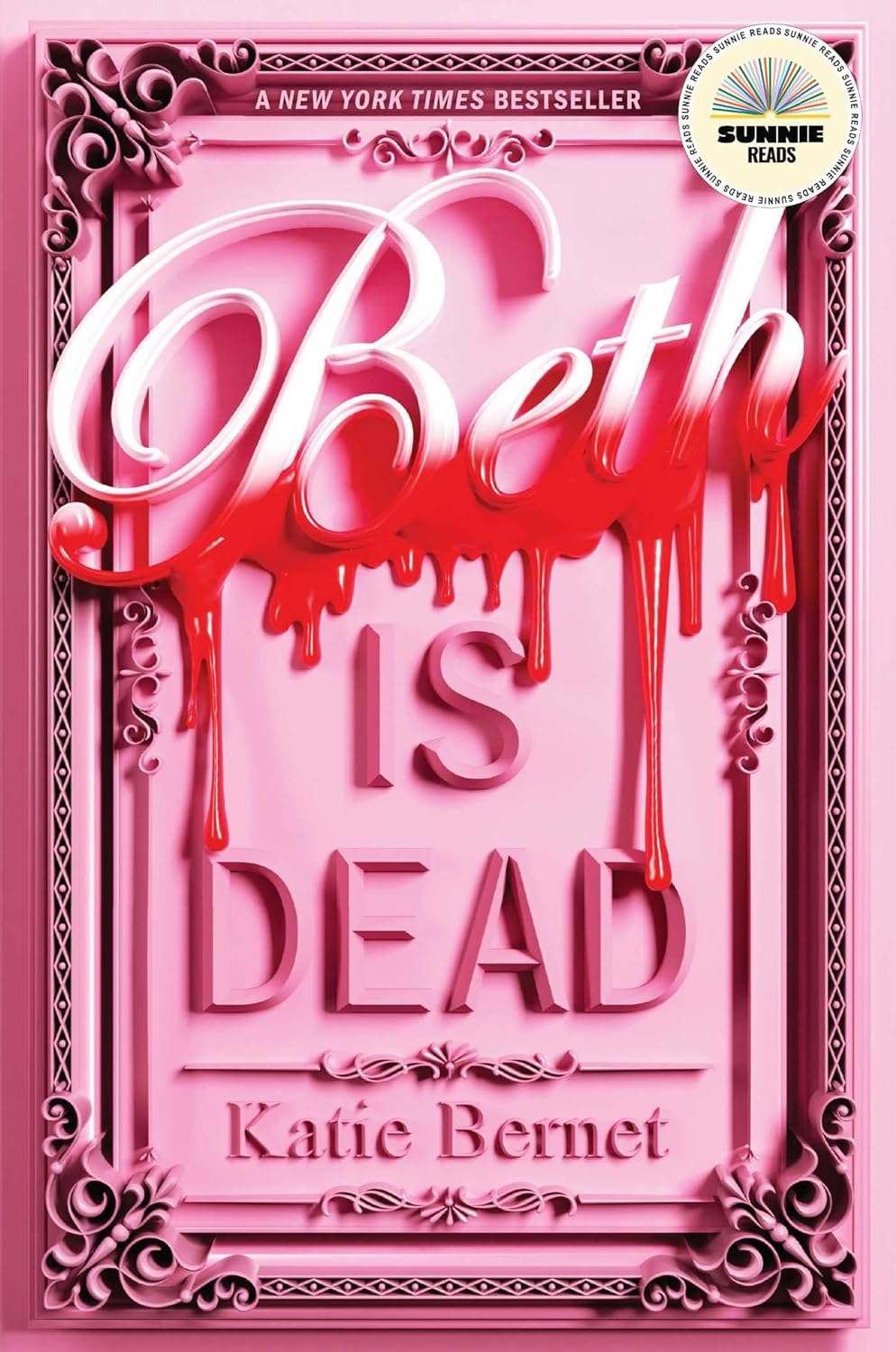
Cover art for Beth is Deat by Katie Bernet


Beth is Dead by Katie Bernet

Sarah Barley Books/Simon & Schuster Books for Young Readers

ISBN-13 ‏ : ‎ 978-1665988698

Available: Hardcover, Ebook edition, audio CD

Buy: Bookshop.org


Beth is Dead is a modern, original take on Louisa May Alcott’s classic children’s novel, Little Women.


I will start by saying that I have read Little Women many times, and most teens today are probably coming at Beth is Dead fresh, which will make a dfference in how it hits. The original novel takes place around the time of the Civil War and is about four sisters, Meg, Jo, Beth, and Amy March, as they grow up, while their father is with the Union Army. Beth is a fragile “angel of the house” character who dies tragically from illness near the end.


Beth is Dead not only brings the story to the present day, but remixes it. This time, the story starts with the discovery of Beth March’s body by sisters Jo and Amy, in a nearby park on New Year’s Day. Bernet name-checks a lot of minor characters from the original book– Amy and Beth had gone to Sallie Gardiner’s yearly party, and had a fight, after which Amy left. There are plenty of secrets about what happened that night.


But the story really starts much earlier, when the March sisters’ father published a bestselling novel detailing their private lives, Little Women, that became controversial because protesters objected to a man exploiting women’s lives for money. Threats caused him to leave home, and he hasn’t returned. In the fictionalized book, Beth dies at the end in a tragic car crash, and since the book is loosely based on their lives, most people think she is dead until she does an interview with Teen Vogue: now everyone is waiting to see what she does next. Beth’s boyfriend, Henry Hummell, is supportive and caring and doesn’t care about the book, and she is a gifted pianist. Life is looking up for her. After the interview, their Aunt March offers to pay for Beth to attend Plumfield, an arts boarding school: she just has to decide if that’s what she wants. I liked Beth a lot in this book– she grows past the “angel of the house” stereotype into someone more complex and independent. able to speak up for herself.


The story is told in alternating first person points of view by Beth (in the past), and Jo, Meg, and Amy (with different chapters set in the past and present). First person gives the reader a much different and more immediate view of the remaining three girls than a third person perspective. I really disliked Jo, who comes across as attention-seeking, selfish, naive, and only interested in picking up social media followers. I was less impatient with Amy, a wannabe artist, because it quickly became obvious where her story was going. Meg didn’t really have a compelling storyline, although it was nice to see that she had big dreams and was going after them while she worked out her feelings about John Brooke, which doesn’t happen in the original. Race plays a more obvious role: Jo’s friend Laurie goes from having olive skin and “Italian features” in the original book to Black in this one, and John Brooke is also Black: this affects their encounters with law enforcement, as both are suspects at some point. The least compelling element of the book to me was the Jo-Laurie-Amy storyline. Bernet didn’t have the opportunity to develop the relationship between Laurie and Amy convincingly, or resolve the hurt feelings between Jo and Laurie. Unfortunately, most conflicts in the book felt forced, and many secondary characters were flat, as there simply wasn’t space for character development.


Bernet does an effective job of depicting anger and grief, and the way sisters can be there for each other even at their worst. But the mystery didn’t feel very original, although there were a few surprising moments. The book moves along at a fairly fast clip, with plenty of accusations, missteps, and betrayals, so teens who like a mystery that moves along, with a dash of romance and family drama, whether they’ve read the original or not, may enjoy this book.


Reviewed by Kirsten Kowalewski


Book Review: Nematodes by David Smith

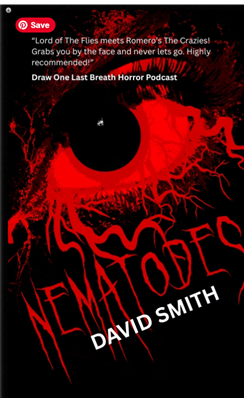
Nematodes by David Smith

Temple Dark Books, 2026

ISBN: 9781068250729

Available: Hardcover

Buy:  Temple Dark Books (pre-order, available in January)


If you thought Lord of the Flies and its premise of “kids running wild amid societal  breakdown” was a cool concept, but wanted a version that was light on philosophy and heavy on excitement (with plenty of gunfire) then you will love Nematodes. The basic idea is taken and amped up way past the redline, and includes the author’s own original twists to the idea in the narrative.


The setting is rural America, in the town of Paradise, a year after nematodes (microscopic worms that are part of our ecosystem) have killed almost all of the adults in America, turning them into flesh-eating, raving lunatics that soon die from the effects. If you saw that old movie  The Crazies, the adults are kinda like that. Only kids, age 15 and under, are left. The author does an excellent job portraying Paradise and its inhabitants.


Here, a rough social order has emerged, run by the strong, and force is the only law. The children are shown as you might expect– petty, extremely cruel, lying constantly to save themselves, and willing to turn on each other whenever necessary. Oh, and very foul-mouthed, of course! It’s a nice job showing what is likely to actually happen, as opposed to trying to portray the kids as suddenly maturing and acting like adults. Some readers might nit-pick about the lack of detail concerning how the kids managed to survive for over a year with no electricity and running water, (cooking and toilet problems come to mind) but this isn’t written like Verne’s The Mysterious Island, where every little survival detail is provided. In this case, doing so would have slowed the narrative, and the intent here is clear: provide a high-speed story that doesn’t ever let up.


It never does, and that’s why it works. Early on, the story revolves around Ben and his younger siblings, and their clashes with Caleb and his slimy brothers Rikki and Marcus, who run the town. Partway through, a couple of surviving adults are introduced, and the scope of the narrative expands to include some areas outside of Paradise, as well as a BIG twist to the plotline, it shifts from being just “survival of the fittest” to “will humans survive, in the face of what they learn about the nematode infestation?” The reason given might seem a little wacky for some readers, and really changes the narrative, but I thought it showed good creativity by shifting away from where the reader expects the story to go. This also allowed the author to have the kids forge new alliances among themselves, which again, does a nice job of keeping the reader guessing, and elevating interest.


Even if the author had made the plot more predictable, this is easily worth reading for the high-octane pacing. Someone is always being hunted for a reason, and that keeps the tension high throughout, wondering if one of the children will survive into the next chapter. There’s enough character development that readers will hurt when some of the characters are killed off, especially considering how heartless some of the murderous kids are. You thought the Children of the Corn were bad news? They are bush-league amateurs compared to Caleb and his gang. Paradise is truly a “take no prisoners” world, and it can be a bit tough to read at times, but it makes for a real page-turner of a story.


Bottom line here is: if you want to see an ugly, ultra-violent world where the kids are every parent’s worst nightmare, you don’t want to miss this. Definitely recommended!


Reviewed by Murray Samuelson