Home » Posts tagged "serial killers" (Page 5)

Book Review: The Devil and the Dark Water by Stuart Turton

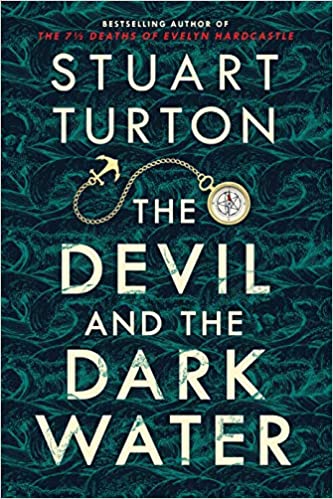
cover art for The Devil and the Dark Water by Stuart Turton

(  Bookshop.org )

The Devil and the Dark Water by Stuart Turton

Sourcebooks, 2020

ISBN-13 : 978-1728206028

Available: Hardcover, paperback


Stuart Turton probably wouldn’t describe his books as horror, but they are compelling, original, and dread-inducing. In a departure from the surreal Agatha Christie-like The 7 1/2 Lives of Evelyn Hardcastle, in The Devil and the Dark Sea, this story takes place in 1634, on a ship leaving from Batavia (now Jakarta, Indonesia), the center of the Dutch East Indian Trading Company, for Amsterdam, home of the company’s headquarters, a journey of about eight months during which many ships were lost as sea. Readers expecting accurate historical fiction will not find it here: in a note, Turton essentially says he did the research, but threw it out the window if he found it wouldn’t work with his story. By changing as much as he did, he’s basically written an alternate history, which would be fine except that he never identifies it as such, which is unfair to readers unfamiliar with the setting, who will think it’s solidly grounded in the historical period (I guess once someone calls your work genre-bending it’s hard to commit).


Passengers on the Saardam include Jan Haan, the ambitious governor general of Batavia; his wife, Sara Wessell; and their inventive daughter, Lia; his mistress, Creesjie Jens, and her sons; his chamberlain, Cornelius Vos; and guard captain Jacobi Drecht.  Also traveling on the ship is Sammy Pipps, a Sherlock-type detective and alchemist of unknown origin who has been accused of spying, and his bodyguard/case recorder, former Lieutenant Arent Hayes. Before the ship leaves, a leper warns the passengers not to leave, warning that the devil “Old Tom” will be their downfall, but the governor general is insistent on leaving for Amsterdam immediately. Complicating things by bringing religion into the mix on a ship where passengers and crew are already uneasy and superstitious, a predikant, or preacher, and his acolyte Isabel, stow away on the ship as well.


Just as the ship sets off, the sail is unfurled to show a symbol that Creesje, the predikant, Arent, and one of the sailors individually recognize and associate with Old Tom. Is the devil really on the ship with the passengers and sailors, are they imagining things, or is someone playing with the characters’ fears in hopes of personal gain? The predikant, a former witch hunter, claims they’ll know for sure once three unholy miracles have occurred. As the ship gets further out onto the open ocean, the unholy miracles are identified, and the weather worsens, the onboard situation gets more violent and treacherous, and it becomes clear that, real or not, Old Tom has followers among the crew. As the histories of the characters and plot twists are unraveled, and the deaths stack up, the situation becomes even more unnerving. Is the ship haunted by Old Tom, or is something else going on?


Turton does a fantastic job of creating a sense of mystery and dread. There is no escape from the ship out on the ocean, just people, most of whom don’t like or trust each other, adrift after a storm. Turton admits he took liberties with history for the purpose of the story, so I don’t know if sailors truly lived continually in such brutal, violent environments, but he paints a vivid picture of the dynamics. Characters who could have been one-dimensional were fully developed: Arent turns out to be the governor general’s nephew, and while Haan might have been terrible to his wife and underlings,  he clearly cherishes his relationship with Arent. Haan’s wife Sara could have been set up in opposition to his mistress, but they turn out to be close friends. Sammy and Arent, for all their similarities to Holmes and Watson, are completely different in body type, personality, background, and overarching motivation. I found the very ending unneccessarily brutal, unrealistic and extremely disappointing, and felt it marred the story in a big way,  but I felt the atmosphere, character development, and descriptive language still made this worth reading.


The Devil in the Dark Water reveals some very dark aspects of overseas trade and the participants in it during the 1600s. No one comes away untainted. Despite the faulty ending, it’s a tale I won’t soon forget, and I would certainly give Turton another chance.

Contains: violence, gore, murder, implied rape, brutal killing of animals, body horror, mass murder


Reviewed by Kirsten Kowalewski


Book Review: Storm-Star (Storm-Star Lore Book 1) by I. N. Morgan

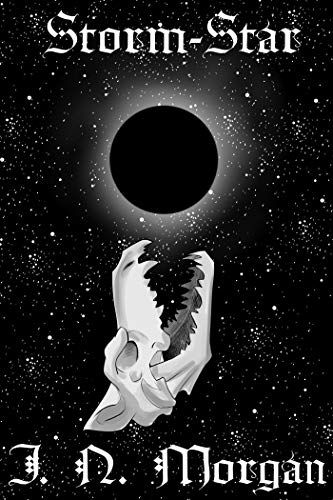
cover for Storm-Star by I.N. Morgan   (Bookshop.orgAmazon.com)

Storm-Star (Storm-Star Lore Book 1) by I.N. Morgan

Heavy Rush Media, September 2020

ISBN: 9781732876514

Available: Paperback, Kindle


Storm-Star is a decent horror debut from rookie author I.N. Morgan.  It’s a werewolf story (well, sort of) with a touch of sci-fi added in.  The elements in the story are nothing new, but they are combined in the right proportions to make the story fun.  The book won’t blow casual readers away, but they will probably find it enjoyable enough to be worth the time.

Set in 1997, Ash Jagerhund is a down-on-his-luck 23 year old with no family, relatives, or future.  He receives a letter from a lost uncle, Jasper, who invites him to live with him, in an effort to rekindle old family ties.  Ash does so, and they reside in the Midwest town of Rust Springs, a town recently plagued by a series of gruesome pseudo-ritualistic murders.  The nature of the murders suggests they may not have a human source.   Ash makes two new friends, Attila and Daisy.  The three of them are unwillingly pulled into the search for the killer, who has ties to the Loupcroix family, a bunch of meth dealers on the outskirts of town.  The Loupcroixs believe that the world will end when a creature called the Storm-Star comes across the galaxy and trashes the Earth for the benefit of the Loupcroixs, who will of course then rule the world.  Add in Ash’s later revealed family history, and you have a fair amount of plot elements, which the author manages to fit into all the right places.

The writing is solid enough and keeps focused on the plot without detours, but there are times when a bit of detail would have helped connect the plot dots better.  Example: the cops somehow find a website all about the Loupcroixs and their beliefs, but there was no one to give them any hint of the site.  Besides, how many meth dealers maintain a website?  The characters are developed well enough, and are interesting, although the reader may get a few of the secondary characters mixed up on occasion, as the character cast is around 10-12 people.  The plot is nice and linear, and has enough action (and just a touch of gore) to keep the reader flipping pages.  It’s not a breakneck thriller, but it’s enough to make it worth reading.  One annoyance is that a good editor should have corrected is the grammatical and sentence structure errors that crop up from time to time.  It’s not enough to pass on the book, but it is aggravating.

Reading this, you can tell it’s written by a first-time author with talent, but who is still learning the craft.  As long as the reader is willing to tolerate the minor problems, Storm-Star is worth a look.  The author did leave a tractor-trailer sized opening at the end of the book for a sequel, and it would be great to see a sequel that focuses on the most exciting characters (Ash, Attila and Daisy) and whittles down the number of secondary ones.

Contains: violence, gore, profanity, drugs


Reviewed by Murray Samuelson

Book Review: Whitechapel Rhapsody by Alessandro Manzetti

A note from the editor (that’s me) :

We are midway through October and Monster Librarian still needs to raise the funds to pay for our hosting fees and postage in 2021. If you like what we’re doing, please take a moment to click on that red “Contribute” button in the sidebar to the right, to help us keep going!  Even five dollars will get us closer to the $195 we need to keep going at the most basic level. We have never accepted paid advertising so you can be guaranteed that our reviews are objective. We’ve been reviewing and supporting the horror community for 15 years now, help us make it another year! Thank you! And now our review of Whitechapel Rhapsody by Alessandro Manzetti.

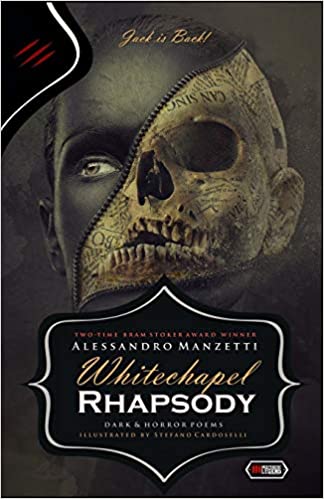
cover art for Whitechapel Rhapsody by Alessandro Manzetti

Whitechapel Rhapsody by Alessandro Manzetti   (Amazon.com)

Independent Legions Publishing,  2020

ISBN: 978-88-31959

Available: Kindle edition, Paperback

Ever since Jack the Ripper prowled the streets, he has been the worst kind of nightmare, the shockingly brutal and chilling reality that monster-men can be living among us unnoticed, watching and freely choosing fresh victims. In his new book of poetry, Whitechapel Rhapsody, Alessandro Manzetti uses words from The Ripper’s letters to the police, information about the women and their possible murderers, and even one of the autopsies to access the mind of a killer who has never been identified for certain.

In “The Lair”, which begins the book, and in the rhapsody poems (“Sick Rhapsody,” “Entangled Rhapsody,” and “Madhouse Rhapsody”) which appear at intervals throughout the collection, we are plunged into the ugly, sordid, sick environment of physical and spiritual contagion that was the setting for the murders, if not the spawning ground of the murderer. Against this background, the poems describe the killer as a macabre artist who vows to his victims, “I will make art of you” and causes them to be “carved” by his “iron brushes,” his “long-bladed knife accurate like a Mozart composition.” True to The Ripper’s artistic vision, there is a focus on color, especially shades of red blood and the textures of the organs of the human body in each “still life.” This is the portrait of a demented artist whose imagination is a “giant” that “can feel the vibrating legs of a grasshopper ready to jump on a leaf of a remote island.”

This extreme sensitivity is on display in “She Knew My Name” which riffs on Poe’s “The Raven.” Both poems are about the narrator’s mind and what is happening inside it, how each is processing his experiences. Both narrators indulge in their madness, and that has an emotional impact on the reader. Manzetti confirms that it is not the facts of blood or death that most inspire terror in a reader but the evil imagination of the poem’s speaker igniting the active imagination of the reader’s “dark side.” This fascination that ordinary people have with horror is apparent in “Madhouse Rhapsody,” a reminder of Bedlam where the English citizenry actually went to enjoy the suffering of the imprisoned mentally ill as live entertainment. Also, many of the poems mention the opium, syphilis, perversions, and abuses which were common at the time and could be the source of madness.

Even though it is unlikely we will ever know Jack the Ripper’s identity or what caused him to kill, Whitechapel Rhapsody pulls back the curtain enough for us to fully feel the evil behind the facts and sense the cold, hard facts behind the dark poetic imagination.

Recommended.


Reviewed by Nova Hadley