Home » Posts tagged "queer horror"

Book Review: Withered by A.G.A. Wilmot

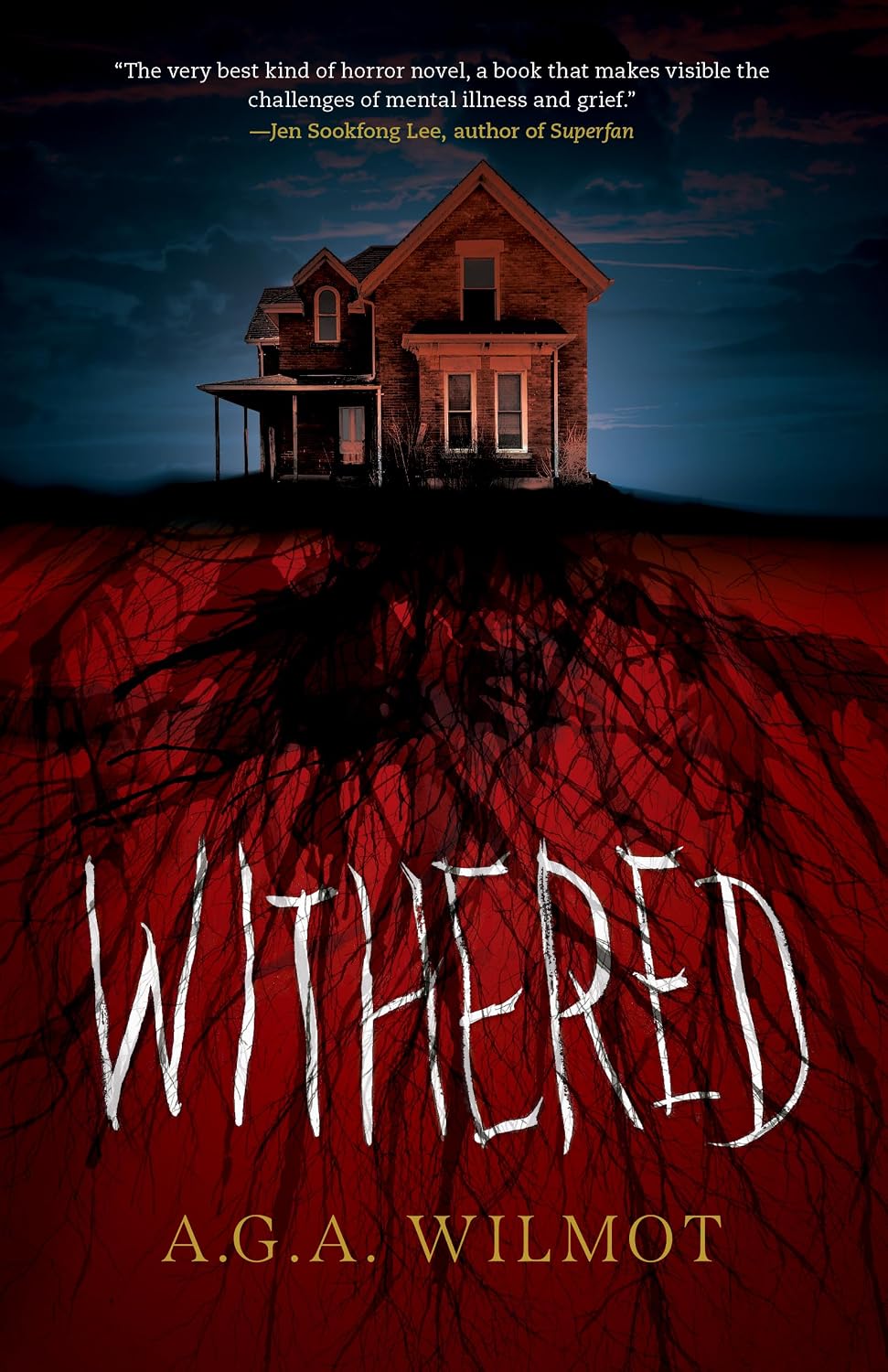
cover art for Withered by A.G.A Wilmot

Withered by A.G.A. Wilmot

ECW Press, 2024

ISBN-13 ‏ : ‎ 978-1770417038

Available: Paperback, ebook edition, audibook

Buy:  Bookshop.org  | Amazon.com


Although I live in the Midwest now, my parents still reside in the Southern California city where I spent most of my childhood. They’ve since moved to a more affluent neighborhood in the same city, but whenever we visit, I always drive my kids past the houses where I grew up. I love showing them where I used to play dodgeball or mix “potions'” out of backyard flowers. A wave of excitement always stirs in me when I see those old spots even if my kids don’t quite share the sentiment. A.G.A. Wilmot understands the deep, undeniable connection between our homes, our history, and who we are now. They write in Withered, “Over years, as a mattress takes on weight from dead skin and oils, so does a house grow dense with memories of all who’ve dwelled within.” (Intermission One).


Withered is a queer psychological horror novel centered on a haunted house and the generations of inhabitants who have lived and died within its walls. Although the story is told through the eyes of the protagonist, Ellis Lang, who recently moved into the home with their mother, the house itself functions as the true main character. The narrative structure mirrors this haunting presence, alternating between chapters focused on Ellis’s current experiences and intermissions that offer flashbacks to past residents whose lives and deaths shaped the house into what it is today.


What makes Withered so compelling is that it completely rejects a simple “good vs. evil” binary. Those who wish to destroy the house and those who fight to preserve it are both driven by their own deeply held convictions of what is right. Even the manifestation of Death avoids the traditional, menacing Grim Reaper trope, appearing instead as an impartial force of nature simply trying to maintain a necessary balance.


This rejection of strict binaries perfectly reflects the core theme of the novel: liminality. Derived from the Latin word limen, meaning “threshold,” a liminal space or state represents an in-between holding area. It’s a point of transition between two conditions. Ellis embodies this threshold state in nearly every aspect of their identity and circumstances. Firstly, as a non-binary individual, Ellis exists gracefully between traditional gender binaries. Secondly, in terms of grief, Ellis is suspended in deep mourning about their father’s death, a psychological limbo where one is surrounded by loss yet forced to keep living, Ellis’s eating disorder acts as a biological threshold, hovering between life-giving sustenance and the physical deprivation of life. Finally, moving from the bustling city to the isolated countryside triggers a profound “relocation depression.” Ellis is caught in the painful gap where the old home is gone, but the new house does not yet feel like home.


This thematic liminality even bleeds into the broader narrative. The central romance features two teenagers navigating between childhood and adulthood, and the book itself sits right on the publishing threshold blurring the line between Young Adult and Adult fiction. The supernatural maternal presence in the house describes itself, “She was no afterlife– of this she held no illusion. What she’s become, she realized, was a haven. A limbo.” (Intermission Six)


While the pacing is initially slow, due to a web of mysteries that aren’t resolved until the second half, the book eventually takes off. The author masterfully gathers all the narrative threads to show you the big picture before slowly untangling them. You have to commit to the slow burn, but the resolution is well worth the wait.


Reviewed by Lucy Nguyen
Book Review: Manhunt by Gretchen Felker-Martin


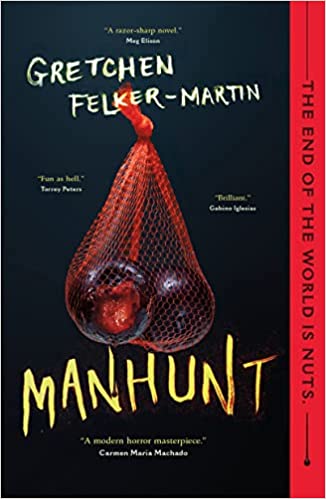
Cover art for Manhunt by Gretchen Felker-Martin

Manhunt by Gretchen Felker-Martin

Tor Trade, 2022

ISBN-13 ‏ : ‎ 978-1250794642

Available: Paperback, Kindle edition, audiobook Bookshop.org  | Amazon.com )


Unless you are hardcore into extreme horror, you need an iron stomach for this one.


Manhunt is a response to gender apocalypse stories, such as Brian K. Vaughan’s Y: The Last Man, which do not address the existence of trans and gender-nonconforming individuals. Unlike those, Manhunt puts trans people front and center.


A plague, T. rex, has infected all individuals with a high level of testosterone (mostly men), causing physical and mental disintegration and reducing them to a set of impulses to rape, maim, and kill any living thing nearby. Trans women become manhunters because testicles and kidneys are a source of estrogen, which they need both to be feminized and to overcome the testosterone that would make them vulnerable to T. rex. The flip side of this is that TERFs have taken over and will shoot and kill any trans women. Fran and Beth are manhunters who have an unfortunate encounter with TERFs and are later attacked by a pack of men who rape Beth. They are rescued by a trans man, Robbie, and take their bounty, and Robbie, to Indi, who has medical training and can use the testicles to synthesize estrogen. Indi has been invited to be the doctor for a compound for trans women and brings Fran, Beth, and Robbie with her. While initially this seems a safer path, something is seriously wrong there. There’s a rebellion, the compound burns, and the survivors create a new community and start planning an attack on the TERFs.


Ramona is a TERF close to the leader, Teach. She is secretly involved with a trans woman, and when the relationship is discovered her lover is executed and she is put in charge of cleaning out all trans women from the city. Fran gets involved with her and Ramona betrays Teach. However, she is not caught because another woman confesses to helping the trans women. The scene of her execution is incredibly painful and gory. Felker-Martin’s answer to the question of what would happen if men really were out of the picture is that there are women who will step in to do the same kinds of terrible things.


This is rage-filled and clearly very personal to the author, who is a trans woman. It doesn’t shy away from uncomfortable or disturbing emotions or situations, I can’t begin to say how difficult this was for me to read and finish, but I also couldn’t look away. It’s a powerful book, with a lot about the value of community, and made me think about the difficulties trans people face that I have the privilege not to reckon with as a cis woman. I think it’s is likely to be a classic in the genre.


Contains: transphobia, transphobic slurs, cannibalism, rape, body horror


Reviewed by Kirsten Kowalewski

Book Review: The Honeys by Ryan La Sala

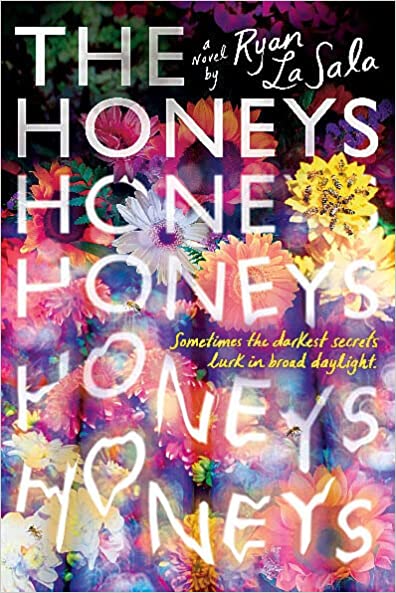
Cover for The Honeys by Ryan La Sala

The Honeys by Ryan La Sala

PUSH, 2022

ISBN-13 ‏ : ‎ 978-1338745313

Available: Hardcover, paperback, KIndle edition, audiobook.

( Bookshop.org |   Amazon.com )


When genderfluid teen Mars Matthias’ twin sister Carikube dies violently in front of them after running away from summer camp, Mars insists on attending the camp for the rest of the summer. They agree to placement with the boys, but their real goal is to rediscover Caroline, especially through The Honeys, her girlfriends in Cabin H, which tends to the camp’s beehives.


Mars’ previous experience at camp involved the other boys tying them to a wooden scoreboard and setting it on fire so their experiences are mixed. Camp authorities prefer to let campers solve conflicts on their own, not great news if you can’t defend yourself. While the rest of the camp participates in mandatory activities, the Honeys do their own thing, and they invite Mars to be a part of it.


But the Honeys aren’t just tending bees, they are the hive– the collective mind of all the bees, seeking a queen, and being pressured by the adults around them to create umbral honey (created as it feeds on living, albeit predatory creatures (such as camp counselor Brayden), that will give them real-world power.


This is an interesting look at how genderfluidity and societal and parental expectations affect teens in a different environment and a genuine and authentic exploration of grief and the complicated feelings that arise when someone you have mixed feelings about dies.


Early in the book, a counselor points out that an aspen grove is actually a colony, with one original tree, effectively making the aspens around the camp disturbing. The whole collective hivemind, blood honey and giant honeycombs, is incredibly creepy, too. It’s one thing to know you are surrounded by interrelated creatures out in nature (nature being something you expect to encounter at summer camp), but it’s horrifying to  experience being absorbed into them against your will. Recommended for grades 9+


Reviewed by Kirsten Kowalewski