Home » Posts tagged "nonfiction" (Page 3)

Graphic Novel Review: American Cult: A Graphic History of Religious Cults in America from the Colonial Era to Today edited by Robyn Chapman

American Cult edited by Robyn Chapman

Silver Sprocket, 2021

ISBN-13: 978-194550963

Available: Paperback Bookshop.org | Amazon.com )


American Cult is a graphic history of American religious cults dating from colonial America to the present. According to editor Robyn Chapman, the eighteen pieces in American Cult turn a critical eye to the cults and their behavior, but recognize the very human faces that entered into these dangerous groups.


The book opens with “The Monk in the Cave” by Steve Teare, relating the history of mystic Johannes Kelpius, also called the “Wissahickon Wizard”, who led the Society of the Woman in the Wilderness in Philadelphia in the 1690s. “Inside Oneida” by Emi Gennis addresses the eugenics experiment that the founder, John Humphreys Noyes, demanded of his followers and the incestuous relationship Gennis carried on with his niece, Tirzah, and how it affected her in her own life. In “Fruitlands: The Little Cult that Couldn’t”, Ellen Lindner relates the Alcott family experience and a failed experiment had a profound effect on Louisa May Alcott’s adult life. “Children of God!” by Rosa Colón Guerra presents the case of sexual abuse ran rampant in this cult at the behest of the leader, David Berg; Ricky “Davidito” Rodriguez, a child of the cult leader and also a victim of abuse, later as an adult found one of his abusers as an adult, killed her, and then killed himself. The cult still exists as a Christian church.


“Death Valley ’69” by Janet Harvey and Jim Rugg discuss the Manson Family. There wasn’t anything really new came out of this, but what volume wouldn’t be complete without mentioning one of the most famous American cults? In “Source Family Values”, Andrew Greenston discusses the Source Restaurant and how easy it was for them to garner followers. “Mindbending: A Story about the Process Church of the Final Judgment” by Lara Antal shows further subtle ways a cult can lure in someone. “Cults Reoriented” by Josh Kramer and Mike Dawson discuss Sufism Reoriented (SR), a cult comprised of white, wealthy Baby Boomers located in Walnut Creek, CA, and its connection with The Cheesecake Factory. In “Walk a Mile in My Shoes: A Jonestown History” by Ryan Carey and Mike Freiheit outlines Jones’ time leading up to the establishment of Jonestown, subsequent travel to Guyana, the physical and psychological torture he put followers through, and the mass suicide or murder that ultimately resulted; the narrative is told through a faceless member of Jones’ congregation, and the last two pages make some profound statements. “Playing the Game” by Lisa Rosalie Eisenberg discusses Synanon, tracing the history through Synanon III, or the Church of Synanon, all the way to the cult’s demise. The author ties the “troubled teen bootcamps” to Synanon.


“MOVE” by Ben Passmore presents the rise and fall of MOVE founder John Africa. The police aren’t shown in a good light here, either, considering after the death of a police officer they arrested nine members of the group after a standoff and the courts convicted them, even though no evidence supported the decision. Police also used C-4 to burn a building MOVE members were hiding in, and killed all but two.


“That’s Not What We’re Called” by Jesse Lambert focuses on Sullivanians and modern day effect on offspring of the adults involved in the sex cult. “The Last Days of Mount Carmel” by Vreni Stollberger, told in second-person, regards the Branch Davidians and the ATF/FBI raid that ended in tragedy. “Making Sense of Heaven’s Gate” by Robyn Chapman includes something particularly touching in the 2-page visual obituary of the victims of the mass suicide. Instead of just leaving them as the faceless covered bodies wearing jumpsuits and sneakers, we see the smiling faces of those who died believing they were being taken to the heavens.


“God Hates Me: A True Tale of the Westboro Baptist Church” by J.T. Yost, is told by the child of a parent who was converted by the WBC, and is particularly difficult to read. “Keep Sweet: On Warren Jeff and His Mormon Fundamentalist Splinter Group” by Robert Sergel presents the disturbing history of the FLDS. “Orthodox Judaism is a Cult” by Lonnie Mann provides a firsthand account of growing up as an Orthodox Jew in New York. He discusses his falling out with his religious parents, and how his life changed for the better after accepting himself. “Call Me Vanguard” by Brian “Box” Brown presents disturbing practices and initiation of NXIVM members.


Chapman outlines very well-defined criteria used to determine if a group is a cult. Regarding the content, Chapman states, “When it comes to creating this sort of nonfiction, I feel you should approach these stories with 50% empathy and 50% justice”. She and the other contributors to American Cult create this balance well. There is a particularly eye-opening sentiment that brainwashing doesn’t just effect the gullible. The chapter on Westboro Baptist Church by J.T. Yost illustrates this frighteningly well. I would recommend this for readers who want a deeper look into these cults. Recommended.


Reviewed by Lizzy Walker


Book Review: Women Make Horror: Filmmaking, Feminism, Genre edited by Alison Peirse

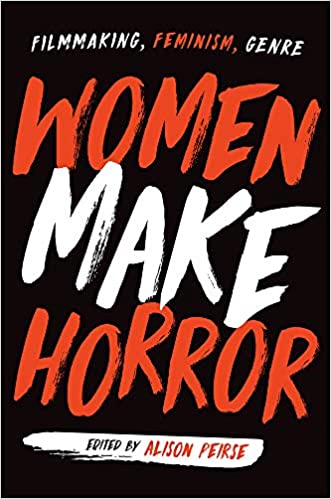
cover art for Women Make Horror edited by Alison Peirse

Women Make Horror: Filmmaking, Feminism, Genre edited by Alison Peirse

Rutgers University Press, 2020

ISBN-13: 9781978805118

Available: Paperback, Kindle edition Bookshop.org | Amazon.com )


Women working in the horror industry today are severely underrepresented. Although they have been making horror for centuries, many women have been cut out of that history and/or had their authorship and creative influence denied. What is more, women also enjoy consuming horror. Women Make Horror explores women’s creation and enjoyment of the genre through analysis of experimental cinema and filmmaking. The book includes seventeen essays, global in scope, discussing creatives, films, and festivals. While I think every one of these chapters deserve attention, I will highlight some that stand out.

“Women Make (Write, Produce, Direct, Shoot, Edit, and Analyze) Horror” by Alison Peirse provides a solid introduction to the text. Peirse discusses how she garnered and selected the texts for this volume. She asked three questions of the writers: why do women make horror; what kinds of stories do women tell in horror; and what makes a horror film a feminist film (p. 8-9). Every contributor has a unique perspective as to how they answered these questions.

“The Secret Beyond the Door” by Martha Shearer discusses Daria Nicolodi’s authorship and, subsequently, creative content of the original Suspiria. In “Why Office Killer Matters”, Dahlia Schweitzer provides valuable information on this film and argues that it is a film that not only restructures the representation of gender representation, but how horror films are expected to conform to specific tropes (p. 89). Donna McRae, in her chapter titled “The Stranger with My Face International Film Festival and the Australian Female Gothic”, discusses the development of this essential film festival, as well as “considers the influence of a female-centric genre filmmaking in Australia today” (p. 146) and how it has been a force for good in creative circles. Erin Harrington’s “Slicing Up the Boys’ Club” provides an excellent analysis of the existing state of anthology and omnibus films and their lack of diversity, as well as a discussion regarding the women-led anthology, XX. Harrington poses some good questions regarding representation for readers as well. “The Transnational Gaze in A Girl Walks Home Alone at Night” by Lindsey Decker presents an analysis through the lens of Hamid Naficy’s Islamicate gaze theory rather than the typical male gaze theory used so often in feminist film analysis.

In “Gender, Genre, and Authorship in Ginger Snaps“, Katarzyna Paskiewicz analyzes the film Ginger Snaps, which makes connections between a werewolf legend and a girl’s coming-of-age story. Paskiewicz describes her study as having two purposes. She seeks to answer how the film might be productively read through a lens that recognizes filmmaking as a collective art form” (p. 106), as well as wanting to “register the significance of women’s film authorship within the horror genre histories in which they have been traditionally overlooked” (p. 106). Early in the chapter, the author argues that directors are not the only creative voice in a film project. Editors, screenwriters, set designers, and more have influence over various aspects of a film (this is precisely why my colleague and I created Women in Film: A Film Index, to recognize other creatives in horror. That the sentiment is recognized in this seminal text is encouraging).

Other chapters cover directors such as Gigi Saul Guerrero, Lucile Hadžihalilović, and Alice Lowe. There are also chapters that focus on the New French Extremity, Korean horror cinema, fans as filmmakers, international films and events, and much more. The end of each chapter includes notes, and there is an extensive index at the end of the book.

Women Make Horror is a much-needed collection of feminist horror film criticism. Some of these essays, such as Molly Kim’s delve into Korean women-made cinema, are the first of their kind. and others showcase someone’s overlooked or misappropriated contributions, such as Alicia Gomez’s chapter on Stephanie Rothman’s The Velvet Vampire, a film originally credited to Roger Corman. Women Make Horror would be an excellent resource for horror scholars or even an addition to a film studies course on the genre. The general reader could enjoy it, but there are many chapters that read more like an academic work.  Highly recommended.


Reviewed by Lizzy Walker

 

Editor’s note: Women Make Horror: Filmmaking, Feminism, Genre is a nominee on the final ballot for this year’s Bram Stoker Award. 

Book Review: End of the Road by Brian Keene

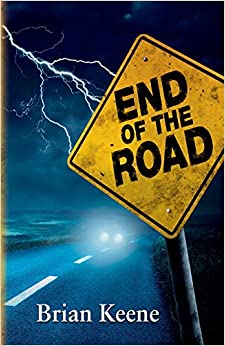
cover art for End of the Road by Brian Keene

End of the Road by Brian Keene

Cemetery Dance, 2020

ISBN-13 : 978-1587677939

Available: Paperback, Kindle edition Amazon.comBookshop.org )


End of the Road is a memoir consisting mainly of weekly columns horror writer Brian Keene wrote for the Cemetery Dance website to finance his 2016 signing tour, the “Farewell (But Not Really) Tour”,  which lasted from May to December of 2016. It also contains some additional material, including an introduction by Gabino Iglesias and a piece written by Tom Piccirilli, as well as epilogues going through about April 2017.  In addition to chronicling his journeys to bookstores and conventions across the country, Keene shares his experiences with grieving the recent deaths of three close friends including writers Tom Piccirilli and J.F. Gonzalez and his reflections on mortality. He attended the last World Horror Convention during the tour and recalls fond memories of past conventions and friendships, and, as a member of the planning committee for the charity weekend Scares that Care, gives that some space as well.  He writes about meeting up with friends and fans he’s made in the horror genre, the value of independent bookstores and local conventions, and the loss of individuality he sees in towns as he drives across America. His focus is definitely not on the controversies going on in the horror writing community at that time: he is looking back, not forward.

Keene also muses over his generation of horror writers (he had been a published writer and outspoken advocate for the genre for about 20 years at that time), touching on the changes in publishing and selling since he started as both a reader and a writer. From about 2000 on, I watched many of the changes from the sidelines, seeing the conversations on Shocklines on ebook vs. print, the effect of the failure of Dorchester Publications, the changes from almost entirely small-press limited editions to easier availability to a much wider variety due to ebooks.  He describes his own vision of the six “waves” of horror writers, putting himself in the fifth wave, and ready to let go for the and let the most current wave to take over the direction of the horror genre. His prediction is that independent niche bookstores and Amazon will take over and drive chain stores out of business. As a former public librarian, I think it’s telling that none of his signings were in libraries, who often feature local writers and midlisters: maybe neither of his publishers thought he would find buyers there, or lists his titles with wholesalers, but Pressure, the book he was promoting, is the only one of his books available in my public library (on a personal note, my husband, the founder of Monster Librarian, who died at the age of 40 in 2014, loved and reviewed many of Keene’s previous books, and recommended them for library collections).

Keene is at his best in this book when he writes about the people and places he cares about. His description of his grandmother, and of West Virginia, is nuanced and vivid, and his frustration over the lack of recognition for Hunter S. Thompson comes through pretty solidly. His self-proclaimed middle-of-the-road politics make the book pretty much an artifact of the times, but he really puts himself out there in speaking about his grief, his love for family and friends, and his feelings about the horror genre.

I’m not sure why it took so long for the book to come out, given that (according to Keene’s epilogue) the epilogue ends in February 2017 and the foreword was written in April 2017. While it is an interesting read ( and will be reflective of many interested readers’ experiences), it is not likely to be of wide interest outside the horror community. That said, current members of the horror community may enjoy his reminisces and appreciate his musings on the state of the horror genre circa 2016. Keene still has a blog, a newsletter, a Patreon, and does podcasts, so readers who are interested in what’s going on with him currently have many opportunities to do so. End of the Road is really a snapshot of his state of mind at that particular time, and a way to support a writer readers and friends want to support.


Reviewed by Kirsten Kowalewski


Editor’s note: End of the Road is a nominee on the final ballot for this year’s Bram Stoker Award in the category of Superior Achievement in Nonfiction.