Home » Posts tagged "nonfiction" (Page 2)

Book Review: Unquiet Spirits: Essays by Asian Women in Horror edited by Lee Murray and Angela Yuriko Smith, foreward by Lisa Kroger

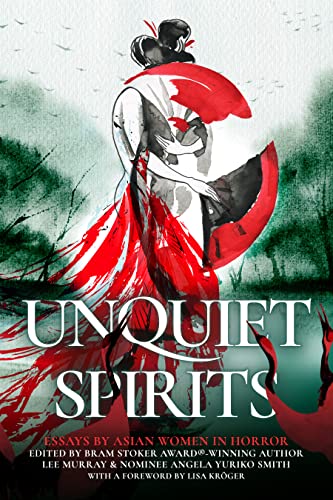
Cover art for Unquiet Spirits: Essays by Asian Women in Horror edited by Lee Murray and Angela Yuriko Smith

Unquiet Spirits: Essays by Asian Women in Horror edited by Lee Murray and Angela Yuriko Smith, with a foreword by Lisa Kroger.

Black Spot Books Nonfiction, 2023

ISBN-13: 978-1645481300

Available: Hardcover, paperback, Kindle edition

( Bookshop.org | Amazon.com )


I read an uncorrected ARC of this book.


Unquiet Spirits is a collection of 24 personal essays by women across the Asian diaspora, grounded in the authors’ family history, relationship to their culture, and the supernatural.


One of the takeaways from reading this is that the Asian diaspora is far from monolithic. Each of the authors has a distinct background and set of circumstances: one certainly cannot speak for all.


Some of the authors include Nadia Bulkin, who is Javanese-American, Geneve Flynn, who is a Chinese-Australian born in Malaysia, Rena Mason, who is a first-generation immigrant to America of Thai-Chinese descent, and Tori Eldridge. who was born in Hawaii and is of Hawaiian, Korean, and Norwegian descent, all of whom approached their essays differently.


The diversity of the authors and their choices of what each individual focused on is what really drew me in. That I read almost 300 pages in tiny print on a PDF is a testament to the quality of the writing.


I learned a lot from these essays: in Lee Murray’s essay on displaced spirits I learned that Chinese immigrants to Australia expected to be returned to China for burial, or become hungry ghosts, and from Nadia Bulkin’s essay that the terms “amok” and “latah” originated in Indonesia, to name just a few. The authors wrote about growing up feeling out of place, feeling unwilling or unable to meet expectations about filial duty, marriage, and motherhood. They wrote about hungry ghosts, fox demons, and yokai
They wrote about finding and using their voices.


I read this a few essays at a time. There’s a lot to think about in each one, so I think that’s a good way to approach this book. I highly recommend taking the time to do so.


Reviewed by Kirsten Kowalewski
Book Review: Hear Us Scream: The Voices of Horror edited by Catherine Benstead, S.C. Parris, and Violet Burns

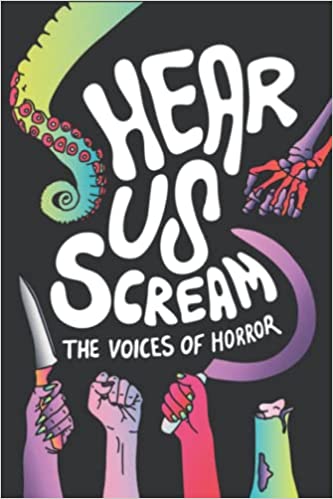
cover art for Hear Us Scream: The Voices of Horror

Hear Us Scream: The Voices of Horror edited by Catherine Benstead, S.C. Parris, and Violet Burns

Hear Us Scream, 2021

ISBN: 9780645235500

Available:  Hardcover, paperback, Kindle edition Bookshop.orgAmazon.com )


Vivid and intimate, these nonfiction reflections examine how and why folks find homes in the horror genre.


The women and nonbinary contributors’ offer personal horror journeys that blend and balance scholarly insights with intensely personal revelations for a unique and powerful reading experience. Despite considerable diversity in contributors’ backgrounds, some common threads emerge in the essays. Authors address themes like life lessons from horror’s surviving characters; horror as a place of self- recognition, community, and discovery; first experiences with horror; the connection between histories of trauma and horror enthusiasm; and the (mis)representations of marginalized identities. The result of the converging themes from distinct perspectives delivers a smart celebration that find pleasure and critical engagement with the genre. The inclusive potential of horror is centered, while raising incisive questions about future directions, and the pathways presented reflect the dynamic value of horror’s diverse voices. Horror lovers will find an enthusiastic appreciation of horror’s many worlds, interesting entry points, and room for emerging conversations. Much like the genre itself, I suspect this book will feel like home to many readers, who recognize and revere similar moments and remembrances.


Hear Us Scream is a welcome addition that will find enthusiastic readers across the community of horror lovers. Both horror content creators and fans will find much to enjoy and relate to in this empowering set of reflections about all types of horror, from B-movies to mainstream features, and more. Some individual essays include trigger warnings for a range of topics, and complex topics are handled with candor and care. Libraries with strong horror collections and pop culture sections will benefit from adding this title. Recommended.


Reviewed by E.F. Schraeder

Book Review: The Devil and His Advocates by Erik Butler

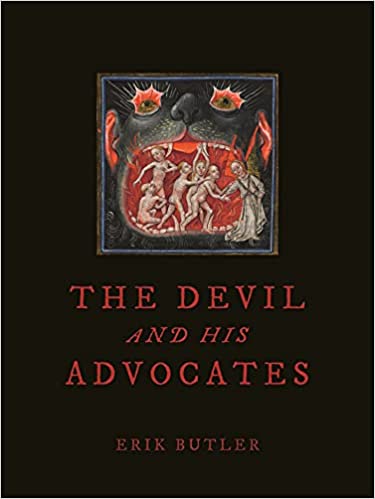
cover art for The Devil and His Advocates by Erik Butler

The Devil and His Advocates by Erik Butler

Reaktion Books, 2021

ISBN-13: 9781789143737

Available: Hardcover, Kindle edition  Bookshop.org  |  Amazon.com )


In Erik Butler’s The Devil and His Advocates, the author argues that Satan is not God’s enemy in the Bible, but that he has been misinterpreted. In fact, he has been doing God’s bidding rather than acting as his own entity all this time. Butler uses the Old and New Testament, especially the trial of Job, to analyze the figure of Satan in literature, music, theology, and visual art from antiquity to the present. Butler asserts that Satan has been tasked by God to test human beings, whose piety leaves room for doubt. Butler argues that while Satan can be manipulative, he facilitates what mortals are inclined to do anyway, and he’s right.


In addition to biblical sources, Butler uses works of literature from Dante, Chaucer, Christopher Marlowe, Robert Burton, Jules Amédée Barbey d’Audervilly, James Joyce, Isidore Ducasse, Oskar Panizza, William Butler Yeats, Fyodor Dostoyevsky, Gian Pietro Lucini, Gottfried Benn, C. S. Lewis and more to unveil the nature and depiction of Satan, or the satan (which is an eye-opening discussion itself in the first chapter) to discuss why and how Satan’s role, position, and even personality have been, essentially, misinterpreted or reinterpreted. Butler includes a chapter on music as well.


Butler includes references, an index, and illustrations in The Devil and His Advocates. While this isn’t a work of horror, The Devil and His Advocates has the potential to be a valuable research tool for anyone who wants to focus on Satan in their fiction. It could also be useful for numerous classes, such as literature, drama, religious studies, fiction writing, and more. Highly recommended.


Reviewed by Lizzy Walker