Home » Posts tagged "manga"

Graphic Novel Review: H.P. Lovecraft’s The Call of Cthulhu (H.P. Lovecraft Manga), adaptation and art by Gou Tanabe

H. P. Lovecraft’s The Call of Cthulhu (H.P. Lovecraft Manga) adaptation and artwork by Gou Tanabe, translated by Zack Davisson

Dark Horse Comics, 2024

ISBN-13: 9781506741406

Available: Paperback, Kindle edition

Buy:   Bookshop.org | Amazon.com


Eisner-nominated mangaka Gou Tanabe adapts H. P. Lovecraft’s The Call of Cthulhu, first published in 1928. Francis Thurston, the executor of the estate of the late Professer Angell, discovers that the academic was investigating a strange cult that worships an entity known as Cthulhu. Thurston, curious about the papers, journal entries, and strange clay idols, launches his own investigation that unearths something bigger than he could ever dream of—the city of R’lyeh.


The story is told in a series of journal entries and flashbacks to events in the aforementioned entries to construct the mysteries of the cult, mythos, and what happened to anyone who comes across even the mere mention of the Great Old Ones.


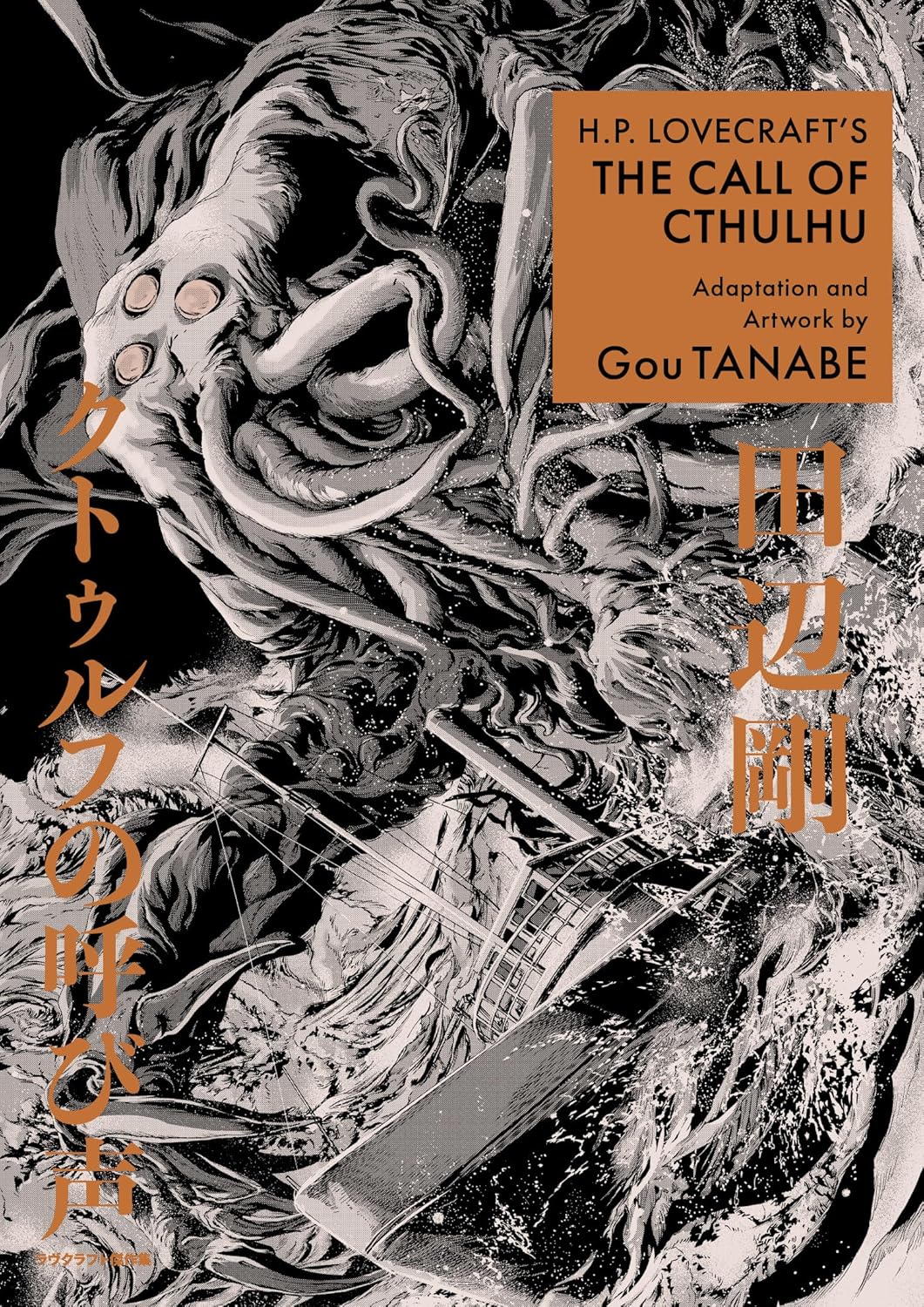
Tanabe’s artwork includes such intricate detail. The eye is forced to observe. He renders Lovecraft’s cosmic horror as visceral, beautiful, and maddening at the same time. There are panels where black text is outlined in white, and is overlaid on the artwork, which forces the reader to slow down, take in the words on the page, and then move to the surrounding artwork. Particularly visceral and intricate scenes include cultist activities and the discovery of and journey through R’lyeh. Tanabe’s large scenes, such as an overhead view of a seafaring vessel fighting to avoid being pulled into a whirlpool near R’lyeh, are impressive. Put these on a shelf next to such horror mangaka as Junji Ito and Q Hayashida. Highly recommended.


Reviewed by Lizzy Walker
Graphic Novel Review: Manga Classics: Dracula by Bram Stoker, adapted by Stacy King, art by Virginia Nitouhei

Manga Classics: Dracula by Bram Stoker, adapted by Stacy King, art by Virginia Nitouhei

Manga Classics, 2021

ISBN-13: 9781947808058

Available: Hardcover, paperback, Kindle edition

Buy: Amazon.com


Manga Classics brings us a manga version of Bram Stoker’s Dracula. By now most readers are familiar with the vampire classic’s general story. Jonathan Harker, a young English solicitor, travels to Transylvania to assist the mysterious Count Dracula with a real estate transaction in England. However, he soon realizes that he is a prisoner on the count’s vast estate. Through observation, he notices the count is not all he seems. While the young Harker is trapped in the castle, Dracula travels to England, where he begins preying upon Lucy Westenra, a young woman engaged to Jonathan’s friend, Arthur Holmwood. A patient of Dr. John Seward’s, Renfield, under the employ of the count, becomes increasingly obsessed with consuming the living a leaves cryptic clues as to the nature of his boss.


As Lucy falls ill with an unknown malady, her friends Arthur, Dr. Seward, American Quincey Morris, and vampire hunter Professor Abraham Van Helsing are determined to save her from the vampire menace. Unfortunately, Lucy succumbs to Dracula’s influence and becomes one of the undead. The friends turn their efforts on hunting down and destroying Dracula where he poses a threat to Mina Murray, Jonathan’s fiancée, and others. With teamwork and the aid of modern technology, they pursue Dracula for a final bloody confrontation.


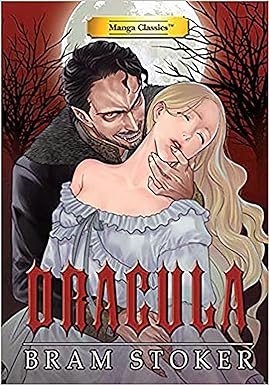
This is the first Manga Classics edition I have picked up. I read the hardcover version from my library, and I have to say it is worth it. King, editor for Manga Classics, does a great job of adapting the original text. As the story is told through letters, diary entries, recordings, newspaper articles, and ship’s logs, I was not sure what to expect from a manga version. Everything lined up and flowed nicely from page to page. The mangaka for Dracula is Virginia Nitouhei, who is a featured artist for “The Tell Tale Heart” in Manga Classics: The Stories of Edgar Allen Poe, which I will also be reviewing. She has a classic style to her art that lends itself well to a story like Dracula. The detail Nitouhei puts into the characters’ costuming alone is exceptionally beautiful.


At the end of the book, the editor and creators include information on themselves, an article on what it took to adapt Dracula to manga, and other helpful tips on reading this book. It would make an excellent entry point for readers who want to read classic horror, as well as manga. Highly recommended.


Reviewed by Lizzy Walker
Graphic Novel Review: Tombs: Junji Ito Story Collection by Junji Ito

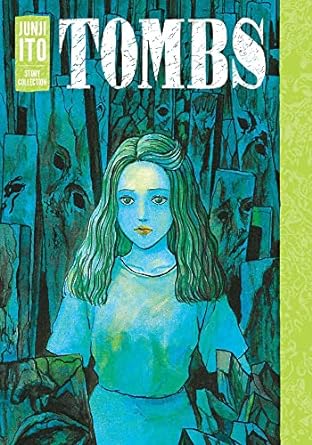
Cover art for Tombs: Junji Ito Story Collection by Junji Ito

Tombs: Junji Ito Story Collection by Junji Ito

Viz Media, 2023

ISBN: 9781974736041

Available: Kindle, hardcover

Buy: Bookshop.orgAmazon.com


Junji Ito’s Tombs presents a collection of nine original horror manga tales. In the titular story, Kaoru and her brother Tsuyoshi take a trip to visit their mutual friend, Izumi, in her new town. One the way, Tsuyoshi hits a young woman with his car. The siblings load her into the vehicle, only to find out she is dead and they transfer the body to the trunk. When they make it to town, they are perplexed by the random countless tombstones in the middle of the road. A few townspeople explain that they appear where people have died. Izumi corroborates these claims, even showing them tombstones that are inside her family home. The dead are not to be touched.


“Clubhouse” is an intriguing haunted house story. Friends Yukari, Chikako, and Minae enter an abandoned building. Minae decides to explore the second floor, while the other two wander the first. Soon after they leave, the friendship between Chikako and Minae deteriorates. Yukari, upset by her friends not speaking anymore, pleads with Chikako to make up with Minae. Chikako, however, has a new group of friends who frequent the haunted house they explored.


The “Slug Girl,” poor Yuko, hates these little creatures. She used to be so talkative, but she falls silent when her tongue transforms into, well, a giant slug. She’s tried cutting it off, but it grows back. Can her family and friends help her?


In “The Window Next Door,” Hiroshi and his parents move into a new house, where the closest neighbor only has one window on the second floor. Unlucky for him, it’s right across from his bedroom window. In the middle of the night, Hiroshi hears the woman next door calling to him. He is met with a terrifying sight when he looks out his window. She repeats her call to him night after night.


“Washed Ashore” is the story of the corpse of a strange, massive sea creature found on a beach. It is mysteriously luring people to it. The scientists studying the monster notice clear patches along the body. A commonality between all of those who are drawn to it is that they are missing loved ones. When bystanders get closer to the body and look closely into the clear patches, they find the unexpected.


In “The Strange Tale of the Tunnel,” a town is plagued by disappearances tied to a train tunnel. Goro, whose mother committed suicide in the tunnel when he was young, finds his sister wandering there when she is not watched. A group of scientists starts to study strange occurrences associated with the disappearances, such as strange sounds, unexplained wind, and blood dripping from the stones.


“Bronze Statue” is a cautionary tale. Mrs. Sonobe is a jealous woman obsessed with the beauty she has lost. Tsuchiya, a master of working in bronze, made the statues of Mr. and Mrs. Sonobe installed at the local park. Through her statue, she eavesdrops on conversations of the mothers who bring their children to the park, and she doesn’t like what she hears. She unexpectedly invites them for a social to unveil another statue. When their hostess leaves the room, they begin to discuss their honest feelings about the situation. Mrs. Sonobe, of course, doesn’t like this. How far she is willing to go to preserve her beauty in statues knows no bounds, and the women, as well as her bronzeworking miracle man and herself, will find out the lengths she will go before she exhausts her options.


In “Floaters,” Ryoichi finds his friend Masao, who has been out of school for a few days, with a bug net at the side of the road. He tells mutual friend, Kyoko, about it, when they see a hairy mass on a tree branch. It shifts in Ryoichi’s hand and starts proclaiming it’s love for Masao…in Masao’s voice. Soon, everyone in town is seeing these things floating around, some stating other townspeople’s secrets and innermost thoughts. The floaters from celebrities become the most coveted to catch and keep

.

The last story in this collection is “The Bloody Story of Shirosuna”. Dr. Furuhata moves to a small village where the townsfolk are all weak and emaciated. Perplexed at what could possibly be afflicting everyone in town, he starts an investigation that reveals a disturbing secret.


This is a strong addition to the Junji Ito Story Collection series that Viz Media has been releasing. The body horror in all of the stories is up to par with the best of Ito’s work, such as Uzumaki and Gyo. Highly recommended.


Reviewed by Lizzy Walker