Home » Posts tagged "John Langan"

Book Review: Why I Love Horror: Essays on Horror Literature edited by Becky Siegel Spratford

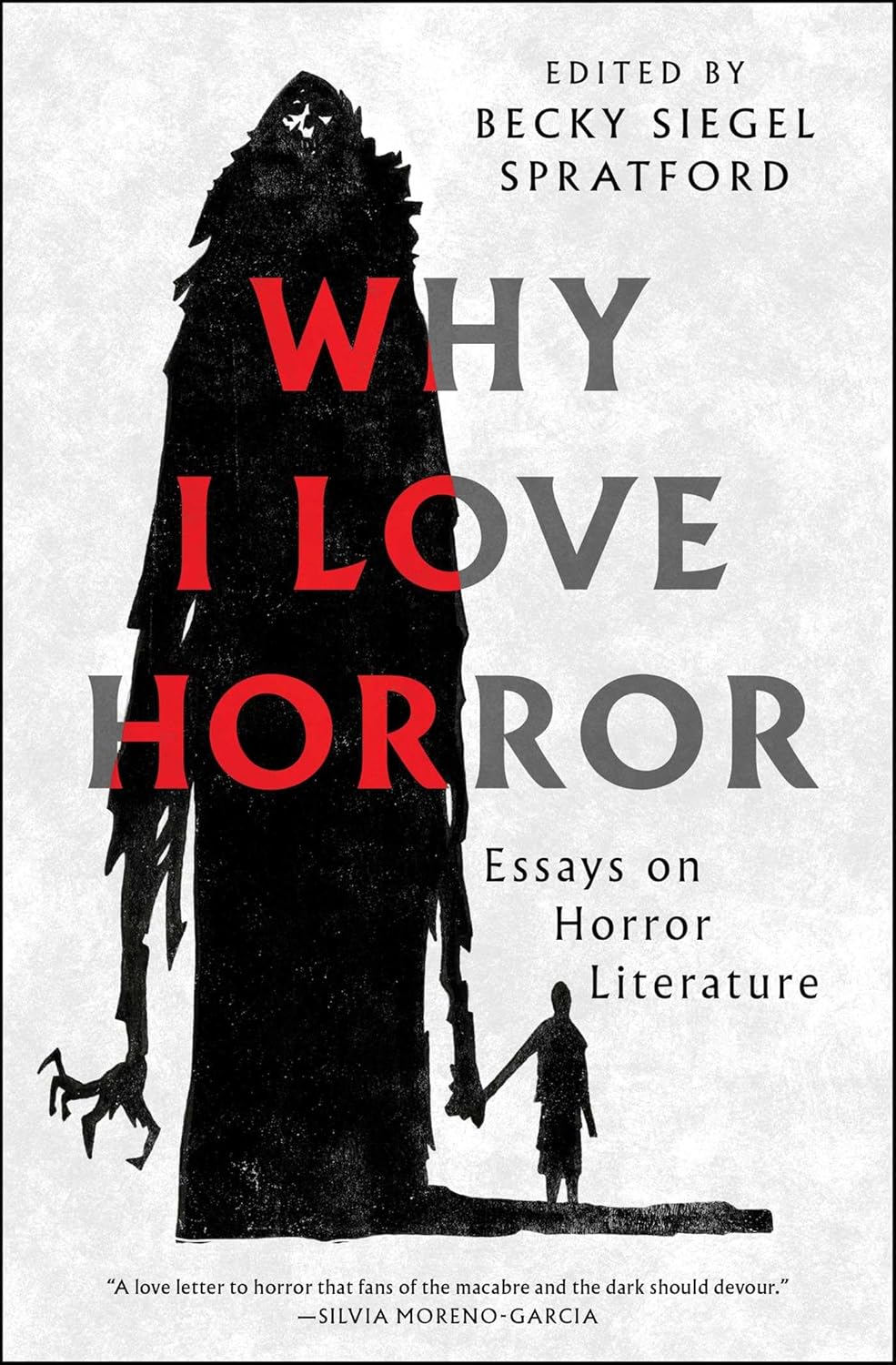
Cover art for Why I Love Horror edited by Becky Siegel Spratford

Why I Love Horror: Essays on Horror Literature edited by Becky Siegel Spratford

Saga Press, 2025

ISBN-13: 9781668205099

Available: Paperback, Kindle edition, audiobook, audio CD

Buy: Bookshop.org |  Amazon.com


Librarian Becky Siegel Spratford presents eighteen essays by current horror authors on why they love horror. The collection begins with a welcome to the reader by Sadie Hartman, followed by Spratford’s own essay, “Why Ask Why,” where she tells her story about how she found herself working with horror and curating this book full of talented horror writers. Before each essay, Spratford includes an introduction to the authors, a book recommendation to start with from their works, and a recommendation of an author in a similar vein.


My experience reading this was like opening a door to different times in my life where horror made significant appearances, despite having never really left me. Childhood memories and horror are foundational for some in this community. In “Brian Keene’s Giant-Size Man-Thing,” the author discusses his introduction to horror through comics and how horror helped him cope with dread and fear. John Langan writes of his childhood fascination with cryptids in “In the Bermuda Triangle with Sasquatch, Flesh Smoldering.” Jennifer McMahon’s “Monster Girl: How Horror Gave Me a Place to Belong” hit particularly close to home in terms of feeling out of place, being the weird girl who liked horror, and experiencing struggles at home. “My Mother Was Margaret White” by Cynthia Pelayo discusses abuse she experienced at home and at school, never feeling safe anywhere. Horror saved us both. “Permission to Scream” by Rachel Harrison and and “Tales From My Crypt” by Mary SanGiovanni specifically focus on girlhood and horror, both also speaking to similar experiences for me.


Horror providing comfort or a safe space is another thread that ties these essays together. Hailey Piper describes, in “The Giant Footprint of Horror”, how Godzilla introduced her to horror, and that there is joy in this dreadful genre. “My Long Road to Horror”, by Tananarive Due, describes horror as feeling. She writes a short but powerful history of her family and their personal horrors of racism and struggle.


Authors remind the reader that horror is more than a genre, it is an entire community. Alma Katsu’s “What You Can Learn from Horror: Don’t Run from Darkness; It’s Trying to Teach You a Lesson”, presents an essay questioning why people shy away from horror. A true crime writer I had a conversation with during my undergrad found it fascinating that there is a line in the sand between what his audience will and will not read: that line is fictional horror. Katsu states “I’m here to argue against running away from darkness,” (52) and provides personal information regarding past employment with government agencies as an intelligence analyst. Gabino Iglesias, in “Horror is Life: A Blood-soaked Love Letter,” discusses his life in Puerto Rico and discovering horror, which turns into a moving statement on how horror changed his life. In “A Day in My Psychedelic World,” Nuzo Onoh, dubbed the Queen of African Horror, reminds us there is horror for everybody.


There are so many great essays in this book. Other authors who contribute are Josh Malerman, Paul Tremblay, whose piece is accompanied by his daughter Emma, Grady Hendrix, Clay McLeod Chapman, Victor LaValle, David Demchuk, and Stephen Graham Jones. This would make a great addition to a general library collection, as well as essential reading for a course on horror. Highly recommended.


Reviewed by Lizzy Walker
Book Review: When Things Get Dark: Stories Inspired by Shirley Jackson edited by Ellen Datlow

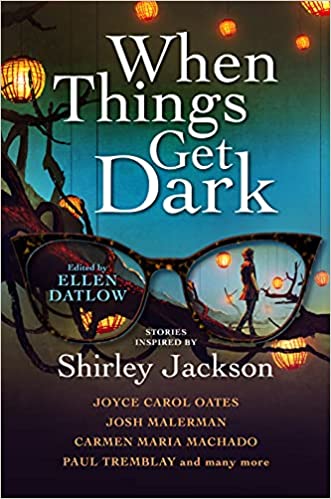
cover art for When Things Get Dark edited by Ellen Datlow

When Things Get Dark: Stories Inspired by Shirley Jackson edited by Ellen Datlow

Titan Books, 2021

ISBN-13 ‏ : ‎ 978-1789097153

Available: Hardcover, Kindle edition, audiobook Bookshop.org  | Amazon.com  )


Shirley Jackson couldn’t have known the impact her writing would have on the horror genre, speculative fiction, and literature in general: she was writing to pay the bills. Yet her work has resonated with readers and writers for both its depictions of domesticity, such as her fictionalized memoir, Life Among the Savages, and of the uncanny, seen in short stories like “The Lottery” and her most famous novels, The Haunting of Hill House and We Have Always Lived in the Castle (and sometimes both together). In When Things Get Dark, well-known anthology editor Ellen Datlow has collected tales by talented writers of horror, the uncanny, and the weird, inspired by Shirley Jackson’s work.


A number of stories take place within suburbia, with the uncanny just beneath a placid surface. Laird Barron’s “Tiptoe” focuses on uneasy family dynamics and the necessity of keeping up appearances, and “For Sale By Owner” by Elizabeth Hand, is a meandering story about three elderly women with a habit of breaking into empty summer houses who hold a sleepover in an empty, beautiful old house, which turns out to be a disorienting and disturbing experience. In Richard Kadrey’s “A Trip to Paris”, a nod to We Have Always Lived in the Castle, a recent widow planning her escape from her mundane life has her nefarious actions revealed by a stubborn, growing patch of mold on her wall, while Jeffrey Ford’s “The Door in the Fence” documents the strange and surprising changes in the narrator’s next door neighbor after her husband dies.


Some stories take direct inspiration from Jackson’s work, such as Carmen Maria Machado’s “A Hundred Miles and a Mile”, which references the “cup of stars” from The Haunting of Hill House, and stories such as “Quiet Dead Things” by Cassandra Khaw and “Hag” by Benjamin Percy that describe insular communities and their deadly rituals like the one in “The Lottery”.

With others, it’s sometimes hard to see the connection, although the stories are interesting. In Seanan McGuire’s dark fairytale “In the Deep Woods; The Light is Different There”, a woman escaping an abusive husband retreats to her family’s lake house, where she discovers the caretakers are not what they seem. John Langan produces a compelling, surreal tale of family, the occult, and mythological creatures in “Something Like Living Creatures”. In the dread-inducing “Money of the Dead”, Karen Heuler addresses the problems with resurrection and obsessive love; Joyce Carol Oates’ “Take Me, I Am Free” is a bleak, heartbreaking story about a child whose angry mother attempts to throw her away; in Josh Malerman’s dystopian “Special Meal”, a young girl discovers the difficulties, and consequences, of hiding knowledge. Genevieve Valentine’s “Sooner or Later, Your Wife Will Drive Home” is a cleverly constructed story about smart women in unlucky situations they can’t escape, something Jackson could certainly relate to. There were a few stories that didn’t hit the mark: “Funeral Birds” petered out at the end, “Refinery Road” and “The Party” left me confused, and “Pear of Anguish” didn’t seem to fit the theme or mood of the anthology.


While there are many excellent stories, the three that stood out to me were the previously mentioned “Tiptoe”; “Take Me, I Am Free”, a bleak, heartbreaking story about a child whose angry mother attempts to give her away; and Kelly Link’s “Skinder’s Veil”, a strange tale about a graduate student struggling with writing his dissertation who takes a housesitting job in rural Vermont, with the only rules being that anyone knocking at the back door must be invited in, but the front door should never be opened. Those who come to the back door are an unusual bunch, and the consequences of that summer are significant for him.


It’s not necessary to be a fan of Shirley Jackson to enjoy this book, but it does help, especially with Machado’s story, which depends on context from The Haunting of Hill House. If you do pick up When Things Get Dark without having read Jackson first, you will want to by the time you finish. Recommended.


Contains: self-harm, torture, suicide, murder


Reviewed by Kirsten Kowalewski


Book Review: Children of the Fang and Other Genealogies by John Langan


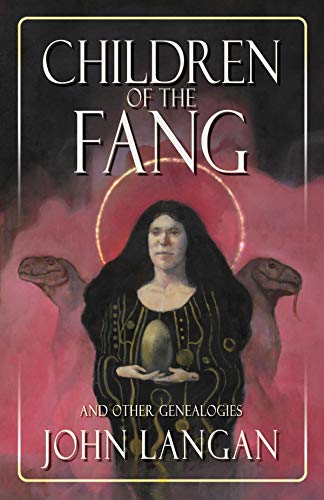
cover art for Children of the Fang by John Langan

Children of the Fang and Other Genealogies by John Langan

Word Horde, 2020

ISBN-13 : 978-1939905604

Available:  Paperback, Kindle edition  Bookshop.orgAmazon.com )


Some writers manage to wrangle the beast that is storytelling through blood, scars, and evisceration– and then some–  but emerge on the other side victorious with a skill that seems to be effortless.


Then there’s John Langan.


For anyone who’s read The Fisherman, it’s apparent that this man was born with a storyteller’s DNA. Langan’s prose and style shouldn’t be this seamless, this well, perfect. Yet it is.


When Children of the Fang was released, many reviewers touted the collection of 21 tales as Stoker-worthy, and it is. It’s the strongest collection of horror short stories this reviewer has read in many a year. To not have at least one story that doesn’t put a stranglehold on the reader through its quiet, yet vicious voice, is beyond rare.


It’s almost as if Langan has that Jungian prescience to peer into the collective unconscious and toy with the shadows within us.


The styles and genres explored here display Langan’s vast talent, from science fiction, to fantasy, to noir, before circling back to straight-up horror.


Choosing a favorite here is difficult. It may vary from person to person and from read to read, depending on the mood and style desired, attaching to the current mood and infecting the soul. On this particular day, a trio stand out. “Episode Three: On The Great Plains, In The Snow,” is a beautiful ghost story, and while it’s not the most innovative story in the collection, it will feel like it is. “Children of the Fang” wormed its way into this reviewer’s consciousness and tattooed its afterimage there. To describe it would dilute the effect, but there’s a reason why it’s the title of the book.  “Hyphae,” is the most “different” tale in the collection. The less said, the better, but it’s best read alone without another story before or afterwards.


Langan’s next offering will be well-sought-after, whether it’s short, spiked bites such as the ones here or a longer, slower dive into darkness that will likely challenge The Fisherman for his best story to date.

Highly recommended reading.


Reviewed by David Simms

Editor’s note: Children of the Fang and Other Genealogies is a nominee on the final ballot for the Bram Stoker Awards in the category of Superior Achievement in a Short Story Collection.