Home » Posts tagged "horror movies" (Page 3)

Book Review: Cult Cinema: A Personal Exploration of Sects, Brainwashing, and Bad Religion in Film and Television by Howard David Ingham

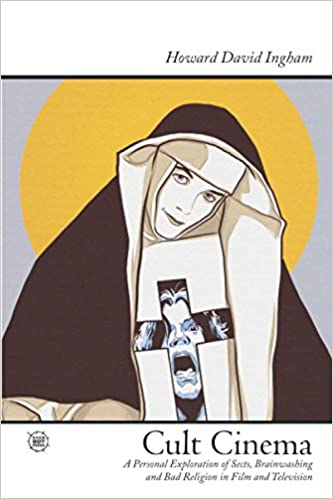
cover art for Cult Cinema by Howard David Ingham

Cult Cinema: A Personal Exploration of Sects, Brainwashing and Bad Religion in Film and Television by Howard David Ingham

Room 207 Press, 2020

ISBN-13: 9781684055982

Available: Paperback, Kindle edition ( Amazon.com )


Howard David Ingham follows up We Don’t Go Back: A Watcher’s Guide to Folk Horror with Cult Cinema: A Personal Exploration of Sects, Brainwashing and Bad Religion in Film and Television. In this book, Ingham posits that religious extremism has dogged humanity’s heels from the formation of Christianity up to the current era. Ingham does not solely focus on horror, looking at other genre sources such as situational comedy, drama, and more. The author looks at why and how people join abusive religious groups, the process of and what it means to brainwash, and at times eventual escape. He frames his book in terms of his personal experience belonging to the evangelical Christian church. Ingham’s time in this group gives Ingham’s analysis a firsthand account of what occurs with cults and cultish behavior. Ingham provides a look into what makes the cult “work”, or not. Just as fair warning from Ingham, and myself, if you are one to shy away from material regarding abuse in a myriad of forms, including child abuse, sexual abuse, rape, and others, avoid this one. However, if those sensitive topics are not triggering for you and you are interested in religious cults, carry on reading this review (and, of course, consider picking up this book).


In the first chapter, “God Only Knows What You’re Missing”, Ingham frames their conversion to evangelical Christianity with a discussion of their experience at a Polyphonic Spree concert in 2003 that felt like a religious experience, and how even an ardent sceptic can be converted in the film The Sound of My Voice. The second chapter, “The Opposite of Brainwashing”, begins with a discussion of four stages of conversion and subsequent brainwashing and the Moonies. All of this leads to a further discussion on cult deprogrammers. Films include Ticket to Heaven, Split Image, Holy Smoke, and Faults to show different applications and results of brainwashing and subsequent deprogramming. In chapter three, “Exiles” Ingham writes about how difficult it is to leave extreme religious groups, analyzing The Passion of Darkly Noon, Martha Marcy May Marlene, The Unbreakable Kimmy Schmidt, and The Endless. “The Atrocity Tour” covers the Big Ones. A book on cult activity would not be complete without mentioning the big events: Jonestown, the siege of the Branch Davidians in Waco, the Heaven’s Gates’ mass suicide, Aum Shinrikyo’s attacks on the Tokyo subway, and the Manson family murders are presented. Ingham covers film and television including Manson Family Vacation, Charlie Says, Mandy, The Sacrament, Red State, and American Horror Story: Cult. In chapter 5, “Live Together or Die Alone” Ingham describes the fictional popular culture theme of what they call the “Pagan Village Conspiracy,” emphasizing that there is no such thing in the real world of cults. The Wicker Man, Kill List, Midsommar, and Doomsday are the films in which this theme is strong. The Church of Scientology is the focus of chapter 6, titled “Clear”. Ingham looks at The Master and The Path for this section.


“You Can Be a Person by Being A Person”, chapter 7, focuses on cults that don’t necessarily have a religious component, but have more of a philosophical and sociopolitical center, such as fascist groups. Films Ingham includes in this chapter include Seven Stages to Achieve Eternal Bliss by Passing through the Gateway Chosen by the Holy Storsh, Safe, The Invitation, and Fight Club. The latter is explored at length in this chapter. In the eighth chapter, “Sects Education”: Ingham discusses different sects of Christianity, focusing on Jehovah’s Witnesses and Mormons extensively, looking at the films Apostasy, The Children Act, Son of Rambow, September Dawn, and Gentlemen Broncos. “Praise Be to He” presents an extensive discussion of American conservative evangelical Christianity. Ingham writes at length of their time as an evangelical, discussing the prosperity gospel, gay conversion therapy, what it is like to attend Christian conventions, and more. Ingham uses media such as The Righteous Gemstones, Don Verdean, But I’m a Cheerleader, and The Miseducation of Cameron Post to frame their discussion.


In the closing chapter, “Chastity, Poverty, Obedience, Pain”, Ingham tells the story of Father Stephen, the chaplain at their secondary school. He mentions the “cloistered divine” in Catholic circles, and looks at films including The Magdalene Sisters, Black Narcissus, The Devils, Mother Joan of the Angels, Flavia the Heretic, and Martyrs.


The book includes an index of film and television programs the author discussed in the book.


Original versions of many of the essays in this book were written between January 2017 and December 2020, and were published by Room 207 Press. Highly recommended.

Contains: spoilers


Reviewed by Lizzy Walker
 

Book Review: Encyclopedia Sharksplotanica by Susan Snyder

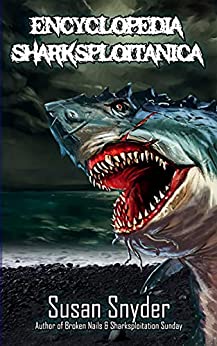
cover art for Encyclopedia Sharksploitanica by Susan Snyder

Encyclopedia Sharksploitanica by Susan Snyder

Madness Heart Press, 2021

ISBN-13: 9781955745994

Available: Paperback, Kindle


Since Jaws emerged from the depths to create the subgenre known as sharksploitation, shark movies and their rip offs have “scared the swimsuits off us”, rendered us immobile from gut-wrenching laughter, or left us speechless with the badness of it all. Susan Snyder, a marine biologist who has experience diving with these toothy beasts, presents her perspective on a whopping 85 sharkploitation movies.


Sections are divided into “Rip Offs”, “The Bastardization of Science”, “The Swimming Dead”, “Mix and Match Mutants, Two for One”: “The “Versus” Movies”, “Bad Environments”, “The Big ‘Uns”, “Terror in the Real World”, “The Paranormals”, “Fins in Funnels: The Sharknado Franchise”, and “Shark-pourri”. Snyder’s collection includes interviews, essays, reviews, and some choice rants about the films she presents. Make no mistake, though. Despite the rants, it is clear that Snyder loves the subgenre. After reading this, I tracked down some of the movies she discussed and found a renewed interest in shark horror.


Highly recommended


Reviewed by Lizzy Walker


Booklist: Final Girls

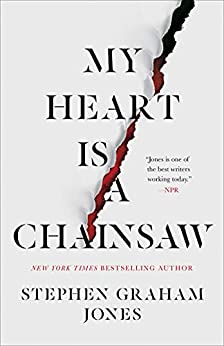
      cover art for My Heart Is A Chainsaw by Stephen Graham Jones  Wow, final girls have really had a great summer! July saw the release of The Final Girl Support Group by Grady Hendrix (reviewed here), and with the very end of August, I see Stephen Graham Jones’ newest book, My Heart Is A Chainsaw, is being released. The final Girls Support Group by Grady HendrixI have not had the opportunity to read that yet, but I highly recommend The Final Girls Support Group (on a side note, my daughter was delighted that the characters were getting therapy).

The final girl is the survivor who takes down the monster in slasher movies. When fiction touches on her, it’s usually in a meta sort of way. Here are a couple of titles to try out if you are in the mood for a tale about final girls.


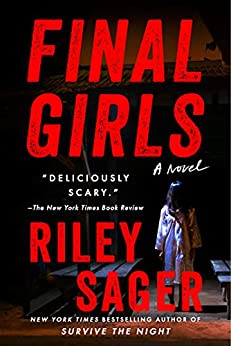
Final Girls by Riley Sager follows Quincy Carpenter. the lone survivor of a massacre at a cabin in the woods ten years earlier. Quincy, along with two other girls, Lisa and Sam, who survived slasher-style massacres, were labeled “Final Girls” by the media.cover art for Final Girls by Riley Sager  She has done her best to move on, finding a boyfriend and starting a baking blog, but things start to fall apart when Lisa apparently dies from suicide, leaving a message on Quincy’s voicemail. Then Sam, who has been off the grid for years, appears at Quincy’s door and Quincy’s carefully constructed life starts to fall apart. The twist in this story was not what I expected it to be. Sager does a great job of deconstructing the final girl trope and this was a very difficult book to put down.


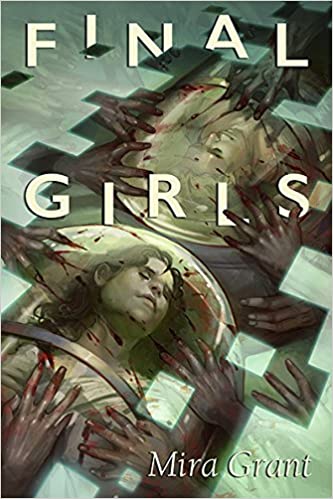
cover art for Final Girls by Mira Grant  Final Girls by Mira Grant introduces Esther Hoffman, a journalist determined to debunk proprietary virtual reality technology that situates participants in horror movie scenarios to force them to face their worst fears. The scientist in charge, Dr. Jennifer Webb, challenges Esther to try it out with her. Events out of their control result in the two of them being trapped in the virtual reality scenario together, with disturbing results.


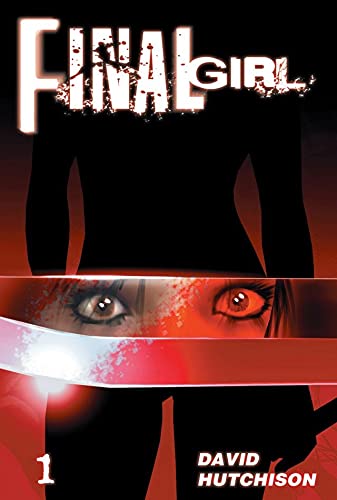
Final Girl by David Hutchison

Final Girl Pocket Manga vol. 1 by David Hutchison drops four girls in a seemingly abandoned, isolated town, where they are stalked by its residents, and must escape their nightmare situation. Only one of them can be the final girl, though… Readers voted for their choice of final girl, and a bloody, full color climax reveals the survivor.


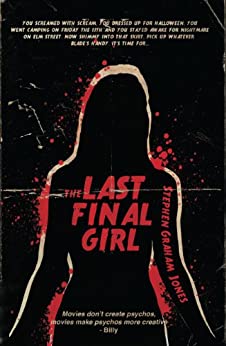
cover art for The Last Final Girl by Stephen Graham Jones  The Last Final Girl  is also by Stephen Graham Jones. Taking a . chance with an experimental format, he has written it in a screenplay format, following the structure of a slasher movie. His love of the genre is clear, with many references to existing movies and “in-jokes”. The structure and the dependence of the audience’s understanding of the text on comprehension mean this will appeal to a very niche audience, but that audience will love it. Graham has also written an amazing final girl in his last novel, The Only Good Indians. 


The Mary Shelley Club by Goldy Moldavsky starts us out with a final girl– Rachel Chavez, who was attacked in her home and survived. Rachel is a scholarship student at a fancy private school who starts out with no friends, cover art for The Mary Shelley Club by Goldy Moldavskyuntil she discovers a secret club of horror lovers, The Mary Shelley Society, who create “fear tests”, horror scenarios that they try out on friends, classmates, and family. There’s no way this could end badly, right?