Home » Posts tagged "horror graphic novel"

Graphic Novel Review: George A. Romero’s The Amusement Park by Jeff Whitehead, art by Ryan Carr

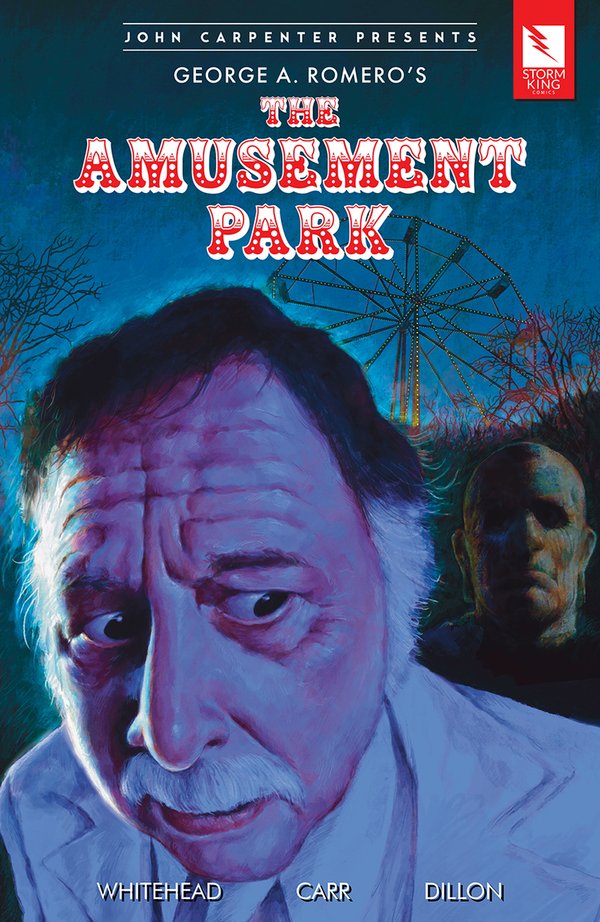
George A. Romero's the Amusement Park bookcover

George A. Romero’s The Amusement Park by Jeff Whitehead, introduction by Greg Nicotero, art by Ryan Carr, lettering by Marshall Dillon, edited by Sandy King

Storm King Comics, 2025

ISBN-13: 9798988728573

Available: Paperback

Buy: Bookshop.org


This graphic novel adaptation of George A. Romero’s previously lost 1973 film The Amusement Park comes from a collaboration between Storm King Comics, jointly owned by John Carpenter and Sandy King, and the George A. Romero Foundation.


Businessman William Lincoln returns to Pennsylvania and has a chance encounter with an elderly man in a small coffee shop. The impatient young man is drawn into a conversation about the history of the amusement park that used to stand in that very spot. The more William learns from the old man, the more uneasy he becomes.


Rather than a lighthearted tale of a typical amusement park atmosphere, the old man relates a story full of pain, sorrow, and loneliness. He simply wanted to visit the grand park one more time, to revisit childhood memories and surround himself with youthful joy and excitement. Instead, every interaction with younger people in the crowds shows the impatience and hostility directed at the elders in the park. Rides and other attractions place the aged in embarrassing and hostile situations. Everything is a reminder of how the mind and body deteriorate with age. As he makes his way through the park, he remains unaware of the looming figure that follows him on his journey.


The horror lies in the struggles the old man witnesses or is subject to himself. We all know someone aging, or who is well into their golden years. Some of us may be there ourselves or quickly facing what is to come. Both the film and this graphic novel sit with you, make you take in some uncomfortable facts about our flawed political system and how it affects healthcare; social reform; housing; and many other issues essential to us all, not just the elderly. That is simply where the systems, and our lives, end.


Whitehead’s adaptation differs from the film, but not in any way that detracts from the message. Carr’s artwork is incredibly effective, especially regarding the pain, emotional and physical, the old man experiences as he makes his way through the amusement park.


This graphic novel could fit in multiple places in a library collection, but the first one that comes to mind is Graphic Medicine. While that is not the sole focus, there are significant panels that address the current United States healthcare system and its failings.


Reviewed by Lizzy Walker
Graphic Novel Review: Tombs: Junji Ito Story Collection by Junji Ito

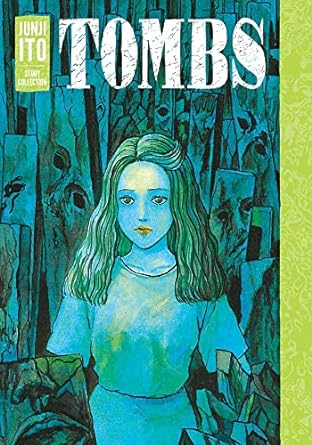
Cover art for Tombs: Junji Ito Story Collection by Junji Ito

Tombs: Junji Ito Story Collection by Junji Ito

Viz Media, 2023

ISBN: 9781974736041

Available: Kindle, hardcover

Buy: Bookshop.org | Amazon.com


Junji Ito’s Tombs presents a collection of nine original horror manga tales. In the titular story, Kaoru and her brother Tsuyoshi take a trip to visit their mutual friend, Izumi, in her new town. One the way, Tsuyoshi hits a young woman with his car. The siblings load her into the vehicle, only to find out she is dead and they transfer the body to the trunk. When they make it to town, they are perplexed by the random countless tombstones in the middle of the road. A few townspeople explain that they appear where people have died. Izumi corroborates these claims, even showing them tombstones that are inside her family home. The dead are not to be touched.


“Clubhouse” is an intriguing haunted house story. Friends Yukari, Chikako, and Minae enter an abandoned building. Minae decides to explore the second floor, while the other two wander the first. Soon after they leave, the friendship between Chikako and Minae deteriorates. Yukari, upset by her friends not speaking anymore, pleads with Chikako to make up with Minae. Chikako, however, has a new group of friends who frequent the haunted house they explored.


The “Slug Girl,” poor Yuko, hates these little creatures. She used to be so talkative, but she falls silent when her tongue transforms into, well, a giant slug. She’s tried cutting it off, but it grows back. Can her family and friends help her?


In “The Window Next Door,” Hiroshi and his parents move into a new house, where the closest neighbor only has one window on the second floor. Unlucky for him, it’s right across from his bedroom window. In the middle of the night, Hiroshi hears the woman next door calling to him. He is met with a terrifying sight when he looks out his window. She repeats her call to him night after night.


“Washed Ashore” is the story of the corpse of a strange, massive sea creature found on a beach. It is mysteriously luring people to it. The scientists studying the monster notice clear patches along the body. A commonality between all of those who are drawn to it is that they are missing loved ones. When bystanders get closer to the body and look closely into the clear patches, they find the unexpected.


In “The Strange Tale of the Tunnel,” a town is plagued by disappearances tied to a train tunnel. Goro, whose mother committed suicide in the tunnel when he was young, finds his sister wandering there when she is not watched. A group of scientists starts to study strange occurrences associated with the disappearances, such as strange sounds, unexplained wind, and blood dripping from the stones.


“Bronze Statue” is a cautionary tale. Mrs. Sonobe is a jealous woman obsessed with the beauty she has lost. Tsuchiya, a master of working in bronze, made the statues of Mr. and Mrs. Sonobe installed at the local park. Through her statue, she eavesdrops on conversations of the mothers who bring their children to the park, and she doesn’t like what she hears. She unexpectedly invites them for a social to unveil another statue. When their hostess leaves the room, they begin to discuss their honest feelings about the situation. Mrs. Sonobe, of course, doesn’t like this. How far she is willing to go to preserve her beauty in statues knows no bounds, and the women, as well as her bronzeworking miracle man and herself, will find out the lengths she will go before she exhausts her options.


In “Floaters,” Ryoichi finds his friend Masao, who has been out of school for a few days, with a bug net at the side of the road. He tells mutual friend, Kyoko, about it, when they see a hairy mass on a tree branch. It shifts in Ryoichi’s hand and starts proclaiming it’s love for Masao…in Masao’s voice. Soon, everyone in town is seeing these things floating around, some stating other townspeople’s secrets and innermost thoughts. The floaters from celebrities become the most coveted to catch and keep

.

The last story in this collection is “The Bloody Story of Shirosuna”. Dr. Furuhata moves to a small village where the townsfolk are all weak and emaciated. Perplexed at what could possibly be afflicting everyone in town, he starts an investigation that reveals a disturbing secret.


This is a strong addition to the Junji Ito Story Collection series that Viz Media has been releasing. The body horror in all of the stories is up to par with the best of Ito’s work, such as Uzumaki and Gyo. Highly recommended.


Reviewed by Lizzy Walker

Graphic Novel Review: Lovesickness: Junji Ito Story Collection by Junji Ito

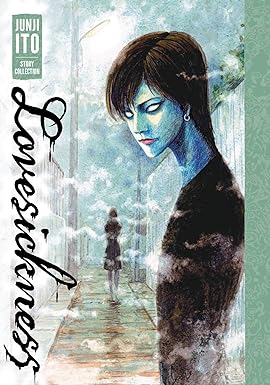
Cover art for Lovesickness: Junji Ito Story Collection by Junji Ito


Lovesickness: Junji Ito Story Collection by Junji Ito

Viz Media, 2021

ISBN: 9781974719846

Available:  Hardcover, Kindle edition

Buy: Bookshop.org | Amazon.com


In Lovesickness, originally published in 1996 and told in 5 parts, Ryusuke Fukuda and his parents move back to the town of Nazumi after his father accepts a job there. The story opens with a teenage girl approaching the crossroads of an empty street where a man is emerging from the fog. She quickly places her notebook over her face and asks for a fortune. The older man responds and they part ways. When the man meets his family at the Nazumi train station, it is revealed that he is Ryusuke’s father. He relates the story to his wife and son, the latter shaken by the chance meeting.


When he starts at school the next day, he is greeted by an old friend, Midori. Eventually the topic of rumors comes up regarding teenage girls committing suicide after encountering a mysterious handsome young man. Ryusuke, in an attempt to calm his own guilty conscience when he reveals a terrible fortune he gave to a woman in distress, which led to a grisly suicide, hunts for the shadowy figure delivering his own tragic fortunes to innocent strangers at the crossroads.


The artwork in Lovesickness is probably some of my favorite in Ito’s work. The effect of the fog and shadows is excellent, and the body horror is fantastic. The handsome stranger is eerily beautiful. The character design reminds me of Fukusuke from the visual kei band Metronome.


Four other stories are included in this volume. “The Strange Hikizuri Siblings,” told in two parts, are a strange family, often at odds with each other while still trying to support each other the best they know how… to a degree. The first story, “Narumi’s Boyfriend”, shows the cruelty of the siblings and how they all take part in driving Kotani, the titular boyfriend, albeit in a forced relationship, to madness. In “The Séance”, we see family power dynamics play out in the worst possible way, with the two eldest brothers being just awful people.


The next story in the collection, “The Mansion of Phantom Pain”, relates the story of Kozeki, a young man employed to be a live-in caretaker for Yusuke, the son of a wealthy family. Yusuke’s condition is a strange phantom pain that extends beyond his normal body. A team of caretakers who can never leave the bricked up mansion manage the boy’s pain, day and night. When they start to experience their own maladies, and the death of Yusuke’s father, his mother still refuses to let them leave. Some of the caretakers slowly succumb to infections and hallucinations, but those remaining can’t leave, with the promise of the family’s wealth at stake, no matter how much Kozeki pleads for doctors.


Following that is “The Rib Woman”,  a cautionary tale of rib removal surgery and  obsession with the perfect figure. Yuki laments the lack of an hourglass figure like her friend Ruriko’s, and decides surgery is the best option. Throughout the story, Ruriko is tormented by strange and discordant music. One evening Yuki and her brother, who is also dating Ruriko, find the latter in agony on the sidewalk as she is trying to find the source of the song. They offer to help, and when they do find the source, they see a mysterious woman in the park playing a small instrument. She flees and leaves behind her instrument, which looks to be a large rib. After Yuki’s surgery, she too can hear the music. She also finds the woman and discovers there is more to the story than she believed. There is some deliciously good body horror in this one.


The final story in the collection is the inexplicable “Memories of Real Poop.” It’s the shortest chapter in this collection, at only four pages, but it’s memorable. I’ll just leave it at that. Highly recommended.


Reviewed by Lizzy Walker