Home » Posts tagged "filmmaking"

Interview: Miles Kowalewski Interviews Eric Shapiro

Eric Shapiro is a writer and filmmaker. He wrote Macho, the forthcoming Randy Savage biopic produced by Artists for Artists, Midas Entertainment, and Range Media Partners, and  Behind the Facade, a feature screenplay developed by Rebel Six Films. His films have screened at Fantasia and Fantastic Fest and streamed on Netflix and Hulu. A California Journalism Award winner, he is editor and co-owner of The Milpitas Beat.

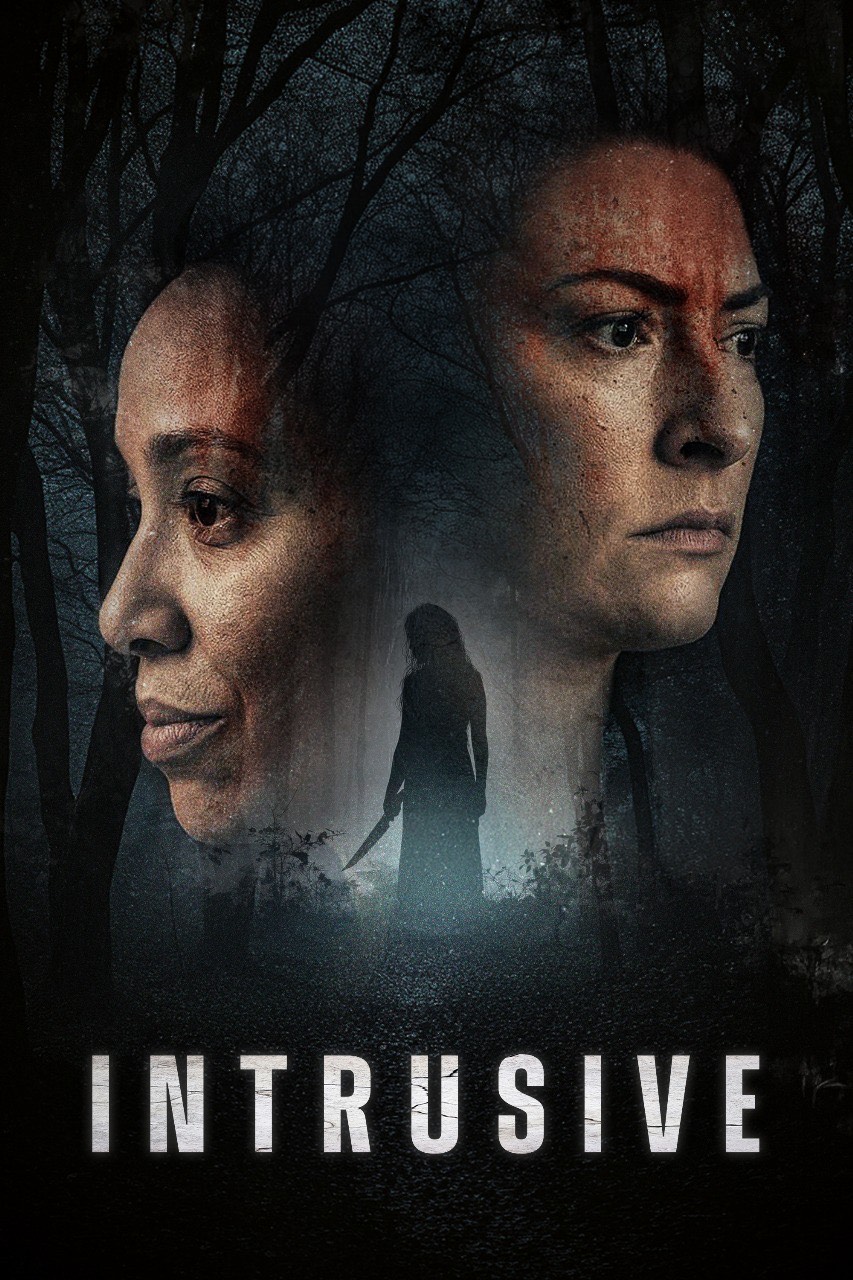
Eric’s latest movie Intrusive just started streaming on Tubi. His next movie, Horrorbuku starts streaming on YouTube channel Kings of Horror.

Eric was kind enough to answer questions about screenwriting and filmmaking asked by aspiring horror movie screenwriter Miles Kowalewski.

Interview with Eric Shapiro
Miles: When and where did your screenwriting journey start? What got you into It?

Eric: I think directing came first. I was 12 and had started making movies with a camcorder. The more I studied the craft, the more I learned about how screenplays were formatted and how stories were structured. So little by little, I tackled screenwriting from various angles: formatting, dialogue, action scenes, narrative architecture. I’m constantly learning more about it.

Miles: How would you explain what you do to people who don’t know what screenwriting is?

Eric: You’re essentially writing a very advanced blueprint for a movie or serial. The screenplay medium is stripped down to scene headers, action, and dialogue. By design, it’s meant for other people to come in and interpret. You don’t say where the camera goes (usually; unless you’re directing, or you can’t help yourself!). You don’t tell the actors how to say their lines. It has to get the story and characters across in a clean, pointed way.

Miles: What is your overall process for outlining?

Eric: It takes some time for the story structure to start clicking in my head. It’s a metabolic thing, like the structure has to accord with the way my nervous system’s flowing. So I walk around daydreaming for a couple weeks (or sometimes several months). Then, ideally, a sort of flow state opens up. David Chase, the showrunner of The Sopranos, described it well; he said there was a point while planning every episode where he’d lie down on a couch and suddenly see the whole episode in his head as a string of scenes. You mess around with ideas and emotions and after a while it all – hopefully – congeals into a legible form. At that point, writing the outline becomes just writing out a list of scenes or sequences.

Miles: What are a few things you wish others to know about the exhibition and distribution process?

Eric: It’s constantly changing. I’ve been writing and directing movies professionally for almost 20 years and the distribution and monetization aspects have transformed about four times during that period. People in the business, or hoping to get in, should read trade publications like Deadline and Variety to stay on top of what’s happening. As of now, streaming is starting to resemble what we used to think of TV as: an ad-based model where the streamers and filmmakers make their money from commercials. A very slim margin of the industry still releases work theatrically, and that’s become a bloodsport. You’ll see a few big hits and then months of stagnation. The industry is trying to become systemized in the wake of Covid and after having been decentralized by social media and our phones.

Miles: What do you think is the most important, plot, themes or characters and why?

Eric: I think it’s the characters. Ideally, their behavior will drive the plot and define the themes. The plot is what they want and how they go about getting it, or failing to, or both. The themes are the meanings derived from that process. But it starts with a vivid, identifiable character and their psyche and circumstances and way of relating to other people and the world.

Miles: How does screenwriting vary throughout different types of mediums? Shorts? Music videos?

Eric: I’ve done shorts from just an index card of notes. It depends. Under all circumstances, there should be a written plan of where you’re going, as it unifies the cast and crew and narrows the possibilities into something coherent. I shot a music video last year where we worked from a list of shots and mini scenarios. If a short is more dramatic or has defined characters and ambition, I’ll write a proper screenplay for it, formatted like a feature script.

Miles: What is the overall process of film festivals?

Eric: It’s brutal! I directed a short film called The Algorithm in 2024; it did the festival circuit in 2025. I think we had a 15% acceptance rate, and we won a couple of awards, so we did well. But you have to submit widely and intelligently. Make sure you’re targeting festivals that match your genre and attitude; festivals have very specific identities and audiences. And nothing helps more than knowing people; you have a better chance of getting into a film festival if you have a way of accessing the deciding parties directly, which has seldom been the case for me. It’s very political.

Miles: Do you often write your ideas as different mediums first?

Eric: Only once in a while. I have a screenplay I co-wrote with my wife Rhoda called The Devoted that has been optioned about five times over the years. At one point, while thinking it wouldn’t get made, I wrote it as a novella just to get it out into the world. Usually, though, for me, a script is a script.

Miles: How do you keep yourself committed to writing and avoiding writer’s block?

Eric: You have to sit down and do it. It’s torture. I don’t think it’s ever easy, on any given day. I wrote a book called ASS PLUS SEAT about this topic. The idea is, you don’t wait for the muse to come to you. You sit down and start working, and only then does she appear. You sit around waiting, you’ll wait your whole life. Your work is like an offering. If the movie gods see you taking it seriously, then they’ll show up and give you more chances to prove yourself. I really believe that.

Miles: What does the horror genre mean to you?

Eric: It’s my white whale. I can’t get over the fact that some movies and books can actually scare you. Even as an adult, it doesn’t compute. How can images on a screen or words on a page cross all the barriers of logic required to grip your emotions like that? It’s not easy for a writer to access that fear state. I think every other emotion – humor, sadness, awe and wonder – is easier to get to, at least for me.

Miles: What project are you the most proud of and why?

Eric: I wrote a biopic screenplay about “Macho Man” Randy Savage that was picked up last year by Kenan Thompson’s company Artists for Artists. I started working on it almost a decade ago, with Macho Man’s real-life brother Lanny Poffo, who sadly passed away in 2023. Lanny and I had become good friends by then. I miss him very much and I’m proud to see our work advancing.

Miles: Do you have any particular influences on your writing and directing?

Eric: Too many to list. Unfortunately, this has become a political statement, but I owe a lot to David Mamet. Over and over again, he showed that you could make something tense and exciting with two people talking in a room. Or he could easily scale up to a major canvas. At any proportion, in his prime, it was all about human emotion and psychology. Anybody who thinks you can’t make an intense movie with limited resources should watch or read some of his early plays. A lot of them were adapted into films.

Miles: Do you often find yourself juggling different jobs between getting your films made?

Eric: Lately I’ve been drawing my income from filmmaking and screenwriting, but in between I’ll do ghostwriting and script doctoring. I also co-own a newspaper in Silicon Valley, so that keeps me busy all the time.

Miles: What are the hardest and easiest parts of getting your film made, from both when you started out vs. now?

Eric: Getting money is always hard. It’s harder now than ever; there’s so much competition, and such a crowded media ecosystem. I’m always out there networking to get projects going; it never stops, and there’s constant rejection and failure. It’s just the nature of the game. The easiest part is everything else; when you have a passion for doing it, it comes bursting out of you.

Miles: Do you have you have any particular advice to young people who want to keep the art of film and screenwriting alive?

Eric: Unleash your biggest, strangest emotions. We’re in a society that’s running at a dopamine deficit. People’s brains are hollowed out from screen addiction. They need movies to remind them they’re alive.

Miles: Is there anything you’d like to share with our audience of horror readers and librarians that we haven’t covered?

Eric: At this point, being a reader or a librarian is a heroic act. Thank you and keep going!

Musings: Doing What You Love with Someone You Love, by Kirsten and Miles Kowalewski


This entry was written at the request of my son Miles, previously referred to here as the Monster Kid for privacy reasons (Miles is just a few months older than Monster Librarian, and inspired our Monster Movie Month project in July 2012. A  little kid doesn’t need his name out there on the Internet) There are some really cool blog posts in the July 2012 archives for this blog) At 20, he is no longer a kid and while he’s home from college he wanted to share how important it is to him that the two of us share the experience of watching and talking about horror movies together. We’ve each written a little about it here, first from my point of view and then from his. Mine is a bit wordy, but make sure to read what he has to say. It’s so cool to see what he thinks about the time we spend together sharing this interest! If you’ve ever wondered how horror-loving kids turn out, mine is kind, curious, loving, generous, and enthusiastic about his interests.


Kirsten: 

I am more of a horror reader than a horror movie watcher. Being married to a horror movie lover made movie nights challenging, to say the least. But my son has not just followed in Dylan’s fandom footsteps but has even gone further, majoring in media production and screenwriting, and working on short films for Radiance, Ball State University’s immersive learning experience in filmmaking. Since Miles was a kid, he has had an interest in monsters and scary movies– in fact, one year, Dylan helped him shoot a short monster movie during his birthday party. As a teenager Miles read about and took classes in screenwriting for horror movies, learned to write film criticism, connected with people online, and even to conventions.


I have learned that if you want your kids to spend time with you, it makes a difference if you take time to share their interests, so I watch and talk about horror movies with Miles. I love getting to share the experience with him, and because it’s interesting to him, he makes it interesting, and even exciting, to get into it with him. I probably text him now with more horror movie related content than I do cat videos (college students apparently need a steady diet of cat videos). I owe many thanks to James A. Janisse of the Kill Count, who has made it possible for me to talk about movies intelligently with him even when I haven’t watched them through.


Almost all of the movies I’ve seen in theaters in the past year have been with Miles, and this actually was a great year for watching horror movies in a theater. I’m probably not representative of the general moviegoing population, but in addition to Sinners, four of the five movies I saw in theaters were horror movies, and worth the ticket price (28 Years Later, Weapons, The Long Walk, and Frankenstein). I really think that they are a lifeline for movie theaters. I saw the first three with my son, and watching a movie on the big screen in a movie theater is a great experience to share with someone who really is interested in being there and enjoying it.  I love Guillermo del Toro and everything Frankenstein, and although Miles was at school, I could go back and forth with him about cinematography, directorial choices, special effects, storytelling, and all the other things I’ve learned from him about filmmaking, especially horror, even though we weren’t able to see it together.  I saw del Toro’s Frankenstein with my mom, who loves the book but doesn’t like violence or horror, and there is a world of difference in the discourse when you are sharing the experience with someone who isn’t open to it.


Since Miles is in college now, we mainly watch movies when he’s home on break, and this year we’ve watched It Follows (a favorite of his), Pearl, Get Out, Psycho, Cure, and Black Christmas together.  We also watched Night of the Living Dead and Dawn of the Dead again, because we learned that the Monroeville Mall, where parts of Dawn of the Dead were filmed, will be demolished later this year. We actually intended to visit this weekend while he is on spring break, but then I discovered there’s actually going to be a final farewell there in June, with original cast members in attendance, so I think we’re going to wait for that!  I watched them casually in the past, but now horror movies mean more, because they’re something Miles and I share.


Miles: To me, this whole experience has been getting to do something that I love with a person that is into and enjoys the same genre as I do. We both have different specialties in regards to the horror genres, across multiple mediums. I enjoy movies more then I do books and for Mom, it is vice versa.


I specifically enjoy watching horror movies with my Mom because I have always been fascinated with movies as medium and horror as a genre ever since I was incredibly young. Plus I also think that it may help that it is something we do together, to varying degrees of enjoyment.


I find that with these movies we watch, it helps us bond and grow closer together. I don’t think Mom would have willingly watched any of the movies that we did with anyone else (maybe except for Daddy, but he was into some pretty intense stuff). And given how unique and special my mom can be with these kinds of things, it is always a treat to do.


In summary, you can dice it many different ways. It could be family bonding, the continuation of legacy, film analysis, criticism and appreciation, or maybe just laughing and screaming at whatever is on our screen for the night (most likely all of the above). But at the end of the day, it is something that I always have found brings me a sense of warmth and comfort in a world that always seems to be getting darker and colder.


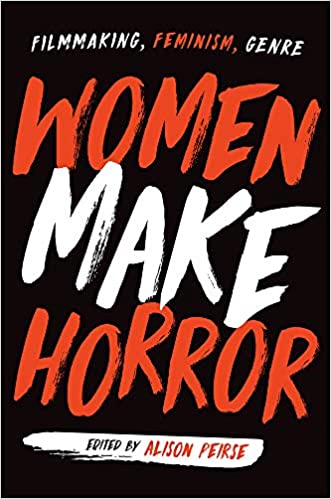
Book Review: Women Make Horror: Filmmaking, Feminism, Genre edited by Alison Peirse

cover art for Women Make Horror edited by Alison Peirse

Women Make Horror: Filmmaking, Feminism, Genre edited by Alison Peirse

Rutgers University Press, 2020

ISBN-13: 9781978805118

Available: Paperback, Kindle edition Bookshop.org | Amazon.com )


Women working in the horror industry today are severely underrepresented. Although they have been making horror for centuries, many women have been cut out of that history and/or had their authorship and creative influence denied. What is more, women also enjoy consuming horror. Women Make Horror explores women’s creation and enjoyment of the genre through analysis of experimental cinema and filmmaking. The book includes seventeen essays, global in scope, discussing creatives, films, and festivals. While I think every one of these chapters deserve attention, I will highlight some that stand out.

“Women Make (Write, Produce, Direct, Shoot, Edit, and Analyze) Horror” by Alison Peirse provides a solid introduction to the text. Peirse discusses how she garnered and selected the texts for this volume. She asked three questions of the writers: why do women make horror; what kinds of stories do women tell in horror; and what makes a horror film a feminist film (p. 8-9). Every contributor has a unique perspective as to how they answered these questions.

“The Secret Beyond the Door” by Martha Shearer discusses Daria Nicolodi’s authorship and, subsequently, creative content of the original Suspiria. In “Why Office Killer Matters”, Dahlia Schweitzer provides valuable information on this film and argues that it is a film that not only restructures the representation of gender representation, but how horror films are expected to conform to specific tropes (p. 89). Donna McRae, in her chapter titled “The Stranger with My Face International Film Festival and the Australian Female Gothic”, discusses the development of this essential film festival, as well as “considers the influence of a female-centric genre filmmaking in Australia today” (p. 146) and how it has been a force for good in creative circles. Erin Harrington’s “Slicing Up the Boys’ Club” provides an excellent analysis of the existing state of anthology and omnibus films and their lack of diversity, as well as a discussion regarding the women-led anthology, XX. Harrington poses some good questions regarding representation for readers as well. “The Transnational Gaze in A Girl Walks Home Alone at Night” by Lindsey Decker presents an analysis through the lens of Hamid Naficy’s Islamicate gaze theory rather than the typical male gaze theory used so often in feminist film analysis.

In “Gender, Genre, and Authorship in Ginger Snaps“, Katarzyna Paskiewicz analyzes the film Ginger Snaps, which makes connections between a werewolf legend and a girl’s coming-of-age story. Paskiewicz describes her study as having two purposes. She seeks to answer how the film might be productively read through a lens that recognizes filmmaking as a collective art form” (p. 106), as well as wanting to “register the significance of women’s film authorship within the horror genre histories in which they have been traditionally overlooked” (p. 106). Early in the chapter, the author argues that directors are not the only creative voice in a film project. Editors, screenwriters, set designers, and more have influence over various aspects of a film (this is precisely why my colleague and I created Women in Film: A Film Index, to recognize other creatives in horror. That the sentiment is recognized in this seminal text is encouraging).

Other chapters cover directors such as Gigi Saul Guerrero, Lucile Hadžihalilović, and Alice Lowe. There are also chapters that focus on the New French Extremity, Korean horror cinema, fans as filmmakers, international films and events, and much more. The end of each chapter includes notes, and there is an extensive index at the end of the book.

Women Make Horror is a much-needed collection of feminist horror film criticism. Some of these essays, such as Molly Kim’s delve into Korean women-made cinema, are the first of their kind. and others showcase someone’s overlooked or misappropriated contributions, such as Alicia Gomez’s chapter on Stephanie Rothman’s The Velvet Vampire, a film originally credited to Roger Corman. Women Make Horror would be an excellent resource for horror scholars or even an addition to a film studies course on the genre. The general reader could enjoy it, but there are many chapters that read more like an academic work.  Highly recommended.


Reviewed by Lizzy Walker


Editor’s note: Women Make Horror: Filmmaking, Feminism, Genre is a nominee on the final ballot for this year’s Bram Stoker Award.