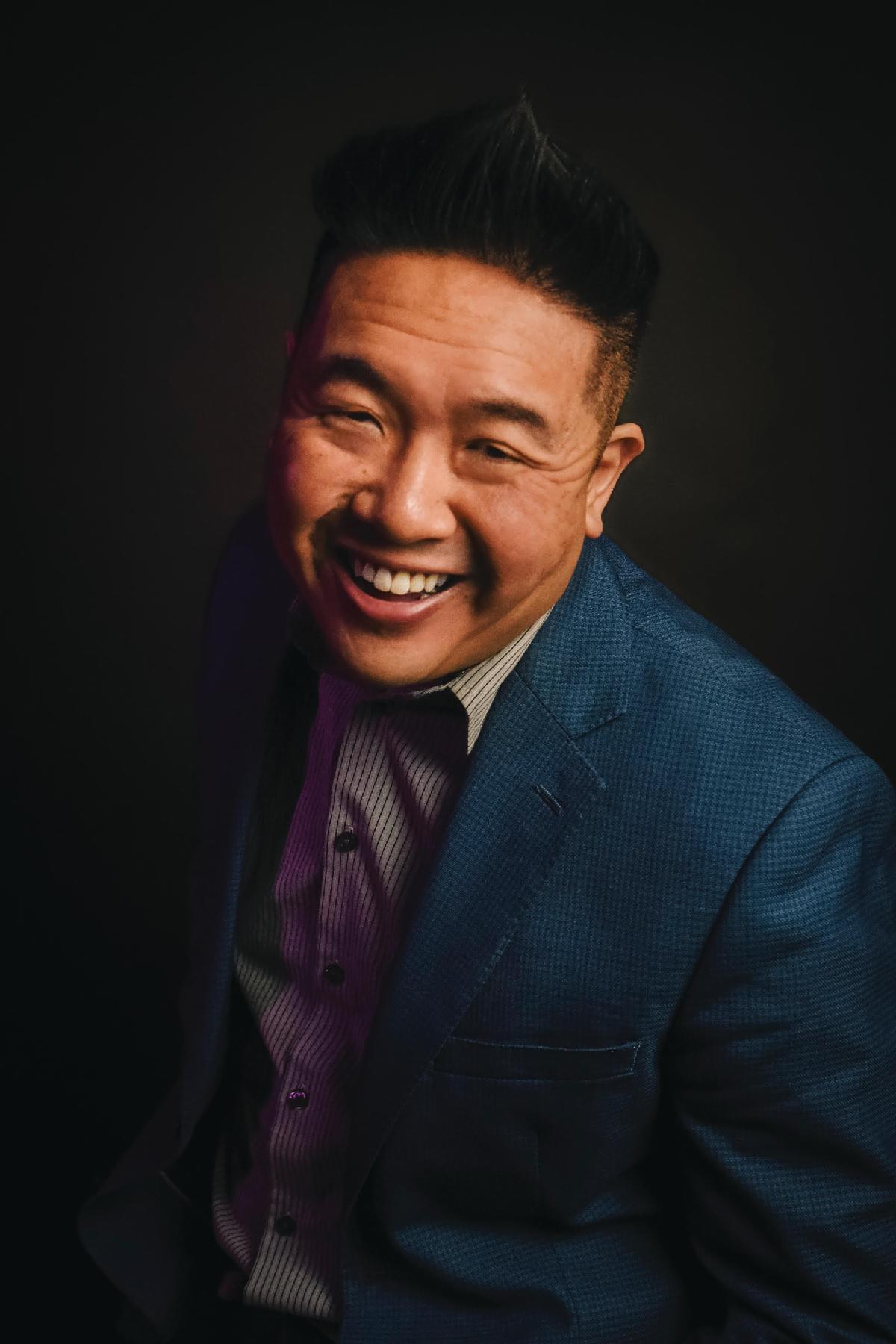
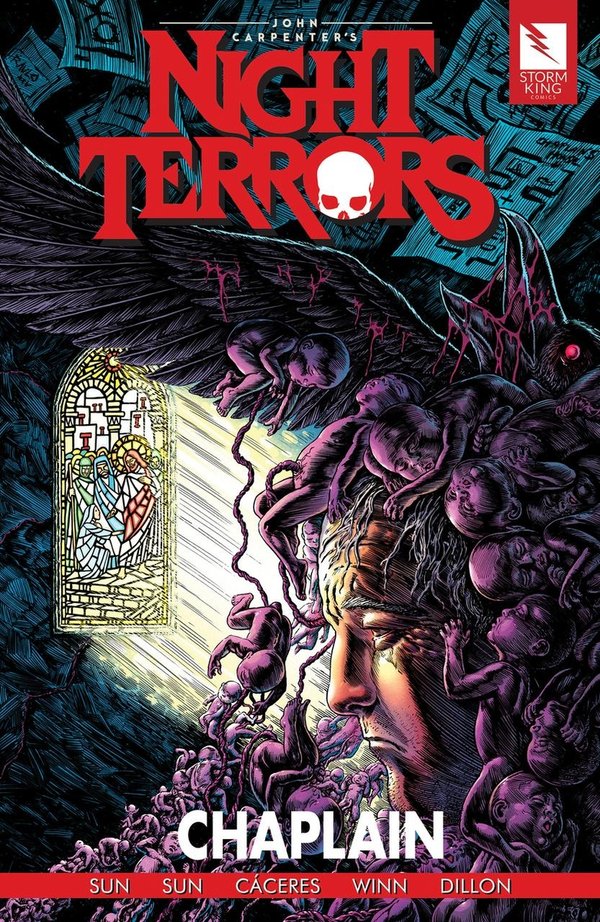
Interview with Reverend Wesley Sun and Brad Sun, creators of Chaplain, Part 3
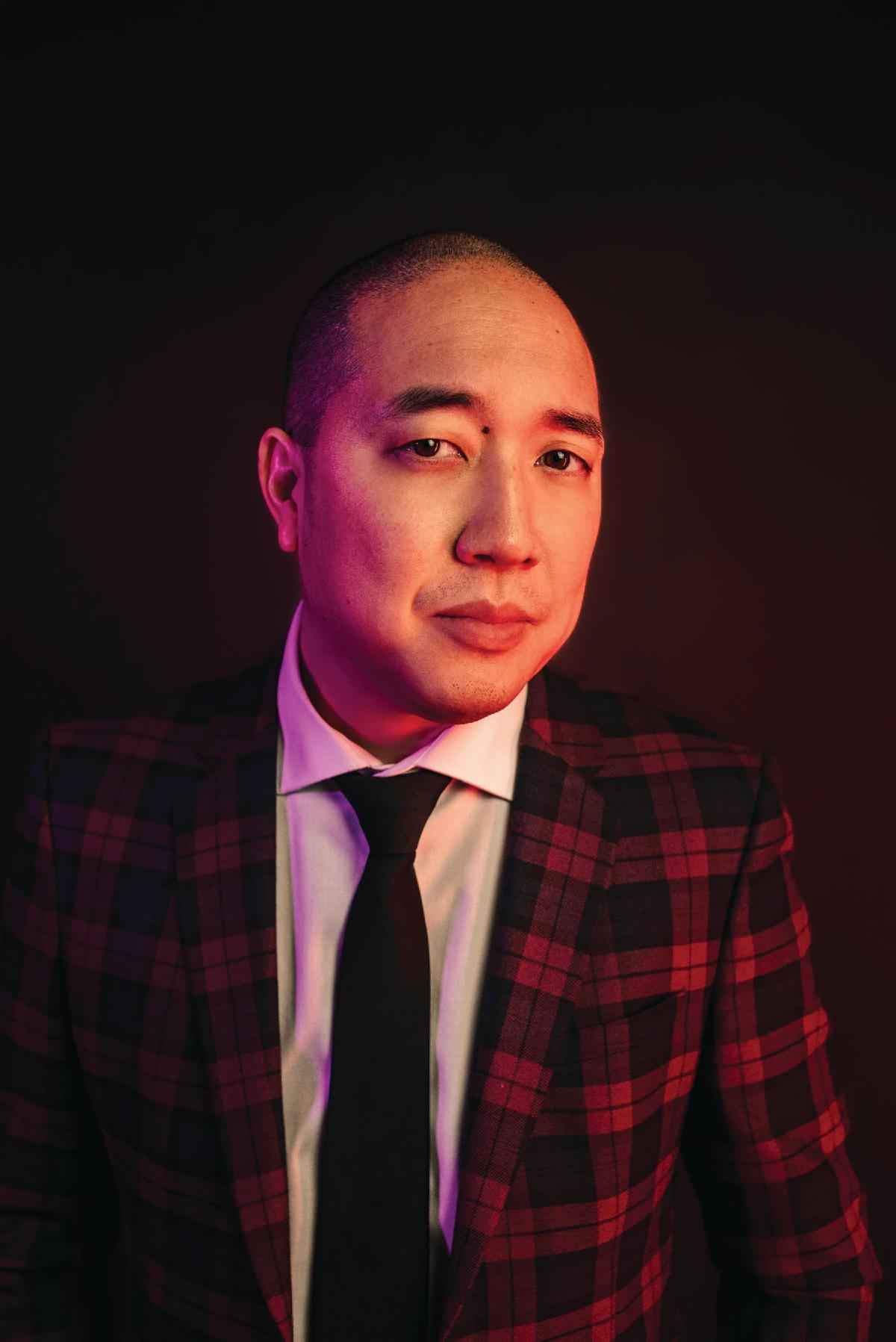
Editor’s note: This interview has been edited for length and clarity
Interviewer’s note: Part 3 contains significant spoilers.
Lizzy: Working through Chaplain, were there things that you learned about each other that you didn’t know before?
Brad: I will say one thing that Wesley kind of sold me on. I’m not a particularly religious person, but one thing that Wesley told me about is that, whatever religion or lack of religion that someone has, there are important things that happen in life, and there is the sense that something needs to be done to mark the occasion. One of them would be the example of a miscarriage or a stillborn child. There are instances where it feels like, I wish we had something we could do here to commemorate this moment, regardless of your faith. We’ve been working on this for all of human civilization. We have all these different things you can do to mark this occasion. And I’m here to facilitate that.
Wesley: Yeah, you had the right.
Brad: There was one New York Comic-Con we were going to a few years ago, and there was a famous Korean artist that was going to be there, Kim Jung Gi. He died on the way to the convention. I was looking forward to meeting him, a lot of people were. I was literally on the bus on the way to the convention when I saw the news came up, this artist had died on the way to the convention. At the convention, they left his table there at the Artist Alley, and people were leaving things behind, writing notes on the table for him. I’m getting a little choked up thinking about it. It’s really nice that they did that because I’m sure everyone who went there was like, I wish we could do something to show that this was important to us. Without any directions, they created their own ritual. I think it just is one of those things where it’s a natural human inclination to want to have something to show that something mattered. I think that’s something that Chaplain can really help people with in moments of need.
Wesley: Lovely. That was so good.
Brad: There are a lot of crossover things, one of them being graphic medicine, and other areas of interest where people might stumble upon Chaplain, but they may not have been as exposed to comic books and graphic novels. If Chaplain could work to motivate people to explore this medium of storytelling that they normally wouldn’t, that would be something that I would be very happy about. If anyone is reading Chaplain, and that’s their first foray into a more mature comic book story, I would encourage them to explore, see what’s available. There are all sorts of different genres and styles of art that you may not be familiar with if you see mainstream pop culture stuff. I hope Chaplain can work as a gateway in some way to get people to see different kinds of storytelling and comics.
Lizzy: How about you, Wesley?
Wesley: This isn’t so much an answer to the question of what I want other people to know. I guess the only other thing that maybe I haven’t said so explicitly in this interview that I’ve been able to say in other conversations is that all of our work until this point had been smaller press or self-published. This is out first time working with a larger publishing company with a big distribution and big names attached to it. I thought that we would have to make some creative concessions, working with the big boys. I was fully prepared to sell a script to Storm King. They would hire some artists that weren’t really my cup of tea, we wouldn’t have any say, and then we wouldn’t see it until it came out on the shelves, and we would pick it up like everybody else. I was so happy to be wrong about every single part of that, from the jump. Like Brad said, we were used to working with artists we knew. Sandy wanted that. We met artists, she gave us portfolios of people to work with, asked us “what do you think about this guy? What do you think about this?” Sandy had a lovely comment about you being crazy, Brad. Do you remember what Sandy said?
Brad: Yeah, she said, and this shows how on the ball Sandy is as the big picture boss, she said that, because she’s familiar with our previous work in my art, “I know if you illustrated the book, it would have been even crazier”. She said, “I knew when I picked your team, when I presented the team to you, I needed to satisfy your level of madness. I knew I needed to thread the needle of making you, Brad, happy with how insane the book is and still be able to keep one foot on the ground.” And she told me this at the very end of the project. That made me realize, oh, the whole time she knew what was going on, the whole project, all the collaboration. I think all of us collectively really managed to hit that target and bring our perspectives to it from us writing the script, through the illustration process, the coloring, the editing, and really make something that’s greater than the sum of the parts.
Wesley: Even then, after they found a person that exactly like threaded the needle, I was prepared to say, okay, well then let’s turn Raúlo loose and we’ll see. But instead, he’s like, “no, no, no, every time I finish a page, I’m going to send it to you. I want to know what you think.” Brad was correct. He was working so fast. There were times we were afraid we weren’t giving him notes fast enough, and we were holding up the art because we had all these notes. And then he found one of the backstrap sandals of the Crocs that was inconsistent. So, he had to go back and re-illustrate a bunch of stuff. I don’t know if readers need to know it, but that was so unexpected. It’s incredible that we’ve worked with such a big team, but it felt as hands-on from my vantage point as it was with any of them. Because Brad is himself a visual artist, there were times where he would get a page, and he’d do a mock-up of, like, well, what do you think about doing this? It’s something I would never do because I don’t draw anything. They took it, and they were excited. I got a front-row seat to see three artists, Ryan, Raúlo, and Brad, going back and forth on how the page could look. It was incredible. I did not expect that part at all.
Lizzy: Ohh, that’s awesome.
Wesley: I think it made for an overall stronger book. There were some sequencings at the end where Raulo’s interpretation of our script had us jump on a phone call and rearrange a few panels right at the end, and we have a stronger book for it. I would say that the creative process, we couldn’t be happier with it.
Lizzy: Did Sandy ever challenge you guys to push the horror further or pull anything back?
Brad: She gave us a few keynotes. In one of the earlier outlines, she was like, make sure that the energy of the chaplain in the story isn’t all anger, isn’t all aggression, which was a tendency for us, to make the chaplain character a little bit more harsh, a little bit more grumpy and cantankerous, and make sure that the sadness of the character is in there, too. That was a simple comment, but it really helped steer the ship in the direction that the story needed to go. The other thing she said, after it was done, was that the thing that she always looks out for when she’s seeing things from writers and artists is that she wants to make sure they’re not trying to write or illustrate or whatever for her, they are actually speaking in their voice. I don’t remember a specific note she gave us in that regard, but that philosophy that she has, I could say rings true through the process. I’m here to facilitate these artists to create the best thing they can do, and I’ll take the ball and handle how it gets out to the masses. My job is to make sure they get to tell the story that I know that they are capable of telling.
Lizzy: Are there other horror-related works coming from the Sun Brothers Studios that you’d like to talk about?
Brad: We always have a few things that are still in the ether process-wise that we’re working on. There are a couple of things right now that I’m excited about exploring. We’ll see what comes to fruition first. One of them is a little bit more of a sci-fi horror, almost like a throwback to a 90s rom-com, but also crossed with existential horror and cosmic beings. The other one, again, early stages still, is about a group of young people in a post-apocalyptic world trying to put together a ska band in the apocalypse. All those stories are always going to be horror-adjacent. I think that’s just built into the way we tell stories. I have this theory that I share with anyone who’s willing to listen, that if you want to tell a relevant story in this day and age, at this time in history, it’s got to be post-apocalyptic for it to resonate with people. I feel like that’s just in the air. Maybe there’s a time in every generation where we feel like this is the end times. But I feel, whatever the reality of the situation is, the physical state that the world is in right now feels post-apocalyptic to me, and that’s where my stories are going right now.
Lizzy: Where can readers find you guys and your work?
Brad: We’re probably most active on Instagram. If you want to follow us on Instagram @thesunbors, that’s probably the place we’re best at updating about convention appearances, upcoming projects, art, and things like that.
Brad Yeah, that was great. I think that was probably the most in-depth interview we’ve done. So I really appreciated your questions, really, the specificity of them.
Wesley: This was wonderful. Yeah.
Lizzy: I appreciate you both taking time to do this. Monster Librarian is directed to librarians or library workers, and horror readers. So yeah, this will get out to more library folks. So hopefully we’ll get this in our collections.
Brad: Excellent, I’d love to see it, yeah.
Wesley: I’ll echo what Brad said. I think part of the reason this interview was so engaging is because you did read the book, it sounds like several times, and put a lot of work in it. And especially knowing that there were parts from your own experiences that were difficult to get through. I really appreciate your commitment to coming to this with some real curiosity about not just broadly, but you had some really specific scenes and images that you’re like, I want to talk about this. And I think that made for a strong conversation.
Lizzy: I didn’t know if it was too much information, but…
Wesley: No, no, not at all.
Brad: Oh, that was great. I really enjoyed that, yeah.
Wesley Yeah, no, that was that was very helpful. That was great.
Lizzy: Thank you so much!




Follow Us!