Home » Posts tagged "Brian Keene"

Book Review: Why I Love Horror: Essays on Horror Literature edited by Becky Siegel Spratford

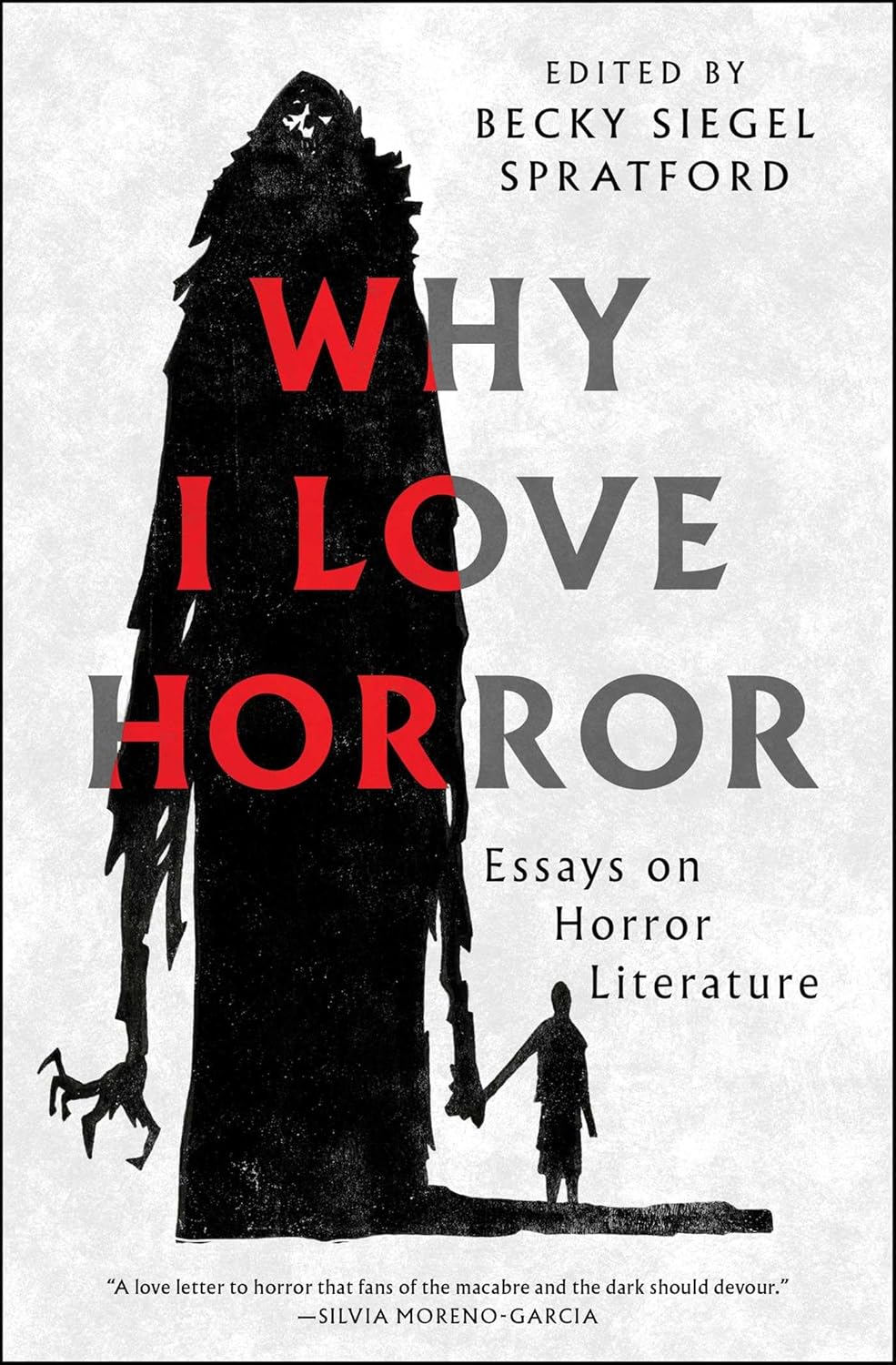
Cover art for Why I Love Horror edited by Becky Siegel Spratford

Why I Love Horror: Essays on Horror Literature edited by Becky Siegel Spratford

Saga Press, 2025

ISBN-13: 9781668205099

Available: Paperback, Kindle edition, audiobook, audio CD

Buy: Bookshop.org |  Amazon.com


Librarian Becky Siegel Spratford presents eighteen essays by current horror authors on why they love horror. The collection begins with a welcome to the reader by Sadie Hartman, followed by Spratford’s own essay, “Why Ask Why,” where she tells her story about how she found herself working with horror and curating this book full of talented horror writers. Before each essay, Spratford includes an introduction to the authors, a book recommendation to start with from their works, and a recommendation of an author in a similar vein.


My experience reading this was like opening a door to different times in my life where horror made significant appearances, despite having never really left me. Childhood memories and horror are foundational for some in this community. In “Brian Keene’s Giant-Size Man-Thing,” the author discusses his introduction to horror through comics and how horror helped him cope with dread and fear. John Langan writes of his childhood fascination with cryptids in “In the Bermuda Triangle with Sasquatch, Flesh Smoldering.” Jennifer McMahon’s “Monster Girl: How Horror Gave Me a Place to Belong” hit particularly close to home in terms of feeling out of place, being the weird girl who liked horror, and experiencing struggles at home. “My Mother Was Margaret White” by Cynthia Pelayo discusses abuse she experienced at home and at school, never feeling safe anywhere. Horror saved us both. “Permission to Scream” by Rachel Harrison and and “Tales From My Crypt” by Mary SanGiovanni specifically focus on girlhood and horror, both also speaking to similar experiences for me.


Horror providing comfort or a safe space is another thread that ties these essays together. Hailey Piper describes, in “The Giant Footprint of Horror”, how Godzilla introduced her to horror, and that there is joy in this dreadful genre. “My Long Road to Horror”, by Tananarive Due, describes horror as feeling. She writes a short but powerful history of her family and their personal horrors of racism and struggle.


Authors remind the reader that horror is more than a genre, it is an entire community. Alma Katsu’s “What You Can Learn from Horror: Don’t Run from Darkness; It’s Trying to Teach You a Lesson”, presents an essay questioning why people shy away from horror. A true crime writer I had a conversation with during my undergrad found it fascinating that there is a line in the sand between what his audience will and will not read: that line is fictional horror. Katsu states “I’m here to argue against running away from darkness,” (52) and provides personal information regarding past employment with government agencies as an intelligence analyst. Gabino Iglesias, in “Horror is Life: A Blood-soaked Love Letter,” discusses his life in Puerto Rico and discovering horror, which turns into a moving statement on how horror changed his life. In “A Day in My Psychedelic World,” Nuzo Onoh, dubbed the Queen of African Horror, reminds us there is horror for everybody.


There are so many great essays in this book. Other authors who contribute are Josh Malerman, Paul Tremblay, whose piece is accompanied by his daughter Emma, Grady Hendrix, Clay McLeod Chapman, Victor LaValle, David Demchuk, and Stephen Graham Jones. This would make a great addition to a general library collection, as well as essential reading for a course on horror. Highly recommended.


Reviewed by Lizzy Walker
Book Review: End of the Road by Brian Keene

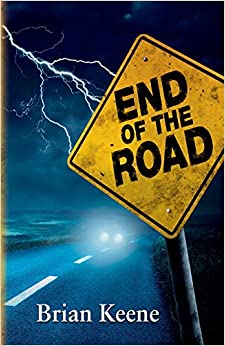
cover art for End of the Road by Brian Keene

End of the Road by Brian Keene

Cemetery Dance, 2020

ISBN-13 : 978-1587677939

Available: Paperback, Kindle edition Amazon.comBookshop.org )


End of the Road is a memoir consisting mainly of weekly columns horror writer Brian Keene wrote for the Cemetery Dance website to finance his 2016 signing tour, the “Farewell (But Not Really) Tour”,  which lasted from May to December of 2016. It also contains some additional material, including an introduction by Gabino Iglesias and a piece written by Tom Piccirilli, as well as epilogues going through about April 2017.  In addition to chronicling his journeys to bookstores and conventions across the country, Keene shares his experiences with grieving the recent deaths of three close friends including writers Tom Piccirilli and J.F. Gonzalez and his reflections on mortality. He attended the last World Horror Convention during the tour and recalls fond memories of past conventions and friendships, and, as a member of the planning committee for the charity weekend Scares that Care, gives that some space as well.  He writes about meeting up with friends and fans he’s made in the horror genre, the value of independent bookstores and local conventions, and the loss of individuality he sees in towns as he drives across America. His focus is definitely not on the controversies going on in the horror writing community at that time: he is looking back, not forward.

Keene also muses over his generation of horror writers (he had been a published writer and outspoken advocate for the genre for about 20 years at that time), touching on the changes in publishing and selling since he started as both a reader and a writer. From about 2000 on, I watched many of the changes from the sidelines, seeing the conversations on Shocklines on ebook vs. print, the effect of the failure of Dorchester Publications, the changes from almost entirely small-press limited editions to easier availability to a much wider variety due to ebooks.  He describes his own vision of the six “waves” of horror writers, putting himself in the fifth wave, and ready to let go for the and let the most current wave to take over the direction of the horror genre. His prediction is that independent niche bookstores and Amazon will take over and drive chain stores out of business. As a former public librarian, I think it’s telling that none of his signings were in libraries, who often feature local writers and midlisters: maybe neither of his publishers thought he would find buyers there, or lists his titles with wholesalers, but Pressure, the book he was promoting, is the only one of his books available in my public library (on a personal note, my husband, the founder of Monster Librarian, who died at the age of 40 in 2014, loved and reviewed many of Keene’s previous books, and recommended them for library collections).

Keene is at his best in this book when he writes about the people and places he cares about. His description of his grandmother, and of West Virginia, is nuanced and vivid, and his frustration over the lack of recognition for Hunter S. Thompson comes through pretty solidly. His self-proclaimed middle-of-the-road politics make the book pretty much an artifact of the times, but he really puts himself out there in speaking about his grief, his love for family and friends, and his feelings about the horror genre.

I’m not sure why it took so long for the book to come out, given that (according to Keene’s epilogue) the epilogue ends in February 2017 and the foreword was written in April 2017. While it is an interesting read ( and will be reflective of many interested readers’ experiences), it is not likely to be of wide interest outside the horror community. That said, current members of the horror community may enjoy his reminisces and appreciate his musings on the state of the horror genre circa 2016. Keene still has a blog, a newsletter, a Patreon, and does podcasts, so readers who are interested in what’s going on with him currently have many opportunities to do so. End of the Road is really a snapshot of his state of mind at that particular time, and a way to support a writer readers and friends want to support.


Reviewed by Kirsten Kowalewski


Editor’s note: End of the Road is a nominee on the final ballot for this year’s Bram Stoker Award in the category of Superior Achievement in Nonfiction.

Book List: Zombies Can’t Swim (Or Can They?)


Apparently, much discussion has been devoted to this topic. Honestly, I don’t see how there can be any right answer. Dylan, the original Monster Librarian, was a huge fan of zombies in movies and books, and he observed that there were many, many variations on a theme.  Zombies have been portrayed as fast, slow, smart, brainless (haha), almost human and about as far from human as possible. Given the many ways they’ve been written and imagined, there’s no reason they couldn’t be expected to swim… is there?

Well, I guess there is that issue of gross motor coordination, but we can’t let details get in the way of imagination. And there is at least one book with an author imaginative enough to create swimming zombies: Sadie Walker is Stranded by Madeline Roux.

There seems to be more evidence that zombies can travel underwater, though. In theory, the undead wouldn’t need to breathe, so there’s no reason they couldn’t just stroll along the ocean floor.  Underwater zombies appear in Max Brooks’ World War Z, and also in Brian Keene’s Dead Sea. In popular cinema, there’s evidence of this in Pirates of the Caribbean. And in not-so-popular cinema, but probably familiar to zombie lovers is this scene from the Italian zombie movie Zombi 2, which Dylan described to me over and over again.


To conclude this brief overview of the deep and meaningful topic of whether zombies can swim, I submit that if you would like to offer me your thoughts on the topic, along with your recommendations, you might just get someone new hooked on the zombie genre. Next up, we will try to address the question: is there such a thing as a “good” zombie?