
Eric Shapiro is a writer and filmmaker. He wrote Macho, the forthcoming Randy Savage biopic produced by Artists for Artists, Midas Entertainment, and Range Media Partners, and Behind the Facade, a feature screenplay developed by Rebel Six Films. His films have screened at Fantasia and Fantastic Fest and streamed on Netflix and Hulu. A California Journalism Award winner, he is editor and co-owner of The Milpitas Beat.
Eric’s latest movie Intrusive just started streaming on Tubi. His next movie, Horrorbuku starts streaming on YouTube channel Kings of Horror.
Eric was kind enough to answer questions about screenwriting and filmmaking asked by aspiring horror movie screenwriter Miles Kowalewski.
Interview with Eric Shapiro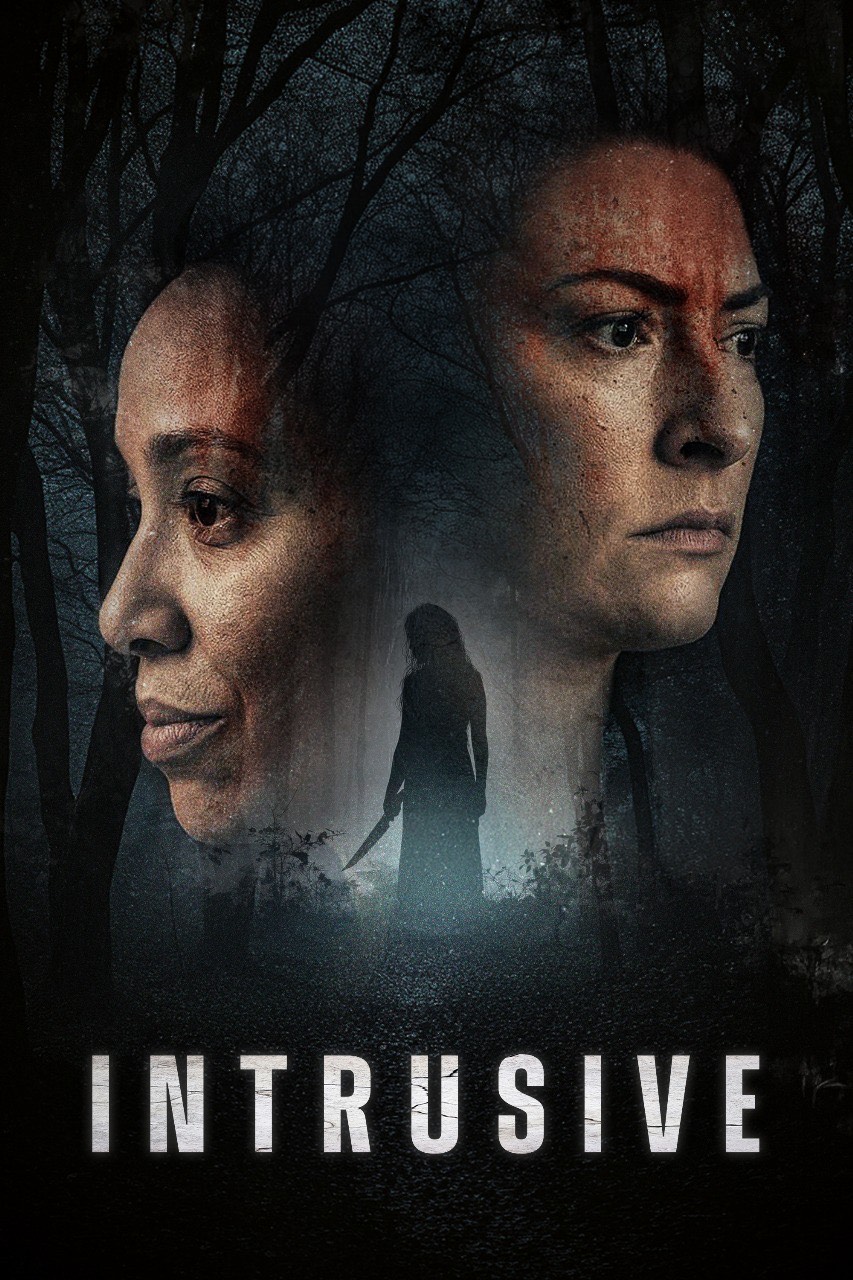
Miles: When and where did your screenwriting journey start? What got you into It?
Eric: I think directing came first. I was 12 and had started making movies with a camcorder. The more I studied the craft, the more I learned about how screenplays were formatted and how stories were structured. So little by little, I tackled screenwriting from various angles: formatting, dialogue, action scenes, narrative architecture. I’m constantly learning more about it.
Miles: How would you explain what you do to people who don’t know what screenwriting is?
Eric: You’re essentially writing a very advanced blueprint for a movie or serial. The screenplay medium is stripped down to scene headers, action, and dialogue. By design, it’s meant for other people to come in and interpret. You don’t say where the camera goes (usually; unless you’re directing, or you can’t help yourself!). You don’t tell the actors how to say their lines. It has to get the story and characters across in a clean, pointed way.
Miles: What is your overall process for outlining?
Eric: It takes some time for the story structure to start clicking in my head. It’s a metabolic thing, like the structure has to accord with the way my nervous system’s flowing. So I walk around daydreaming for a couple weeks (or sometimes several months). Then, ideally, a sort of flow state opens up. David Chase, the showrunner of The Sopranos, described it well; he said there was a point while planning every episode where he’d lie down on a couch and suddenly see the whole episode in his head as a string of scenes. You mess around with ideas and emotions and after a while it all – hopefully – congeals into a legible form. At that point, writing the outline becomes just writing out a list of scenes or sequences.
Miles: What are a few things you wish others to know about the exhibition and distribution process?
Eric: It’s constantly changing. I’ve been writing and directing movies professionally for almost 20 years and the distribution and monetization aspects have transformed about four times during that period. People in the business, or hoping to get in, should read trade publications like Deadline and Variety to stay on top of what’s happening. As of now, streaming is starting to resemble what we used to think of TV as: an ad-based model where the streamers and filmmakers make their money from commercials. A very slim margin of the industry still releases work theatrically, and that’s become a bloodsport. You’ll see a few big hits and then months of stagnation. The industry is trying to become systemized in the wake of Covid and after having been decentralized by social media and our phones.
Miles: What do you think is the most important, plot, themes or characters and why?
Eric: I think it’s the characters. Ideally, their behavior will drive the plot and define the themes. The plot is what they want and how they go about getting it, or failing to, or both. The themes are the meanings derived from that process. But it starts with a vivid, identifiable character and their psyche and circumstances and way of relating to other people and the world.
Miles: How does screenwriting vary throughout different types of mediums? Shorts? Music videos?
Eric: I’ve done shorts from just an index card of notes. It depends. Under all circumstances, there should be a written plan of where you’re going, as it unifies the cast and crew and narrows the possibilities into something coherent. I shot a music video last year where we worked from a list of shots and mini scenarios. If a short is more dramatic or has defined characters and ambition, I’ll write a proper screenplay for it, formatted like a feature script.
Miles: What is the overall process of film festivals?
Eric: It’s brutal! I directed a short film called The Algorithm in 2024; it did the festival circuit in 2025. I think we had a 15% acceptance rate, and we won a couple of awards, so we did well. But you have to submit widely and intelligently. Make sure you’re targeting festivals that match your genre and attitude; festivals have very specific identities and audiences. And nothing helps more than knowing people; you have a better chance of getting into a film festival if you have a way of accessing the deciding parties directly, which has seldom been the case for me. It’s very political.
Miles: Do you often write your ideas as different mediums first?
Eric: Only once in a while. I have a screenplay I co-wrote with my wife Rhoda called The Devoted that has been optioned about five times over the years. At one point, while thinking it wouldn’t get made, I wrote it as a novella just to get it out into the world. Usually, though, for me, a script is a script.
Miles: How do you keep yourself committed to writing and avoiding writer’s block?
Eric: You have to sit down and do it. It’s torture. I don’t think it’s ever easy, on any given day. I wrote a book called ASS PLUS SEAT about this topic. The idea is, you don’t wait for the muse to come to you. You sit down and start working, and only then does she appear. You sit around waiting, you’ll wait your whole life. Your work is like an offering. If the movie gods see you taking it seriously, then they’ll show up and give you more chances to prove yourself. I really believe that.
Miles: What does the horror genre mean to you?
Eric: It’s my white whale. I can’t get over the fact that some movies and books can actually scare you. Even as an adult, it doesn’t compute. How can images on a screen or words on a page cross all the barriers of logic required to grip your emotions like that? It’s not easy for a writer to access that fear state. I think every other emotion – humor, sadness, awe and wonder – is easier to get to, at least for me.
Miles: What project are you the most proud of and why?
Eric: I wrote a biopic screenplay about “Macho Man” Randy Savage that was picked up last year by Kenan Thompson’s company Artists for Artists. I started working on it almost a decade ago, with Macho Man’s real-life brother Lanny Poffo, who sadly passed away in 2023. Lanny and I had become good friends by then. I miss him very much and I’m proud to see our work advancing.
Miles: Do you have any particular influences on your writing and directing?
Eric: Too many to list. Unfortunately, this has become a political statement, but I owe a lot to David Mamet. Over and over again, he showed that you could make something tense and exciting with two people talking in a room. Or he could easily scale up to a major canvas. At any proportion, in his prime, it was all about human emotion and psychology. Anybody who thinks you can’t make an intense movie with limited resources should watch or read some of his early plays. A lot of them were adapted into films.
Miles: Do you often find yourself juggling different jobs between getting your films made?
Eric: Lately I’ve been drawing my income from filmmaking and screenwriting, but in between I’ll do ghostwriting and script doctoring. I also co-own a newspaper in Silicon Valley, so that keeps me busy all the time.
Miles: What are the hardest and easiest parts of getting your film made, from both when you started out vs. now?
Eric: Getting money is always hard. It’s harder now than ever; there’s so much competition, and such a crowded media ecosystem. I’m always out there networking to get projects going; it never stops, and there’s constant rejection and failure. It’s just the nature of the game. The easiest part is everything else; when you have a passion for doing it, it comes bursting out of you.
Miles: Do you have you have any particular advice to young people who want to keep the art of film and screenwriting alive?
Eric: Unleash your biggest, strangest emotions. We’re in a society that’s running at a dopamine deficit. People’s brains are hollowed out from screen addiction. They need movies to remind them they’re alive.
Miles: Is there anything you’d like to share with our audience of horror readers and librarians that we haven’t covered?
Eric: At this point, being a reader or a librarian is a heroic act. Thank you and keep going!




Follow Us!