Home » Archive by category "Uncategorized" (Page 176)

Interview: Cecilia Abate, aka Horror Scholar, Talks to Lizzy Walker

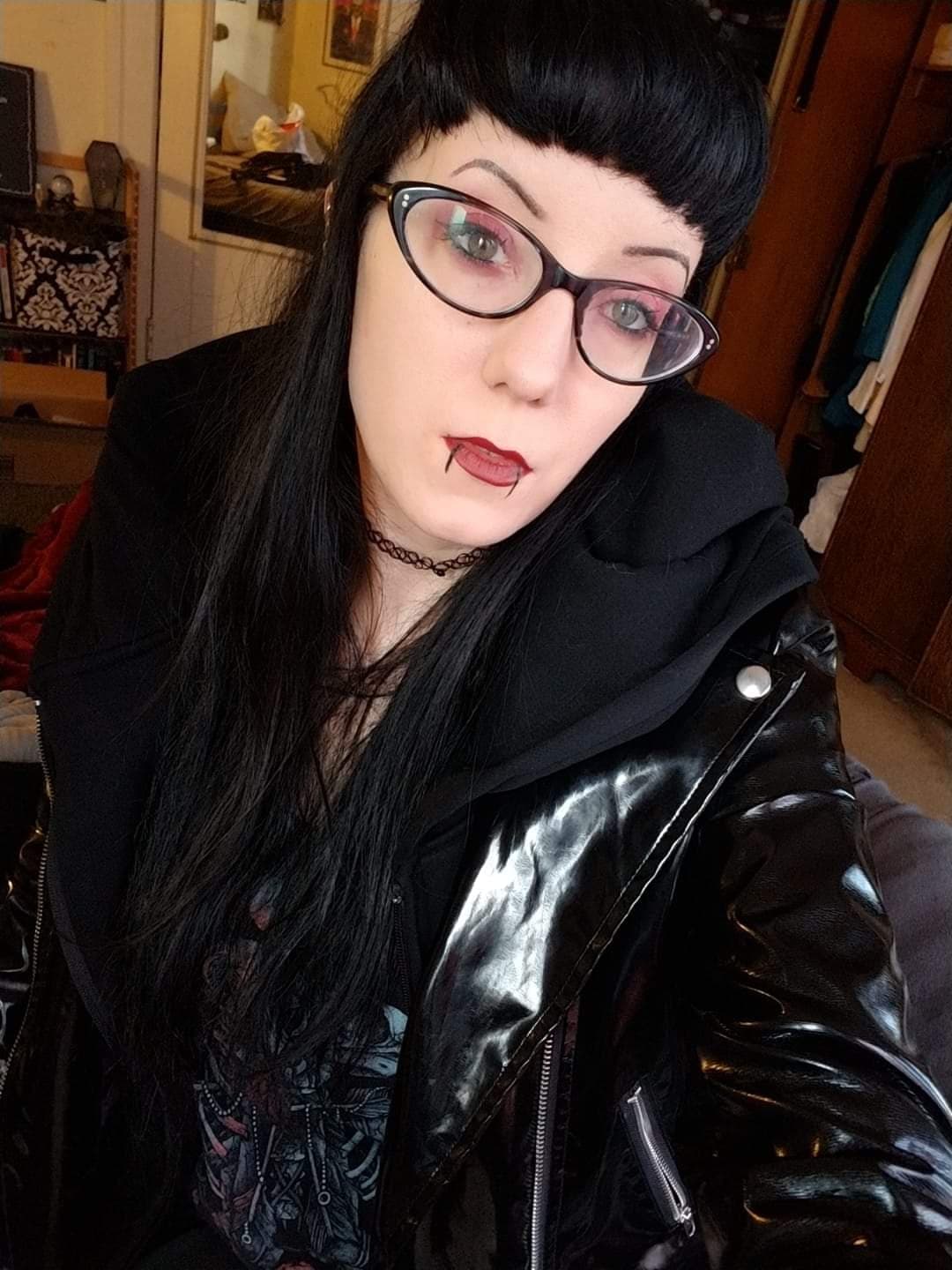
Cecelia Abate

We’re a little past Women in Horror Month, but why limit ourselves to one month a year? There are way too many awesome women who are a part of the horror community to do that. Monster Librarian primarily reviews fiction, but I actually like reading nonfiction, too, as it widens my knowledge of horror and I think makes me a better reviewer. Also, despite academic jargon, the ideas can be really compelling. Any researcher who doesn’t have the resources of a university or similar institution knows the challenge of actually getting your own stuff written, researched, and published. Enter Cecilia Abate, aka Horror Scholar, founder of Horror Scholar Journal, a new online journal that provides an avenue for independent researchers to get their work published. Reviewer Lizzy Walker had the opportunity to interview Cecilia recently, so read on to learn more about her!


Lizzy: Hi, Cecilia! Tell Monster Librarian readers about yourself.

Cecilia: Hi there! I’m an independent horror academic & researcher with a focus in data-heavy quantitative analysis. I run a research brand under the title Horror Scholar and am currently employed at Google during my daylight hours.


Lizzy: Describe your path to horror studies. How did this become an interest for you?

Cecilia: Actually, total accident. As I was getting through my BA, I remember *hating* pop culture studies and literary analysis. I was rereading Frankenstein for a sci-fi studies course and I bought an edition which had about 4 analytical essays included in the back. I remember flipping through them and just scoffing, being like, “Oh my god, who cares? The monster is a monster, leave it alone.”

Somehow, in the next few years, that opinion completely reversed. I did my last essay of my college career on colonialism in The Nightmare Before Christmas. And as I was laughing at myself writing it, I started to go “oh no… this is actually a lot of fun.”


Lizzy: What made you start Horror Scholar Journal?

Cecilia: Frustration and a drive to lead a project, honestly. At the time—I don’t fully remember the line of thought, but I remember being frustrated at the gap between being an independent academic (not backed by a university, therefore less credible) and needing my work published. And I sort of thought, “You know what? I’m gonna do it myself. I’m gonna make a change here.”


Lizzy: The inaugural Issue of Horror Scholar Journal which focuses on American Horror Story was great. Could you talk about your American Horror Story research you started prior to the journal?

Cecilia: Thank you! So in 2015, I started conceptualizing a thesis about the usage of sexual violence on AHS, but I didn’t have the numbers to back it up, which resulted in me starting a data project to record and process all the incidents of sexual violence on the show. I’ll be doing that until the show ends and I’m currently almost caught up – I’ve got to finish the numbers for the previous season.


Lizzy: So, Hannibal is the focus of Issue 2. What made you want to focus on this iconic horror figure?

Cecilia: One of the things that pushed me was the passion of his fans! The Hannibal fandom is SO ALIVE. While I know is most certainly due to the 2013 show, there are still tons and tons of classic Lecter fans out there. When I put the call for theme suggestions out on Twitter, the Hannibal fans answered strongest of all. It’s a rich canon, the books & movies are great, and it made for a bunch of very strong essays.


Lizzy: What can we expect for more themes of future issues of Horror Scholar Journal?

Cecilia: Phew. My girlfriend most recently suggested the Alien franchise, which is a pretty strong bid. Ideally, I’d like to take on things that aren’t the most obvious suggestions. Like, I’d never do “Dracula” or “Frankenstein” because the topics have been diced every which way already.


Lizzy: Why should librarians recommend Horror Scholar Journal as a resource?

Cecilia: I’ve always seen librarians as a particularly revolutionary and rebellious arm of academia, so I think my goals for Horror Scholar align with those sentiments – accessibility (both intellectually and financially), critical thought, creativity.


Lizzy: Do you have any upcoming projects you would like to mention?

Cecilia: I’m prepping a paper on vampire identity and social strata in What We Do In The Shadows and Being Human (UK). While I’m secretly not hyped for this paper, I AM hyped for attending the Popular Culture Association Conference for the first time to present it!


Lizzy: How can people get in touch with you for more information?

Cecilia: My email, horrorscholar@gmail.com is fine – OR we’re available on FB and Twitter! www.facebook.com/horrorscholar or www.twitter.com/scholarhorror.

Book Review: Doll Crimes by Karen Runge

Doll Crimes by Karen Runge.

Crystal Lake Publishing. 2019

ISBN-13: 978-1646693146

Available: Paperback, Kindle edition


Karen Runge is a force that will leave a scar on the genre. Jack Ketchum mentored her, and those influences are felt within the novel, but she’s her own writer and has a style that’s nobody else’s but her own. Doll Crimes is more of a nod to Elizabeth Massie’s Wire Mesh Mothers; it’s the horror novel Gillian Flynn should have penned.

Doll Crimes  examines the human soul: the good, the bad, and the downright evil.  It’s written in a manner that digs so deep that readers will have a tough time forgetting the characters, long after the final page is turned. Yes, it might disturb some, but only in the way a good horror novel should.

Runge opens the novel with a mother and her daughter on the run. From what, or who, we have no idea, but they’re moving in a direction that appears dangerous and devolving. The daughter is the main character; her mother is a mere fifteen years older than her, which makes for a relationship dynamic that is closer to sisters or close friends than a maternal bond.

The two travel from town to town, scamming people for food, shelter, money and more, but are aiming higher. They seek something permanent, even if they’re not quite sure what that entails. They shack up with a pair of interesting characters at different places in the story. One may be helpful to the girl, or simply another shadow with varying degrees of darkness. The other, a drug dealer, just might be a bit more stable than the mother.

More details regarding the plot would spoil the emotional heft of the book but please give this one a shot. The gut punch, the visceral impact Runge inflicts upon the reader, is a tough one, but there’s a strong reason to wade through the razor-tinged gauntlet of the travels of these two broken characters: the writing.

Doll Crimes should turn out to be one of the strongest efforts of 2019, and a portent of things to come from Karen Runge, through her ability to wrench the emotion from the everyday pain characters navigate. She knows this pain. She’ll also likely know success if there’s any justice left in this twisted society.

The loss of one’s innocence is key here, and made much more powerful by the fact that the character believes it to be what families do. Recommended.


Contains: child abuse

Reviewed by David Simms


Book Review: Death’s Dreams by Darryl Dawson

Death’s Dreams by Darryl Dawson

Darryl Dawson Books, 2019

ISBN: 978-1-7331921-4-9

Available: Paperback, Kindle edition


Death’s Dreams is the wildest, most original collection of short stories to come barreling down the pike in a long, long time.  If you’re looking for stories that are seriously OUT THERE, with a decent touch of blood splashed around the pages, this book is the place to be.  Why this wasn’t nominated for a Stoker award is beyond me, as it is certainly good enough to justify a nomination.

The collection is loosely held together by the idea that ol’ Death, the Grim Reaper himself, is losing it.  All the horrors he’s seen over the years while riding his figurative pale horse have started to get to him, so he finds a shrink to talk to and unload all his stories on.  Those stories make up the basis of this collection.  Make no mistake, what he’s seen in these stories would be enough to put any rational person in a padded room.   “New Identity” is a hellish look at what happens when one bad person makes a mistake and winds up the prisoner of a person who is a lot worse.  It’s a common plot device, but this story is truly terrifying.  “Night Train” may be the most original one, as it contains an actual phantom (or not?) train running in the storm drains beneath the city, that promises possible escape to those who need it.  Simply open the door to one of the train cars, and step into another dimension.  “There Really Are No Accidents” is a viciously ironic story concerning one woman’s attempt to take a brutal revenge on her scummer of a husband, and what befalls her.  This one also showcases author Dawson’s twisted sense of humor. The end of the story might well make you laugh, despite its nastiness.  Written with only dialogue, “The Claim” concerns a camera that causes the death of everyone it takes a picture of.  The author’s choice of format for this story makes it stand out from the others, as it can be a tough format to work with, but Dawson does it with ease.  “The Champion of Suffering” is a fantastic revenge story, as the evil killer starts the story already executed through lethal injection, and in Hell.  The protagonist has to decide if he is willing to sacrifice and condemn himself to Hell, just to go after the killer and inflict more punishment.  Is the death penalty enough?  How much is vengeance  worth to him?  This is an outstanding story that also raises some good questions about the nature of retribution.

The overall quality of all the stories is extremely high; there isn’t a bad one in the collection.  Some are better than others, but they all do a good job showcasing the author’s fertile imagination and skill.  The only drawback is the lack of dialogue between Death and the psychiatrist.  The first chapter was an excellent setup between the two of them, but that thread never really got explored to its potential, as they barely show up for the rest of the book.  If the interaction between Death and the doctor had been fleshed out more, this could have been an outstanding novel, instead of an outstanding collection of short stories.  Despite that minor quibble, Death’s Dreams is a book not to be missed.  Keep an eye out for this author in the future. Highly recommended.


Contains: violence, gore, profanity, sex


Reviewed by Murray Samuelson