 So, one of the things that we talk about at MonsterLibrarian is the value of using media tie-ins and cross-platform media to get people involved in reading horror fiction. Given the way our world is evolving today, the natural targets for marketers are kids. I watch kids who do a great job integrating existing media characters and stories into completely different scenarios (the Monster Kid’s many stories about the classic mystery solving team of Detective Baby Godzilla and Scooby Doo come to mind) but, frankly, Godzilla and Scooby Doo are small potatoes when it comes to marketing to kids today.
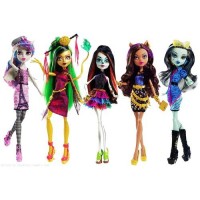
In a discussion of this very topic, two very different people recently asked me “What about Monster High”? I’ve actually read quite a bit about the problematic nature (to put it mildly) of Monster High, but I hadn’t done any real digging on the topic. Fashion dolls representing the “hip,” teenage children of Universal Horror monsters? I was done on a personal level when I saw the words “fashion dolls”– those are code words for “Barbie”. In spite of her popularity, Barbie and friends aren’t coming into my house anytime soon. And Barbie is wholesome looking next to the dolls for Monster High. However, the dolls are mainstream, and they are a riff on the Universal Horror monsters, who in turn are tied to some of the great horror stories of our time. For example, there’s Operetta, the daughter of the Phantom of the Opera; Draculara, Dracula’s daughter; and the imaginatively named Frankie Stein who… well, I’m pretty sure you can guess her famous relative.
What I didn’t realize is how overwhelming the presence of Monster High is now. I knew it was more than dolls– I see licensed items all over the place (and apparently even my daughter’s best friend has a Monster High backpack. My daughter is five). I even knew there were webisodes. But a musical? A possible movie? A series of books? This is merchandising that outstrips what Scholastic did with Goosebumps, or at least comes darn close. Are these dolls really drawing girls to explore the horror genre? I have no clue. MonsterHighMom, a commenter on a post about Monster High on Peggy Orenstein’s blog said she used the dolls to introduce her 6 year old to the Universal monsters (you’ll have to scroll down– she actually made several comments regarding sharing the dolls, and horror movies, with her 6yo), but that doesn’t seem to be part of Mattel’s marketing scheme. Mattel is trying really hard to push the line as having an anti-bullying theme, but researchers and marketers are getting opposite messages from the actual content Mattel is putting out. “Mean girls” given monster guise to raise the “cool factor” of a toy line are, well, icky. Mean girls are monsters without looking like them.
But the idea is kind of a neat one, even if the execution isn’t. My own daughter is surrounded all the time by monster action figures and images from B movies (which she’s only mildly interested in, although she’ll play Mommy and Baby Godzilla anytime). But she also likes Tinkerbell and princesses. I think maybe there are a lot of girls who are elementary aged who like monsters and also like dress-up. I think there’s a place for a doll– not an action figure, or a miniature, or a model, but a doll. If you look at the Universal Monsters franchise, there aren’t really any girl monsters (except the Bride of Frankenstein, but she’s not exactly a dynamic character). A doll could create a place for girls where it really doesn’t exist, and provide the opportunity for all kinds of creative storytelling. I might be convinced to buy a monster doll for my daughter if it wasn’t all sexed up. Melissa Wardy of Pigtail Pals, in meeting with Mattel about Monster High, told them something similar. Her daughter, who is not that much older than mine, loves monsters too.
It’s been suggested that the Monster High franchise could be used to teach media literacy, and it’s probably necessary to do that to get kids to think about the messages they’re internalizing. But how would you feel about promoting Monster High as a way of introducing young girls to the monster genre? I think it would make me uncomfortable, in a way that Goosebumps doesn’t. All media franchises are not equal, and Monster High’s adult messages aimed at little girls bother me a lot. There are so many strong, creative, and intelligent women in the horror genre that I think it’s really important for girls to feel like there’s a place for them there as readers, writers, and creators. Monster High is the mainstream, and I don’t feel like it creates that place for them: my question is, what are the alternatives to this powerful media franchise?
 Libraries should definitely know about the love they’re getting from Dark Regions Press.



Follow Us!