Home » 2020 (Page 24)

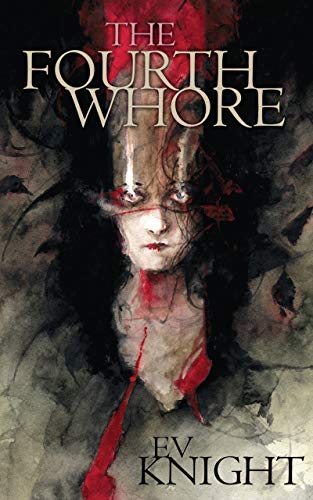
Book Review: The Fourth Whore by Ev Knight


The Fourth Whore by Ev Knight (Bookshop.org | Amazon.com)

Raw Dog Screaming Press, 2020

ISBN: 978-1-947879-16-4

Availability: paperback, Kindle


The Fourth Whore is the debut novel from Ev Knight.  It’s the eclectic, and often bloody, story of Kenzi, a young, woman with hard luck, caught up in a centuries-old struggle of the gods.  Written from a number of character viewpoints, The Fourth Whore is a dark tale combining the ugliness of humanity with the insanity of the deities who are involved with it.


Kenzi is the focal point of the book, and her life sets the overall grim tone of the story in the first few pages.  She’s saddled with trying to pay for a slum apartment and supporting her junkie mother, which she does by peddling dope.   She also peddles herself to the landlord for rent.  Despite the fact that she’s quintessential street trash, it’s easy to like her.  She does have dreams of a better life, and her upbringing hardly resembles re-runs of The Brady Bunch.  Her pseudo-guardian, Sariel, is also intriguing; he’s a study in contrasts.  Kenzi knows him as the ‘Scribble Man,’ but he’s actually Death, the collector of souls for God.  However, he’s no faithful servant: his job is a punishment, not a blessing.  Also, his occasional sympathy for the dead, and sometimes aiding Kenzi in her times of extreme need, render him all too human.   His collecting allows for some hilariously bleak humor at times, such as when he grows impatient waiting for a young man to throw himself into a river with a load of heavy chain, thereby drowning himself.  Very morbid, but the thoughts Sariel voices are also quite amusing in a twisted way.


Kenzi and Sariel’s lives are quickly tied into the ‘god’ story thread, as both of them become targets of Lilith, a demi-god.  The story takes a nice turn here, as the author has re-worked the Bible story of Adam and Eve.  In this version, Lilith was the original wife of Adam, but she was tossed from Eden and tormented for failure to be a 1950’s style, submissive housewife to Adam.  Needless to say, when freed from her prison, she’s angry and wants revenge on…everything, and everyone.  She’s the closest thing to pure evil in the book, although some readers, especially women, may actually find her quite sympathetic, perhaps more so than any other character.


Therein lies Knight’s primary strength: she’s very good at painting her characters as somewhat sympathetic, or at least relatable, to all types of readers.   The story itself is good, but it’s the characters and how they feel that carry the book to its conclusion.  The only minor drawback is the occasional lack of cohesion around some of the plot elements in the book.  Things happen, but the reader might be questioning how they happened, as no hint of reason is given.  Events don’t always relate to each other, and seem occasionally random.  A little more explanation for some sections would have helped boost the story to the next level.


Overall, a solid first effort from Ev Knight, and worth reading.


Contains: profanity, graphic violence and gore, graphic sex.


Reviewed by Murray Samuelson
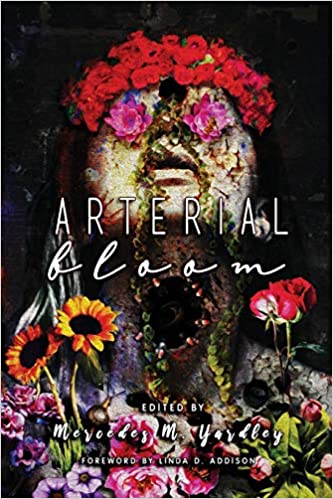


Book Review: Arterial Bloom edited by Mercedes M. Yardley

Arterial Bloom edited by Mercedes M. Yardley ( Bookshop.org | Amazon.com )

Crystal Lake Publishing, 2020

ISBN-13: 9781646693108

Available: Paperback, Kindle, comiXology


Arterial Bloom is another great anthology from Crystal Lake Publishing, edited by Bram Stoker Award-winning author Mercedes M. Yardley. This is the first anthology with Yardley at the helm, and she curated some beautiful and horrific tales. A unique feature of this particular anthology is that it does not rely on a cohesive theme to direct the tales in its pages. I was dubious at such a risky decision, especially as this is Yardley’s first anthology as an editor. However, it is clear she is in touch with the genre. The anthology contains 16 stories. Rather than discuss all of them, I will highlight the ones that were particularly enthralling.

In “The Stone Door” by Jimmy Bernard, three sisters must keep a bike equipped with a lever system operating in order to keep a monster behind a door. The door must remain closed. When one of the sisters falls ill, they worry about how much longer they can keep this up. “Dog (Does Not) Eat Dog” by Grant Longstaff is told in a post-apocalyptic world where two old friends find themselves at a dangerous crossroads. Linda J. Marshall’s “Kudzu Stories” entwines three separate lives where they come to different ends when the kudzu gets entangled in the human condition. In “Welcome to Autumn” by Daniel Crow, a mysterious bandaged stranger posing as a journalist visits the wife of a brilliant artist who has gone missing under mysterious circumstances. “The Darker Side of Grief” by Naching T. Kassa tells the story of George, a young boy who grieves his recently deceased mother and finds himself haunted by something that calls itself his mother. On top of that, George and his sister Mindy have a new babysitter, Carla Runningdeer. He’s heard all of the rumors about their new caretaker’s violent tendencies and wonders if they are true. Ken Liu’s “In the Loop” tells the story of a young girl watching her father turn into an abusive monster who eventually kills himself. He had been a drone strike operator for the military and suffered from severe PTSD. She signs up with a company whose representative tells her they are making software to completely replace humans at the controls, something that Kyra believes will free others of experiencing the tragedy and guilt of wartime. She develops the algorithm for their drones to recognize threats, but when two of those drones kills a group of children, things get messy.

Other authors include Christopher Barzak, Armand Rosamilia, Jennifer Loring, Kelli Owen, Jonathan Cosgrove, Steven Pirie, Dino Parenti, Todd Keilsing, and Carina Bissett, all of whom contributed powerful stories. Yardley did an excellent job selecting stories that resonate with the reader, despite not having a theme behind them. I also didn’t find myself questioning character motivations or wondering why a story was included. Yardley has a good eye for horror, and I hope she continues as an editor as well as a writer. Highly recommended.

Contains: domestic violence, implied child abuse, discussion of prostitution, murder of a child, PTSD, suicide


Reviewed by Lizzy Walker

Book Review: Frozen Hell: The Book That Inspired “The Thing” by John W. Campbell, Jr., illustrated by Bob Eggleton

Frozen Hell: The Book That Inspired “The Thing” by John W. Campbell, Jr.,  illustrated by Bob Eggleton (Amazon.com)

Wildside Press, 2019

ISBN-13: 9781479442829

Available: Hardcover, paperback, Kindle edition


Frozen Hell is John W. Campbell, Jr.’s original and previously unpublished novel that became the novella “Who Goes There?”, and the basis for three movies (The Thing from Another World (1951), The Thing (1982), and The Thing (2011)). The book includes three extra chapters at the beginning. The story opens with McReady, Vane, Barclay, and Norris arriving at a camp to investigate a magnetic anomaly that has occurred in the area. Upon their excavation, the team unearths a piece of highly polished metal and a frozen creature with blue skin and three red eyes. The description of the Thing is fantastic, and I don’t do it justice here, but I also don’t want to take away from the reader experience. Blair and Copper arrive at the camp later, and they make the decision to take the body back with them. Little do the men know that by returning to basecamp with the body the hell that will be unleashed. Paranoia and isolation run rampant through the camp after the body is found to be missing. When they do realize what is happening, it may already be too late.

Material that is included in this volume are, as mentioned, new chapters that detail the discovery of the Thing and its metal spacecraft, as well as rich description of the Antarctic landscape and atmosphere. Some reviewers felt that this took away from the story, but I felt that it added a slow burn element, and I’m a sucker for deep description of landscapes. I understand this element isn’t for everyone, however. The book includes a preview of a sequel written by John Betancourt. Alec Nevala-Lee provides a great discussion of how he found the manuscript in Campbell’s archival collection in Harvard’s Houghton Library. Robert Silverberg introduces the book, and the illustrations and wraparound full colour cover by Bob Eggleton add a nice spooky touch to the book. The text and table of contents needed an additional review by an editor, but otherwise the book was put together well. I would recommend this as a great companion piece to Campbell’s “Who Goes There?”.

Recommended

Reviewed by Lizzy Walker