Home » Posts tagged "YA horror book reviews"

Book Review: The Verdant Cage by Jess Lourey

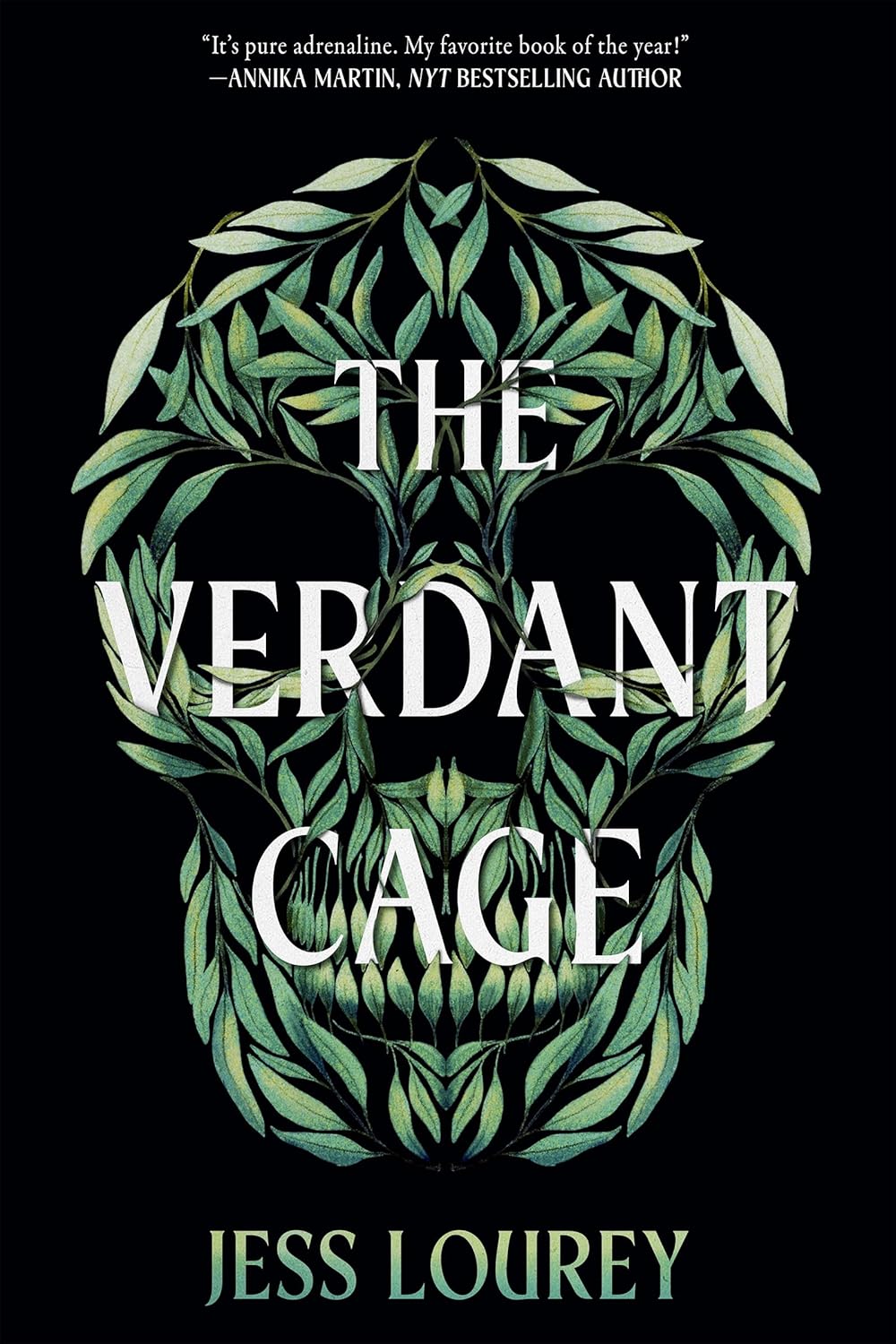
Cover art for The Verdant Cage by Jess Lourey

The Verdant Cage, by Jess Lourey
Mayhem Books, April 2026
ISBN: 9781682816455
Available: Hardcover, ebook edition
Buy:  Bookshop.org 


The Verdant Cage is a decent YA dystopian novel that in terms of basic setup, strongly resembles the old M. Night Shyamalan movie The Village: small utopian, self-sustaining community cut off from the rest of the world behind a wall in an idyllic village, no electricity,  they all live in peace and harmony.  It’s a good read, although a bit slow and predictable through the first two-thirds. However, the payoff and increased pace in the last third of the book are worth the wait.  As far as where it falls in quality in the YA dystopian genre, it is certainly a good deal better than the Divergent series, if not quite at the level of The Hunger Games.


The first third of the story is basically stage-setting, getting the characters and location characteristics into place, and there’s a fair amount to cover.  It’s a reasonably large cast of characters, each of them working in different Houses, where they apply their trades, such as Apothecary, Cobbler, Insect Farmer… there are at least 15 houses.  Thankfully, the author had the foresight to include an appendix at the end, a very helpful idea that more authors today should consider.  While the setup is well done  and detailed (cricket flour was a nice touch, in terms of creativity for a  modern self-sustaining community) the plot here is guessable.  Teenage protagonist Rose Allgood is stuck with a pre-arranged marriage to someone she doesn’t like, but used to; murder happens in a community that has never seen such a thing; no one knows how or why they wound up in Noah’s Valley…predictable, but still interesting. The setting and character interactions are intriguing enough to keep the reader engaged at that point.  The author did enough research to make the community feel believable, in terms of how trades such as a medic would function in pre-modern times. It’s a good job of world building, very in-depth, and it feels realistic.


Rose’s brother is the person labeled responsible for the murder of her mother, at which point he is sent up and over the Wall, to his likely death.  Naturally, Rose isn’t buying it, and about half the book is her trying to find out who is responsible, which of course slowly leads to her uncovering certain hidden truths about Noah’s Valley.  Once she puts all the pieces together in the last part of the book, the story takes off and improves dramatically.  Faster pacing, and the shifting loyalties and double-crossing by many characters make the plot much more engaging, and less predictable.  The big reveal in terms of the Valley and the history of its inhabitants is outstanding: very high marks for creativity to the author!  It adds an unexpected change to the plot, and a much wider lens for the story.  The book continues in high gear right up to the end, with an open-ended finale.  I expect a lot of readers might wind up screaming for a sequel due to the ending, as there is potentially a LOT of story to tell, and the ending’s nature makes it a perfect fit.  However, I would actually vote against another one.  I liked the ambiguous ending and feel it should be left where it is. Let the reader imagine what happens next.


For readers that can exercise a bit of patience to wait for the story to get rolling, this one is worth the time invested.  The big payoff certainly is enough to justify reading this.


Reviewed by Murray Samuelson
Book Review: You’d Better Watch Out by Frank Cadaver


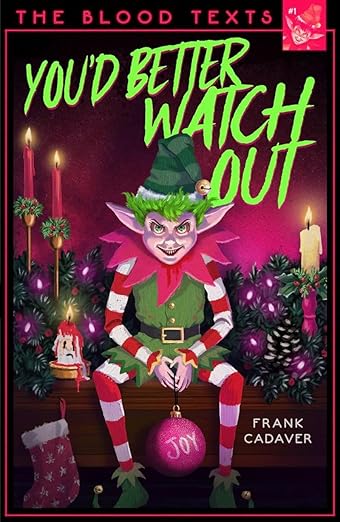
Cover art for You'd Better Watch Out by Frank Cadaver

You’d Better Watch Out  (The Blood Texts #1) by Frank Cadaver

UClan Publishing, 2025

ISBN-13 ‏ : ‎ 978-1916747227

Available: Paperback, Kindle edition

Buy:  Amazon.com


Nothing says the holidays like a young adult novella about a vengeful elf that indiscriminately flays anyone who misbehaves. You’d Better Watch Out is a gripping tale from the Blood Texts series that will have you turning the pages hoping for more. The author listed is Frank Cadaver, the pen name of Colm Field when he writes YA horror. This book would be a great stocking stuffer for that wacky teen that would prefer chilling horror over another rendition of ‘Twas the Night Before Christmas.


Evangeline and her friends are part of the mean girls clique at school, and after she gets in trouble for bullying the new girl, her mother and father choose different strategies to change Evangeline’s ways. Her mother tries empathy and compassion, while her dad uses a vindictive elf, the Watchful Elf, to guilt her into being a better person. There are so many parenting strategies, who’s to say which is best?


The plot seems very simple, but the author imbues it with many questions of morality. It is not as simple as goodness being good and evilness being bad. The elf punishes everyone. It is his perception that makes him act: it doesn’t matter if it was a malicious lie or a white lie to avoid hurting another person’s feelings, the actor will be punished. Everyone around the elf will be attacked; there is no way around it. Wherever Evangeline goes, the elf will follow and inflict injury on everyone around her. Should Evangeline leave her family to save them? The elf has broken many of its previous owners. Will Evangeline fall into the same fate? How long can Evangeline pretend to be good when it is against her nature? The ending is captivating- it is not just black and white, like most morality tales for young people. I like it because it suggests that in a messed-up world, the only way to deal with it is to be a little messed up, too.


The Watchful Elf is a play off the ubiquitous Elf on the Shelf that’s pulled out every December. It is poorly constructed, with felt, cardboard, and a saccharine smile on its plastic head. Kids cannot touch the elf or it loses its magic. It is so flimsy that if you were to hand it to a kid, it would be torn apart by the end of the day. Whew! Now we can keep producing this product as cheaply as possible.


The Elf on the Shelf watches kids’ every move and reports it to Santa every night. This is why it is found in a different place every morning. Every night, parents place the elf in elaborate and hilarious situations for the kids to find each morning. There is ambiguity in this ritual because the elf acts as a surveillance tool for Santa, reporting the children’s misdeeds, yet the parents are encouraged to put the elf in mischievous situations, because it’s fun to be bad. It’s very counterintuitive and promotes extrinsic motivation instead of intrinsic motivation to be good. Such are the joys of consumerism and living in a police state.


It appears the elf did not spark joy in the author’s house and has probably been lazily positioned in a guitar sound hole for multiple days, with his children complaining about the lack of magic in their household. Is this why the author has written about a murderous elf, so his children will never request it taken out of its box again? I don’t know, but in some households, putting away the Elf on The Shelf and reading this spooky novella could be the new holiday tradition.


Reviewed by Lucy Nguyen

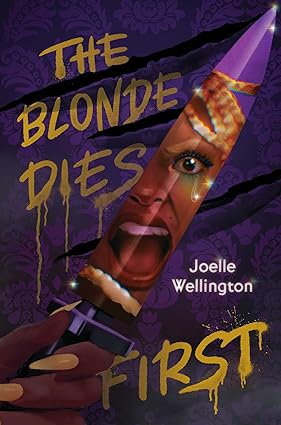
Book Review: The Blonde Dies First by Joelle Wellington

The Blonde Dies First by Joelle Wellington

Simon & Schuster Books for Young Readers, 2024

ISBN-13 : ‎978-1665922456

Available: Hardcover, paperback, Kindle edtion, audiobook

Buy:   Bookshop.org | Amazon.com


In The Blonde Dies First, Joelle Wellington tries to subvert the teenage horror slasher movie. She takes an interesting approach, but ultimately there are too many loose ends, unrealistic situations, and undeveloped characters for the book to be successful in its approach.


The book follows a group of six teens living in the same neighborhood who have been friends since childhood: Leila, a would-be artist; Gael, a horror lover who has already directed a short film; Malachi, a black queer boy; Devon, twin sister to genius Drew; Drew, the skeptic, who attends private school, and Yaya, Devon’s longtime crush. Most of the friends are Black, with the exception of Leila.


When Drew announces her early graduation, Devon is crushed. Although they haven’t been close for many years, Devon makes plans to spend time with Drew and their friends before she leaves for college.


The friends go to a party with Drew, held by her school friend Avery in a tony part of town.  During the party, he decides they should summon a demon using a Ouija board and an athame. Devon tamps down her misgivings and participate, but the friends are disturbed by the summoning attempt. Gael recognizes the ritual from a horror movie, Read Your Rites. Avery claims the athame is real, and that his mom contributed to the research behind the movie as part of her job as a museum curator.


Gael talks about horror movie tropes: the blonde dies first, the black queer guy dies next, then the asshole, the nerd, the independent girl, and the final girl. Sex will summon the movie’s demon, and the person who summons the demon has to be eliminated to get rid of the creature. The demon summoned in the movie has to go through these character tropes in a specific order and can’t go backwards.


Devon, who bleaches her hair, is the first to encounter the demon, at the convenience store where she works with the annoying Alexis.. It drives them out of the store and shoves Alexis, also blonde, into the street, where she is hit and killed by a car. The requirement satisfied, Devon survives. No one believes Devon, with the police insisting Alexis must have jumped in front of the car..


While the friends, especially Drew, don’t believe Devon at first, soon Malachi is attacked, but the demon takes his date instead. With two of them vouching for the demon attacks, Gael tries to figure out the rules the demon is following, based on the movie.


Gael assumes he’s the asshole and will be next, The others film him and Leila making out in Leila’s bedroom in hopes of summoning the demon,, but it turns out the demon wants Drew for that role . As they battle the demon, Leila falls down the stairs and breaks her ankle. While they’re waiting at the hospital, they spot the demon, who is still after Drew. Leila’s racist doctor follows them into a room and demands they leave, and the demon attacks and kills him instead of Drew.


These kids get away with a lot, even for YA fiction. Leila’s parents know they are smoking weed, drinking, and involved in some pretty risky behaviors that they never outright address. Because they are involved in a group chat with the other kids’ parents, all of them must be pretty aware of what the kids are into. It’s only when Leila breaks her ankle that the parents clamp down.


Drew and Devon’s mother has been planning a summer block party every year for years and it is the big summer event in the community. The friends are sure the block party will be the final act in their living horror movie and plan to face it together, but Drew and Devon have a blowout fight and Devon takes off to see Yaya, finally tells Yaya she likes her romantically. In a surprise twist, (spoiler) it turns out that Devon is the final girl, and Yaya is the love interest who is supposed to be killed at the end of the movie. In another surprise twist, the demon is controlled by entitled neighborhood creep Keith, whose gentrifier mother Kendra was a production assistant on Read Your RItes,(meaning Avery has nothing to do with the monster stalking them). Kendra has no qualms about Keith eating the friends to satisfy the demon and make the neighborhood quieter.


The story touches on issues but doesn’t really address them. After Alexis is hit by the car, Devon is hostile to the police in her interview. Her hostility and interactions with the police are a potential plot thread, but Wellington does not explore it. Kendra, determined to gentrify the community, who is generally disliked also threatens them with calling the cops.


This gentrification storyline could be stronger: trusted neighbors and friends give Kendra and Keith the benefit of the doubt, treating them as if they are annoying, not dangerous. There’s also room to explore privilege and entitlement further: Keith, in his 20s, is routinely excused for his predatory behavior towards Yaya, and Drew, usually a skeptic, humors Avery’s pushy, irrational actions. Alyssa Cole did a great job dealing with class, race, police hostility, and gentrification in When No One Is Watching. Wellington is not as successful here. But it’s an ambitious book: Wellington had to integrate a supernatural element, a metafictional approach to horror movie elements, and a fair amount of teenage and sisterly drama involving six kids. Despite the unwieldy number of characters and missed opportunities, she keeps the reader entertained and turning the pages.


Reviewed by Kirsten Kowalewski