Home » Posts tagged "unreliable narrators" (Page 4)

Book Review: The Graces by Laure Eve

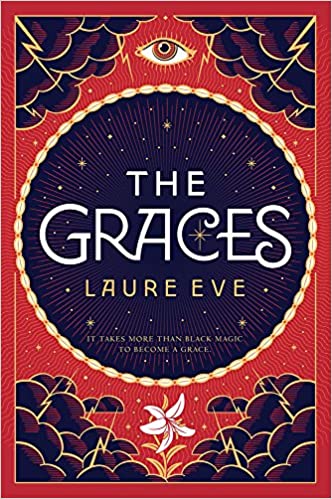
cover for The Graces by Laure Eve

The Graces by Laure Eve (  Bookshop.org |  Amazon.com )

Amulet Books, 2016

ISBN-13 : 978-1419721236

Available: Hardcover, paperback, Kindle edition, audiobook

The narrator of The Graces is new to town, and ready to shed her old identity, including her name. The centers of attention at her school are the Graces, seventeen-year-old twins Thalia and Fenrin, and their younger sister, Summer. The Grace family has been entwined in the town’s history for generations, and there are rumors of witchcraft that surround them. They are a close-knit family that rarely let anyone into their circle, but, renaming herself River, she finds herself welcomed in. River herself is very closed off and rarely volunteers information about her life or family– she is always thinking about whether she has said or done the “right thing” to be accepted by the Graces, who she believes have a magical key to helping her solve her problems.

River, Summer, and a group of girls from school attempt to cast a love spell, which River secretly focuses on Fenrin. Developing a close friendship with Summer, who is her own age, River also attempts to create situations that will give her and Fenrin the opportunity for close contact, but these are always interrupted, and finally end in tragedy.

It’s easy to read the first part of this book and see the narrator as merely anxious, needy, and maybe a little manipulative, a wishful thinker swept up by a glamorous and mysterious family. The second part gives us a look under the surface of it all, and there’s where it starts getting disturbing, as there are some very unsettling powers that come to the fore.

There is a lot of suspension of disbelief required to buy into this book, but Eve keeps things erratic enough, with her unreliable narrator, and enough gaps between the real and unreal to keep a reader going. A couple of things are real flaws, though. The book uses a trope I loathe, of the “always absent but overprotective parents,” and the plot had some big holes in it that made the actions of certain characters very confusing, and led to an ending that was only partly satisfactory (there is a sequel, so hopefully some of that will be resolved in it). None of the characters are especially likable, but there’s enough intrigue and “fairy tale” atmosphere to appeal to a certain kind of teenage girl. Recommended.


Book Review: Rules for Vanishing by Kate Alice Marshall

Rules for Vanishing by Kate Alice Marshall

Viking Books for Young Readers, 2019

ISBN-13: 978-1984837011

Available: Hardcover, paperback, Kindle edition


The legend of Lucy Gallows says that 12 year old Lucy Callow ran into the woods after an argument with her mother, and when her brother went after her, he saw her step onto a road, and as she walked away, both she and the road vanished, never to be found.

Sara Donoghue’s sister Becca was obsessed with the legend of Lucy Gallows, going so far as to fill a notebook with thoughts, drawings, photographs, and clues that could lead her to the vanished road and find Lucy.  A year ago, on April 18, Becca disappeared, and Sara is certain her sister found her way to the road. Now everyone in her school has received a text message to find a partner and a key to find the road by midnight. Anthony, Trina, Kyle, Mel and Nick were Becca and Sara’s closest friends, and despite doubts, all of them show up to see if the road appears. The road has seven gates, and you need a partner to hold on to as you take the thirteen necessary (and disorienting) steps through each gate.  Becca’s notebook contains rules for traveling on the road:

Don’t leave the road.

When it’s dark, don’t let go.

There are other roads. Don’t follow them.

The road does appear, but since three of the friends have shown up with partners for the game, there is an odd number, meaning someone won’t have a partner. And in the dark, it’s easy to get separated and accidentally step off the road. The teens are not on a friendly stroll here; they are on a terrible road with frightening and sometimes deadly obstacles, and once they’re through the gate, they can’t turn back. But they also can’t help breaking the rules. If the reader isn’t filled with dread at the beginning of their journey, it won’t take long for that to happen.

Marshall constructs her story in a complicated way. First, we get Sara’s relatively straightforward narrative, told entirely from her point of view.  Then we move to a point past the events on the road,  with transcripts from interviews with Sara, and others who were on the journey, by Andrew Ashford, a discredited researcher of the paranormal.  There’s also documentation of what happened before the teens stepped onto the road (through text messages between Sara’s friends) and while they were on it (cell phone recordings and videos, and photographs) suggesting that maybe Sara’s story is not as straightforward or reliable as it seems to be. Marshall balances these nicely to create a cohesive, if sometimes hallucinatory, story.   The creativity of the story and the work that goes in to structuring a book like this are impressive. I wasn’t a big fan of most of the characters, but the world-building is outstanding (although I am curious as to why the author chose to ground her story in a legend from Brittany when the book is set in Massachusetts), and the suspense is terrific.

I wonder if this is meant to stand alone (it certainly can) or if it’s meant to be part of a longer series about Andrew Ashford’s investigations of the paranormal, which I would find intriguing. Either way, for those who like the puzzle of pulling a story together, it’s a compelling and worthwhile read. Recommended.

Contains: Violence, gore,  murder


Reviewed by Kirsten Kowalewski


Editor’s note:  Rules for Vanishing was nominated to the final ballot of the 2019 Bram Stoker Award in the category of Superior Achievement in a Young Adult Novel.

Book Review: The Good Demon by Jimmy Cajoleas

Life would have to be pretty awful and lonely for a person to agree to be possessed by a demon, but Clare has had a pretty traumatic life, and her demon not only takes her away but protects her from danger. Several years after she discovered her addict father dead from an overdose, her secret is revealed, and her stepfather, an abusive alcoholic, has the demon, who Clare calls her Only, exorcised by an evangelical preacher and his son, Roy.  Bereft, Clare is on a mission to retrieve and reintegrate with her Only, the one being who truly knows and loves her, but clues left by the demon instruct her to make friends with Roy, and despite their rocky beginnings, Clare and Roy become friends.

The One Wish Man has the power to grant Clare’s wish, but there is always a price.  In her eagerness to reunite with her Only, Clare chooses to overlook some obvious red flags: a cardinal crucified upside down at the entrance to the One Wish Man’s property, a nightmarish walk to his house, a stolen scroll of human skin, and others. As Clare’s investigations reveal a rottennness and lust for power at the center of town that is more than its terrible place in history (the Trail of Tears, the KKK, and tornadoes, among other disasters). Clare has to decide how far she can trust her Only, and whether her Only’s love is worth enough to sacrifice the new relationships she is building.

The Good Demon takes place in the deep South and has some great Southern Gothic trappings, and the trope of rottenness under the surface of a small town plays out well here. Clare is an unreliable narrator, and there’s a strange feeling of unreality enfolding her story. Oddly for a book set in the South, outside of Clare’s brief mentions of the town’s history with slavery, the KKK, and Native American genocide in the context of “terrible things happen here”, there aren’t actually any identifiable African-American characters and the book doesn’t really touch on race, which would pretty much flavor everything there. Of course, we are seeing all of this from Clare’s point of view, which is pretty narrow, since her life appears to be basically doing nothing at home, stealing from the secondhand store, or going to the library, and rarely encountering people other than her mother and stepfather, who spend much of their time drunk and arguing, so maybe she is really just that isolated from her community. The more time you spend with her, the more you can see why Clare wants her demon back so badly, and that any child would be in that position may be the saddest and most terrifying thing of all. Recommended for YA collections.

Contains: occultism, body horror, sex, gore, mild violence, attempted rape, references to suicide, drug and alcohol abuse.