Home » Posts tagged "teen fiction" (Page 4)

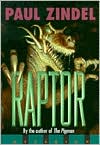
Book Review: Raptor by Paul Zindel

Raptor by Paul Zindel

Hyperion Books For Children, 1998

ISBN: 0786823747

Available: New and Used


When Zack and his Native American friend Ute explore the cave where Zack’s paleontologist father was mysteriously injured, they discover a strange nest with very large eggs. Zack, thinking they might be worth a lot of money, takes an egg with him despite Ute’s warnings that he should leave it be. Ute is right, of course. As soon as she and Zack get the egg home, it hatches into (surprise!) a baby raptor, and not thirty minutes later, its mother comes by looking for junior. And all of that happens in the first fifty pages! Teens will love the fast pace of this book. It opens with a gruesome raptor attack, so there’s no waiting around for dinosaur action, and there’s a thrill in every chapter. I also loved Zack’s eating a live grub to impress Ute’s wise old grandmother. Why, you may ask, is a supposedly extinct raptor roaming around the Utah desert? Well, that’s the book’s big mystery and I won’t spoil it for you.  Situations are extremely contrived, the characters are painfully flat, and the writing is awkward, overdone and melodramatic. The scenes involving raptors attacking people were well described, fun to read and surprisingly gruesome. Personally, I rooted for the raptors to chomp Zack and Ute and end this silly novel early on, but teen readers, especially boys, will eat this story up.

Contains: gore, violence, adult alcohol use.

Review by Horror Master

Musings: Drawing on the Walls: The Boy Who Drew Cats

The Boy Who Drew Cats adapted by Lafcadio Hearn and Margaret Hodges, and illustrated by Aki Sogabe

Holiday House, 2002

ISBN-13: 978-0823415946

Available:  Used hardcover and paperback, Audible audiobook


I had a reader request the name of a book about a little boy drawing all over the walls. The classic story about a boy drawing himself into a story is Harold and the Purple Crayon by Crockett Johnson, but that didn’t seem quite right. I finally remembered a Japanese folktale about a boy who drew all over the walls of a temple and drove a demon away, and was able to find what I think is really the answer to this question; it’s a story called “The Boy Who Drew Cats”, and it has been adapted and illustrated many times. The copy pictured above was adapted by Lafcadio Hearn and Margaret Hodges, and illustrated by Aki Sogabe, but there are MANY other versions.

The story follows a young man who is obsessed with drawing cats; he draws only cats, but he draws them amazingly well. Forced to leave home to find a trade, he spends the night in an abandoned temple, with empty screens all around, just begging to be painted with cats. After painting the walls, the boy falls asleep, waking in the night to hear a tremendous fight. In the morning, he discovers a terrible rat demon, dead, and notices the cats on the screens are not in the same positions he had painted them in. His cats have defeated the monster and saved his life, revealing his artistic ability and enabling him to become a professional artist.

Walls can be the source of creativity, as they are in the nonfiction picture book Painting for Peace in Ferguson, a story about the creative approach the community of Ferguson took to beautify  and inspire neighborhoods where the buildings had been boarded up or defaced following demonstrations against police brutality that turned violent. They can become a personification of insanity or paranoia, as they are in Charlotte Perkins Gilman’s “The Yellow Wallpaper”, in which the protagonist has delusions of a trapped woman creeping behind the room’s wallpaper, or the whispers from her dead mother that one character hears in Amy Lukavics’ The Women in the Walls.

Walls can be an “in-between” place, as they are in Neil Gaiman’s The Wolves in the Walls and Coraline,  in which the main characters have to make choices about whether they will be passive or active participants in their own lives. If you are on the outside, walls can be a barrier you look to cross that conceal a treasure inside, as in The Secret Garden, and if you are on the inside they can be a trap– a haunted house that won’t let go, a locked-room mystery you can’t escape, like the inhabitants of the island in Agatha Christie’s And Then There Were None. If you are the builder, like Hugh Crain in The Haunting of Hill House, you can make the walls be disorienting and disturbing to inhabitants to influence their minds, and if you want to keep people away, like Baba Yaga, you can decorate with human skulls.

Or you can follow your passion where it goes, and both protect and beautify the world by transforming walls into something new, like the boy who drew cats.
Book Review: Tell The Story To Its End by Simon P. Clark

Tell The Story To Its End by Simon P. Clark

St. Martin’s Griffin, 2015

ISBN-13: 978-1250066756

Available: Hardcover, paperback, Kindle edition


Oli’s mum has suddenly, and without explanation, decided the two of them should go to the country and visit his uncle, Rob. Rob has been estranged from Oli’s parents for many years, and although no one is telling him anything, Oli knows something bad has happened. In an effort to distract him, Rob suggests that Oli explore the attic, and once the attic door is opened, strange things begin to happen in the house.

As Oli explores the village it becomes clear that something about his family is being held against him, but no one will tell him exactly what it is. He becomes friends with Em, who is fascinated by local legends and stories, and shares with him the tale of Full Lot Jack, who offers children their heart’s desire in exchange for their dreams. Her stories, in combination with the strange things that have been happening since the attic door was opened, and a need to escape his family’s lies, drive him to explore the attic, where he meets Eren, a creature that lives in the attic and feeds on stories. As frightening as Eren is, Oli can’t stay away. There is more truth to Eren’s dark stories than in Oli’s everyday life, and Oli must make a decision about which one he most wants to escape.

In some ways, this book reminded me of A Monster Calls. There’s a lonely boy with nightmares, who calls a monster to him in an effort to make sense out of fear and lies, with a parent who has something seriously wrong going on. As in A Monster Calls. there is a great deal about the power of story. But there the similarities end. Tell The Story To Its End lacks the powerful illustrations combined with primal emotion that make A Monster Calls an outstanding read. Instead, it’s a story packed in cotton wool, with muted emotions and dissociated relationships. The beginning of the book suggests its end, and Clark’s skill with creating gothic nightmares instills a sense of dread from the very first page, that only increases as the reader turns the pages, knowing what is likely to unwind. Despite that feeling of inevitability, the book doesn’t unfold in a predictable manner. Readers who enjoy dark tales that play cleverly with plot, structure, and narrative will be surprised, and may find something to like, but those seeking deep emotional connection or expecting a happy ending will want to look elsewhere.  Appropriate for ages 11 and up.