Home » Posts tagged "Little Women"

Book Review: Beth is Dead by Katie Bernet

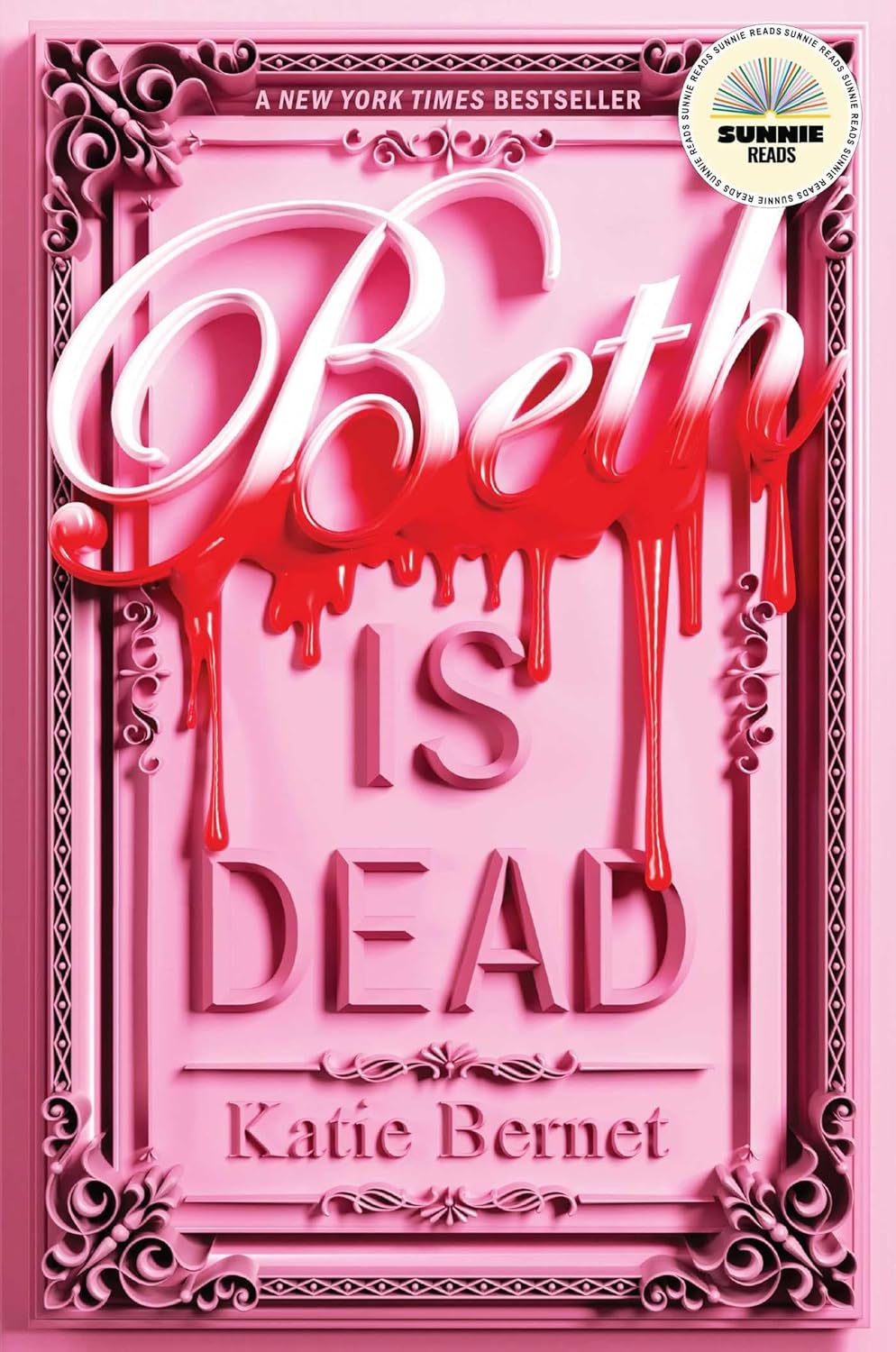
Cover art for Beth is Deat by Katie Bernet


Beth is Dead by Katie Bernet

Sarah Barley Books/Simon & Schuster Books for Young Readers

ISBN-13 ‏ : ‎ 978-1665988698

Available: Hardcover, Ebook edition, audio CD

Buy: Bookshop.org


Beth is Dead is a modern, original take on Louisa May Alcott’s classic children’s novel, Little Women.


I will start by saying that I have read Little Women many times, and most teens today are probably coming at Beth is Dead fresh, which will make a dfference in how it hits. The original novel takes place around the time of the Civil War and is about four sisters, Meg, Jo, Beth, and Amy March, as they grow up, while their father is with the Union Army. Beth is a fragile “angel of the house” character who dies tragically from illness near the end.


Beth is Dead not only brings the story to the present day, but remixes it. This time, the story starts with the discovery of Beth March’s body by sisters Jo and Amy, in a nearby park on New Year’s Day. Bernet name-checks a lot of minor characters from the original book– Amy and Beth had gone to Sallie Gardiner’s yearly party, and had a fight, after which Amy left. There are plenty of secrets about what happened that night.


But the story really starts much earlier, when the March sisters’ father published a bestselling novel detailing their private lives, Little Women, that became controversial because protesters objected to a man exploiting women’s lives for money. Threats caused him to leave home, and he hasn’t returned. In the fictionalized book, Beth dies at the end in a tragic car crash, and since the book is loosely based on their lives, most people think she is dead until she does an interview with Teen Vogue: now everyone is waiting to see what she does next. Beth’s boyfriend, Henry Hummell, is supportive and caring and doesn’t care about the book, and she is a gifted pianist. Life is looking up for her. After the interview, their Aunt March offers to pay for Beth to attend Plumfield, an arts boarding school: she just has to decide if that’s what she wants. I liked Beth a lot in this book– she grows past the “angel of the house” stereotype into someone more complex and independent. able to speak up for herself.


The story is told in alternating first person points of view by Beth (in the past), and Jo, Meg, and Amy (with different chapters set in the past and present). First person gives the reader a much different and more immediate view of the remaining three girls than a third person perspective. I really disliked Jo, who comes across as attention-seeking, selfish, naive, and only interested in picking up social media followers. I was less impatient with Amy, a wannabe artist, because it quickly became obvious where her story was going. Meg didn’t really have a compelling storyline, although it was nice to see that she had big dreams and was going after them while she worked out her feelings about John Brooke, which doesn’t happen in the original. Race plays a more obvious role: Jo’s friend Laurie goes from having olive skin and “Italian features” in the original book to Black in this one, and John Brooke is also Black: this affects their encounters with law enforcement, as both are suspects at some point. The least compelling element of the book to me was the Jo-Laurie-Amy storyline. Bernet didn’t have the opportunity to develop the relationship between Laurie and Amy convincingly, or resolve the hurt feelings between Jo and Laurie. Unfortunately, most conflicts in the book felt forced, and many secondary characters were flat, as there simply wasn’t space for character development.


Bernet does an effective job of depicting anger and grief, and the way sisters can be there for each other even at their worst. But the mystery didn’t feel very original, although there were a few surprising moments. The book moves along at a fairly fast clip, with plenty of accusations, missteps, and betrayals, so teens who like a mystery that moves along, with a dash of romance and family drama, whether they’ve read the original or not, may enjoy this book.


Reviewed by Kirsten Kowalewski

 

Banned Books Week: Children’s Books and the End of Innocence


Something I see a lot in arguments about whether kids should have access to a particular book is that, as parents and guardians of children, we want to protect their innocence. If you live in a middle class family that was relatively intact, in an area where everyone seemed to be pretty much like you, controlling your kids’ reading might help to preserve that innocence for a while, but if you take a closer look at the individual families there, what you see is that under the surface, children have already faced, or learned about, some pretty terrible things. Even at school, they’ve faced lockdown drills, practice for what to do if the school is invaded by a shooter. The terrible things we live among are so commonplace, and many of us are so numb to them, that it may be difficult for adults to realize how affected some of our kids really are.

I was in the library with my daughter, who is a huge fan of the 43 Old Cemetery Road books and was looking for something similar. The librarian kept making suggestions and asking questions: is this one too dark? Are you looking for something scary, or something funny, or both? I can’t remember what it was the librarian pulled off the shelf that I looked at and said “I think that one might be too dark and scary for her”. My daughter put her hands on her hips, looked at me with exasperation, and said “Mom, my dad died. Nothing is sadder or scarier than that”.  Okay, then. Keeping kids away from the media doesn’t preserve their innocence. Fiction is a safer place than fact. And let me tell you, there is a lot of scary stuff, and a lot of death, in children’s fiction. Even Little Women spends a lot of time on death.

Children’s writing has gotten a lot edgier today, so I can see where some of the discomfort comes from, but we are living in an uncomfortable world. It is a scary place. We can respect that our kids are dealing with a lot of the same things that make the world a scary place for us, and help them choose the reading material they want, or maybe even need, in hopes that even scary books will give them a space in their lives for hope.

If a kid doesn’t think he’s ready to read a scary book, there’s time yet. And certainly there are choices that need to be made about what’s developmentally appropriate: for instance, most Holocaust fiction is not recommended for elementary students (the one exception I can think of is The Devil’s Arithmetic) but if you take your kids to The Sound of Music, you are going to have to come up with a reasonable explanation of who the Nazis were. But that means having dialogue with your child about that, not making choices for him or others to protect his innocence. For a lot of kids, that innocence just isn’t there anymore. Taking books out of their hands can’t save that. Talking to kids about them can help a lot.

For a partial list of banned children’s books, from picture books through Young Adult, go here.

Women in Horror Month: In Praise of Scribbling Women (and Louisa May Alcott)!

It’s Women in Horror Month, that time of year when we recognize the amazing women who celebrate and create the horror genre. When it comes to horror fiction, there don’t seem to be very many names that appear in the past. Of course, there’s always Mary Shelley, but, while she was exceptional in many ways, she certainly wasn’t the only woman of her time writing gothic and horror stories .

Anyone who is surprised by this hasn’t read Little Women. Here’s Jo March, the most unconventional of the four March sisters, burning up with her desire to write:

Every few weeks she would shut herself up into her room, put on her scribbling suit, and “fall into a vortex,” as she expressed it, writing away at her novel with all her heart and soul, for till that was finished she could find no peace.

Jo’s family is much more supportive of her than most families were: writing was not only considered unsuitable for women, but unhealthy (and that’s literal– if you want to read a seriously twisted horror story, try Charlotte Perkins Gilman’s semi-autobiographical story “The Yellow Wallpaper”). But at the same time, the reality of daily life meant that women somehow had to support their families, and many of them did it by writing (KC Redding-Gonzales has written about it here).  The writing that earned a steady paycheck, though, was pulp fiction for magazines and newspapers– “sensational stories” that gave their readers thrills, chills, romance, and murder. So that’s what Jo does. Her publisher “rejected any but thrilling tales” so that’s what she wrote, but with no name attached. Little Women‘s author, Louisa May Alcott, supported her family by writing sensational stories for ten years under a pen name, including a novel, A Long and Fatal Love Chase. But in the end, conventional Louisa won out, and, as in Little Women, where Jo finally gives up her writing, she stopped (this review from Stephen King has more on Louisa).

Alcott, Gilman, and the fictional Jo are just three examples from that time, though (even Frankenstein was first published under a pseudonym)– and we can’t know, really, how many women supplied horror, romance, suspense, ghost stories, and gothic fiction for pulp magazines, newspapers, and even three volume novels, since so many of them, like Jo, left their work unsigned, or like Alcott, wrote under a pen name. They did it because they loved writing, or needed money, or both, and whether they were proud of their work or ashamed of it, these scribbling women shaped popular culture. Many of them may be nameless, but they shouldn’t be forgotten.
