Home » Posts tagged "haunted house fiction" (Page 4)

Book Review: Horrid by Katrina Leno

A note from the editor:

We are midway through October and Monster Librarian still needs to raise the funds to pay for our hosting fees and postage in 2021. If you like what we’re doing, please take a moment to click on that red “Contribute” button in the sidebar to the right, to help us keep going!  Even five dollars will get us closer to the $195 we need to keep going at the most basic level. We have never accepted paid advertising so you can be guaranteed that our reviews are objective. We’ve been reviewing and supporting the horror community for 15 years now, help us make it another year! Thank you! And now our review of Horrid by Katrina Leno.

Horrid by Katrina Leno  (  Bookshop.org  |  Amazon.com  )

Little, Brown Books for Young Readers, 2020

ISBN-13 : 978-0316537247

Available: Hardcover, Kindle edition


There was a little girl

Who had a little curl

Right in the middle of her forehead.

And when she was good,

She was very, very, good,

And when she was bad, she was horrid!


The title of Horrid comes from a nursery rhyme that started out as a poem by Henry Wadsworth Longfellow, and there’s definitely some foreshadowing going on. After her father dies, Jane and her mother reluctantly move to the home where her mother grew up, North Manor, in Bells Hollows, Maine. Empty since her grandmother died, North Manor has an abandoned air. Its windows are broken and it is in disrepair, with bad wiring, creaky floors, and a local reputation as the “creep house”. Surprisingly, although it is September, roses are in full bloom.

Jane’s mother won’t explain why she never brought Jane there before, and as the two of them clean up, move in, and begin to move forward, strange and unexplained things start happening in the house and garden. Jane starts school, makes friends, and gets a job working in a bookstore, while her mom sorts and cleans and starts a new job with long hours. Wariness and even hostility from longtime residents of the community when they hear Jane is living in North Manor makes Jane suspect something terrible happened there that caused her mother to leave. Strange things keep happening: Jane discovers she’s lost time, with no memory of text messages she’s sent or things she’s done; she is certain someone is in the house, but no trace can be found; she has sudden bursts of violent temper. As she and her mother try to cope with their grief and loss, Jane becomes more and more disoriented, especially once she learns the town, and her mother, have been keeping her in the dark about a twisted family secret.

Very early in the book, we learn that Jane has pica (a psychological disorder that causes people to eat non-nutritive items and is associated with OCD and schizophrenia). Eating pages from books helps her manage her anger. As the story progresses, it’s difficult to tell if Jane is in a dissociative fugue and expressing extreme anger due to mental illness aggravated by grief and stress, especially after her mother takes her book away, or if she’s being possessed and/or haunted. I’m not familiar enough with pica to know if Leno’s representation is accurate, but her writing is evocative. It turns out that Jane is not the only person in her family to have had pica, or what effect it had on the past actions of other family members.

Leno does a great job of portraying the messiness and ugliness of grief and its effects on the book’s characters. Despite recognizing many of the elements of Gothic horror, I did not expect the ending, which left me shocked and breathless. Recommended.
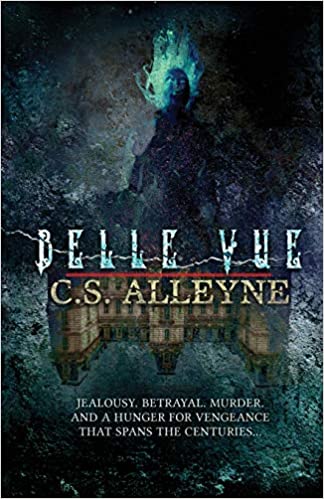
Book Review: Belle Vue by C.S. Alleyne


Belle Vue by C.S.cover for Belle Vue by C.S. Alleyne Alleyne (   Bookshop.org   |  Amazon.com )

Crystal Lake Publishing, August 2020

ISBN: 9781646693115

Available: paperback, Kindle


Belle Vue isn’t a horror story.  Nor is it a suspense novel, or a crime thriller.  It isn’t even a story of the occult and ancient rituals.  It’s a beautifully entangled web of all of the above genres, with the author adding just the right dose of each to create a compelling, first-rate story.  Belle Vue deserves a serious look when next year’s nominees come out for ‘best debut horror novel.’

The story runs two threads concurrently throughout the book, and they join together at the book’s climax.  The present-day thread concerns Claire, a graduate student in her mid-20s, who just rented an apartment in Belle Vue, an old Victorian-era insane asylum that has been converted to luxury apartments.  The other thread is set in the late 1800s, and stars two sisters, Ellen and Mary Grady.  Ellen is the sweetheart who is always trying to help others, while Mary, to put it simply, is cold-blooded, conniving, and ruthless.  Mary has Ellen committed to the asylum for her own scheming reasons, whereas poor Ellen, kindhearted soul she is, thinks Mary is trying to help her deal with the death of her mother.  The true depth of Mary’s evil unfolds as the story progresses.

Both stories are the “slow burn” type, and both are equally compelling.  Claire soon finds her dream place is not all she expected, with the strange occurrences that happen once she moves in.  It’s to the author’s credit that many of the things that happen are fairly minor, but they are written well enough to leave the reader with a feeling of disquiet, expecting something worse to come (and it usually does).  The suspense builds as the story progresses, and the author snaps off a couple of well-placed curveballs in regard to the fate of some of the main characters.  The 1800s part of the story is less supernatural, but explains the complicated history of Belle Vue.  It’s a complex tangle of characters, supporting and backstabbing each other for their own ends.  It’s a wonderfully enjoyable net of intrigue, and this part also contains the occult section of the story, as the reader learns of a depraved pleasure and sacrifice cult that once called the asylum home.  The actions of the Belle Vue staff and cult members are horrible enough to justify considering this book to be a horror novel, yet it’s so much more.  Emotional swings for the reader should be expected when reading this.  Sometimes you can thrill to trying to figure out who will betray who next, other times you will be reading fast to find out what weird things will happen in the present day thread.  Occasionally, you just feel sadness, especially where the character of Ellen is concerned.  That’s a hallmark of a good book: it takes the reader on an emotional roller coaster.  Belle Vue does it exceptionally well.

This is a story no one should miss.  From its skillful cross-pollination of genres to its Hitchcock-style ending, this book should easily find popular acclaim.  It won’t scare you out of your seat, but instead leaves you with a feeling of unease that grows throughout the book, and lingers long after the conclusion.  Extremely well done, C. S. Alleyne is an author to keep an eye on in the future.  Highly recommended.


Contains: violence, profanity.


Reviewed by Murray Samuelson

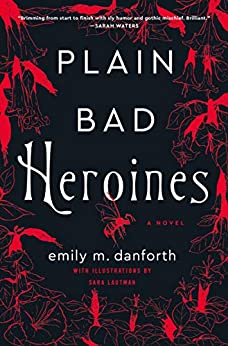
Plain Bad Heroines by Emily M. Danforth illustrated by Sara Lautman

Cover of Plain Bad Heroines by Emily M. Danforth

Plain Bad Heroines by Emily M. Danforth illustrated by Sara Lautman

William Morrow & Company, 2020

ISBN-13: 978-0062942852

Available: Hardcover, Kindle edition, audibook, audio CD ( Bookshop.orgAmazon.com )


Emily M. Danforth, author of the YA novel The Miseducation of Cameron Post, stretches her boundaries in this unsettling, haunted novel that reveals a buried history of queer romance and horror and some seriously creepy hornets.

The story moves smoothly from events in 1902 that led to the deaths of three students at the Brookhants School for Girs, tied to an uninhibited and shocking memoir by openly bisexual feminist Mary McLane, to a present day where author Merritt Emmons has written a book about the deaths that is about to be made into a sapphic “Blair Witch” style horror movie.

Two of the girls who died were co-founders of a club called The Plain Bad Heroines, which admires Mary’s unapologetic attitude, are found dead in the woods with a copy of the book,  attacked by a swarm of hornets in an orchard of rotting fruit. The third acquires it after their deaths and is literally poisoned by reading it near a plant in the campus greenhouse where she is caretaker. The headmistress confiscates it, convinced that it is cursed. As the students abandon the school, both the headmistress and her relationships begin to disintegrate, and trapped almost alone in a snowstorm, it’s hard to tell how much of a grip on reality she has left.  She’s also left remembering her college days, where a love affair led to her eventual inheritance of Brookhants, chosen by her husband because of its reputation as a spiritually important location, in a very strange manner.

The horror movie based on Merritt’s book will star the popular actress Harper Harper and the less well-known actress Audrey Wood. Merritt initially is starstruck by Harper and they hit it off; her interactions with Audrey are more negative. The movie will be filmed at the actual Brookhants School and on the grounds, adding atmospheric creepiness.  Once the filming starts, it seems nothing can go right– it’s almost like the production is cursed. This leaves Harper, Audrey, and Merritt, a lot of time for exploration on the Brookhants estate. Black apples, rotting vegetation, and ominous swarms of hornets in the woods ratchet up the tension, and eventually the story behind the Brookhants curse is revealed.

This is a doorstop of a book. After its tense begining, it slows down for some time and, had I not known there would be a payoff, I might have set it down. I think a large chunk of the Hollywood segment could have been easily eliminated  to slim it down. This is where a lot of the present day characters’ personalities are established, and Merritt’s romantic interests start to develop, but it is just too drawn out.

Danforth isn’t subtle about centering lesbian and bisexual characters. It is even a point of contention in the casting of the movie, where Merritt objects to Audrey playing a lesbian role, assuming she must be straight, to have Audrey come out and say she’s bisexual. The headmistress’ memories of inheriting the school are all related to the romantic love she and her partner had for each other. even as she turns on her.

Plain Bad Heroines is also about as metafictional as you can get; it’s a fictional story inspired by a book by a real person, containing illustrations and images of what I’m pretty sure are news articles about the book, that a fictional author has written a fictional nonfiction book about, that is being made into a fictional movie being filmed found-footage style, as if it is nonfiction. Both the director and Harper Harper use social media to affect the narrative, so Harper’s Instagram posts document the movie shoot and all of its “cursed” problems for her followers, creating a Blair Witch effect of convincing the audience for the movie that the haunting is real. Even the people around Audrey and Merritt are in on the gaslighting, so that none of them know whether they can trust each other or reality. It’s clever, and the unreliability of the people around them and the way the reader knows the three women are being manipulated is distracting, but it doesn’t detract from the sense of atmospheric creepiness, dread, and tension, with hornets and rotting vegetation always around. You will never feel the same about hornets after reading this book.

Danforth actually has an author’s note where she discusses her discovery of Mary Maclane in researching hidden sapphic history, and that she wanted to bring that to light through Plain Bad Heroines. I never had heard of her and I found this fascinating. Unlike The Miseducation of Cameron Post this is not a YA novel, although it might be appreciated by some older YA readers, but certainly it is an original book with plenty of dread and some well-drawn lesbian and bisexual characters that will draw in readers of historical and metafictional horror, Hollywood, and haunted houses. It won’t be for everyone, but this book will certainly find its audience. Recommended.


Contains: violence, murder, body horror, sexual situations, insects