Home » Posts tagged "ghost stories" (Page 2)

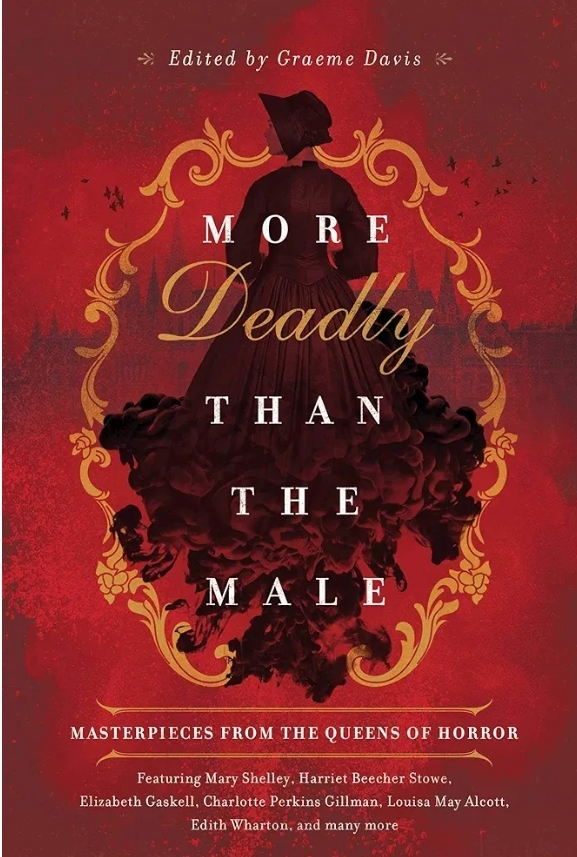
Book Review: More Deadly Than the Male: Masterpieces from the Queens of Horror edited by Graeme Davis

More Deadly Than the Male: Masterpieces from the Queens of Horror edited by Graeme Davis

Pegasus Books Ltd., 2019

ISBN-13: 9781643130118

Available: Hardcover, Kindle, audiobook, audio CD

Buy: Amazon.com


More Deadly Than the Male gives us 26 tales of terror written by women between 1830-1908. Some of my favorite Gothic and horror tales were written around this time period. Davis has selected some great stories in this anthology by well-known, and some not as well-known, women authors. In addition to select stories, Davis includes brief biographies with information about the authors’ lives and challenges they faced as women writers, and about the stories themselves. While I enjoyed all of the stories in More Deadly Than the Male, there are several that stand out. Some of my favorite tales include the following.


The volume opens with Mary Shelley’s “The Transformation,” in which Guido, seeking revenge, makes a deal with a monstrous being to trade bodies. What will become of the man trapped in a monster’s body?


In “Lost in a Pyramid, or the Mummy’s Curse” by Louisa May Alcott, Evelyn begs Forsyth to tell her how he came to be in possession of an ancient and strange gold box. He tells a tale of exploration, colonization, greed, hubris, and the mummy of an ancient sorceress and mysterious seeds found in the box.


Edith Nesbit’s “The Mass for the Dead” is a haunting story about a couple who change their history because of a vision. Jasper mourns that the woman he loves, Kate, is to marry someone else. When she reveals she is not marrying for love, but for wealth, he still insists that she should break her engagement. Out of familial obligation, she refuses to end the engagement in order to help her father with his finances. When she shares her vision of a mass for the dead with Jasper, they believe it to be a sign of her impending marriage. Later, when he reveals his own vision to Kate, they find they may have misinterpreted the vision entirely.


“The Vacant Lot” by Mary E. Wilkins-Freeman is a lovely ghost story. The Townsend family has decided to move to Boston, and the man of the house has purchased a home for a more than reasonable cost, originally $25,000 for a mere $5,000. The family wonders what the catch is with such a low dollar amount. After a month goes by, they find out. There are strange happenings in the vacant lot next door, and shadows moving about with nobody to cast them.


Other authors include Charlotte Perkins Gilman, Mary Austen, Elizabeth Gaskell, Edith Wharton, Eliza Lynn Linton, Margaret Oliphant, Vernon Lee, Mary Louisa Molesworth, Ada Travenion, Edith Wharton, and more.


It’s not new or controversial to say that horror is subjective. When we read the Gothic or older horror tales of the past, we may not be frightened, we may not get the spine tingles we are looking for or may scoff at the fainting or other what we would deem as “quaint behaviors” of the heroines. Descriptions tend to be much longer and go too far for modern audiences. I, for one, love Gothic and older horror stories, thanks to my late grandmother Phyllis, so these early stories were great to read. I just recently heard about a subgenre called “cozy horror,” and I believe these would qualify. Also, not only would this be a good addition to a Gothic fiction collection, but it would also be an interesting addition to a Gothic novels course.


Highly recommended

Reviewed by Lizzy Walker
 

Book Review: I Am Margaret Moore by Hannah Capin

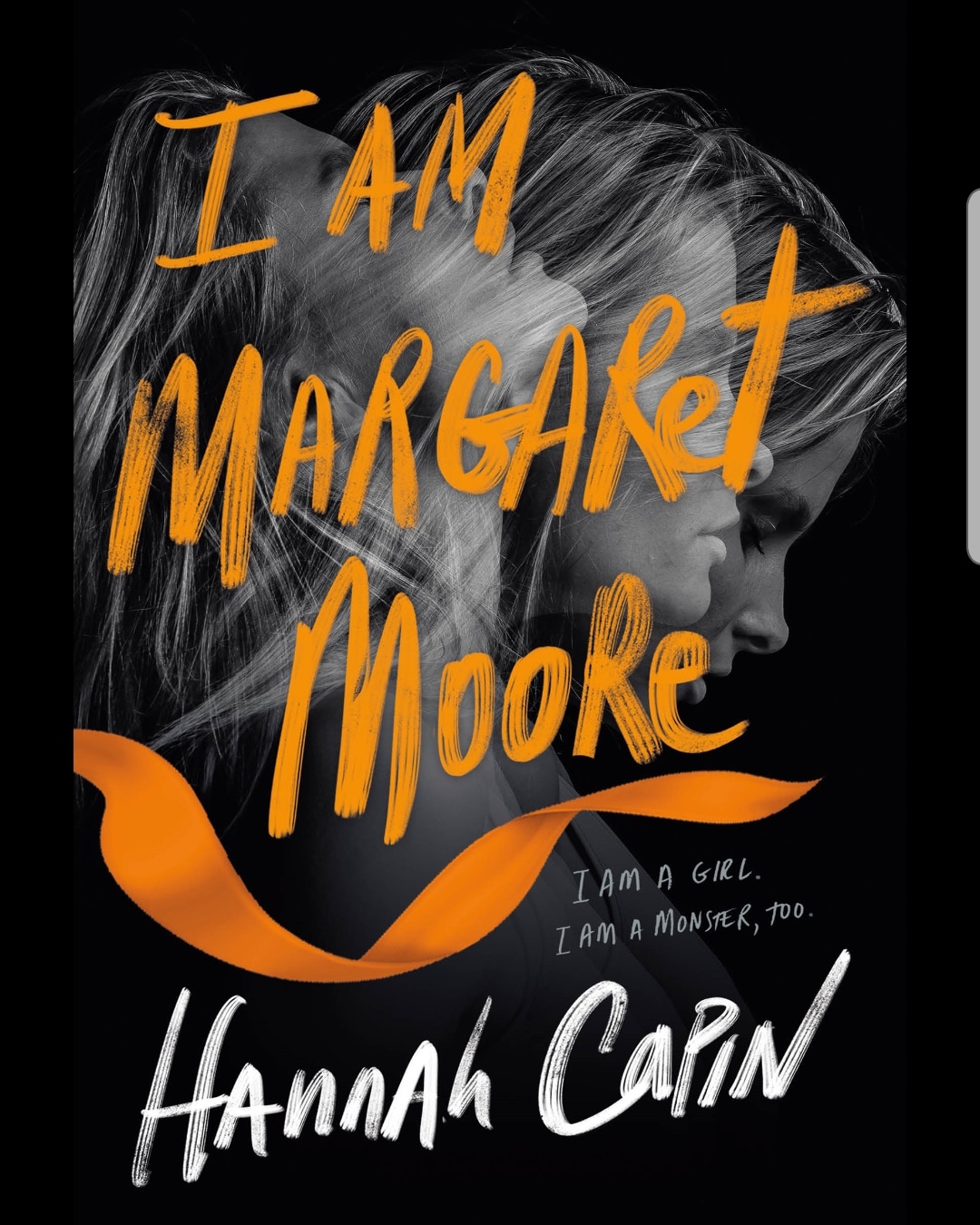
I Am Margaret Moore by Hannah Capin

Wednesday Books, 2022

ISBN-13: 9781250239570

Available: Hardcover, Kindle edition ( Bookshop.org  )


In comparison to the other two books I’ve read by Capin (Foul is Fair, retitled Golden Boys Beware, and The Dead Queens Club) I Am Margaret Moore is more experimental, slower- moving, and more pessimistic. Margaret Moore has attended the same naval-themed summer camp with her friends Flor, Nisreen, and Rose for nine years, and what happens at camp is supposed to stay at camp. Margaret breaks that rule when she falls in love with a boy from a wealthy family, resulting in an inconvenient pregnancy. Now there are stories that she drowned in the lake from heartbreak.


Her friends have uncovered most of the story, including the name of the boy responsible, who has faced no consequences and is admired in the camp. They decide to tell what they know but it backfires on them. Flor and Nasreen, who are in love, are separated, and the names of all four girls are stricken from the camp records.


Margaret’s ghost narrates most of the story and isn’t great at keeping track of time or stringing events together coherently. It is unclear through most of the book how much time is passing until the end (62 years). Figuring out what actually happened is complicated by the changing stories about Margaret the campers tell as time passes as well as the jumping around in time and Margaret’s unreliable memories and interpretations of events.


This was not an easy book to read, not just because the characters felt ephemeral, the stream-of-consciousness style of writing or because the topic was difficult and heartbreaking but because it took time to piece together what actually happened and how. In many ways this book is as much about the way we tell stories and how they change as anything. Those readers looking for a fast-paced, straightforward narrative aren’t going to find it here.


Margaret and her friends are made to feel small, worthless, erased for the convenience of the entitled white guys in this timely book. The story at the center of the book takes place in 1957. That abortion wasn’t an option for Margaret Moore leads to tragedy. It could not be more timely, with today’s Supreme Court decision at hand.


Recommended, for readers willing to take their time.


Book List: Get Ready for Black Children’s Book Week!

Black children's book week logo


February 27-March 5 will be the first celebration of Black Children’s Book Week, which extends Black History Month into March.

Black Children’s Book Week is a global celebration of Black children and the people who ensure Black children are represented in books and other children’s media. While the week is administered by Black Baby Books, events are hosted by both the Black Children’s Book Week Committee, and celebrants throughout the world!

Read Across America Day is also during the first week of March, so look for that week to be a huge celebration of children reading!  To get you started, here’s a short list of some really cool scary books to share with kids next week,  or really any time!


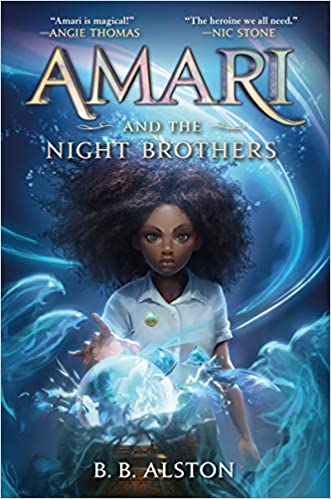
cover art for Amari and the Night Brothers by B.B. Alston

Amari and the Night Brothers  by B.B. Alston  (Bookshop.org)

Thirteen-year-old Amari Peters, on a mission to find her missing older brother,  mysteriously receives a scholarship to the training camp for the Bureau of Supernatural Affairs, which has the mission of keeping supernatural creatures secret while also protecting humans. Amari navigates both the supernatural and social obstacles she encounters with her street-smarts, resourcefulness, and resilience.  Read the full review here.


cover art for The Forgotten Girl by India Hill Brown

The Forgotten Girl by India Hill Brown (Bookshop.org)

India Hill Brown joins Mary Downing Hahn as a true storyteller of the middle-grade ghost tale. Iris discovers an abandoned cemetery in a wooded area near her neighborhood. Soon she is having nightmares and is drawn back to the cemetery by the ghost of Avery Moore, a girl buried there. She and her friend Daniel discover it is a Black cemetery, dating back to when Black and white people were segregated even after death. Although they bring it to their town’s attention successfully, Avery won’t be satisfied until she has Iris as a “forever friend”. While there are many similarities to Hahn’s Wait Till Helen Comes,  Brown takes the story to a new and more complex level that deals with racism, segregation, and student activism among the scares.


The Dark-Thirty: Southern Tales of the Supernatural by Patricia McKissack, illustrated by Brian Pinkney. (Bookshop.org)
These stories have the eerie feeling of truth to them, possibly because of McKissack’s introduction, where she describes listening to the stories the adults around her told when she was a child. This is a Caldecott Award winner, and also a Coretta Scott King award winner, but beyond that, it’s just really good storytelling, made even better by the dramatic illustrations. This is one of the books that you really need to hold in your hands and see the artwork complementing the story across a double page spread, to truly appreciate. Don’t let the award for children’s book illustration fool you: this book is often used with and appreciated by middle school aged kids and older.

Everyone talks about how seminal Scary Stories to Tell in the Dark is, but The Dark-Thirty is just as essential.


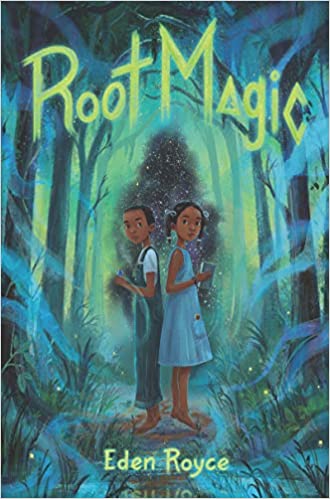
cover art for Root Magic by Eden Royce

Root Magic by Eden Royce (Bookshop.org)

After Jezzie’s grandmother, a root worker, dies, her grandfather decides to teach her the basics of root magic, for purposes of protection, and she starts to develop supernatural powers. Her “witchiness” is causing her problems at school, though, and a racist police officer who knows her family are root workers is harassing them. Root Magic takes place around the time of the Kennedy assassination, during the time of Jim Crow. Eden Royce has written an excellent Southern Gothic novel with vivid description and plenty of scares about the traditions of the little-known Gullah-Geechee people. Read our full review here.