Home » Posts tagged "experimental horror"

Book Review: Imperfect Creatures by Joe Butler


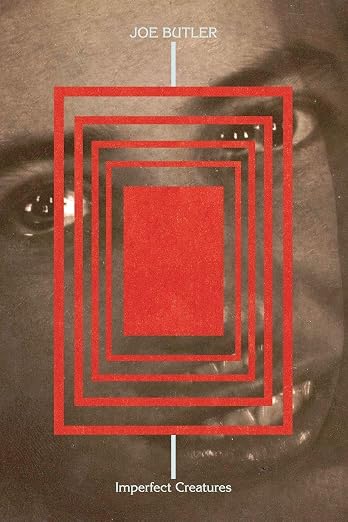
Cover art for Imperfect Creatures by Joe Butler

Imperfect Creatures by Joe Butler
Diachroneity Books, 2025
ISBN-13: 9781738360925
Available: Paperback, audio
Buy: Bookshop.orgAmazon.com


As Clare drives along the road to the small town of Harrow to attend her father Marshall’s funeral, she hits a man with her car. A panic attack strikes her as the man dies in front of her. The police and paramedics arrive, asking the usual questions, until one of them asks if she has heard of the New Foundation. After Clare accepts a ride to the diner there from a police officer, she has a strange conversation with her aunt, and finally returns to her childhood home. Warned against working with Marshall’s research assistant Jack, she searches for his research notes for his final book.


Shortly after the funeral, Clare collapses, and wakes up as she finds herself driving along the road to attend her father Marshall’s funeral, when she hits a deer with her car. She attends the funeral, and meets Jack who knows many things about Marshall’s research and wants to help Clare put the pieces together, even though she has been warned not to get involved with her. Then, she wakes up to another vehicular accident.


Stuck in a warped time loop, with each cycle opening a different mystery, the pattern repeats several times. With each repetition, Clare discovers more about the New Foundation, and the House, an eons-old eldritch being. She faces her mother’s dementia and tragic death, as well as family secrets.


The book is sectioned into the acts that are titled for the five stages of grief (denial, anger, bargaining, depression, and acceptance), plus one called “Trauma.” Butler’s story is unsettling, with characters that are Lynchian in their small-town ways and even the environment. An aunt delivering warnings of doom, an enigmatic cult leader with a wish to bring people to the House, the ghost of Clare’s father providing clues, and more, provide an eerie cast, guiding or hindering Clare throughout the book. Clare’s paranoia about impending doom, reliving family trauma, and her own death, always simmer underneath, even when she tamps them down and tries to deny them. She questions her sanity and wonders if what she experiences is real, which makes for an interesting and frightening read.


The physical environments are effective at creating a sense of unease. It was difficult not to imagine the diners from Mulholland Drive and Twin Peaks as Clare was taking in her surroundings when she was inside the local diner. I was never sure if it was a safe place, an in-between space, where characters could breathe before their next dilemma or if it was a place where danger lurked underneath.


The design of the book itself is reminiscent of books like House of Leaves, and Uketsu’s Strange Houses and Strange Buildings. Text boxes are arranged throughout, disrupting the main story. Strange figures appear in the margins. Disjointed sentences litter some of the pages, making the reader stop to decipher the words and images. Excerpts from Marshall’s notebooks lead Clare and the reader through his thought processes, research, and disturbing discoveries that could not possibly be real (could it?). I thoroughly enjoyed the experience of just flipping through the pages where Butler experimented with the layout.


This would be a great book for readers who are fans of David Lynch, House of Leaves, and cosmic horror. Highly recommended.


Reviewed by Lizzy Walker
Book Review: Clear by Ray Leigh

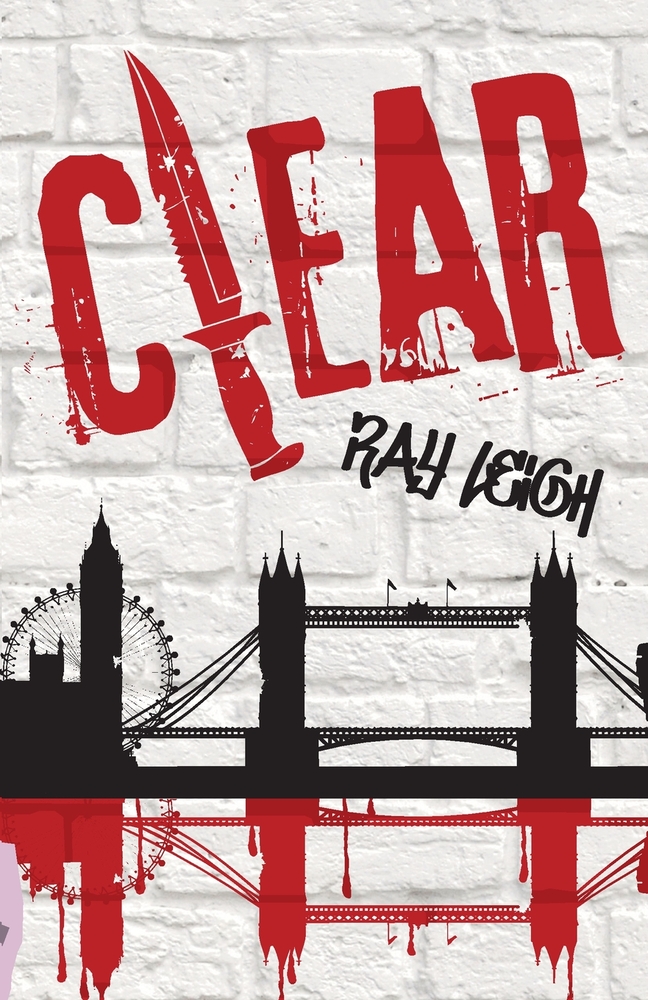
Clear by Ray Leigh

Bad Press Ink, 2020

ISBN: 978-1-9168845-1-3

Available: Kindle


Twenty years ago, writer and then youth worker Ray Leigh saw firsthand the brutal lives of addicts, dealers, prostitutes, and thieves, as well as police and “government men” gone bad, and wrote Clear to capture the dark side of 1990s London. Leigh writes in a style he calls “distilled prose” which seems like a hybrid of a long narrative poem and a screenplay. The text is arranged to cross the length of the page rather than the width, and transitions in the action, dialogue and descriptions are marked by small, black daggers.


In a patchwork of quick scenes and character sketches, Clear captures the conflict, violence, dread, and horror in a part of the city that some people only glimpse on the news and that other people actually experience as a nightmare they are trying to get “clear” of but never will. Leigh includes the expected crime and poverty, but he also makes the fragments of story poignantly relatable by incorporating the ordinary parts of the characters’ day, things like what and where they eat or their interaction  with their children. This is a dysfunctional community with its own definitions of life, relationships, and values.


Leigh suggests that this work is, in part, a “love story.” That makes sense because there is so much attention paid to the heartbreak, sadness, and disappointment of these people that it is easy to conclude that Leigh knew and cared about them. Clear is so terrifying because there is a certain normalcy to this nightmarish flip-side to typical city living. To fully realize that both the typical and nightmare lives go on simultaneously, each a sort of parallel universe, is chilling and should only be the stuff of science fiction. Recommended.


Contains: violence, sex, crude language, adult subject matter


Reviewed by Nova Hadley

Book Review: Grey Skies by William Becker

Grey Skies by William Becker

Publisher: Self-published, June 2019 (pre-order)

ASIN: B07PHGQB8M

Available: Kindle edition


Grey Skies by William Becker is the author’s second novel. The main character’s first-person voice narrates the story, but his identity, the story’s location, time, and plot are revealed piecemeal over many chapters.

The narrator suffers through an excruciating series of horrific ordeals. He and the reader know that some parts are unreal. The question is, which parts are dreams or delusions, and which are real?

The narrator finds and buries a nun’s slashed, bloody body; wriggling balls of black spiders cling to doors and walls in his home; he’s trapped in a cramped sub-basement, and crawls and scrapes his way through a stinking underground tunnel to escape; he wades waist-deep through brown, feces-laden sewer water; a giant spider with a human head chases him through a burning house; a stuffed, sackcloth giant stalks him through a doomed cruise ship, listing and powerless in a monstrous storm; he’s drowning in black ocean waters; he finds himself under giant tree roots next to the nun’s rotting corpse.

Throughout these miseries there are mysteries. Who is our narrator? Does he have a family? Why is he being tortured? Who is torturing him? Readers will appreciate the author’s ingenuity in piling on gruesome events and tying them into the mysteries.

The author scattered several paragraphs of nonsense letter, numbers and symbols throughout the novel. These lines of literary graffiti detract from the story. He also appended two unrelated short stories. Recommended.


Contains: Gore and violence.


Reviewed by Robert D. Yee