Home » Posts tagged "dystopian fiction" (Page 4)

Book Review: (CON)science: A Novel (Phoenix Horizon #3) by PJ Manney

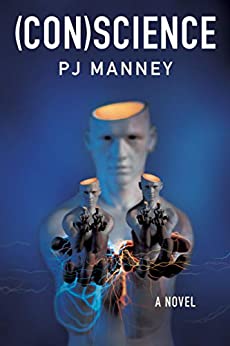
cover art for (Con)science by PJ Manney

(CON)science: A Novel (Phoenix Horizon #3) by PJ Manney

47North, 2021

ISBN-13: 9781503948501

ISBN-10: 1503948501

Available: Paperback, Kindle edition, audiobook, audio CD, MP3  Bookshop.org  |  Amazon.com )


Note: this review contains spoilers for all three books in the series.


(CON)science is the third novel in PJ Manney’s Phoenix Horizon trilogy. Some trilogies by other authors can drag out plots that can be presented in one book, but Manney’s intricate, compelling story about a dystopian future, in which morality and ethics don’t keep pace with technology, requires multiple books.


In her first book (R)evolution, Manney introduces Peter Bernhardt, a driven, young Stanford graduate whose goal is to use breakthroughs in nanotechnology and computer science to cure brain disorders using computer implants that connect directly to brain cells by submicroscopic nanowires. Nanobots injected into blood vessels create the wires and also connect the rewired brain to other parts of the body. Peter creates a Silicon Valley start-up, but his venture capitalist insists that the nanobots be developed first and brought to market before the implants. Terrorists make aerosolized nanobots with Peter’s technology and kill thousands at a tech convention.


Another venture capitalist and former classmate, Carter Potsdam, helps Peter create a new company. An impatient Peter becomes the first cyborg. He has a miniaturized memory unit and neocortex implanted in himself and experiences the problems of accumulating and controlling every memory.


Carter initiates Peter into the Phoenix Club, a secret organization created by the Founding Fathers after the American Revolution. Members of the club include select politicians, businessmen, generals, scientists and other leaders who work to control and guide the country’s future. The Club planned the attack at the convention and plans to spread nanobots throughout the country to control the populace and maintain its power indefinitely.


Peter discovers the Club’s plans and sets out to stop them. He assumes a new persona, the cyborg Tom Paine, naming himself after the American revolutionary, and he and his friends infiltrate the Club’s secret compound, destroy missiles containing the nanobots and kill the Club’s leaders. Before Tom dies, his brain is uploaded into cyberspace and becomes the first fully autonomous, self-conscious, artificial human intelligence (AHI), known as Major Tom after David Bowie’s song. Major Tom exposes the secrets and plans of the Club to the public.


Manney’s second book (Id)entity describes the political disintegration of the United States after the Phoenix Club is exposed, and the struggle between a resurgent Club and groups like Major Tom’s that strive to stay independent. Most state governments  have dissolved. Some large cities, like New York, Los Angeles, Chicago and San Francisco govern themselves loosely. Other groups form offshore or deep ocean, self-sustaining colonies called sea steads that use cryptocurrencies like bitcoin.


The AHI Major Tom used hidden servers in New Zealand and elsewhere to support his group of scientists, programmers, hackers, doctors and other followers. In a fatal mistake, Tom created AHIs of the two dead leaders of the Phoenix Club, Carver and Josiah Brandt, to converse with. Their AHIs escaped their confinement from Major Tom’s virtual Memory Place and reconstituted the Phoenix Club.


The Club reunited several southern states into the Southern States of America (SSA). The SSA revised history by destroying records and altering videos and other computer files to show Peter Bernhardt, Tom Paine and Major Tom causing death, destruction and chaos. Advanced nano and computer technology created insect-sized, video cameras for surveillance and contact lenses that changed what a person saw from real-life squalor to a virtual suburban bliss. The SSA used swarms of drones armed with lasers and machine guns and frenzied, brainwashed mobs to expand its territory.


Major Tom and the Phoenix Club’s AHIs needed physical bodies on the ground. Technology enabled both groups to create cyborgs out of robots originally designed as sexbots and the bodies of recently deceased humans. The robots and cyborgs could be in continuous contact with the AHIs.


An independent sea stead in the Pacific Ocean was mysteriously destroyed and the dark web’s superstar of false identities and Major Tom’s ally, Dr. Who, was kidnapped. The SSA lures the decommissioned destroyer Zumwalt with Major Tom’s cyborg and his top hacker and the hospital ship Savior into Port Everglades, Florida. Thousands gather at the port fleeing an SSA onslaught hoping for places on the ships. Armed SSA drones slaughter hundreds, but videos are altered to show Major Tom’s cyborg orchestrating the massacre. Most of the world now sees Major Tom’s group as the villains.


In book three (CON)science, the SSA creates multiple AHIs of Peter Bernhardt. Their memories are manipulated to accept the SSA’s version of history that the original human Peter Bernhardt, cyborg Tom Paine and AHI Major Tom overthrew the legitimate U.S. government and caused the chaos and death that followed. The SSA instructs its AHIs to create war games to simulate a doomsday attack against Major Tom’s group if it attacks the SSA.


The SSA chooses its most naïve and gullible AHI to make a trial run of its game. Unbeknownst to the AHI, actual attacks against major East and West Coast cities begin. Explosives planted by human infiltrators, soldiers and drones destroy infrastructure and kill thousands of people. At universities like Stanford, MIT, Caltech and the University. of Chicago, faculty and students are arrested or killed.


The Phoenix Club’s resurgence and victory are almost complete. Only a few of Major Tom’s team remain on the Zumwalt. They face monumental tasks: 1. convince others that the SSA’s version of history is false, 2. rescue captured team members, 3. protect persons fleeing from SSA massacres, 4. convince China to help or at least be neutral in the conflict, and 5. finally destroy the Club despite all of the humans, robots, cyborgs, AHI’ s and other resources it controls.


Many readers will find Manney’s novels interesting and relevant because they address contemporary problems. Autocrats and oligarchs can acquire political power and wealth by controlling the public’s access to information. Advances in computer science and the internet have made the influence of social media and control of news sources more effective. Given the rapid pace of breakthroughs in many scientific fields, the author’s nanobots, robots, cyborgs and AHI’s are not out-of-the-question in the near future.


Highly recommended


Contains: moderate gore, moderate graphic sex


Reviewed by Robert D. Yee


Book List: A Year of Witchy Reads

My library informed me that this year was the Return of the YA Vampire, and indeed we did see a number of YA vampire novels this year, not least of which was Stephenie Meyer’s latest addition to the Twilight saga, Midnight Sun. 

For myself, I discovered I had read a number of very good books focused on witches and witchcraft.


A Deadly Education by Naomi Novik was an interesting YA title that followed a teenage witch at a boarding school for witches, who is aggressively beleagured by her powerful talent in black magic that she is trying to avoid using. The school is regularly invaded by monsters who feed on the students and their magic and also surround the school, making survival until graduation and escape afterwards a deadly challenge. This is significantly different from Novik’s previous endeavors in alternate history and fantasy, and presents a unique twist on the “boarding school” genre.


   Gideon the Ninth by Tamsyn Muir is a strange combination of space opera, necromancy, and political maneuvering. In this book, there are nine Houses, each responsible for a different variety of magic. The Ninth House specializes in necromancy. When a competition for a high position working with the Emperor  arises, each House is required to send a magic user with a bodyguard. Gideon, much against her will, reluctantly agrees to accompany Harrow, the powerful and very unpleasant necromancer who heads the Ninth House.  I can’t even try to explain the puzzles, magic, politics, personalities, and relationship dynamics in this book except to say that Gideon and Harrow are a compelling pair, regardless of whether you love, hate, or are exasperated by either or both of them. The sequel, Harrow the Ninth, came out recently as well, and is also mindbending and disturbing.


Cemetery Boys  by Aiden Thomas is another  #OwnVoices YA novel that has gotten a lot of press, and a lot of praise. Our main character, a Latinx trans boy, proves he deserves to be accepted in the coming-of-age ceremony for brujos, who can see, control, and banish ghosts.  While not as thoroughly horrific as a genre reader might expect, the conclusion makes up for it, and this is an outstanding book with great representation.


 The Mercies by Kiran Millwood Hargrave is a terrifying work of historical fiction strongly grounded in fact, about a fishing village of women in an isolated, freezing location are left to manage everything on their own when the men are all swept away during a storm while they are on the water. Once the government steps in, the idea that women could be competent enough to take care of themselves suggests that at least some of them must be witches. I wrote a more extensive review of this book earlier this year and I really suggest that you read it, and then read the book.


Conjure Women by Afia Atakora is an #OwnVoices work of historical fiction with threads of horror and the supernatural throughout. It alternates between “slaverytime” and “freedomtime”. The “slaverytime” storyline takes place on an unnamed plantation in the South and follows Miss May Belle, the conjure woman responsible for healing, midwifery, and sometimes, casting curses and spells. The “freedomtime” storyline is told from the point of view of Rue, Miss May Belle’s daughter, who has taken over her responsibilities as conjure woman. The former enslaved people from a burned down plantation have built a hidden village nearby. While they respect Rue at first, after she delivers a baby with a caul over its head and an illness she can’t cure causes children to sicken and die, they turn against her. There’s no way to avoid horror when evoking slavery, and Atakora based a lot of her story on oral accounts and slave narratives. While the pacing was relatively slow and not everyone will appreciate the shifting points of view, I found this a compelling story.


The Graces by Laure Eve is a YA novel about a girl who believes she has magic and is looking for others like her. She finds them in the Grace siblings, beautiful and charismatic, who may or may not have magic. The narrator, identifying herself as River, is an unreliable reporter of events, making it a challenge to tell what is actually happening.


Cinderella is Dead by Kalynn Bayron is an #OwnVoices YA novel that explores what might happen after the happily ever after of the Cinderella story. If you’ve read any book about a repressive, patriarchal society, from The Handmaid’s Tale to The Grace Year, you’ll be able to guess that the answer is “nothing good”.  200 years after Cinderella married her true love, all teenage girls must know the government-approved version of the story by heart, and be ready to be chosen by an eligble man as his wife. Sophia would rather marry her friend Erin than any man, but she’ll have to take down the patriarchy to do it. I’d spoil the story if I revealed the part the witch takes in this story.


 Year of the Witching by Alexis Henderson is a dark tale of witchcraft, wildness, and the dangers of a patriarchal theocracy. Immanuelle is the child of a forbidden affair that led to her parents’ death and her grandparents’ ostracism, and she has been told never to enter the woods because dangerous witches live there and would seduce her into witchcraft. Entering the woods despite the warnings, she discovers her mother’s diary, which contains both evidence of her love for Immanuelle’s father and of a descent into madness. When inexplicable plagues begin to destroy her community, the head of the Church, known as the Prophet, decides they must be due to witchcraft and starts culling possible witches from the women, including Immanuelle. While the plagues send illness, darkness, and blood, the Prophet, his co-leaders, and his most devout followers are also sources of dark and terrible things.


 Undead Girl Gang by Lily Anderson was a surprise to me! Despite appearing on a list of YA vampire titles (there are no vampires) and a title suggesting a zombie romp, this book actually centers on a fat, Mexican, teenage witch, Mila, who is grieving the sudden death (and probably murder) of her best and only friend, Riley, following the sudden deaths (and probably murders) of Dayton and June, popular mean girls at school, all of which have been chalked up to suicide.  Mila discovers a grimoire with a dark spell that will allow her to bring Riley back from the dead for seven days to help prove and solve her murder, but when she casts it, she accidentally also brings back Dayton and June– and now they’re all connected okay, so maybe it is a little of a zombie romp, but the plot centers on Mila and her witchery). The reunion with Riley isn’t exactly what Mila expects it to be, and both Dayton and June turn out to be a little more three-dimensional than they seemed while they were alive and tormenting Mila. The mystery is pretty predictable– it’s the girls, and especially Mila, who make it fun. Anderson sensitively deals with grief, death, and friendship, with touches of humor.


The Once and Future Witches by Alix Harrow was also published this year,  but I haven’t yet had an opportunity to read it. But there are great books of all kinds on witches, for teens and adults, for lovers for horror, fantasy, space opera, dystopia, and historical fiction… If you are looking for a little witchcraft to spice up your holiday season, you might want to check one of these out.


Book Review: The Grace Year by Kim Liggett


A note from the editor:

We are getting near the end of November and Monster Librarian still needs to raise the funds to pay for our hosting fees and postage in 2021. If you like what we’re doing, please take a moment to click on that red “Contribute” button in the sidebar to the right, to help us keep going!  Even five dollars will get us closer to the $45 we still need to keep going at the most basic level. We have never accepted paid advertising so you can be guaranteed that our reviews are objective. We’ve been reviewing and supporting the horror community for 15 years now, help us make it another year! Thank you! And now our review of The Grace Year by Kim Liggett.


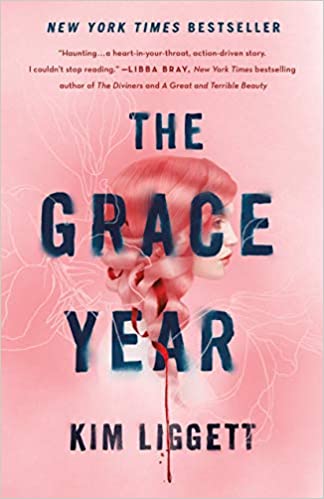
cover art for The Grace Year by Kim Liggett

The Grace Year by Kim Liggett (   Bookshop.org  | Amazon.com  )

Wednesday Books, 2019

ISBN-13 : 978-1250145444

Available: Hardcover, Kindle edition, audiobook


At first glance, The Grace Year seems like a YA take on The Handmaid’s Tale crossed with The Lord of the Flies. It takes place in an alternate society where women and girls are divided into groups by the colors of their hair ribbons: white for girls, black for wives, and red for grace year girls. Grace year girls are sent to an isolated camp as a group when they turn sixteen, after boys and men their age and older have an opportunity to choose one to marry from among them. Some girls are “veiled” and the rest know they will be assigned to manual labor tasks. The younger sisters of the girls who don’t return run the risk of being sent to the outskirts, where they will struggle to survive and are expected eventually to sexually service men no longer satisfied with their wives.

Protagonist Tierney is about to begin her grace year. She does not aspire to be veiled, but would rather labor outside when her grace year is done, as wives’ movements and speech are very restricted and she has always enjoyed spending time outdoors, learning useful skills from her father and spending her time alone and with her friend Michael, whose family is very high status. Rather than choosing Kiersten, the girl his family has picked out for him, though, Michael chooses Tierney to keep her safe, not realizing that he has actually made her a target during the grace year.

The supposed purpose of the grace year is for girls to come into their magic and work it out of themselves without risking the men, so the girls are “safe” to be around, but girls know that things too terrible to talk about must happen, because of each group of girls that leaves, fewer come back, and the ones who do are traumatized and refuse to speak about it. In addition to their isolation, the girls must stay within a fence, because they are being hunted by “poachers” who will skin them alive, dissect them, bottle the parts, and sell them back to the men in town as aphrodisiacs. There is the obligatory section of a YA speculative survival novel where a character whose job it is to exterminate a girl actually saves her and heals her and they fall in love, but it is particularly gruesome because there is no hiding the fact that he’s there to skin, dissect, and bottle her for consumption– he even has diagrams. The body horror is strong in this book, although most of the actual damage is done offscreen.

It is difficult to write about the characters and society in this book, both women and men, because from best to worst every one of them is so poisoned by patriarchy. The gaslighting of women and girls is so extensive and ingrained that it can’t really be separated out. Would Kiersten be so cruel if she hadn’t been trapped by society’s constraints since she was a child? Would so many of the girls have been so eager to believe in their magic if they hadn’t been powerless their entire lives? Even “good” men like Michael, with the best of intentions, can’t undo the damage. In 800+ pages (Amazon says there are 416, my Kindle says 815) there was not a single character in this book whose decisions could be trusted, including Tierney’s. The ending was absolutely crushing to me. I have to hope that YA readers who get all the way through to the end will develop a strong desire to examine their decisions and choices in light of the damage patriarchy does to all of them in the present, rather than waiting for the next generation. Whether they do or not, given the number of comparisons to The Hunger Games, I am sure many will find it a compelling read. Recommended.