Home » Posts tagged "dystopian fiction" (Page 11)

Book Review: Thinner Than Thou by Kit Reed


Thinner Than Thou by Kit Reed

Tor, 2005

ISBN-13:978-0765311955

Available: Paperback, used hardcover, Kindle edition.


I haven’t gone back to them lately, but I remember how breathtaking and gruesome I found the stories of Kit Reed as collected by Connie Willis in Weird Women, Wild Women when I first discovered them.  Reed’s stories push the edge of our existing world just a step beyond into a reality that is both plausible and unreal.  In general, her stories have a feminist slant, and focus on taking issues and situations that primarily affect women and taking them to the next level. Even for her, though, this novel is message-heavy.

Thinner Than Thou is a novel that expresses in detail the consequences of taking “beauty culture” to extremes on a systemic level. It’s told from multiple points of view, but is centered on teenage anorexic Annie Abercrombie, whose parents sign her over to an organization called the Dedicated Sisters, which treats extreme cases of people with eating disorders. Annie’s siblings, Betz and Davey, angry at their parents, run off to search for their sister without a clue as to where she might be. Annie’s mother, who regrets signing her daughter away, is being pressured into getting plastic surgery in order to look younger, resists it and takes off to find all three of her missing children. A connected storyline involves the wealthy, overweight Jerry Devlin, who has signed up for a weight-loss “boot camp” run by the “Reverend Earl”. Devlin has a strong personality and his insider’s view helps shape the story as Annie’s family searches for her, unable to find her from the outside. Betz and Davey’s storyline, as well as their mother’s, is pretty random, as they wander from place to place seeking out the facilty in which Annie is being held. Eventually they run into each other, manage to discover where Annie is and rescue her, and lead a resistance movement to the headquarters in hopes of publicly overthrowing the Reverend Earl on television.

As grotesque as this future is, the stereotypes are taken to such extremes that character development suffers. The plot is unsatisfying because of the randomness of events and the convenient way everything falls into place at the end. While individual characters are interesting, especially those who change (like Devlin and Annie’s mother) and Reed does an excellent job of creating a disturbing near-future that can be easily pictured in the mind’s eye, I think that she is a much better writer in the short story format, and that this novel would have been more successful as a group of linked short stories. Thinner Than Thou isn’t the most satisfying book I’ve read recently, but it is still well worth reading, and provides a great deal of food for thought. Recommended.

Contains: Torture, sexual situations.


Book Review: The Detainee by Peter Liney

  The Detainee (The Detainee Trilogy, Book 1) by Peter Liney

Jo Fletcher Books, 2013

ISBN13: 9781623651084

Available: Hardcover, Paperback, Ebook


I am a sucker for a good dystopia. In fact, I often complain about “end of the world” stories that don’t have enough gloom. However, although there are plenty of good elements here, and the book ranks high on other review sites, I have to admit it didn’t connect with me.

The first person narrative style was the first strike against novel for me; I felt this slowed the pace. 70 pages in, I still had no idea who the main character was. He was just an amorphous “I”.  The book went on at length about the setting, and a few unfortunate events, but I didn’t know the protagonist’s name. I had to look it up in an online review. This really bothered me. I needed to have a strong sense of who the narrator was by now. That is a bad sign.

Clancy, the protagonist, is considered undesirable by the hyper-capitalist society he lives in, and has been exiled to a giant trash heap of an island for “unproductive” people. “Unproductive” includes the elderly, so the island contains many people of an advanced age, like a reverse Logan’s Run world. The setting provided the potential for this to be a fantastic dystopian novel, my favorite kind of science fiction/horror crossover. It’s a great concept; I like the point of view and the message, a warning of what could happen if the right wing’s stance against social programs and welfare were taken to an extreme.

However, this is a novel, not an essay. No matter how interested I am in the socio-political philosophy of inevitable dystopia, a novel has to be a story first. I admit I found myself skipping entire paragraphs, which is not typical for me. It just didn’t hold my interest. To be fair, this book has lots of great reviews. It’s been promoted as a Hunger Games for adults, and certainly many responded to the book’s take on ageism. Because the themes are so timely and well defined, libraries should make it available despite my personal dislike for it. Recommended for ages 12-adult.


Reviewed by David Agranoff

Guest Post by Piers Torday: Climate Change Horror: Too Real For Middle Grade?

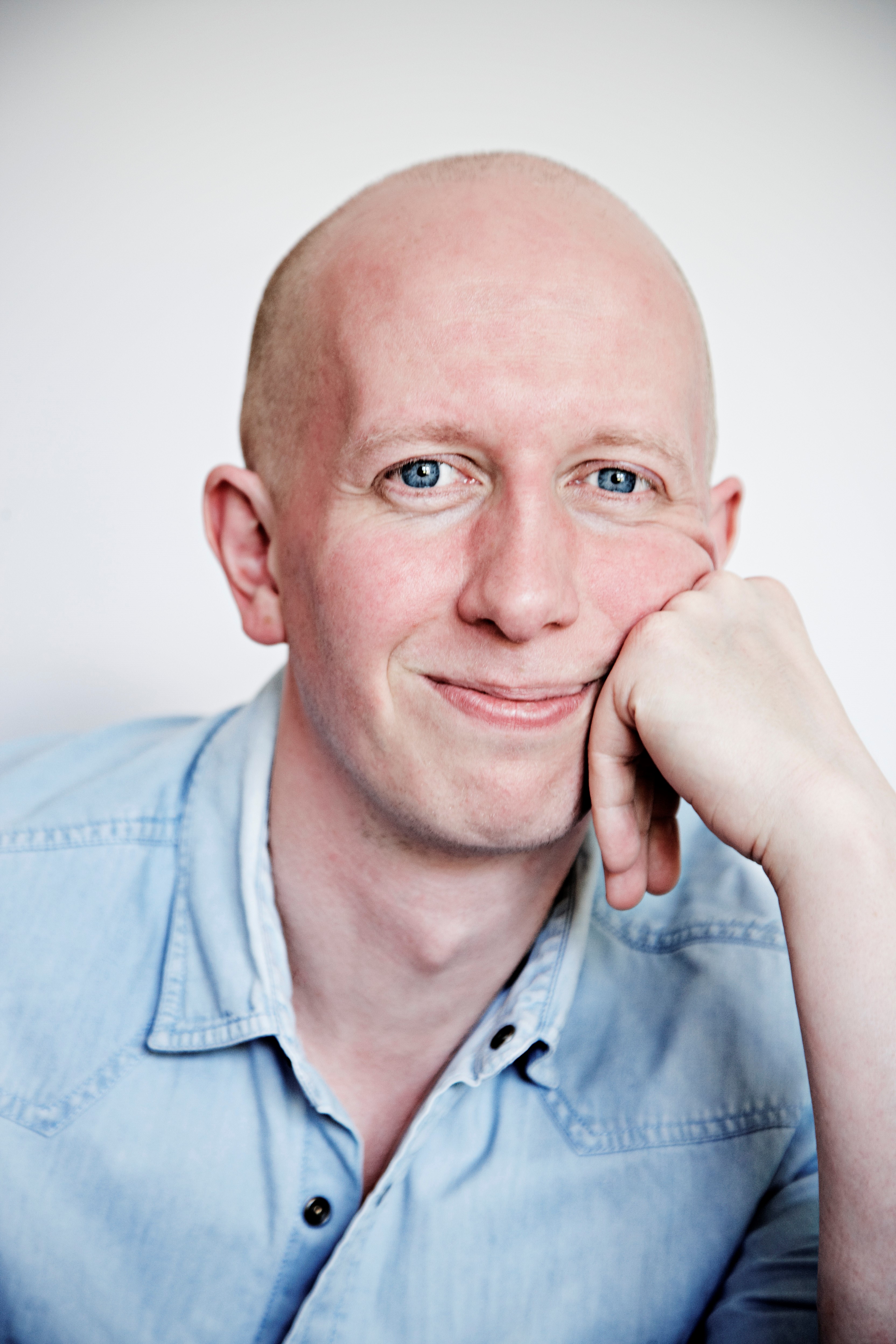
Piers Torday photo credit James Betts


     Piers Torday is the author of the middle grade novel The Last Wild, a unique book that deals with a topic usually dealt with in nonfiction with children– climate change. I asked Piers why he chose to write fiction on this topic for children instead of teens or adults, and he wrote this guest post for us here. Having just returned from vacation in Alaska, where my children actually held a chunk of melting glacier in their hands, this hits home for me. For them, it was a novelty and photo opportunity, although I found it to be pretty disturbing to see the pieces melting in front of me. Now that I’m home and have read what he has to say,  I think it’s very important for there to be books like his, that appeal to the imagination while creating an opportunity for awareness of this situation. Look for a review of The Last Wild to be posted shortly. Many thanks to Piers for sharing his thoughts with us.

CLIMATE CHANGE HORROR: TOO REAL FOR MIDDLE GRADE?


Of our many fears that can animate great stories, for me perhaps the greatest and the most palpable is our fear of the future. Wherever you stand on the politics, from dwindling (not to mention overheating) power supplies to water wars, housing space to food security, we all face major ecological challenges in the years ahead.

Most of those challenges, whether they come in the form of rising sea levels, increased immigration or extreme weather, are not predicted to come fully online until later in the century. It’s the middle grade readers of today who will have to face them.

The level of economic and political sacrifice required to avert major climate change make it nigh impossible for any decisive global unity on how to approach it. Certainly I don’t pretend to have the answers. What I do know for sure is that it’s going to take more than recycling the odd soda can to change anything.

The first problem with tackling this subject for middle grade readers is no one, especially children, likes being lectured to. Saving the planet, as the science currently stands, would require a level of sacrifice across the board that makes it hard for one person or country to stand up and tell another how to behave. I am writing this blog on a computer (and you’re probably reading it on one) which I use constantly for my work and am not really prepared to use much less. And I am just one of seven billion people on the planet who probably, given the chance, would all like to use a computer which they can turn on and off at will.

The second problem is that, unless you’re a polar bear on a shrinking ice cap, it still feels very abstract. Statistical modelling of carbon emissions and ocean acidity levels are hard to grasp at any age, and bar the odd unexpected hurricane or drought, most young people in the West don’t necessarily experience the effects of climate change in a tangible first hand way. Yet.

As a storyteller, I relish the challenge of animating these vital issues for the readers in whose hands the planet’s future resides.  First off, I can ask some questions. Do animals have an equal right to share this planet with us? What is greater within us, the desire for consumption or the ability to conserve?

Secondly, these abstract concepts are a gift for metaphor. In The Last Wild series I’m primarily using the animal characters – a heroic stag, a brave cockroach, some ditzy pigeons, a mini-spread of biodiversity – to represent the earth itself and through their different characters, provide some emotional heart to global issues that can feel dry and lacking in genuine, page-turning jeopardy.

Then, rather than scaremongering developing minds with totally bleak catastrophe scenarios (although there is no denying their power) in telling the story of my hero’s quest to save the last animals left alive on earth, what I can offer most of all is hope. Because, believe it or not, what I really feel is that human beings – through our curiosity, ingenuity and humanity – do have the ability to overcome those challenges and still make Earth a pleasant place to live for all creatures. If we choose.

____________________

Piers Torday is the author of The Last Wild (Viking, $16.99). The sequel, The Dark Wild is due out next spring. You can follow him on Twitter @PiersTorday or catch up with him at www.pierstorday.co.uk.