Home » Posts tagged "collection development" (Page 12)

Thank You For Weeding Mindfully: A New Life for (Very) Worn Books


Inside the covers of the Crestwood House Monsters series, adventures await!

Part of a librarian’s job is to weed the collection (obviously, you know this already if you are a librarian). That is exactly what it sounds like– pulling undesirable materials that have taken root (and shelf space). By “undesirable” I mean books that are damaged, or that have incorrect information, or that are old and worn out. These last are the hardest, because they usually are books that have been thoroughly loved for many, many years. Although they may not be checked out frequently any more, there are certain kids for whom you know those books will be just right. When I was a school librarian, I struggled with getting rid of the falling-apart Choose-Your-Own-Adventure books, and when it came time to take three shelves of beat up Nancy Drew books down, I offered them to a teacher who couldn’t bear to see them exit the building (teachers will rubber band books together that have fallen apart if they have to).

But it has to be done. I have been in school libraries that had not been weeded in so long that the books on space read “Some day, man will land on the moon”, 35 years after that giant step for mankind occurred.  And I have encountered the same set of monster movie books, the Monsters books from Crestwood House, first published in the 1970s, multiple times: as a kid discovering monster movies for the first time, a librarian wavering on whether to keep the books or weed them, and now as the mom of a Monster Kid.

I was actually very surprised to find the Crestwood House books on the shelf both at my local public library and the school library. I’m not sure how he actually discovered them, as I did not introduce them to him, they were in library bindings (so the covers weren’t visible), and his class was encouraged to choose from more “age-appropriate” books. The school librarian even called me to check if it was okay for him to check the books out. And for two years, he has checked them out, over and over.

Today I got an email from the librarian. She wrote that she had weeded the nonfiction extensively this summer, and the Crestwood House Monsters books did not make the cut. They have been pulled from the collection. “Since he enjoyed them so much, do you think he would like to have them”?

Oh yes.

That was quite possibly the fastest thank you note my child has ever produced.

Libraries have to make room for new books and knowledge by discarding inaccurate and damaged materials, but bless our school librarian for really paying attention to my son’s unusual interests.

These books that are probably as old as I am? They have a new life ahead of them, with someone who will treasure every torn, worn page.
 

Women in Horror Month: Researching Women in Comics– Guest Post by Rachel Hoover, Librarian of the Dead

Rachel Hoover is a librarian and aspiring writer living in the Chicago area. She runs the blog Librarian of the Dead, where she blogs about the sorts of things you’d expect from such a title. She writes frequently about the horror genre–whether it’s books, comics, movies or games– as well as gravestone art, cementeries, and other items or topics that are dark, spine-chilling or have something interesting to say about our relationship with fear or death. Rachel is an official participant in Women in Horror Month this year, and is spotlighting women in horror comics this month.

With comics and graphic novels such a big topic in libraries right now, we wondered how you discover horror comics created by women, and Rachel offered to share her research strategies. It takes some work, but there are some interesting surprises. Until Rachel wrote about it, I had no idea Nancy A. Collins, who won the Bram Stoker Award for Sunglasses After Dark, also wrote for comics, including Alan Moore’s Swamp Thing! Want to introduce women in horror comics to both comics and horror readers? Read Rachel’s suggestions below.


On Researching Women in Horror Comics

Rachel Hoover

In honor of Women in Horror Month , an annual event put on by the Viscera Organization each February, I’ve been writing about Women in Horror Comics for a weekly series on my blog, Librarian of the Dead.

The goal of WiHM is to provide exposure, support and education about the typically underrepresented women working in the horror genre. So each Monday, I’m featuring a specific female writer or artist that works on horror comics, discussing their work, and asking them a few questions about the industry, what influences them and what advice they have for aspiring comic creators.

I came up with this project was because I couldn’t think of that many women working on horror series that I read or was aware of. It’s not always easy to stumble upon the names of all the artists, colorists, pencillers, letterers that make up one issue of a comic, one graphic novel, let alone the many people that could contribute to work on a trade paperback that collects multiple comic issues. It’s even harder when you’re only looking for women in one genre.

Since I am an actual librarian (that blog title isn’t just for fun!) I was up to the challenge. I used a couple of different strategies. No one had already created the kind of resource I was looking for, so I went with the next best thing: a list of women working in comics in general, and I found a nice long one on Wikipedia.

Part of my work was looking through lists like this and trying to either identify horror titles, or watch for publishers that I knew did horror series (Dark Horse, for example). I also worked the other way around sometimes, looking up a specific comic series or a graphic novel and checking if they had any women working for them. The main websites that I used to explore names and titles were things like Comic Book DB, Comic Vine, and  DeviantART, as well as the publisher and convention websites.

Librarians looking to stock female comic creators on their shelves should dig deep into the comics or graphic novels they already read and seek out the names of all of the writers and artists who have contributed to it. Research their careers and you’ll find new titles to check out. But be open to seeking out independent comics, there are a lot of wonderful unknown writers and artists that self-publish or work with indie publishers. They may not have easily-available trade paperbacks, and most libraries don’t stock individual issues of comics, but what about buying digital issues and loading them onto a tablet? Slap a barcode on that device and you still get circulation stats!

I would also recommend going to comic conventions and visiting with the female comic creators and artists that are there, talk to them about what they’re working on right now, what they’re reading and other women in the field who do work they enjoy. Once you start learning their names you’ll see them everywhere and realize what you and your library users were missing out on before. Maybe you can inspire them to become a fan of something they wouldn’t have picked up on their own. Maybe the girls and women in your community will even try their hand and writing or drawing their own comics when they see the possibilities. It’s a win-win: you and your library benefit, and so do the women out there already creating comics.

If you’d like to learn more about the women I’m featuring in my blog, I have a few up already. My first feature is on writer Rachel Deering and her epic werewolf comic ANATHEMA and my second is on cover artist Jenny Frison, who works on titles like HACK/SLASH, REVIVAL and ANGEL . I have two more to go, plus bonus posts of more women I discovered, but couldn’t fit in February. I’m excited and passionate about my project, because I believe these ladies are doing amazing work and deserve the exposure.

If you don’t want to miss the next features in my series you can subscribe to my blog, follow me on Twitter @rachelsstorm or keep an eye on all of the Women in Horror Month events through their website, Twitter @WiHmonth or Facebook page.

Alan Moore’s Neonomicon Banned!

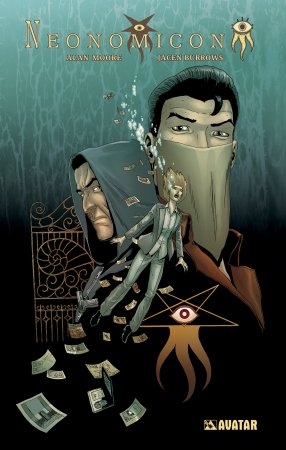
Alan Moore's NeonomiconWell, here we go again. Alan Moore’s graphic novel Neonomicon has been removed from the shelves of the Greenville Public Library in Greenville, South Carolina after a parent challenged it (The parent in question apparently thought from looking at the cover that it was a child’s murder mystery. WHAAT? In my wildest dreams I would NEVER guess this was the cover of a child’s murder mystery). But wait, there’s more to this story. The library’s internal review committee voted to keep it on the shelves. Access Manager Barbara Yonce was quoted as saying “it was purchased on the basis of being an award winner and on the reputation of the author, but then with further consideration, we decided that those qualifications were outweighed by some of the disturbing content of the item.” The library director, Beverly James, decided to overrule the committee’s recommendation based on her own personal reaction, and told the media the removal was based on the committee’s recommendation. Her words (from the Greenville Journal):

‘Neonomicon’ was added to the library’s collection based on the reputation of the author as one of the most outstanding writers in the genre and the fact that the book won the 2011 Bram Stoker Award from the Horror Writer’s Association in the graphic novel category. Nonetheless, had we known in advance about the disturbing material contained in the book, it is unlikely we would have added ‘Neonomicon’ to our collection. For that reason, we have withdrawn it from the library’s collection.

Winner of the 2011 Bram Stoker Award? Maybe that should have been a clue to possible disturbing content. The Stoker doesn’t go to graphic novels about adorable fuzzy bunnies, unless they have sharp knives and are chasing you (like our own Horatio) Taking it off the shelf in the adult fiction section? Not cool. A LIBRARY DIRECTOR overriding her committee’s recommendation to keep the book? I have no words for that.

The Comic Book Legal Defense Fund (CBLDF), National Coalition Against Censorship (NCAC) and American Booksellers for Free Expression (ABFFE) have joined forces to advocate for the restoration of Neonomicon to the Greenville County Public Library System. For more information about that, and to see the letter they wrote, click here.
