Home » Posts tagged "bullying" (Page 3)

Book Review: Ghost Girl by Ally Malineko

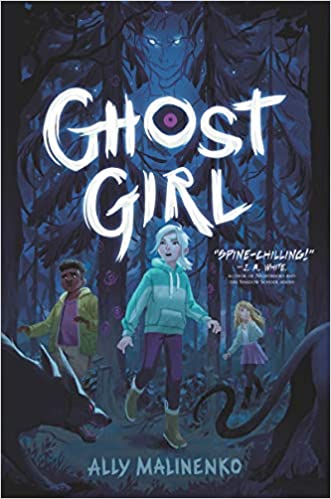
cover art for Ghost Girl by Ally Malineko

Ghost Girl  by Ally Malineko

Katherine Tegen Books, 2021

ISBN-13 ‏ : ‎ 978-0063044609

Available: Hardcover, Kindle edition, audiobook Bookshop.org |  Amazon.com )


Knobb’s Ferry is a sleepy little town, just south of Sleepy Hollow, home to the tale “Ichabod Crane and the Headless Horseman”, is the kind of place tourist stop to fill up with a tank of gas or have a slice of pie on the way, and it’s also home to sixth grader Zee Puckett, who has just discovered she is gifted with the ability to see ghosts.

Zee is an outsider with a prickly personality, but she is also a born storyteller, and she especially loves making up and telling ghost stories, much to the delight of her peers. She lives with her older sister, Abby. Their father has been out of town for six months, looking for work, and they haven’t heard from him, so the girls are scraping by. While Abby works, Zee goes to school and hangs out at the cemetery with her friend Elijah. Elijah’s mother is ill, and his father was an athlete and is now a mechanic. Elijah is bright, but uninterested in sports or cars, a disappointment to his dad. During a field trip to the library, Zee sees her first ghost. She’s spotted by her frenemy, popular Nellie Blake, who announces on the bus home that Zee thinks she was talking to a ghost, earning Zee the nickname “Ghost Girl”.

In the meantime, the principal has disappeared, leading to the appointment of a new one, Principal Scratch. Principal Scratch encourages the students to put themselves first, and focus on their own desires, and Zee watches as the people around her start to see their hopes miraculously come true. After a visit from Principal Scratch, the girls’ father starts regularly calling Abby, Eli’s mother is suddenly healthy again, and Nellie finds her missing dog.  Everyone in town loves Principal Scratch, yet the townspeople are drained of energy. Only Zee can see that something is wrong, and she helps Eli and Nellie break Principal Scratch’s hold over them. Can the three of them stop Principal Scratch and break his hold over the town?

Early in the book Principal Scratch muses that sixth grade is a testing time, “a strange, in-between time… when we walk that delicate line between good and bad. Between bully and friend.”  Malineko portrays the growth of Zee and her friends in that liminal time, as they realize people, including each other, have more going on than they show to the world, and that that line is not as solid as it appears.

With vivid descriptions, terrifying hellhounds, gruesome moments, plenty of suspense, and a librarian in their corner, Malineko has created a dark story, told with compassion, about family, friendship, becoming comfortable with yourself, and standing together, that ends with real hope. Kids who enjoyed A Tale Dark and Grimm or the Shadow School books will find a lot to like here, and parts of the book reminded me of Tuck Everlasting. Knobb’s Ferry may not have a headless horseman, but it does have a ghost girl. Recommended for grades 4-7.


Reviewed by Kirsten Kowalewski
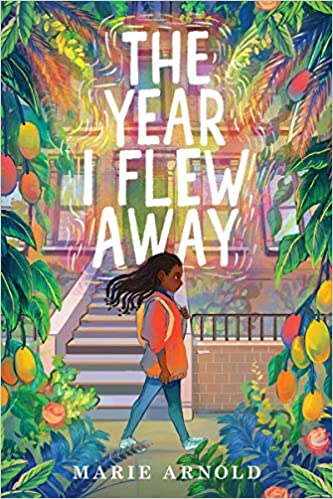
Book Review: Women in Horror Month: The Year I Flew Away by Marie Arnold

(  Bookshop.org  |  Amazon.com )

The Year I Flew Away  by Marie Arnold

Versify, 2021

ISBN-13 : 978-0358272755

Available: Hardcover, Kindle edition, audiobook


Ten-year-old Gabrielle has left her home, family, and friends in Haiti to live in America with family she barely knows. Arriving in New York City in the winter, she is being bullied, having a hard time learning and understanding English and fitting in. She knows better than to trust a witch, but determined to be accepted, she accepts three slices of mango from the witch Lady Lydia. Each piece Gabrielle eats will grant a wish, but take something else away.

Gabrielle is a character who squeezes everything she can out of life. At the beginning of the book, she is mischievous and playful, active, curious, imaginative, loving, strong-minded, and brave. Marie Arnold sets her story to be descriptive of all the senses: flavors, textures, colors, and smells.  As much as Gabrielle loves her home, there is still poverty, hunger, and violence, and her parents, unable to get papers for themselves, decide to send her to America on her own, to stay with her uncle’s family. The qualities that serve Gabrielle well in Haiti, though, aren’t appreciated or apparent in New York City.

When she meets the witch, Lady Lydia, Gabrielle is wary, but after turning Lady Lydia away several times, Gabrielle finally decides she wants to belong enough to accept the consequences. Lady Lydia warns Gabrielle that if she eats all three pieces of the mango, she will have to give her essence to Lady Lydia. Gabrielle wishes for perfect English, and gains friends (Carmen and a talking rat named Rocky) but she also loses understanding of her home language, Haitian Creole, meaning she can no longer speak to or understand her family. What will the next wish take away? Gabrielle, along with help from her friends, must save herself and her family from Lady Lydia and figure out how to balance fitting in as an American with pride in her Haitian identity.

Arnold does a really wonderful job depicting the varying characters in the book, and addresses skillfully tough issues like racism and anti-immigrant sentiment. She presents a rounded picture of Gabrielle’s aunt and uncle, Carmen’s large family, and even the girl who bullies her. The tricky Lady Lydia is dramatically and vividly depicted, as is her nearly completed and disturbing spell. This is an entertaining, thoughtful, witchy, #OwnVoices book for middle grade students, and although the protagonist is a little young, could also be enjoyed by middle schoolers. Highly recommended for ages 8–12.


Reviewed by Kirsten Kowalewski

Musings: The Cruelty Is The Point: The Burning by Laura Bates

The Burning by Laura Bates

Sourcebooks Fire, 2019

ISBN-13: 978-1728206738

Available: Hardcover, Kindle edition


Reading Laura Bates’ The Burning was like a dizzying fall down a rabbit hole to hell.  Anna, the main character, has moved to a new town and a new school to escape a scandal at her old school, only to find that the perpetrator has established social media profiles for her, posting provocative statements and photos that portray her in a very negative light  to classmates who already were incredibly nasty to each other, giving them the excuse they’ve been looking for to bully her (there is a parallel storyline about her visions during a search for information about a woman also unfairly turned on by her community who was burned for witchcraft in the 1650s). After attempts to deal with the cyberbullying on her own,  Anna eventually speaks up and even uses social media to reclaim her image, but  even after the uproar finally dies down, she can’t really escape what’s out there. Once you’re on the Internet, you don’t easily get your privacy back. I don’t know how common it is for cyberbullying to swing that far out of control, but it is terrifying.

Last year’s  The Ghost Hunter’s Daughter  by Caroline Flarity (review here) didn’t go quite as far wirh cyberbullying: the main character (also named Anna) has a reputation for being odd, and she is bullied, but she’s a stronger character and much of  the mockery she faces is due to her reputation as the spooky daughter of an eccentric ghost-hunter (if you have gone to school with the same kids your whole life, you’ll know how hard it is to change the way they look at you). This Anna faces personal and physical threats in a different way (a bully obsessed with her sets her house on fire) as well as ostracism due to social media (a boy she likes tries to convince her to take off her shirt, and later shows video he took to their classmates) but the cyberbullying doesn’t go nearly as far as The Burning in tearing her down. Unlike Anna in The Burning, who is just trying to make it, and reclaim her identity, with her situation central to the story,  Anna in The Ghost Hunter’s Daughter also has to fight a supernatural force and save the day.

Foul is Fair by Hannah Capin (reviewed here), also from last year, is a revenge tale based on Macbeth, where four girls conspire to eliminate the athletes who raped one of them. The girls use the Internet to track down and identify the boys, and erase Elle’s presence in social media (this seems unlikely, but certainly the plot wouldn’t work without this). Changing her name to Jade, and altering her appearance, she transfers to the school the team attends, and manipulates the team members and the girls they’re involved with until one of the boys starts killing off the others. It’s interesting that a lot depends on who has a a cellphone and where it is. Not only is it horrifying to know these boys were either participants or complicit, but the way Elle is able to manipulate them into turning on each other demonstrates vividly the poor judgment, intense emotion, and peer pressure teens experience.

These girls go through some horrific events, and the cruelty and fear of the teens in these stories is what I find really frightening. The Burning caused me to have conversations with both my middle schoolers about their experiences at school. They don’t have much access to social media, so they wouldn’t be exposed to some of the more appalling incidents, but it doesn’t mean it couldn’t happen.  My daughter, who was bullied in elementary school asked what the motivation is for someone to act as maliciously as some of the kids in The Burning. That’s the real horror for me as a parent: for some, there is no reason, or sometimes the cruelty is the point.


A final note:  Laura Bates is an English feminist activist and writer who founded the Everyday Sexism Project. At the end of The Burning she offers a list of websites for organizations who offer information and support to girls dealing with issues that appear in the book, and many others,

The Burning contains: cyberbullying, bullying, descriptions of pornographic images, references to abortion, rape, torture, and death.