Home » Posts tagged "1980s"

Book Review: The Rack: Stories Inspired by Vintage Horror Paperbacks edited by Tom Deady

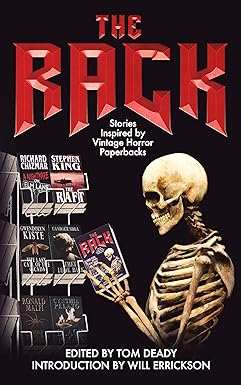
Cover art for The Rack edited by Tom Deady

The Rack: Stories Inspired by Vintage Horror Paperbacks, by various authors

Greymore Publishing, 2024

ISBN: 9780990632771

Available: Paperback, Kindle edition

Buy: Bookshop.orgAmazon.com


The Rack is a mixed bag.  That’s surprising, considering the pedigree of the authors involved, many whom I’ve read before.  There are some really good ones, but when the best one is a Stephen King one borrowed from his ’80s collection Skeleton Crew, that tells you something.  If you really want good ’80s style horror stories, track down the original ones from that era on Ebay,


The reason it’s a bit of a disappointment is that for the five or six really good ones, there are an equal number of clunkers.  The rest are somewhere in the middle: they provide some entertainment, but nothing you are likely to read again. The writing and ideas are fine, but most of them just don’t have any real “grab” to them.  Still, there are some that have plenty of zip,


“White Pages” is one of the best and most creative stories, illustrating how prank calling could go horribly wrong in the old days of rotary phones.  “Fuzzy Slippers” is straight, messy, ’80s-inspired lunacy, with yes, killer slippers, and a great twist at the end.  This one really captures the feel of the gory, free-for-all stories that marked some of the best ’80s horror.  “Blood of my Blood” may be the most unusual, with its blood-drinking health zealots.  Mixi them into a marriage ceremony with a groom who has no idea what type of family he’s marrying into, and you have a wonderfully dark humored story.  “The Keeper of Taswomet” and “Lips Like a Scythe” are solid, vintage-inspired monster mashups, with enough character interactions to keep the story humming. They’re not just focused on the monsters and carnage, although there is plenty of that too!  The best story, King’s “The Raft”, is one that doesn’t need to be mentioned; you already know how good it is.


As for the rest…again, this is strictly opinion.  There’s nothing lacking in how the stories are written, they just really aren’t page turners, which is my main requirement for a good short story.  Other readers may feel differently..


Bottom line?  If you want to read the best ’80s shorts, go back to the originals: they truly hit the mark.  King’s Night Shift or Skeleton Crew, Robert McCammon’s Blue World, or Clive Barker’s Books of Blood are all prime examples of what made the ’80s such a fertile period for creativity in the horror field.


Reviewed by Murray Samuelson
 

Graphic Novel Review: Let Me Out by Emmett Nahil, illustrations by George Williams

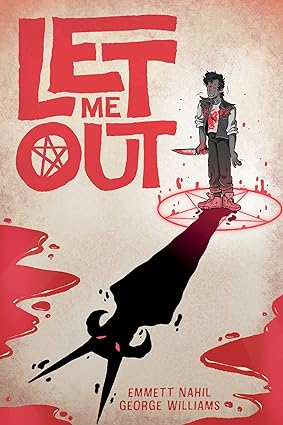
cover art for Let Me Out by Emmett Nahil


Let Me Out by Emmett Nahil, illustrations by George Williams

Oni Press, 2023

ISBN: 9781637152362

Available: Paperback, KIndle edition

Buy: Bookshop.orgAmazon.com


It’s 1979. Mitch wakes up after a terrible assault near the local Y. His friends scold him for going there alone and take him home to recuperate. There’s also been a murder in the quiet suburb of Columbiana, New Jersey. The body of Pastor Holley’s wife, Kelly, has been found with demonic sigils carved into her body.


New Jersey Sheriff Mullen and FBI Agent Garrett partner up to investigate the case. At least, that’s how it appears to the locals. Behind the scenes, they are devising a Satanic Panic cover to conceal their own crimes. They set their sights on a group of queer punks; Mitch, Lupe, Terri, and Jackson.


Sheriff Mullen hears a rumor that Pastor Holley records extra sermons for himself, and confronts the priest about them. It takes a little convincing, but Father Holley turns over some of the tapes to be played on the local radio station. A federal agent issues a warning, announcing the lurid details of satanic rituals, and asks teenagers to keep an eye out for anyone different. After a violent altercation between Lupe and the manager on duty at the local grocery store, the authorities quickly pin Kelly’s murder on the teens. When the friends flee to a cabin in the woods, they find the building gone and a bloodstained pentacle embedded in the ground. Mitch knows they aren’t alone out there.


I love a good Satanic Panic plot. With a diverse cast of characters, each with a unique personality and story, Let Me Out has a unique angle on the “devil in the details”. There is good LGBTQ+ representation, as well as people of color. There are parents and adults who are not accepting of their children, which is difficult to stomach, but is a painful reality some LGBTQ+ teens face. As hard as it was to confront on the page, I am glad that Nahil didn’t shy away from that. The character designs were really good and well rendered, as were the backgrounds and sweeping landscapes.


Nahil and Williams opted to include trigger warnings at the beginning of the book. I know there have been conversations in the horror community about the idea of including these warnings in general. My view is that if it makes someone’s enjoyment of a book better to have a warning, I have no problem with that. For those of us who are library workers, we are probably familiar with Ranganathan’s Five Laws of Library Science. Content warnings align well with three of the five laws: every reader their book; every book its reader; and save the time of the reader. Highly recommended.


Reviewed by Lizzy Walker


Book Review: Jedi Summer by John Boden

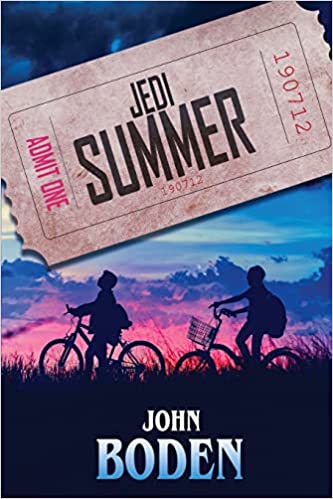
Cover art for Jedi Summer by John Boden

Jedi Summer by John Boden

Cemetery Dance Publications, 2022

ISBN-13 ‏ : ‎ 978-1587678356

Available: Paperback, Kindle edition ( Bookshop.org | Amazon.com )


Jedi Summer is a fictionalized coming-of-age memoir by John Boden, taking place in 1983, the summer Return of the Jedi came out, when Boden was 12 and his brother Roscoe was 7. It meanders through a summer filled with the brothers playing, fighting, and just living through their days. Boden’s mother worked several jobs and he was both responsible for and unpleasant to Roscoe in the way siblings can be. Boden reflects on how his perspective has changed since then. Stylistically he uses italicized text in brackets for digressions. This would work in oral storytelling (it reminded me a bit of Donald Davis) but disrupts the flow on the page.


There are three additional stories. “Possessed by a Broken Window” is a powerful piece on grief and guilt.”Trick” is relatable to anyone who has meant to call someone important but never quite does. “The One Who Closes the Door”, a story about caretaking for the adults of your childhood, will stick with me for a long time.


The fictionalized darker and supernatural events that take place during the story range from gentle (Boden’s brother can see and interact with the ghosts of dead pets) to believable (a Ferris wheel that crashes to the ground) to the gruesome (a dead man hanging from a tree whose body has been turned into a birdhouse). Even without these, the story of these boys on summer vacation with plenty of time and imagination, and the pieces at the end, are worth reading.