Home » Posts tagged "1970s"

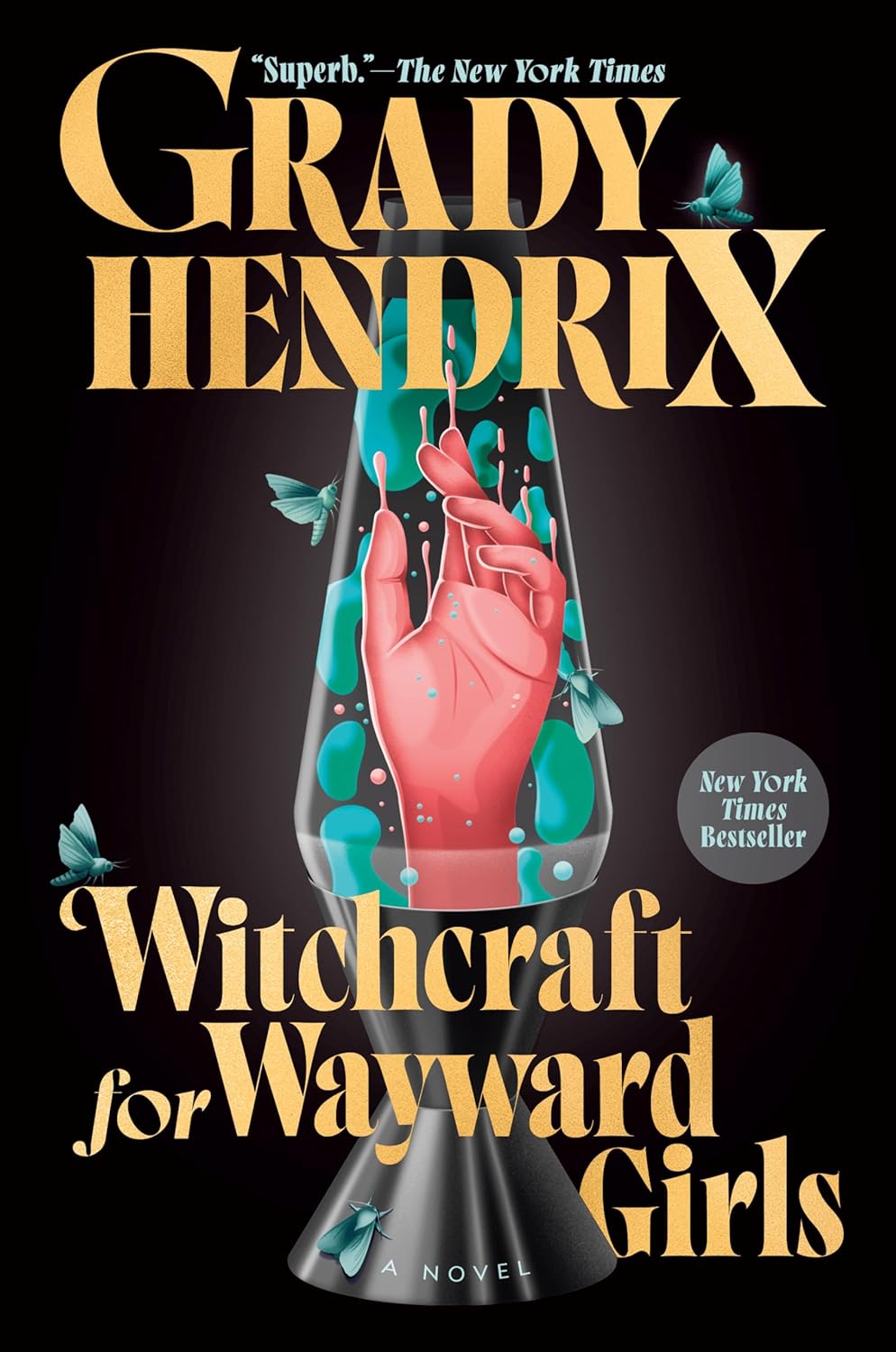
Book Review: Witchcraft for Wayward Girls by Grady Hendrix

Witchcraft for Wayward Girls by Grady Hendrix

Berkley, 2025

ISBN-13: 978-0593548981

Available: Hardcover, paperback, Kindle edition, audiobook

Buy:   Bookshop.org | Amazon.com


It’s 1970. Neva is 15, pregnant, and lost. Her father leaves her at the Wellwood Home in St. Augusta, Florida, a maternity facility for pregnant teens. Miss Wellwood, the proprietor, runs her home with strict rules and reprimands the girls about their loose morals and poor decisions. the adults in charge include Diane, a social worker who guides the girls through their time in the Home;  Dr. Vincent, a cold elderly man with traditional views on women’s healthcare, who prescribes restrictions and other cures for the girls, with a focus on the babies; Nurse Kent, who minds the girls at night and when needed; Hagar, a Black woman who runs the kitchen; and Hagar’s sister Miriam, who instructs the girls on their domestic roles, such as proper cleaning of the Home.


The adults are not the focus of the story, of course. It is the girls, renamed by Miss Wellwood as flowers, as though she is tending a special garden. Neva is renamed Fern. Rose, a radical hippie who wants to keep her baby Blossom, is a force to be reckoned with in the Home. Always on strike, she fears nothing and no one… until she does. Holly has been through terrible trauma in her short life, at the hands of a powerful member of the community. She’s wild, refusing to allow people to get close to her, and remaining mute until she finds her voice. Zinnia is a musician who loves the father of her baby, swears they will marry upon her return home, and tries to ignore what she was put through at the hands of her mother when her parents found out she was pregnant. There are other girls, and as one leaves, she is replaced by another flower.


One hot summer day, the local library’s bookmobile arrives with librarian Miss Parcae at the wheel. She presents Fern with a book called How to Be a Groovy Witch, a powerful tome that opens a new world for Fern, Holly, Rose, and Zinnia. There is something special about this book, and it reveals more to them the deeper they go as they form their own small coven and cast their first spell. The unassuming librarian is more than she seems. As Fern and the girls become more involved with witchcraft and the librarian, they find their newfound power comes at a painful price.


Witchcraft for Wayward Girls is powerful. I read the ARC, hardcover, and audiobook versions. Author Grady Hendrix opens the ARC with a letter to the reader, while the published version includes a statement in the acknowledgments, where he provides a brief history of these homes, and shares the experiences of his own family members. There are visceral depictions of body horror in terms of giving birth, which I had a difficult time getting through. Medical horror, especially regarding women’s health and trauma, is difficult for me to read.


Hendrix’s ability to write about and from the perspective of girls and women is incredibly effective and well-executed. Readers who enjoy this book may also enjoy his other books, especially The Southern Book Club’s Guide to Slaying Vampires, My Best Friend’s Exorcism, and We Sold Our Souls.  Highly recommended.


Reviewed by Lizzy Walker
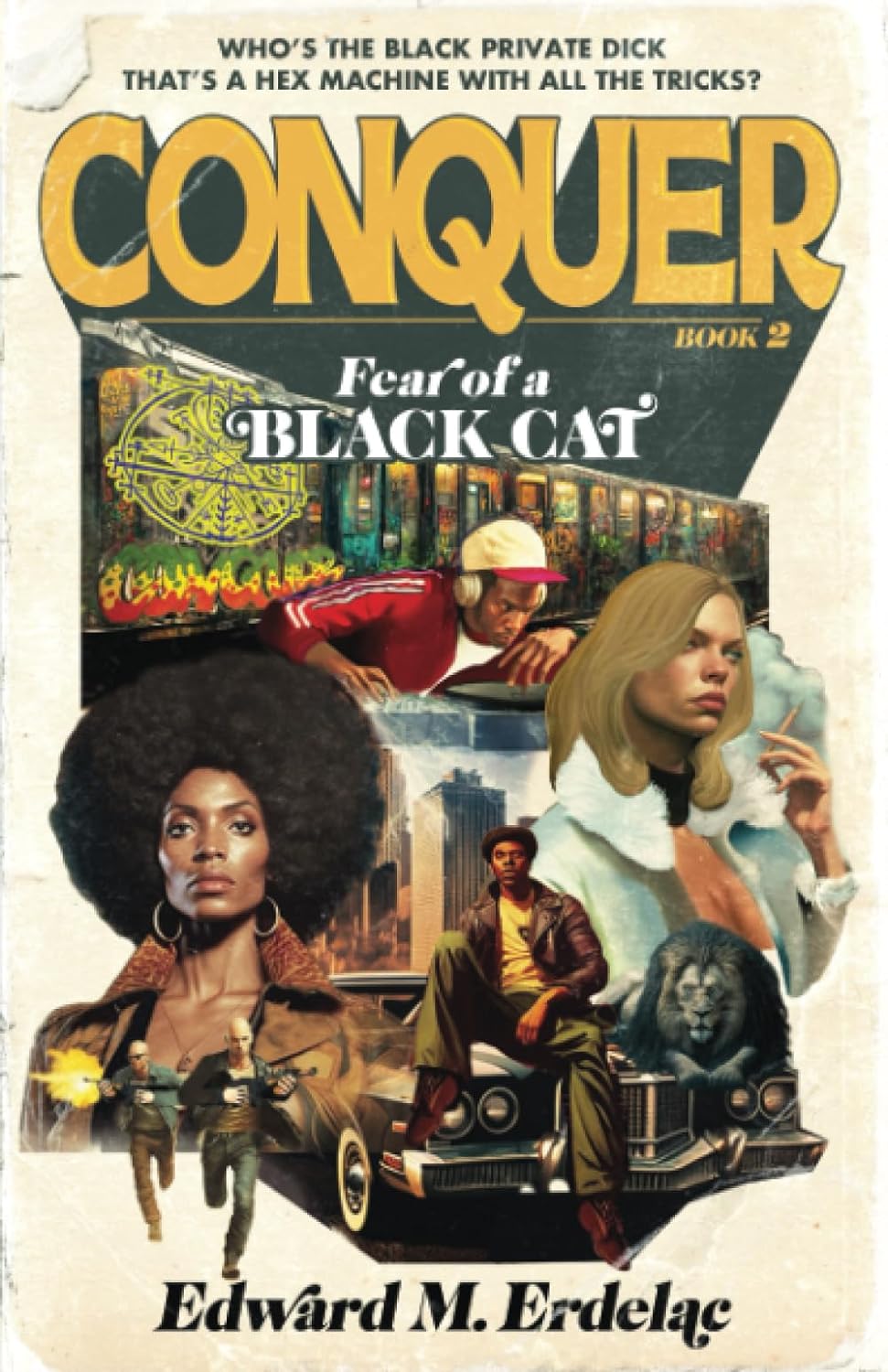
Book Review: Conquer: Fear of a Black Cat by Edward M. Erdelac

Conquer: Fear of a Black Cat (John Conquer series, book 2) by Edward M. Erdelac

Self-published, 2023

ISBN-13 ‏ : ‎ 979-8856895413

Available: Paperback, Kindle edition

Buy: Amazon.com


Forget about those silly excuses for black heroes that Marvel comes up with: if you want a real black hero-you call John Conquer.  Whereas book 1 in the series was a collection of short stories, Conquer gets his own full-length (over 500 pages) novel this time.   The book succeeds on all levels, and hopefully won’t be the last one in the series.  John Conquer is without a doubt one of the most interesting book characters out there today.


Set in 1978 Harlem, private investigator John Conquer has finally got a case that may be too much for him.  People are turning up dead all over Harlem with their hands cut off.  For Conquer, this case is personal- one of the victims is the lady who raised him.  What follows is a good detective crime story that races all over the city, from Studio 54, to CBGB’s, to Untermeyer Park, as Conquer tries to put the pieces together.


This book is a period piece, and in that aspect, it’s absolutely perfect.  The author did a staggering job of making 1970’s NYC seem real: this seems so true to life you can almost smell the spray from the graffiti on the subways.  The descriptions, the mannerisms, the dialogue: it’s all perfectly true to life.  The book is a phenomenal example of world-building: .


The plot itself is a good one. The author again does a fantastic job of mixing voodoo and all sorts of magic into a standard detective story. It’s what gives the Conquer stories their unique flavor.  Sometimes Conquer has to pound the pavement like a normal detective, but often he has voodoo tricks he can use to help solve the case.  One improvement over the last book is this time, some of the lesser-known gods and magic items come with a bit of background, so readers won’t need to make Wikipedia runs.  Some of the characters from the previous stories return. Detective Lou Lazzaroni plays a part, and Conquer is, thankfully, still driving the Cordoba inhabited by the wise-cracking ghost, Pope.  Conquer and Pope make a perfectly mismatched team, especially when they are squabbling about disco.  Some real people from the 1970s also pop up in the story.  David ‘Son of Sam’ Berkowitz plays a part, and there are also appearances by Muhammed Ali, Andy Warhol, and…Donald Trump.  (anti-Trumpers will be ecstatic with Trump’s part)  The gangs from the 1970’s cult classic film The Warriors also pop up in the narrative.  The new characters in the book are quite intriguing, with Conquer’s drunken sort-of security guard Oshkosh being one of the most fun.  For a detective story, this one has a fair amount to keep track of, but the author wisely inserted a recap into the story around page 300 for any readers who might have gotten a bit lost.


‘Da bottom line here: this is a fantastic knockout of a story.  You wanna hang with the slickest, baddest cat out there? You’ve gotta read Conquer.  Hopefully, this isn’t the last we’ll see of him.  Highly recommended.


Reviewed by Murray Samuelson

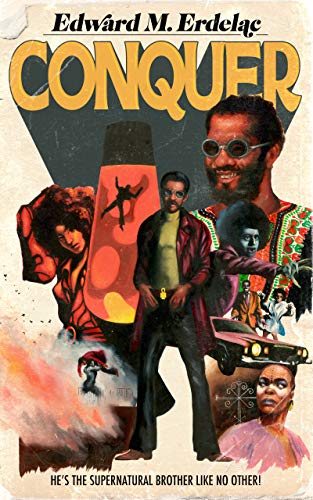
Book Review: Conquer (John Conquer Series, Book 1) by Edward M. Erdelac

Bookshop.org |  Amazon.com )

Conquer (John Conquer Series, Book 1) by Edward M. Erdelac

Independently published, 2020

ISBN: 9798579334848

Available : Paperback, Kindle edition


Harlem, 1976: an era of bad clothes, bad habits, and bad music.  From this scene emerges John Conquer, private investigator, and the baddest brother around.  How bad?  Well, “didn’t he kung-fu Frankenstein off the marquee at the Apollo, and bust him to pieces with John Henry’s hammer?  Didn’t he go fishin’ and catch the Creature from the Black Lagoon, and throw him back because he was too small!  He played ball with Dr. J in Rucker Park, and let him win!”  Conquer is a folk hero to Harlem, and his exploits have grown into legend among the locals.  These are his stories.


Conquer consists of seven short stories, three were previously published in Occult Detective Quarterly in 2017.  The stories are consistently entertaining, if a bit formulaic at the beginning of each story.  They usually start with Detective Lou Lazzaroni of the NYPD being assigned a case.  Lou realizes that the cases have a supernatural bent to them, and that’s where John Conquer steps in.  Although he’s a standard PI, Conquer also has a deep knowledge of voodoo, hoodoo, and all kinds of occult stuff, as he was partially raised in Louisiana, America’s capital of pagan weirdness.  It’s up to Conquer to solve the cases and save the day.


Author Erdelac has done a nice job writing a horror period piece: his portrayal of the late 1970s feels quite authentic, both in terms of setting (ox-blood leather coats, linoleum, lava lamps, etc.) and dialogue.  The dialogue feels very accurate with its terminology and phrasing, and does a good job transporting the reader back to another time in American history.  After Conquer is brought onto each case, the author shifts gears and shows a strong flair for creativity.  Readers might assume that voodoo automatically means zombies, but only one story actually has the undead.  Instead, Erdelac does a nice job cross-pollinating various African and Asian mythologies into the story.  Examples include a Slip-Skin Hag (or ‘boo hag’), a Popobawa (a bat-wing creature) and a monster based on Dahomeyan beliefs that defies easy categorization.  He did an excellent job researching these creatures for the book, but there are times when a little more explanation would have helped.  Unless you’ve read Wade Davis’s The Serpent and the Rainbow, terms like bokor, vodoun, veve, and Papa Legba are likely to sail over the heads of most readers, sending them scrambling for Wikipedia.


The stories are fast with no wasted time. Conquer dives right into the action, destroying villains with often-creative methods, such as cigarettes laced with sage for exorcising demons, and a pocket-coating powder that renders pickpockets immobile and subject to Conquer’s commands.  Part of the character’s appeal is that he doesn’t just blast away with his Colt Python, but often relies on his own magic methods to beat the baddies at their own game.  Special mention must be made of a fantastic secondary character, in the form of the ghost of a dead pimp that haunts Conquer’s car, and speaks to him through the radio.   This also allows Conquer to control the car through voice command, when the ghost agrees.  It’s like a bizarre 1970s version of the television show Knight Rider, and the back and forth squabbling provides unexpected and welcome hilarity.


Overall, Conquer is a welcome horror novel throwback to another era.  Let’s hope for more from Conquer and company in the future.  Recommended.


Contains:  violence, profanity


Reviewed by Murray Samuelson